Motor skills development Normal Letter Recognition Worksheets for Ages 5-8
3 filtered results
-
From - To
Enhance your child's motor skills and letter recognition with our engaging worksheets designed for ages 5-8. These printable exercises combine learning and fun, providing young learners with the opportunity to improve their fine motor skills while mastering the alphabet. Each worksheet features vibrant illustrations and various activities that captivate children's attention. As they trace, draw, and match letters, kids will gain confidence in their writing abilities and letter recognition. Perfect for classrooms or at-home learning, our resources support early childhood education by fostering essential skills needed for academic success. Unlock your child’s potential today with our motor skills development worksheets!

Letter H Tracing Page
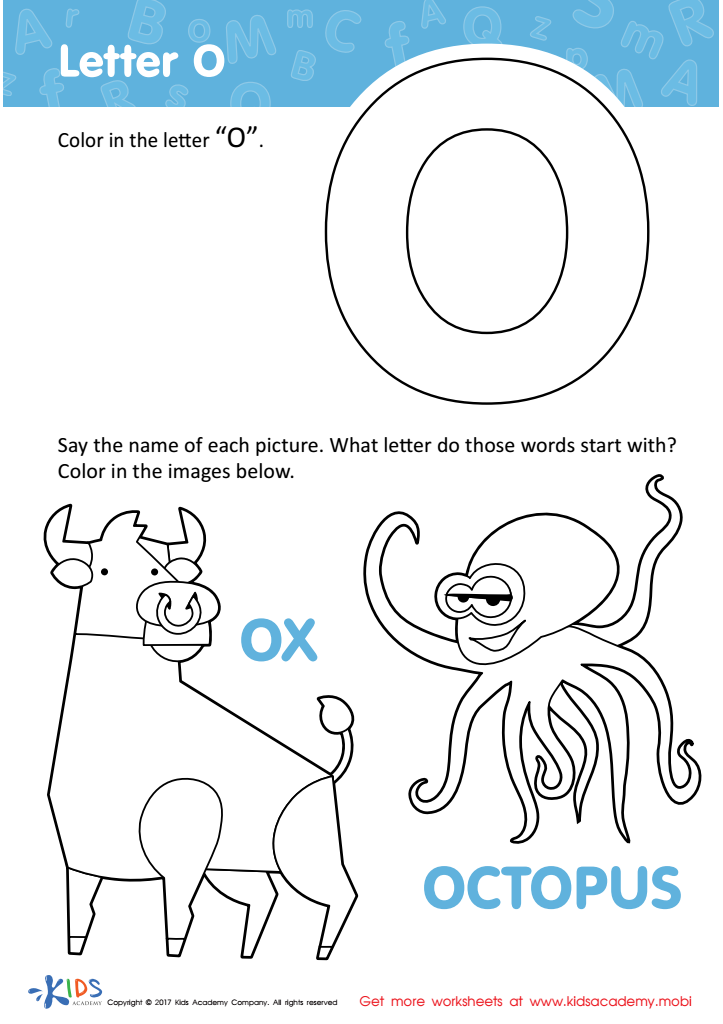
Letter O Coloring Sheet
 Assign to My Students
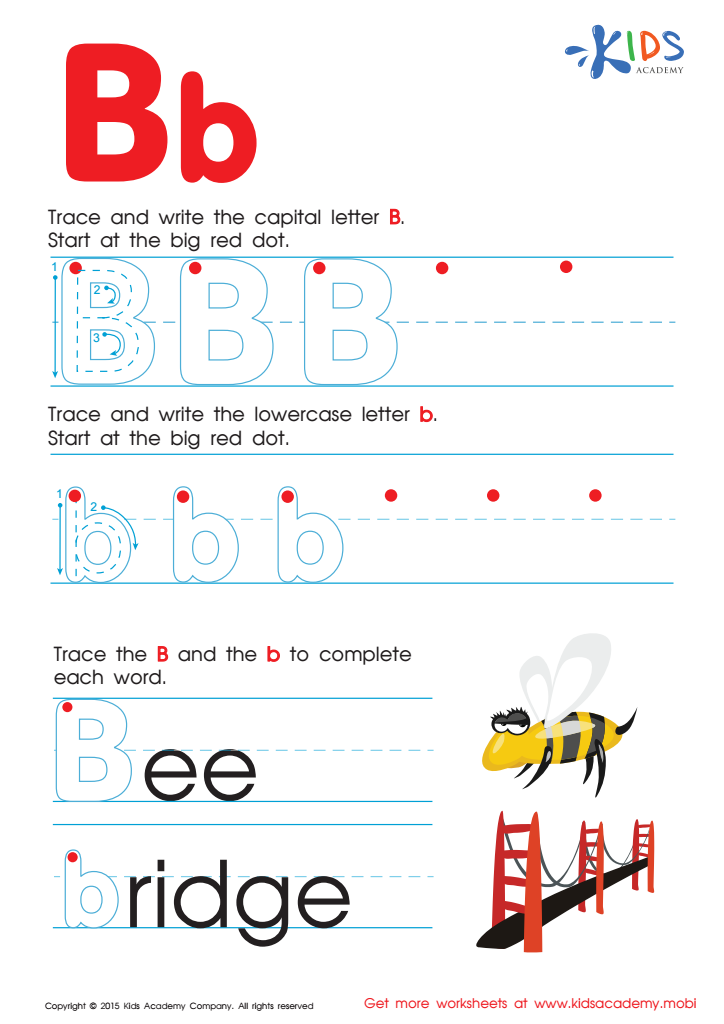
Letter B Tracing Page








Motor skills development and normal letter recognition are crucial for children aged 5-8, and they hold significant importance for both parents and teachers. At this age, children are transitioning into more structured learning environments where foundational skills will influence their academic journey.
Firstly, motor skills, including fine motor skills like writing, directly impact a child's ability to manipulate writing instruments effectively. Mastery of these skills not only boosts their confidence but also enhances their capacity to express ideas clearly through writing, which is vital for literacy development.
Secondly, letter recognition is essential for reading proficiency. Children who can efficiently recognize letters develop stronger reading abilities, paving the way for later comprehension and vocabulary expansion. When children can associate letters with sounds, they begin to blend and decode words, forming a base for their reading skills.
For parents and teachers, understanding the importance of these developmental aspects allows them to provide targeted support and activities that encourage motor skill and letter recognition growth. Early intervention, whether through fun games, structured lessons, or creative activities, fosters both skills effectively, consequently setting children up for future academic success. Engaging with and supporting their development is no small contribution to a child's lifelong learning and confidence.








