Vowel Recognition Normal Letter Recognition Worksheets for Ages 5-8
4 filtered results
-
From - To
Welcome to our engaging Vowel Recognition and Normal Letter Recognition worksheets designed for children ages 5-8! These interactive resources aim to enhance your child's understanding of vowels and letters through exciting activities. Each worksheet encourages young learners to identify and differentiate vowels in the alphabet, building essential reading and writing skills. Perfect for both classroom and home learning, these worksheets are visually appealing and age-appropriate, ensuring a fun and educational experience. Facilitate early literacy development and boost confidence in letter recognition with our thoughtfully crafted materials. Empower your child to explore the wonderful world of language today!
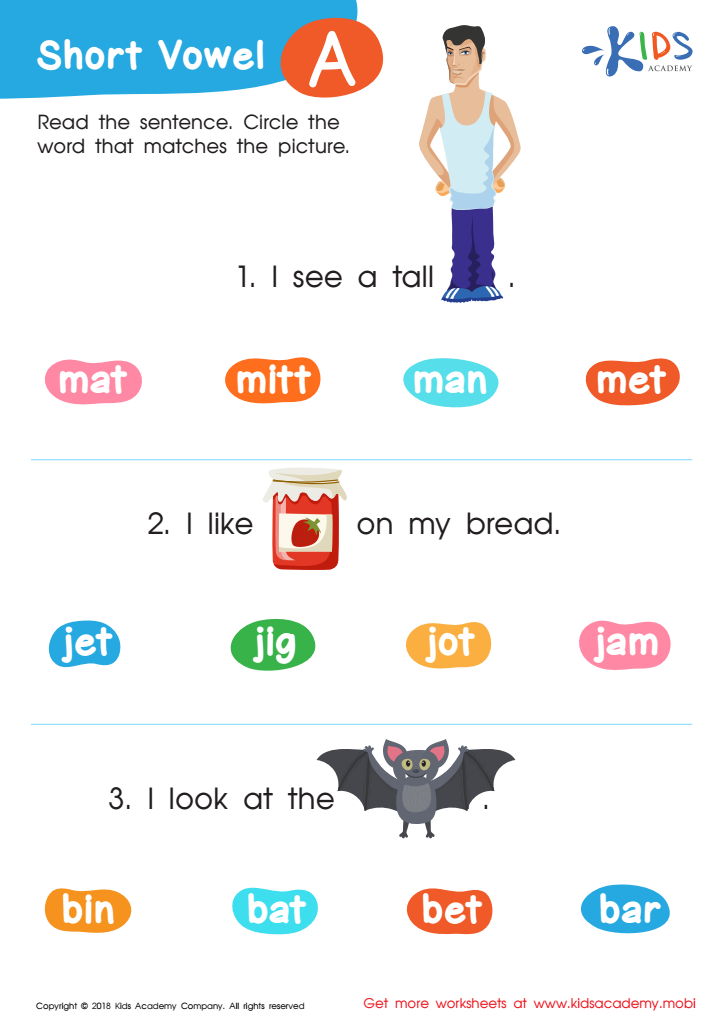
Short Vowel /a/ Worksheet
 Assign to My Students
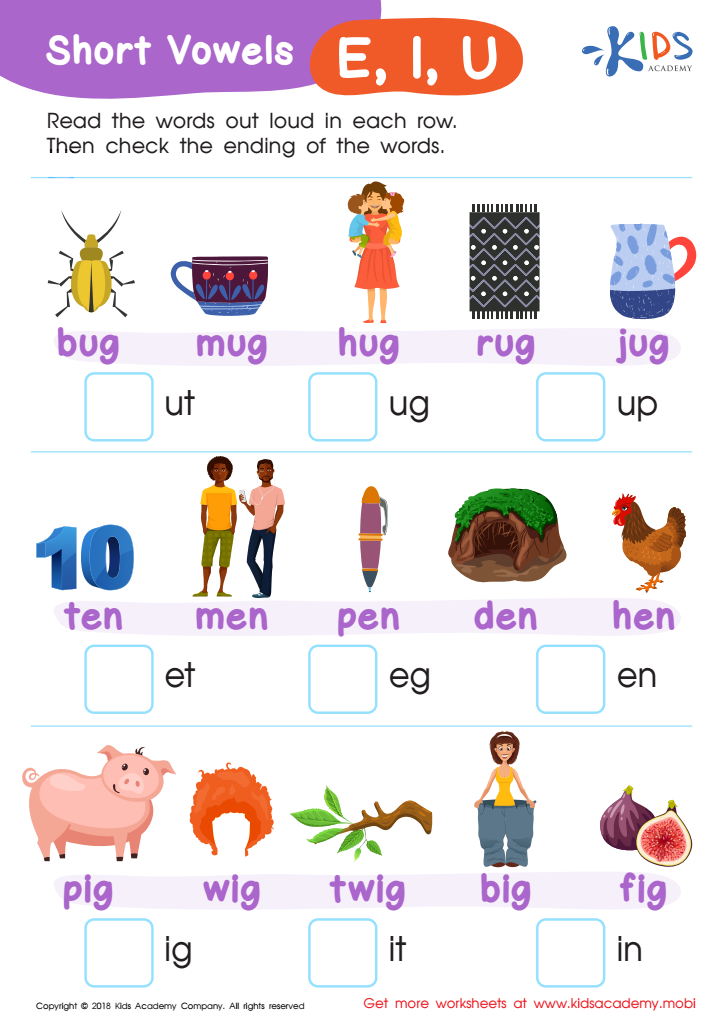
Short Vowels /e/, /i/, and /u/ Worksheet
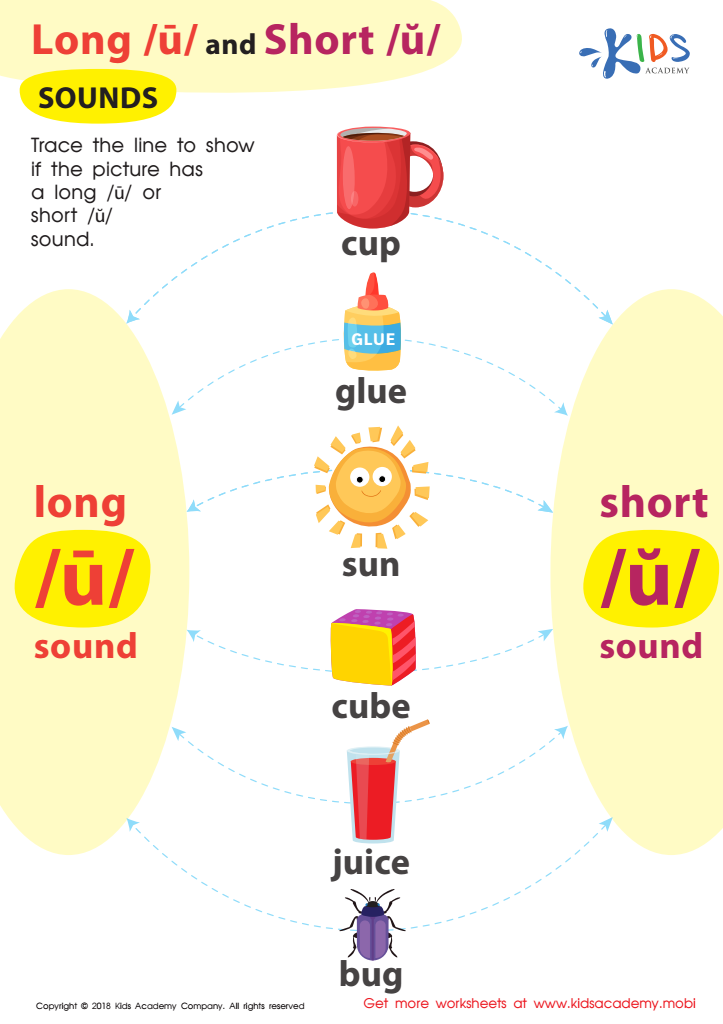
Reading: Long U and Short U Sounds Worksheet
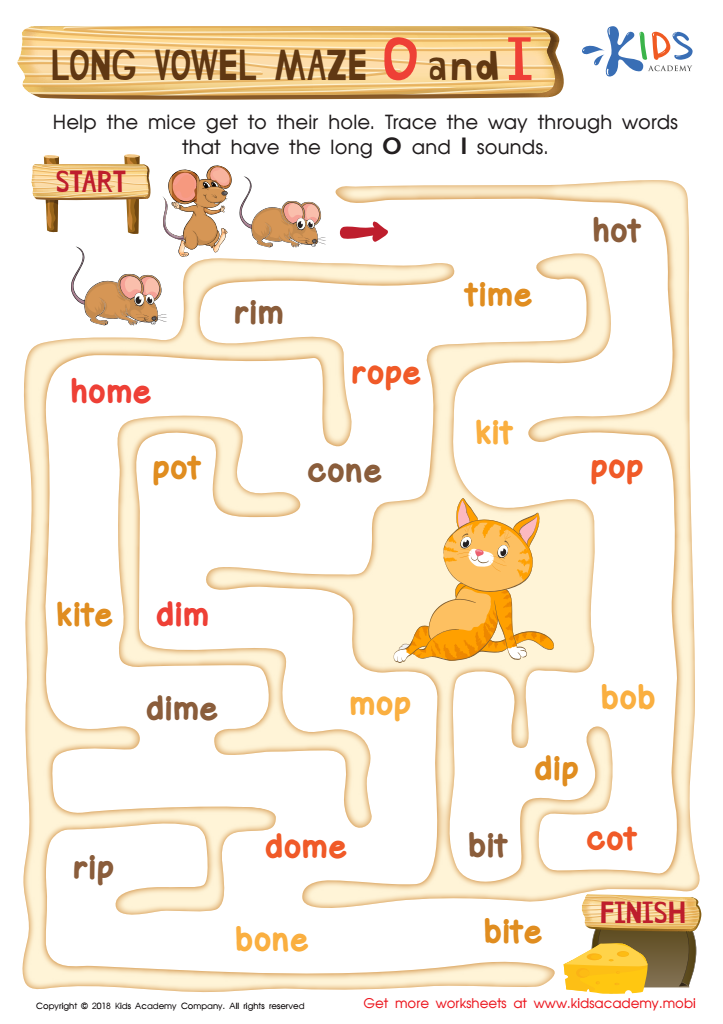
Long Vowel Maze /o/ and /i/ Worksheet








Vowel recognition and letter recognition are foundational skills essential for early literacy development in children aged 5-8. These skills play a critical role in a child’s ability to read and write, which are vital for academic success.
Understanding vowels—particularly the short and long sounds they make—enhances phonemic awareness, enabling children to decode words more effectively. Mastery of vowel sounds assists in distinguishing between different words, facilitating better comprehension. When children grasp vowel recognition, they also develop the confidence to experiment with spelling and writing, fostering their creative expression.
Normal letter recognition complements vowel knowledge by helping children identify individual letters and their corresponding sounds. This recognition is crucial for developing strong reading skills as it allows children to read and spell simple words, laying the groundwork for more complex language skills.
Parents and teachers should care about these skills because early mastery can reduce future reading difficulties and promote a lifelong love of literacy. Early intervention through engaging activities and supportive practices ensures that children meet these milestones, setting them on a path toward academic achievement and better communication skills. Investing in these foundational skills is not just about reading and writing; it’s about cultivating learners who are equipped for success in all areas of life.








