Phonics recognition Normal Letter Sounds Worksheets for Ages 5-8
5 filtered results
-
From - To
Welcome to our engaging collection of Phonics Recognition Normal Letter Sounds Worksheets designed specifically for children ages 5-8! These interactive worksheets provide young learners with a fun and effective way to master letter sounds essential for early reading skills. Each activity is tailored to reinforce phonemic awareness, helping students recognize and differentiate between various letter sounds. With vibrant illustrations and playful exercises, children will enjoy practicing their phonics while building confidence in their reading abilities. Perfect for both classroom use and home learning, our worksheets are a valuable resource for enhancing literacy skills in young learners. Unlock the joy of reading today!
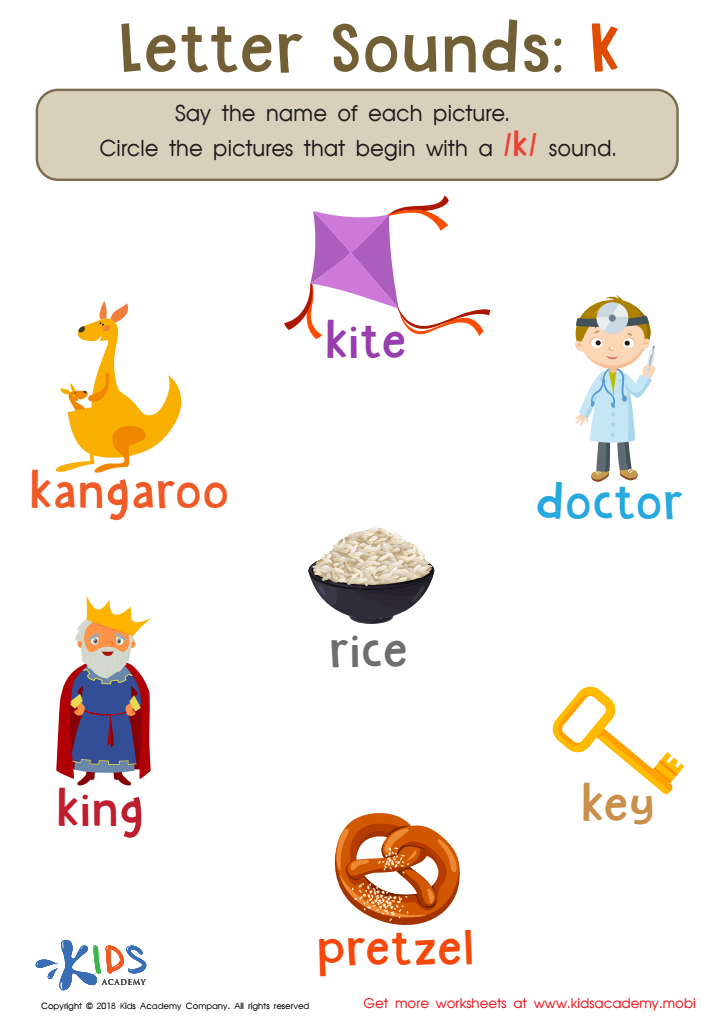
Letter K Sounds Worksheet
 Assign to My Students
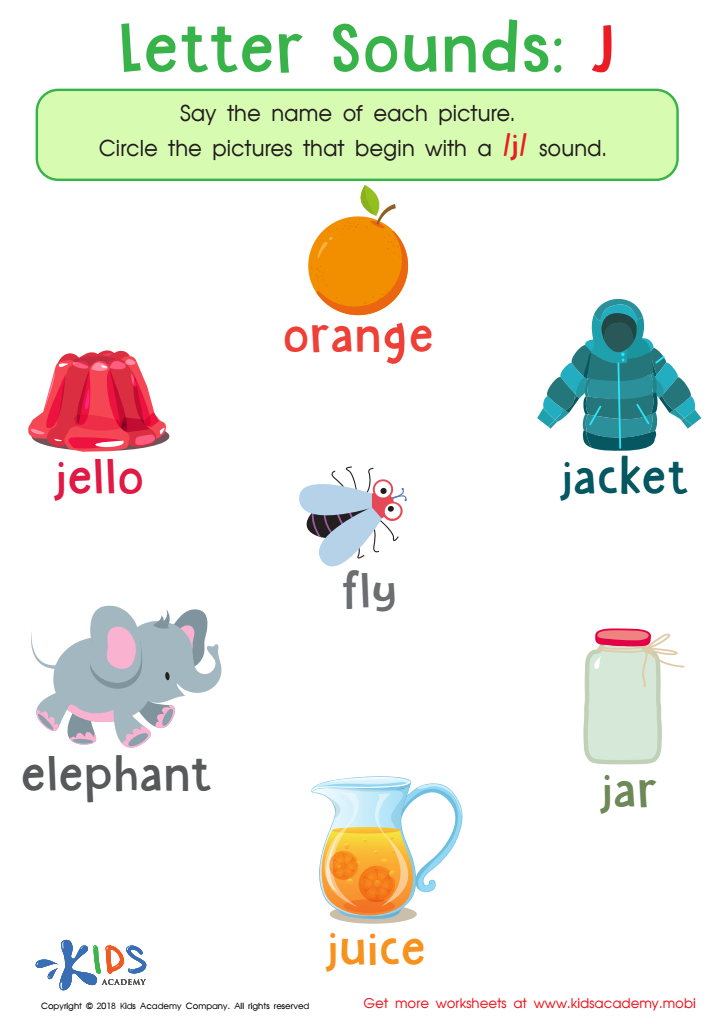
Letter Sounds: J Printable Worksheet
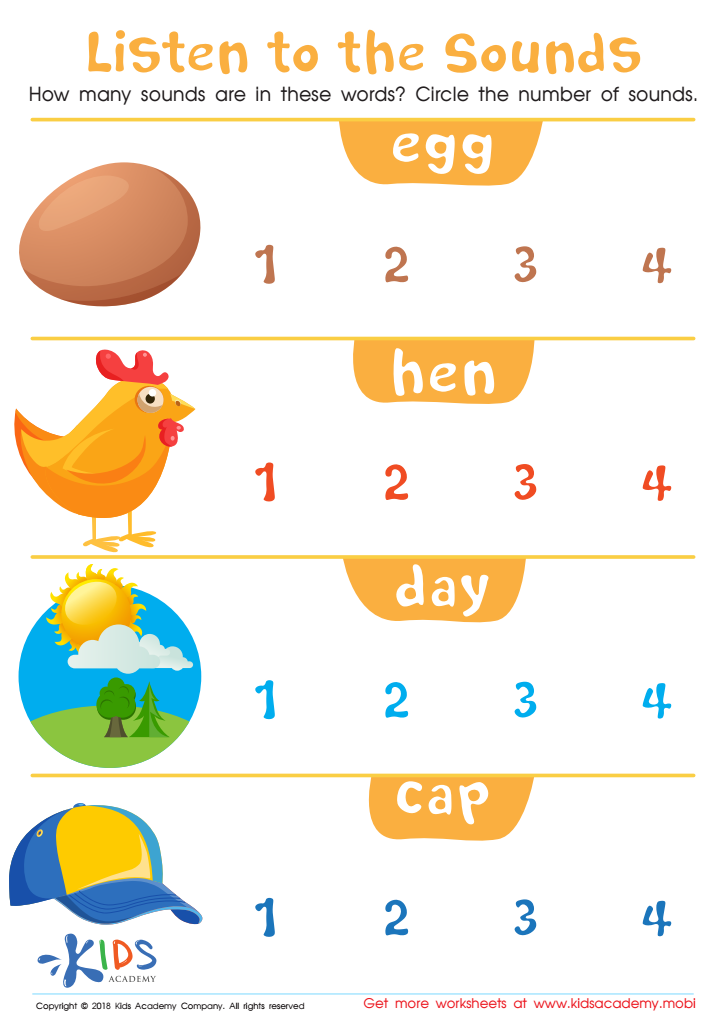
Listen to the Sounds Worksheet
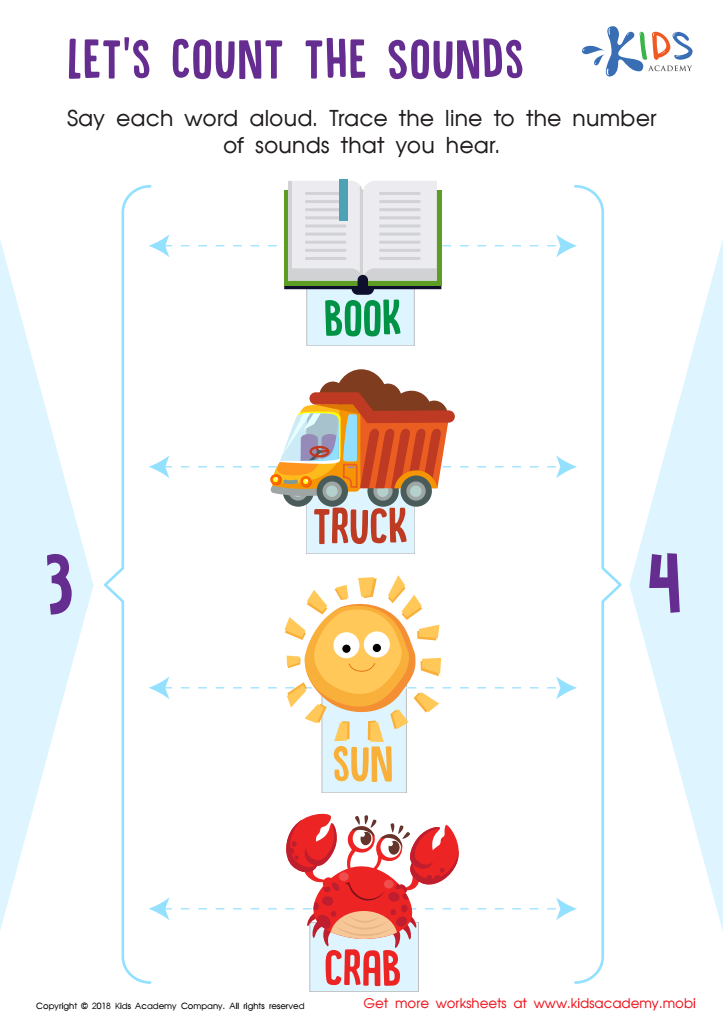
Let's Count the Sounds Worksheet
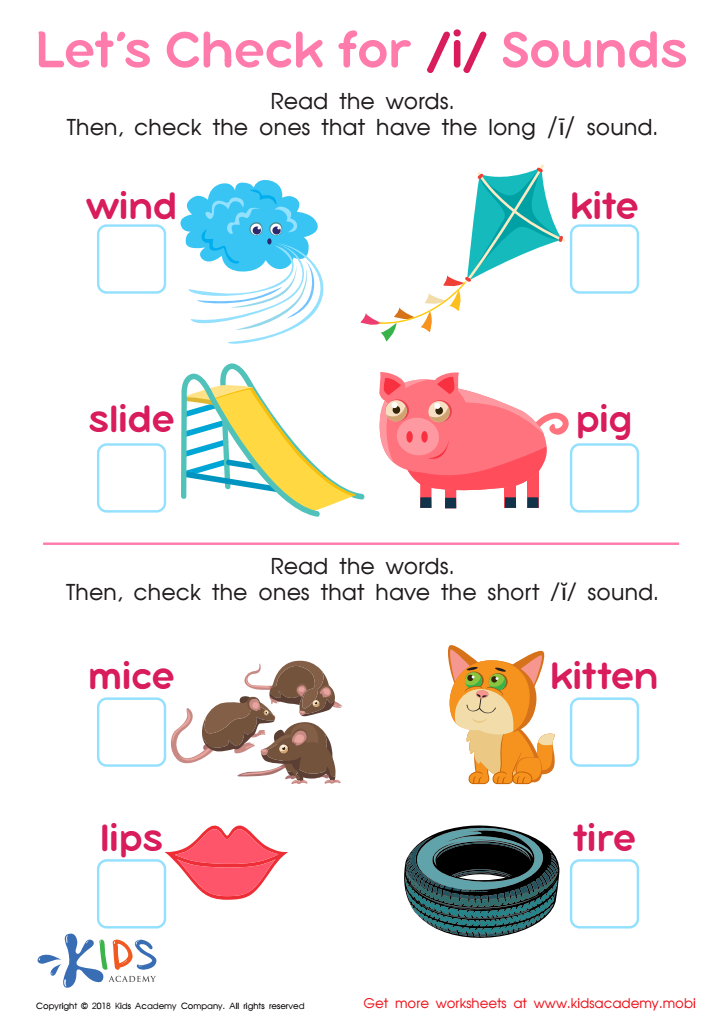
Let's Check for «i» Sounds Worksheet








Phonics recognition, especially normal letter sounds, is fundamental for children aged 5-8 as it lays the groundwork for reading and writing. Understanding letter sounds helps children decode words, which is a crucial skill in early literacy development. Parents and teachers should prioritize phonics because it builds confidence and fluency in reading. As children successfully recognize sounds and blend them into words, they become more enthusiastic about exploring books and engaging with text.
Additionally, phonics instruction fosters critical listening skills, enhancing vocabulary as children learn to associate letters with their corresponding sounds. This skill is not just essential for academic success; it also supports social and emotional development. Children who struggle with reading due to weak phonics skills may experience frustration, impacting their love for learning.
Furthermore, phonics recognition aligns with educational objectives, enabling smoother transitions into more complex literacy tasks. When children grasp phonemic awareness, they are better prepared for spelling, writing, and comprehension, creating a foundation for lifelong literacy. Ultimately, investing in phonics instruction equips children with vital skills necessary for their ongoing educational journey, making it an essential focus for both parents and educators.






