Filters

7 filtered results

Clear all filters
Favorites
With answer key
Interactive

7 filtered results

Difficulty Level

Grade


Discover our engaging Reading Comprehension Normal Rhyming Worksheets designed for children aged 5-8. These worksheets blend literacy skills with the fun of rhyming, making learning enjoyable for young readers. Each activity focuses on enhancing understanding through contextual clues, promoting critical thinking, and expanding vocabulary. With captivating visuals and age-appropriate content, these materials cater to varying learning styles, encouraging children to explore sound patterns while improving their comprehension skills. Perfect for home or classroom use, our worksheets will help your little ones build a strong foundation in reading as they develop a love for language and storytelling. Download and start rhyming today!

Check out this FREE Trial Lesson on Rhyming for age 5-8!

Recognize Words that Rhyme

Favorites
With answer key
Interactive
  • 5-8
  • Reading comprehension
  • Rhyming
  • Normal
Rhyming Words: Assessment Worksheet

Rhyming Words: Assessment Worksheet

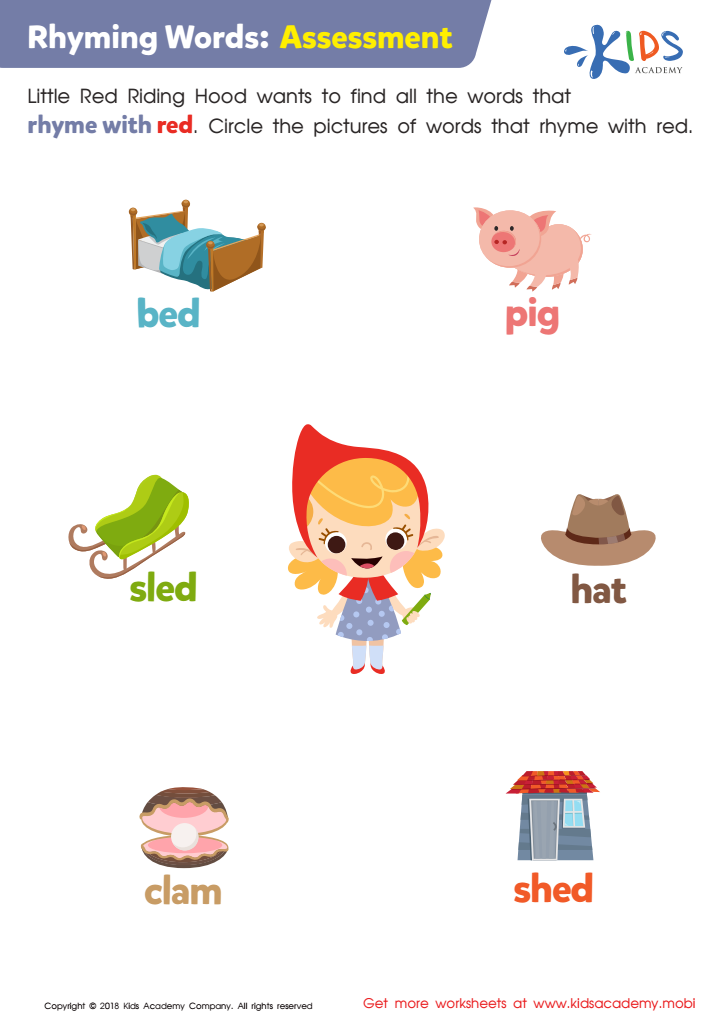
Help Little Red Riding Hood find rhyming words with "red". Download and print this worksheet. Have your child circle the rhyming words and pictures. Get them to say each word out loud and compare it to the word "red". When they're done, review the answers and talk about any words that don't rhyme.
Rhyming Words: Assessment Worksheet
Worksheet
Rhymes in Poems Worksheet

Rhymes in Poems Worksheet

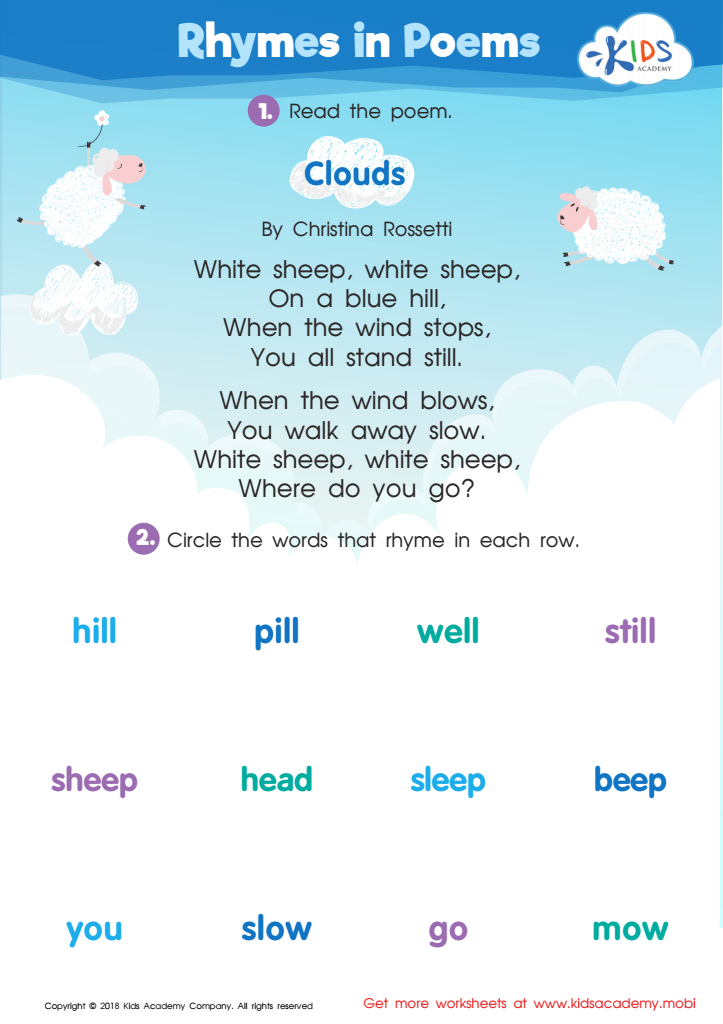
Poems are lovely works of literature; some with rhymes, and some without. This poem for kids is full of rhymes and tells the tale of a sheep. Read it aloud to your kids, then help them circle the rhyming words.
Rhymes in Poems Worksheet
Worksheet
Rhyming Words Worksheet PDF

Rhyming Words Rhyming Worksheet

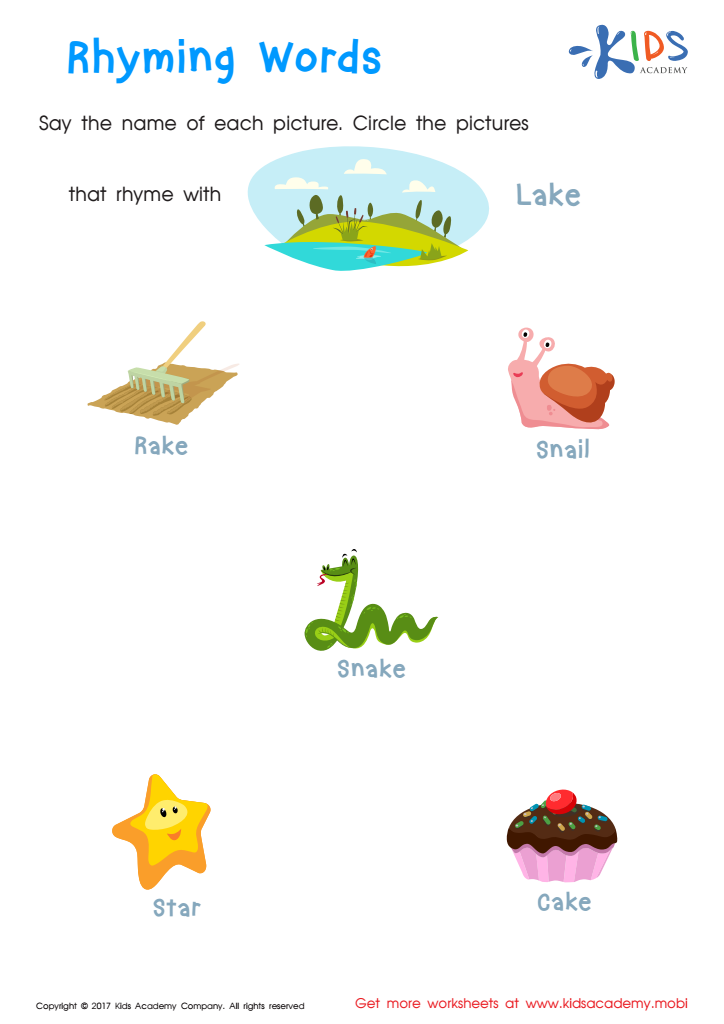
This worksheet is great for honing pre-reading skills. It helps kids make connections between pictures and written words, use problem-solving, and recognize sounds and words that rhyme. Have fun exploring rhyming words with your child, and they'll be rhyming in no time!
Rhyming Words Rhyming Worksheet
Worksheet
Rhyming Bells Worksheet

Rhyming Bells Worksheet

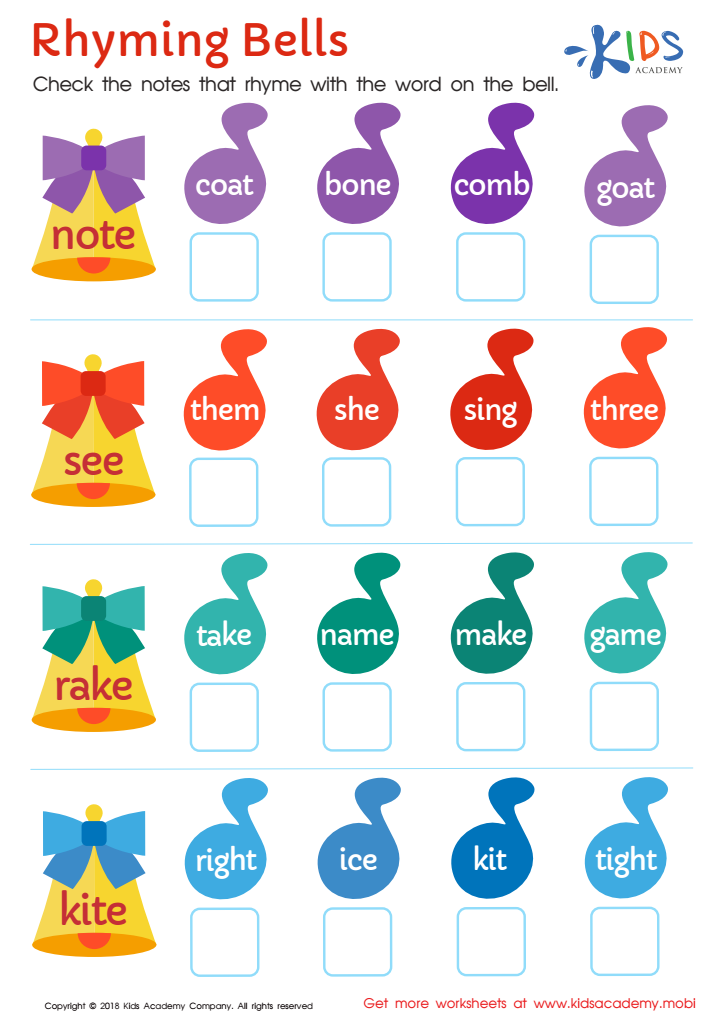
This printable worksheet helps students recognize rhyming words. Read a word, then pick the 4 words that rhyme. Look out for words with different spellings but same ending sound. It's a great exercise to improve understanding of rhyming words.
Rhyming Bells Worksheet
Worksheet
Picture Rhymes Printable

First Words: Picture Rhymes Worksheet
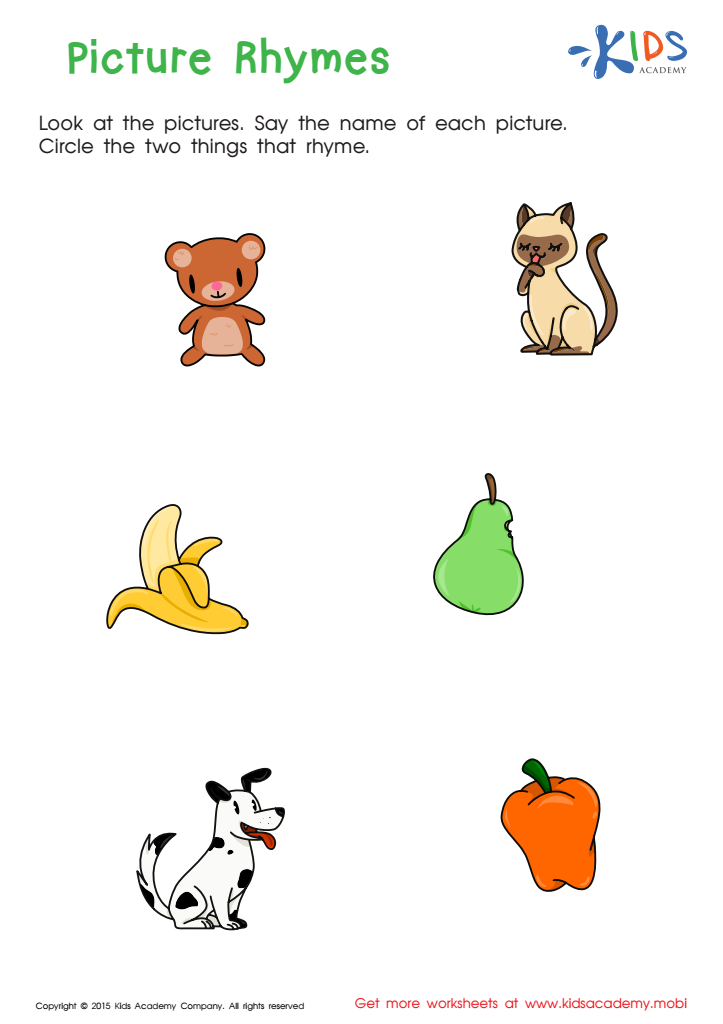
Rhyming helps kids understand language, read and write better. This printable worksheet boosts problem-solving and cognitive skills with vibrant pictures. It teaches kids to identify words, recognize rhymes, complete mental tasks and write words. An extra activity: show them how rhyming words share some of the same letters.
First Words: Picture Rhymes Worksheet
Worksheet
Rhyming Words Worksheet for Kindergarten

Time to Rhyme Rhyming Worksheet

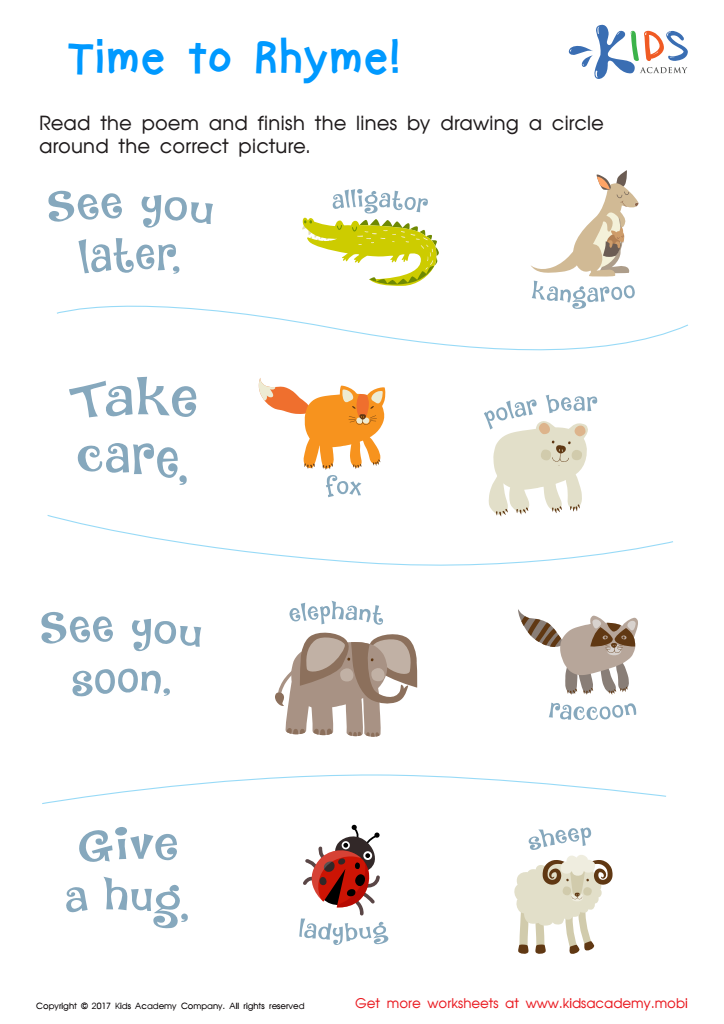
This worksheet helps kids learn catchy sayings with rhymes, notice words and sounds that rhyme, and use problem solving to solve expressions. By using these expressions in everyday talk, kids gain the repetition needed to internalize the skills they've learned. Check out our nursery rhymes to further support them!
Time to Rhyme Rhyming Worksheet
Worksheet
Poem: Cats and Dogs Worksheet


Poem: Cats and Dogs Worksheet

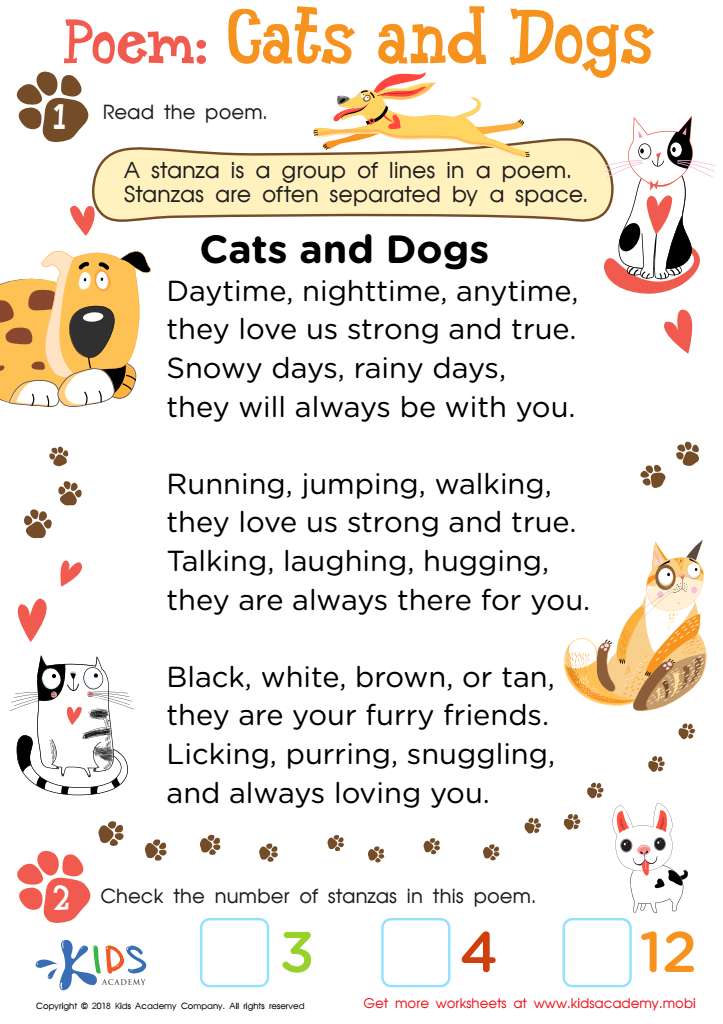
Read the poem to your child and point out where each stanza ends. Ask if they know what a stanza is (if not, explain it's a group of lines in a poem). Help them answer the question at the bottom of the printout. This simple, sweet poem about cats is easy for your child to relate to.
Poem: Cats and Dogs Worksheet
Worksheet


Reading comprehension normal rhyming is crucial for children aged 5 to 8 as it lays a foundation for their literacy skills and overall cognitive development. At this age, children are not only learning to read but are also beginning to read to learn. Engaging with rhyming texts enhances phonemic awareness, helping them recognize and manipulate sounds in words, which is vital for decoding and spelling.

Moreover, rhyming materials often introduce rich vocabulary and rhythmic patterns, making reading more enjoyable and memorable for young learners. This enjoyment fosters a positive attitude towards reading, encouraging further practice and exploration.

Additionally, reading comprehension plays a significant role in critical thinking and analytical skills. When children understand and appreciate the flow of language in rhyming texts, they begin to grasp narrative elements and underlying messages, enhancing their ability to make connections with other texts and experiences.

For parents and teachers, supporting rhyming comprehension isn't only about improving reading skills; it's about enabling children to express themselves creatively and confidently. The social and emotional benefits—fostering collaboration and enjoyment around reading with others—can also nurture a lifelong love for learning. Ultimately, focusing on reading comprehension normal rhyming equips children with essential tools for academic success and personal growth.