Uppercase identification Normal Upper & Lowercase Letters Worksheets for Ages 5-8
5 filtered results
-
From - To
Enhance your child's reading and writing skills with our "Uppercase Identification Normal Upper & Lowercase Letters Worksheets" designed for ages 5-8. These printable worksheets from Kids Academy focus on helping young learners recognize and distinguish between uppercase and lowercase letters. Ideal for early grade students, our engaging activities foster foundational alphabet knowledge, critical for literacy development. With fun visuals and interactive tasks, children will enjoy mastering letter identification while building confidence in their abilities. These worksheets cater to diverse learning styles, making them an excellent tool for home or classroom settings. Start your child's literacy journey today!
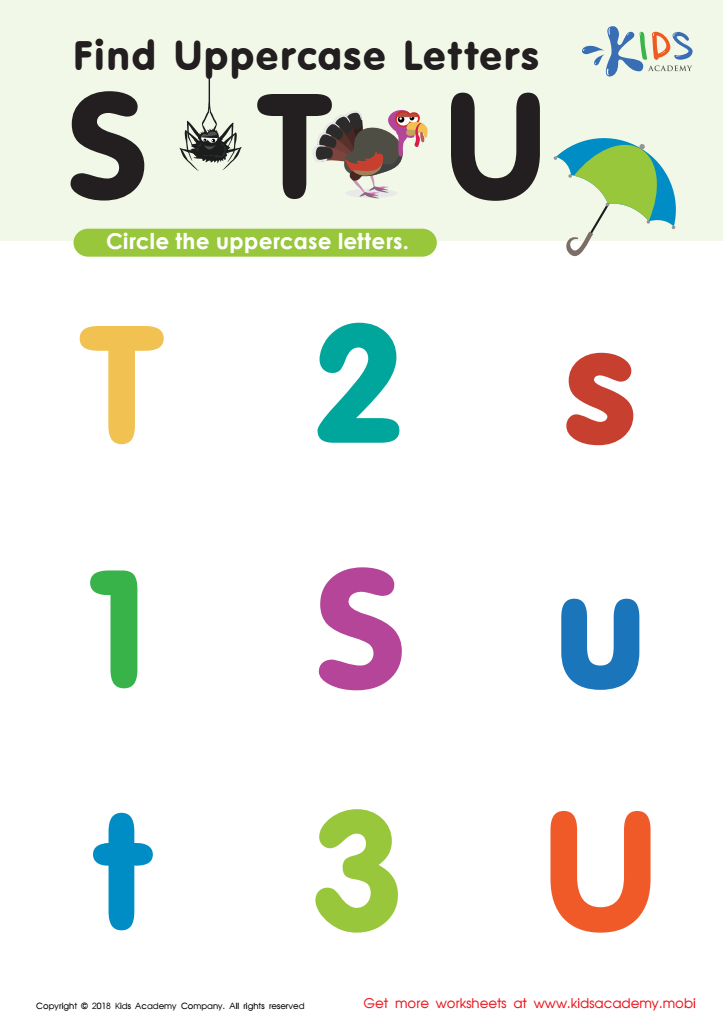
Find Uppercase Letters Worksheet
 Assign to My Students

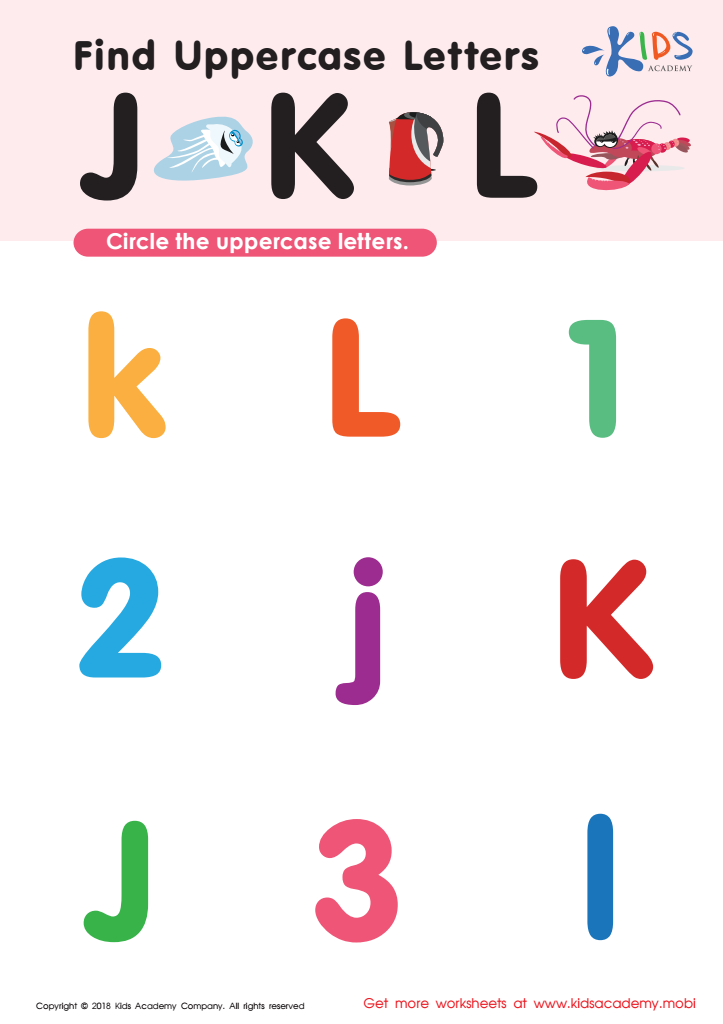
Find Uppercase Letters J, K, and L Worksheet

Find Uppercase Letters A, B, and C Worksheet
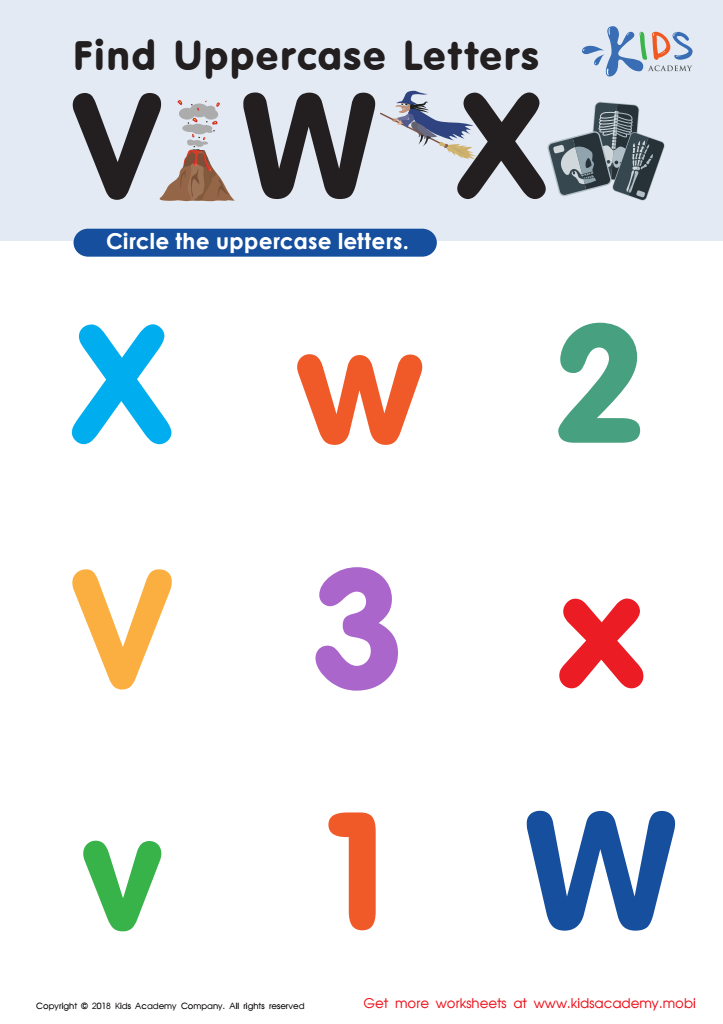
Find Uppercase Letters V, W, X Worksheet
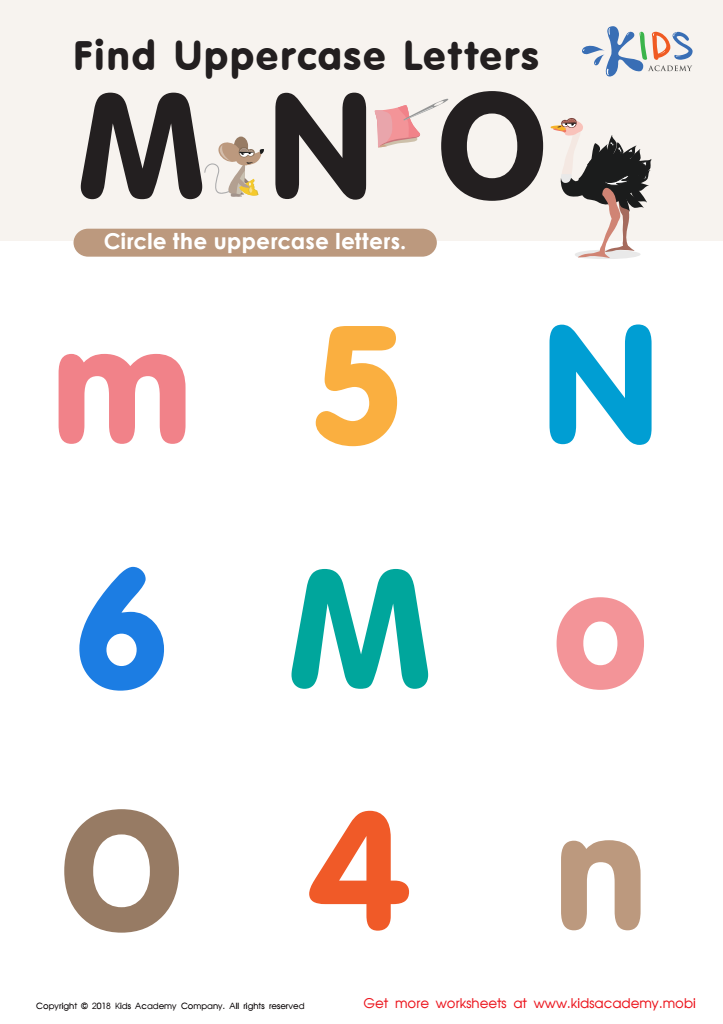
Find Uppercase Letters M, N, and O Worksheet






Uppercase and lowercase letter identification is a pivotal skill for children aged 5-8, forming the bedrock for effective reading and writing. Parents and teachers should prioritize this learning phase as it significantly impacts literacy development. Recognizing both uppercase and lowercase letters ensures that children can seamlessly read and comprehend text, bridging the gap between familiar uppercase letters often found in early reading materials and the more prevalent lowercase letters in everyday written language.
Developing this skill enhances a child's phonemic awareness, facilitating the connection between spoken sounds and their written representation. This understanding is crucial for decoding new words and developing fluency, which are foundational capabilities for academic success and comprehension in all subjects.
Moreover, mastering uppercase and lowercase letter identification can boost a child's confidence and self-esteem. Proficiency in this area not only eradicates frustration during reading but also empowers children to express themselves clearly in writing, aiding their communication skills.
Early intervention by parents and teachers can ensure that children grasp these concepts through engaging activities, games, and consistent practice. This holistic support fosters an enthusiastic attitude toward reading and writing, nurturing a child’s lifelong love for learning and equipping them with practical, fundamental skills for future educational pursuits.







