Hand-eye Coordination Normal English for Beginners Worksheets for Ages 5-8
9 filtered results
Difficulty Level
Grade
Age
-
From - To
Subject
Activity
Standards
Introduce your child to the essential skill of hand-eye coordination with our engaging Normal English for Beginners Worksheets for Ages 5-8. These carefully designed worksheets help young learners improve their English language skills while practicing proper hand-eye coordination. Packed with fun activities, these worksheets incorporate interactive tasks like tracing, cutting, and matching to enhance fine motor skills and cognitive development. Perfect for ESL students, each exercise supports language acquisition through captivating visuals and straightforward instructions. Build a strong foundation in both English and motor skills with these effective, educator-approved resources. Start their learning journey today!
Favorites
With answer key
Interactive
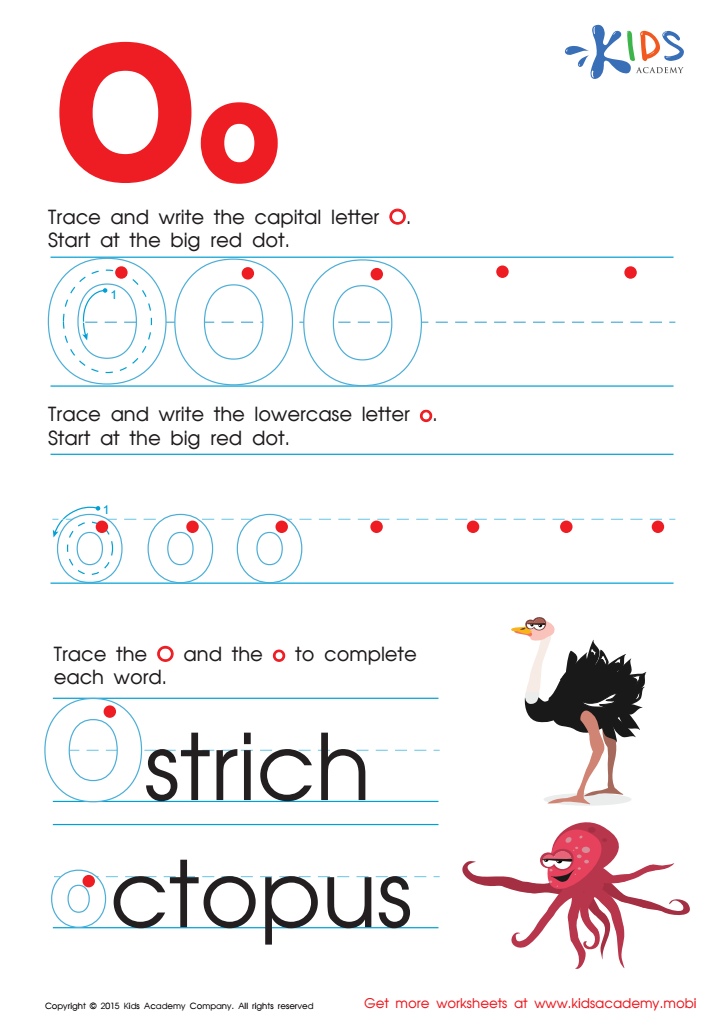
Letter O Tracing Page
Practice writing the letter "O" with our new worksheet. Trace and write the letter several times, starting at the red dot. First do the uppercase letter, then the lowercase. Use the pictures to complete the words "Ostrich" and "octopus". Kids Academy offers more fun alphabet worksheets.
Letter O Tracing Page
Worksheet
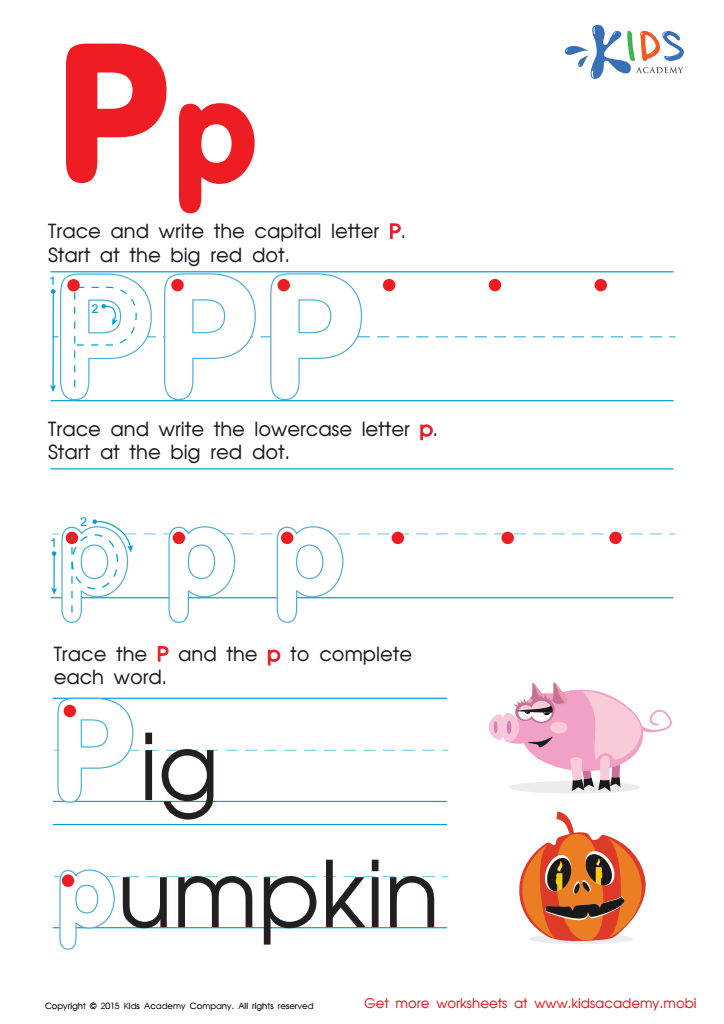
Letter P Tracing Page
Trace the lines from the red dot to learn to write "P"! Then practice this letter with the fun activities: complete the word "Pig" and "Pumpkin". Check out Kids Academy to get more free ABC worksheets.
Letter P Tracing Page
Worksheet
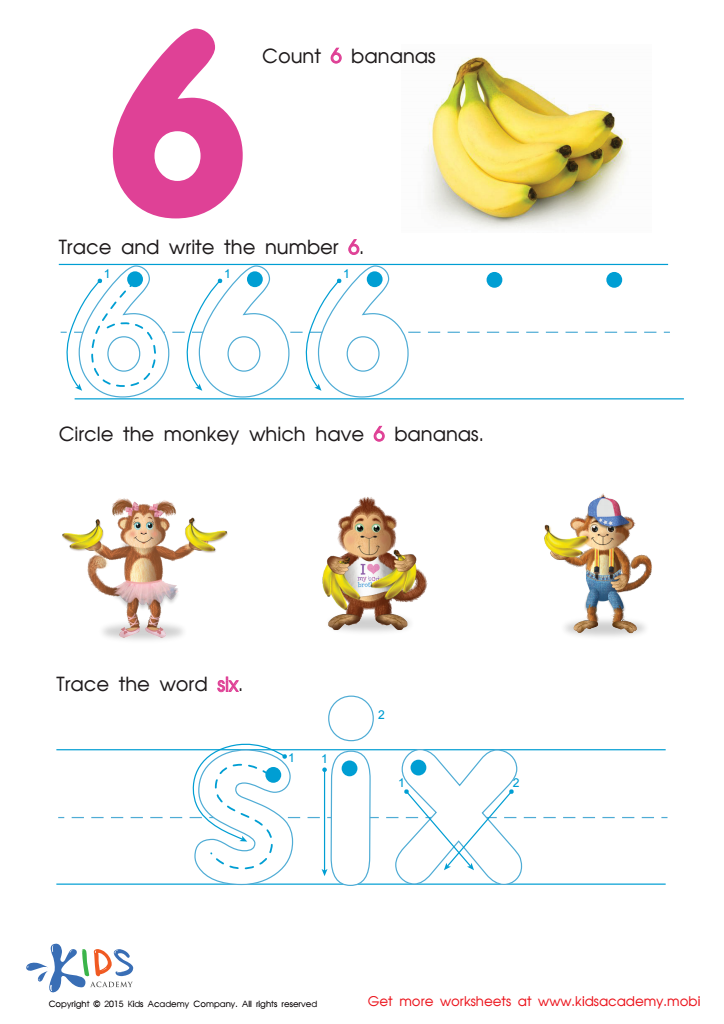
Tracing And Writing Number 6 Worksheet
Learn numbers in a fun way with our preschool number worksheets. Count six bananas, trace and write the number, find the monkey with six bananas, and trace the word "six." Explore more activities at Kids Academy.
Tracing And Writing Number 6 Worksheet
Worksheet
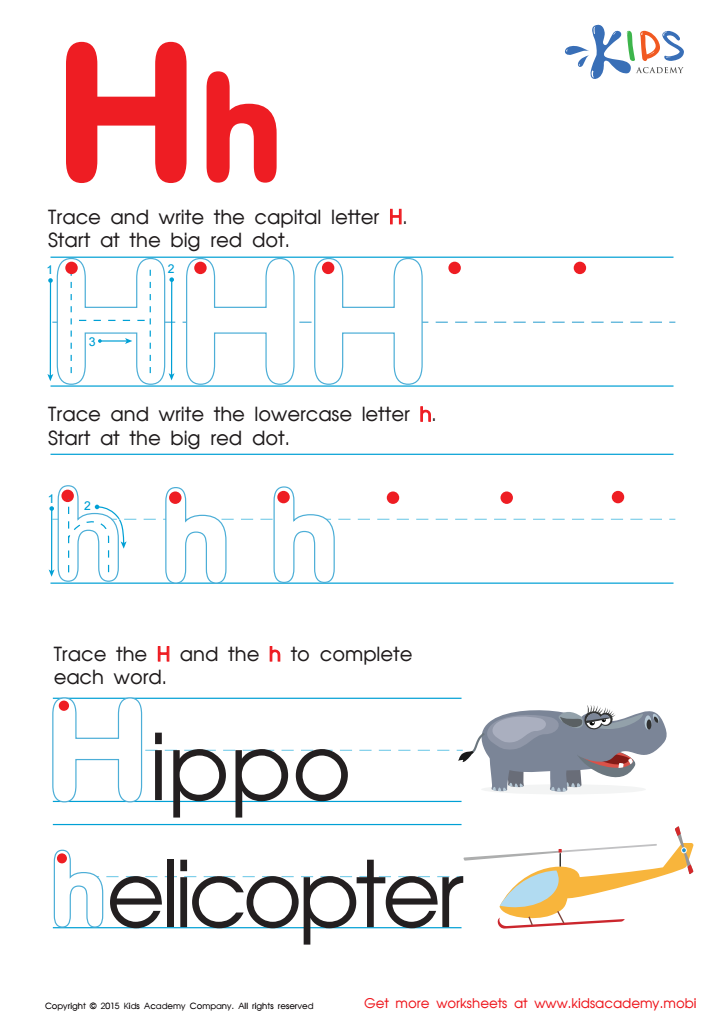
Letter H Tracing Page
Trace the letter "H", then practice writing its lowercase form. Finally, choose your favorite form of transport and ride away! Get our worksheets to make learning fun and easy.
Letter H Tracing Page
Worksheet

Long and Short U Worksheet
Revised: Spice up your lesson on long and short vowels with this fun printout! Kids read the words "tube" and "tub," then reinforce the sound by coloring in the words and pictures. It's a great way to make phonics class enjoyable!
Download (PDF)
 Assign to My Students
Assign to My Students
Long and Short U Worksheet
Worksheet
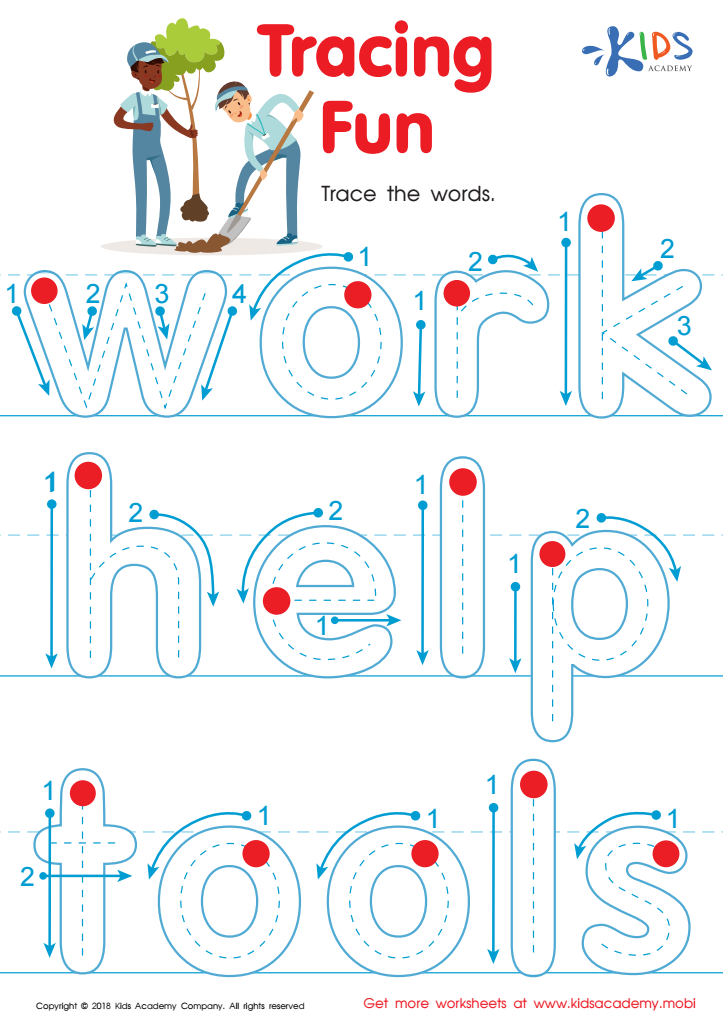
Tracing Fun Worksheet
Believe it or not, good handwriting helps with reading! Starting at the top left and writing legibly builds reading skills. This free worksheet helps little learners practice basic sight words. Red dots show them where to start and the words provide reinforcement without them realising. An enjoyable way to boost their reading and writing.
Tracing Fun Worksheet
Worksheet
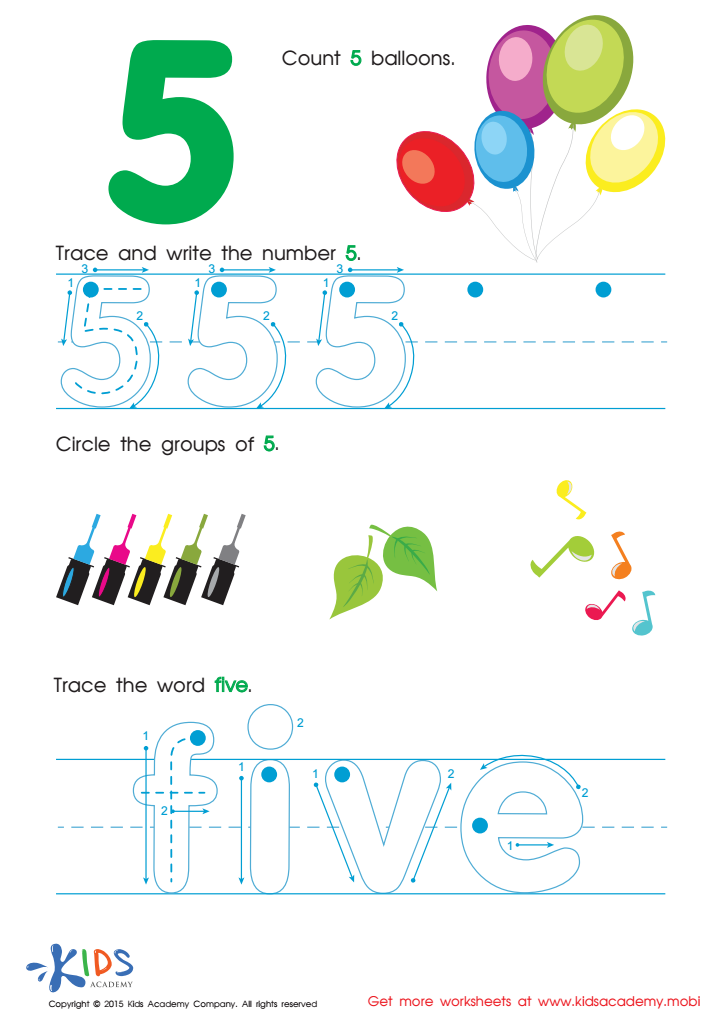
Practice Writing Number 5 Worksheet
Make learning numbers fun! Let your kids count the balloons, trace numbers, and circle the groups with five items. Also, have them trace the word "five" for letter revision. Get the full collection of preschool number worksheets from Kids Academy for a fun and interactive learning experience.
Practice Writing Number 5 Worksheet
Worksheet
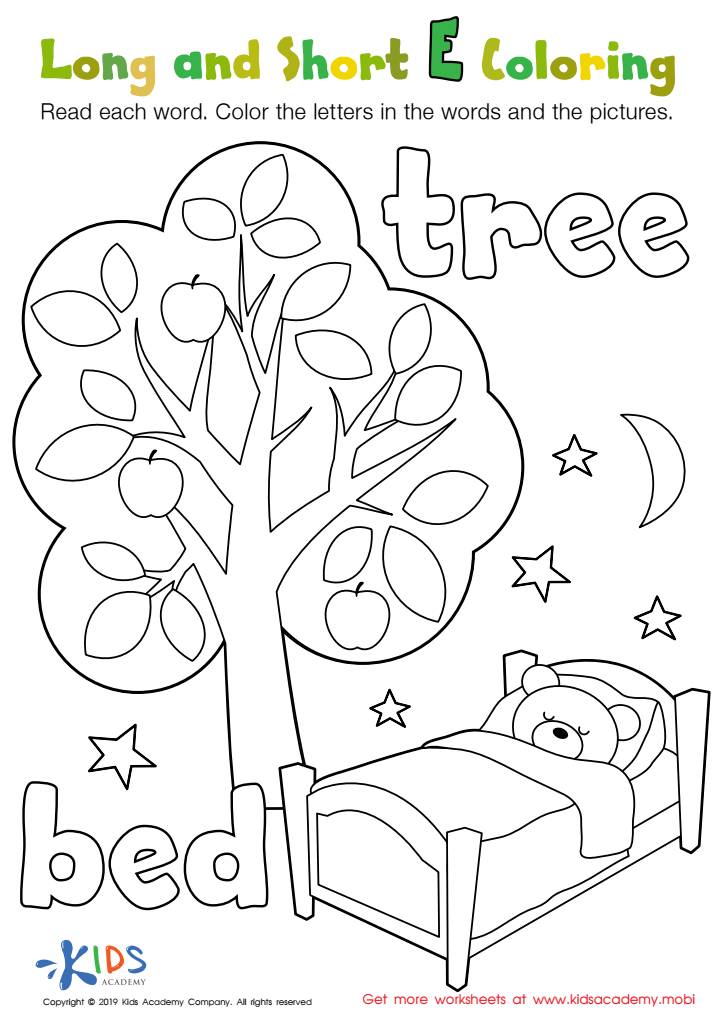
Long and Short E Worksheet
This fun printout makes learning phonics enjoyable for Grade 3 students. Get them to read the words “tree” and “bed” to recognize the different sounds of the letter “E”. After hearing the words they can color the words and the pictures to understand differences between long and short vowels.
Download (PDF)
Assign to My Students
Assign to My Students
Long and Short E Worksheet
Worksheet

Letter D Tracing Page
Trace and write capital and lowercase letter "D" with our free printable alphabet worksheet! Be careful not to mix up "b" and "d" - just look at the ducks and write their first letter. The dolphin wants to join the fun too - do you like dolphins? Get more fun worksheets and activities at Kids Academy!
Letter D Tracing Page
Worksheet
Join Kids Academy for Free
Who is primarily going to use this learning content?




Hand-eye coordination means the ability to do activities that require our hands and eyes to work together. It's crucial for young children, especially those between the ages of 5-8, because it forms the base for many everyday skills. Parents and teachers should care about it for several reasons.
First, good hand-eye coordination helps children succeed in school activities. From writing and drawing to cutting with scissors and even playing musical instruments, many classroom tasks depend on this skill. Children who develop strong hand-eye coordination can complete these activities more easily, which can boost their confidence and make learning more enjoyable.
Second, it also plays a big role in physical activities and sports. Throwing a ball, catching, swimming, and even riding a bike all require it. Kids who lack this skill might find these activities challenging, which can make them less eager to participate in playground games and sports, potentially impacting their physical fitness and social interactions.
Lastly, hand-eye coordination is essential for daily life skills like tying shoelaces, buttoning shirts, and even brushing teeth. Strong development of this coordination during early years ensures that kids become more independent and capable in their daily routines. Thus, parents and teachers should pay attention and encourage activities that build hand-eye coordination.