
Phonics Skills Normal Building Vocabulary Worksheets for Ages 5-8
5 filtered results
Difficulty Level
Grade
Age
-
From - To
Subject
Activity
Standards
Enhance your child's reading abilities with our Phonics Skills Normal Building Vocabulary Worksheets, designed specifically for ages 5-8. These engaging and interactive worksheets help young learners develop essential phonics skills while expanding their vocabulary. Each worksheet promotes letter recognition, sound association, and word formation through fun activities and exercises. Ideal for both home and classroom use, these resources ensure that children master foundational literacy concepts while fostering a love for reading. Our user-friendly format makes it easy for parents and educators to track progress and encourage skill retention. Set your child on the path to reading success with our phonics-focused worksheets!
Favorites
With answer key
Interactive
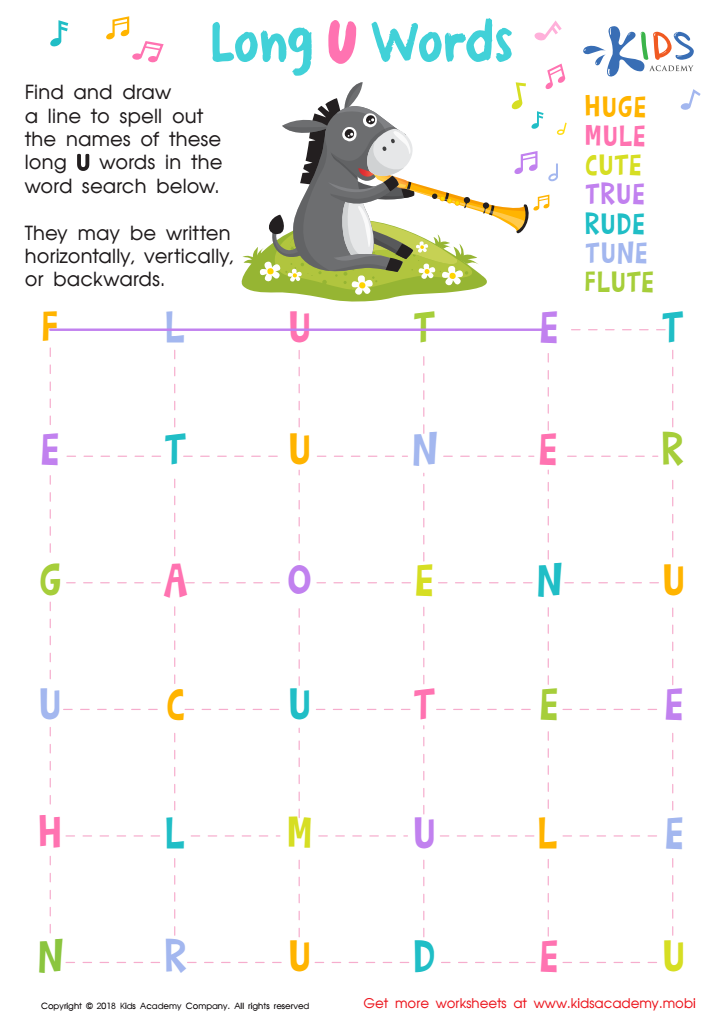
Long /u/ Words Worksheet
Your child needs to learn phonetics to enunciate and differentiate words. This fun worksheet encourages them to find and draw lines connecting the long 'U' words in the word search. Help them read the words on the right side of the picture, then look for them in the word search (horizontally, backwards or vertically).
 Assign to My Students
Long /u/ Words Worksheet
Worksheet











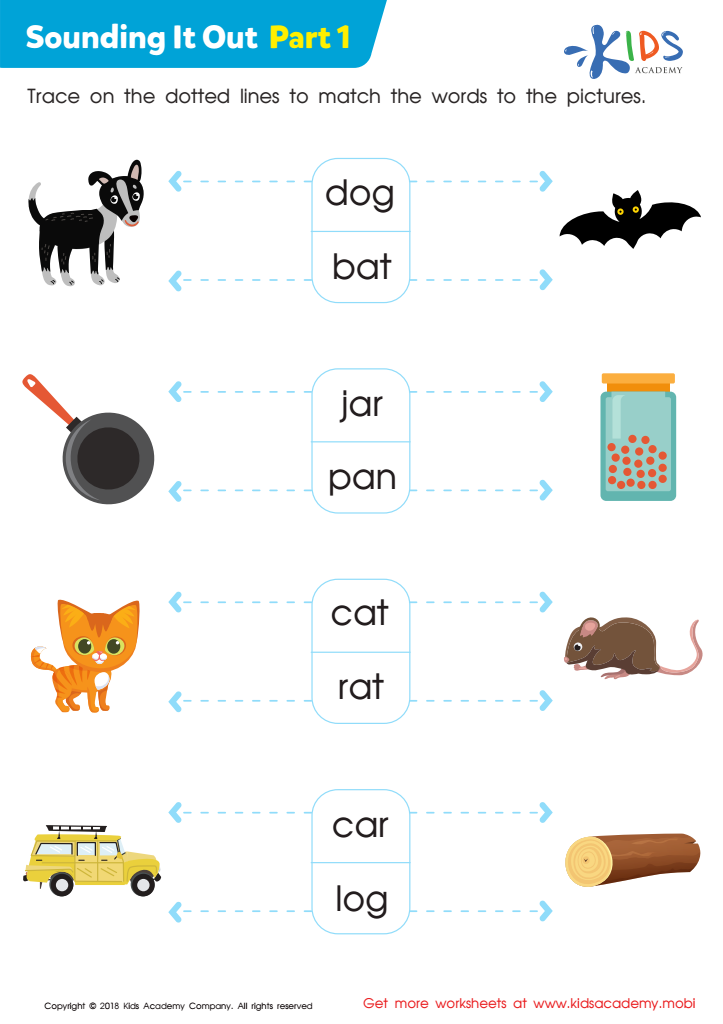
Sounding it Out: Part 1 Worksheet
Help kids learn to read with this fun worksheet! Kids use picture clues to sound out words and trace the dotted lines to match each word to its corresponding image. Stimulating and interactive, this printable is a great way for little learners to practice phonics.
Sounding it Out: Part 1 Worksheet
Worksheet
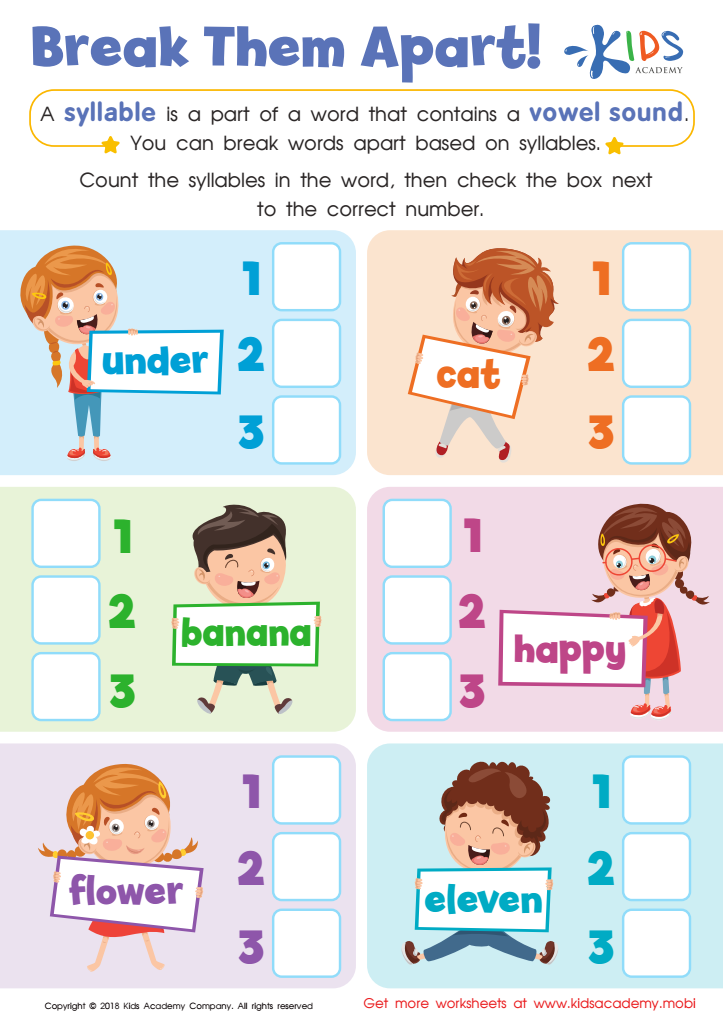
Reading: Break Them Apart Worksheet
See if students understand syllables with this fun worksheet. It teaches them that a syllable is a word part with a vowel sound. Kids read each word and choose how many parts it has. Doing this often helps them decode new words and gain confidence.
Reading: Break Them Apart Worksheet
Worksheet
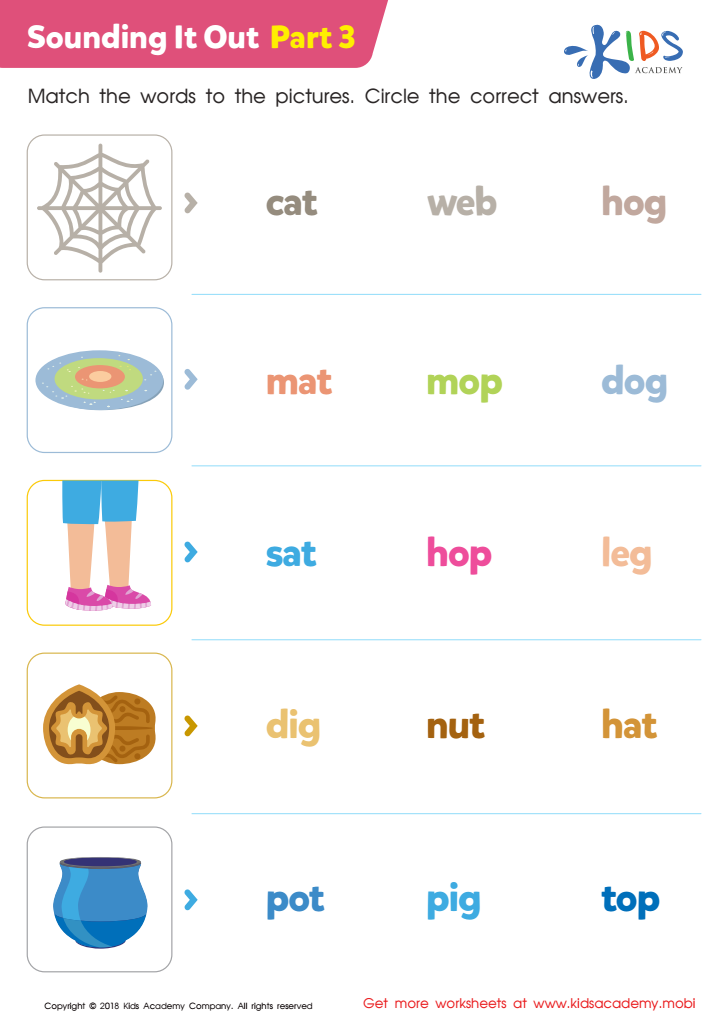
Sounding it Out: Part 3 Worksheet
Once Parts 1 and 2 are complete, this printable phonics worksheet will help kids take their reading skills to the next level! As they gain confidence, give them hints less often and direct their attention to three words in a row. Ask them to read and circle the correct word to complete!
Sounding it Out: Part 3 Worksheet
Worksheet
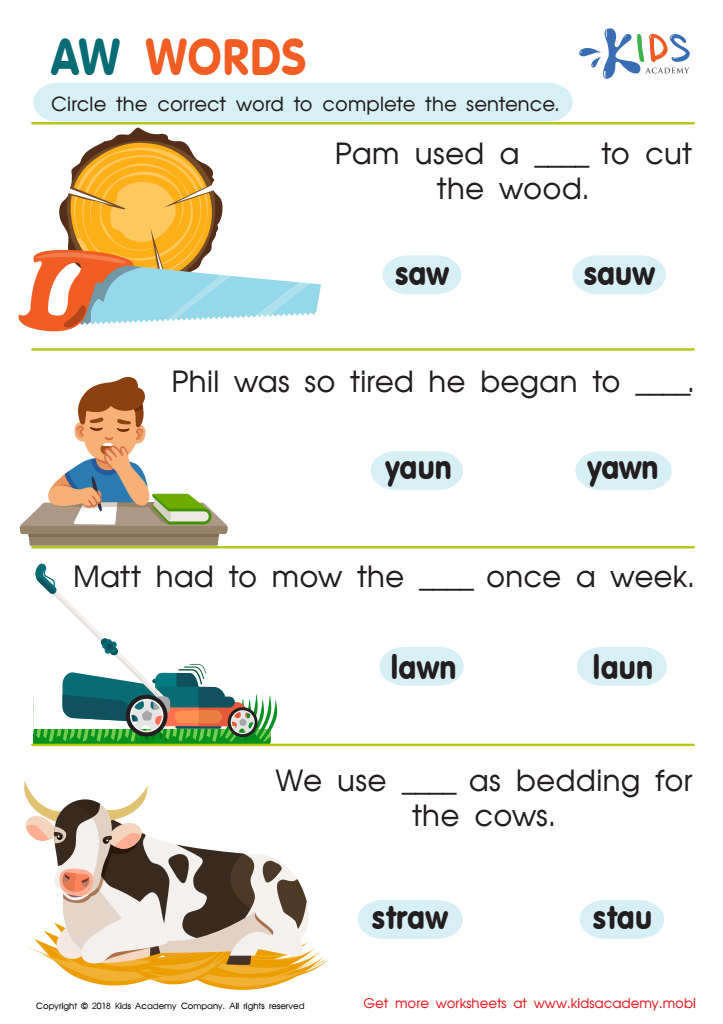
Reading: AW Words Worksheet
Practice decoding the /aw/ digraph with this printable. Students read sentences and select the word with the correct spelling to complete each one. Note, /aw/ is sometimes spelled /au/, so this worksheet helps prevent confusion. Have fun, and practice hard!
Reading: AW Words Worksheet
Worksheet
Join Kids Academy for Free
Who is primarily going to use this learning content?




.jpg)



Parents and teachers play a crucial role in developing phonics skills and building vocabulary for children aged 5-8, as these are foundational components of early literacy. Phonics, the relationship between sounds and letters, helps children decipher words, fostering reading fluency and comprehension. Children equipped with solid phonics skills can tackle new words with confidence, which is vital for academic success and lifelong learning.
Building vocabulary is equally important; as children learn new words, their ability to express themselves and understand cues from spoken and written language improves. A rich vocabulary enhances communication skills, enabling children to articulate thoughts and emotions effectively.
Moreover, early mastery of phonics and vocabulary strengthens critical thinking skills by providing children the tools to make connections between concepts. Engaging children in phonics and vocabulary-focused activities, such as reading together or playing word games, promotes a love of reading that can last a lifetime.
Ultimately, investing time and resources in these linguistic skills leads to better literacy outcomes, improved academic performance, and increased self-esteem. Therefore, prioritizing phonics and vocabulary development for children ages 5-8 is an essential responsibility for both parents and educators, shaping confident readers and communicators for future success.








