Reading skills development Normal Building Vocabulary Worksheets for Ages 5-8
3 filtered results
-
From - To
Enhance your child's reading journey with our Building Vocabulary Worksheets for ages 5-8. Perfectly designed to develop critical reading skills, these worksheets cover diverse topics that engage young learners. Each activity is crafted to expand vocabulary, improve comprehension, and boost confidence. Through fun-filled exercises, children will recognize new words, understand meanings, and use them contextually in sentences. Ideal for both classroom and homeschooling environments, these resources help lay a strong foundation for reading proficiency. Download our worksheets and watch your child thrive in their reading abilities, transforming learning into an exciting adventure.
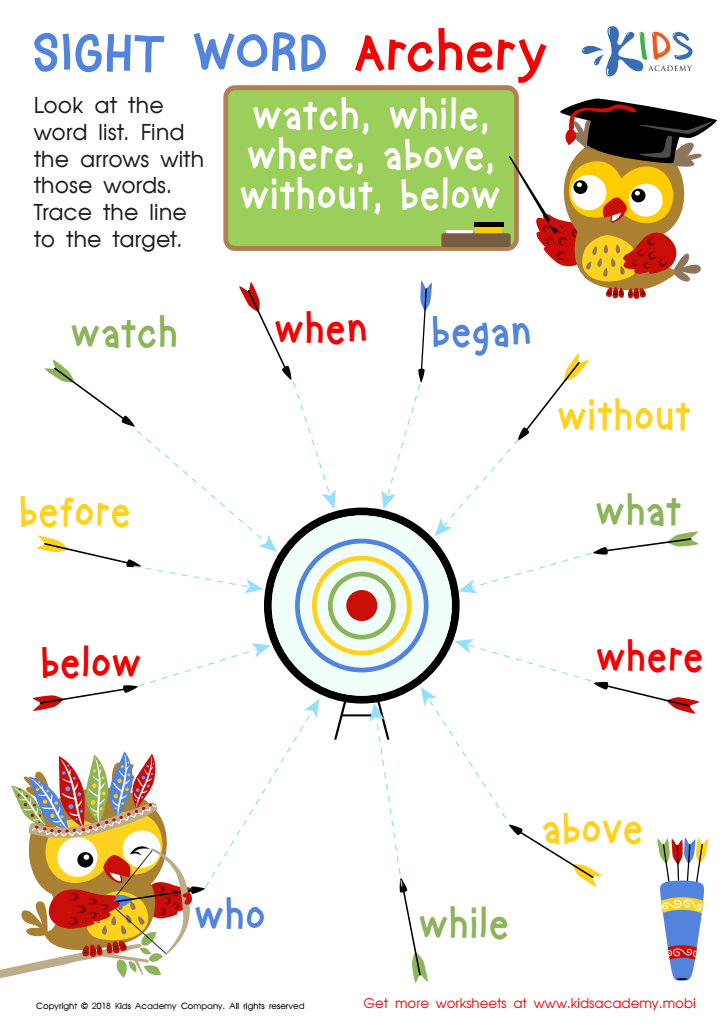
Sight Word Archery Worksheet
 Assign to My Students











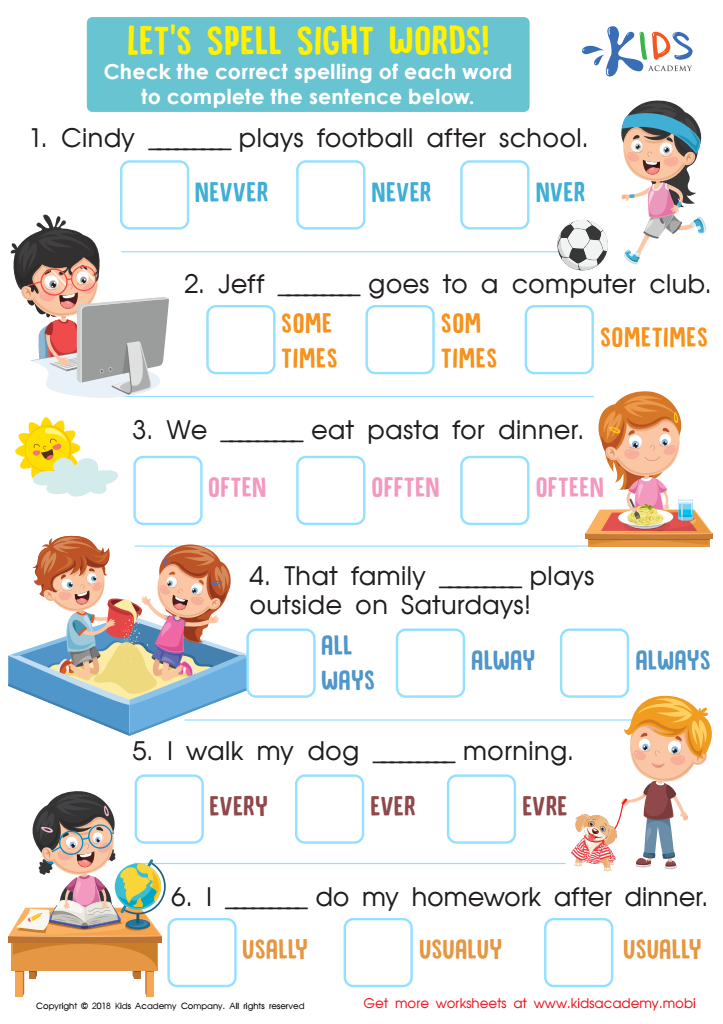
Let's Spell Sight Words Worksheet
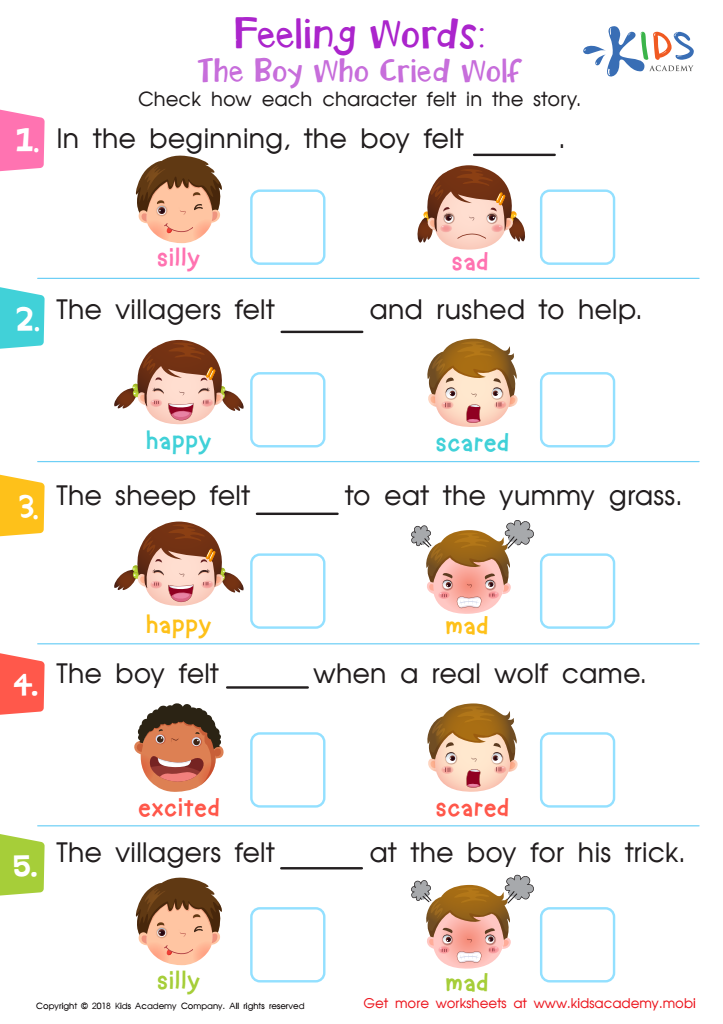
Feeling Words: The Boy Who Cried Wolf Worksheet








Early reading skills form the bedrock of a child's educational journey, making the development of strong vocabulary and reading habits crucial between the ages of 5-8. During these formative years, the brain is exceptionally receptive to learning, and kids are introduced to phonics, word recognition, and the basic grammar that will support their language proficiency.
Strengthening vocabulary at this stage does more than just help children read. It enriches their ability to express thoughts, understand others, and engage with the world. By expanding their word bank, children can comprehend and process more complex ideas, fostering cognitive development. This skill also links directly to academic achievement across subjects, as reading comprehension plays a key role in understanding sciences, math problems, social studies, and instructions.
As parents and teachers, prioritizing reading development during this critical period also encourages a lifelong love of learning. Interactive reading sessions, educational games, and positive reinforcement create a supportive environment that builds confidence. When children associate reading with fun and accomplishment, they’re more likely to continue improving these skills independently. In essence, focusing on reading and vocabulary in early grades equips children with the tools they need for future success, both academically and socially.








