Understanding suffixes Normal Building Vocabulary Worksheets for Ages 5-8
3 filtered results
-
From - To
Unlock your child's reading potential with our "Understanding Suffixes: Building Vocabulary" worksheets, designed for ages 5-8. These engaging resources help young learners grasp the concept of suffixes, an essential skill in vocabulary development. With fun activities and carefully crafted exercises, kids will learn how adding suffixes changes word meanings and discover new words as they play. Perfect for classrooms or at-home practice, these worksheets support reading comprehension and language skills. Visit Kids Academy today to explore our collection and give your child the tools they need for a strong vocabulary foundation.
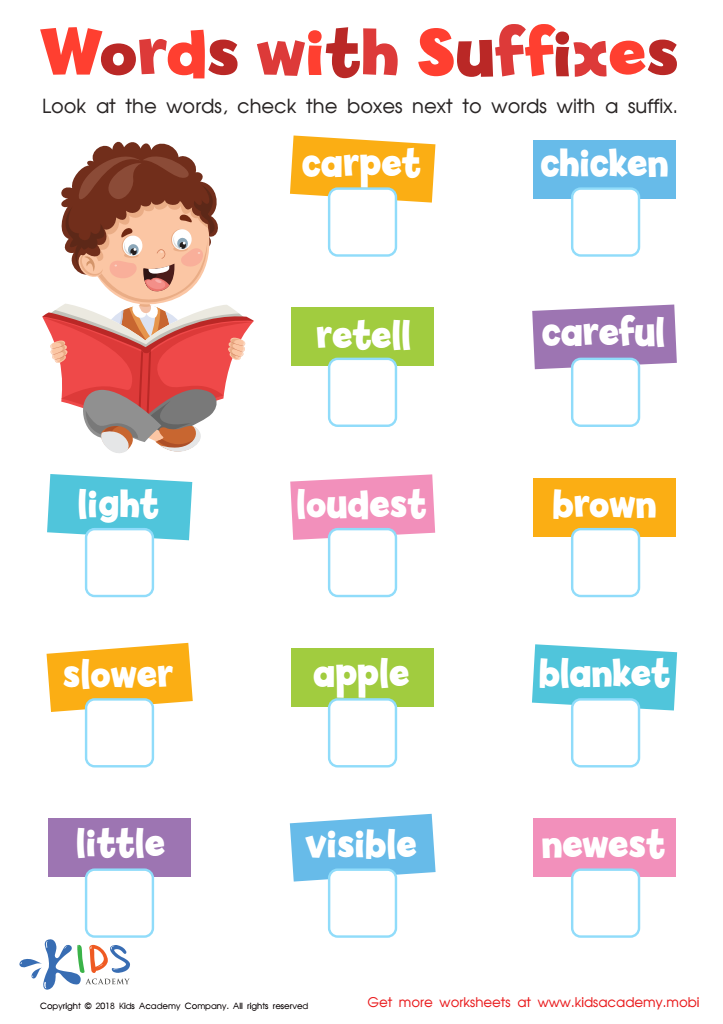
Reading: Words With Suffixes Worksheet
 Assign to My Students











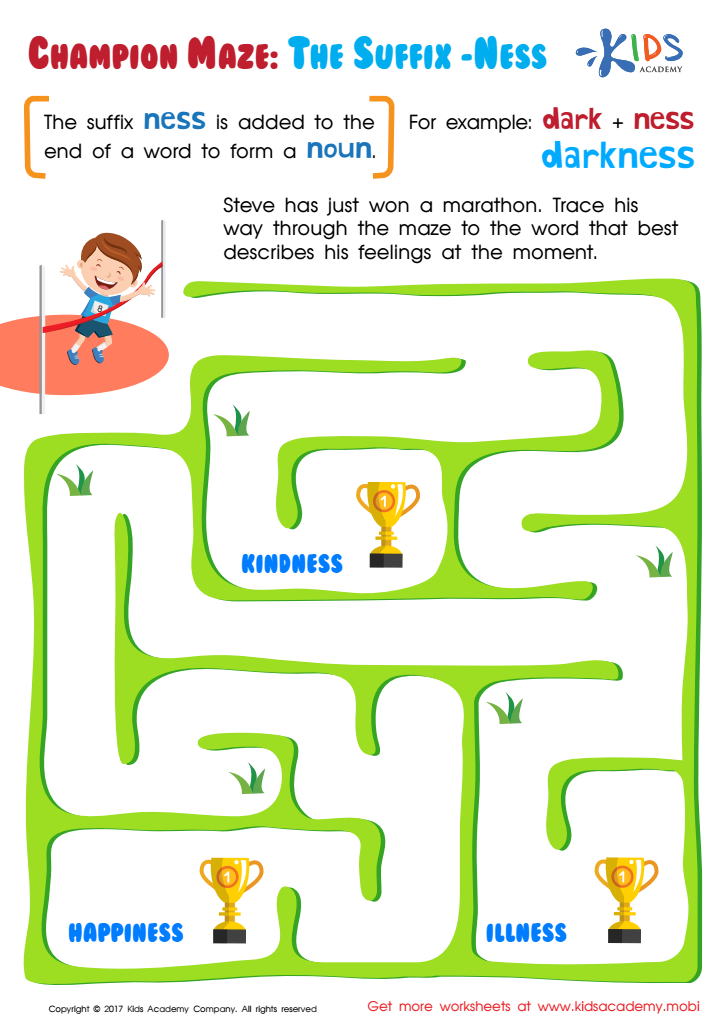
Suffix Ness Worksheet
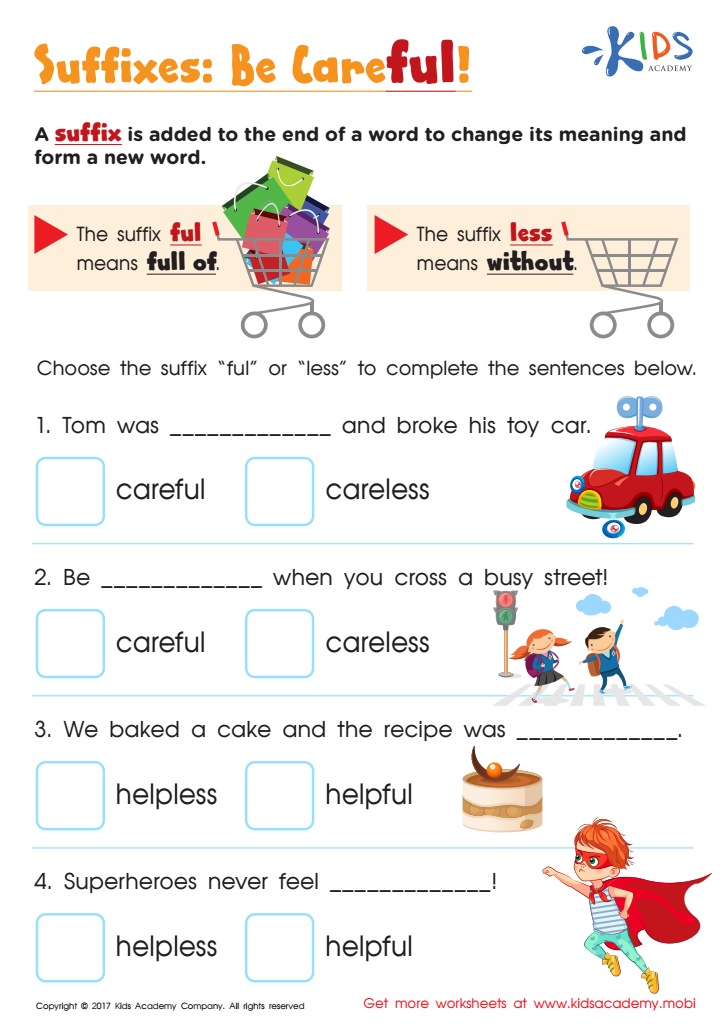
Suffixes Ful and Less Worksheet



.jpg)



Understanding suffixes is crucial for building vocabulary in children aged 5-8. Suffixes, like '-ed,' '-ing,' '-ness,' and '-ful,' are essential building blocks of words. They help children decode new words by understanding the meaning added by these endings. For instance, knowing that '-ed' denotes past tense or that '-ful' means "full of" helps kids grasp word meanings more quickly.
Parents and teachers should emphasize suffixes because they enhance reading and spelling skills. When children recognize common suffixes, they can more easily break down and read new words independently, boosting their confidence and reading fluency. For example, understanding that the suffix '-ness' turns adjectives into nouns (e.g., happy to happiness) expands their ability to express ideas and understand texts.
Additionally, suffixes play a pivotal role in comprehension. By understanding these word parts, kids can decipher more complex vocabulary in stories and textbooks, enabling them to grasp content more effectively. This skill is foundational for later academic success. Thus, teaching suffixes supports not just vocabulary growth but overall literacy and cognitive development, setting children up for lifelong language skills and learning adaptability.








