Understanding prefixes Normal Reading Worksheets for Ages 5-8
3 filtered results
-
From - To
Boost reading skills with our "Understanding Prefixes" Normal Reading Worksheets for Ages 5-8 at Kids Academy! Designed with young learners in mind, these engaging printables help children grasp the concept of prefixes in an easy and fun way. With age-appropriate activities, students will learn how adding letters to the beginning of a word can change its meaning. Our worksheets feature colorful illustrations and interactive tasks that make learning prefixes enjoyable while enhancing vocabulary and reading comprehension. Perfect for classroom or at-home learning, these resources offer a solid foundation for young readers to become confident and proficient in their language skills.
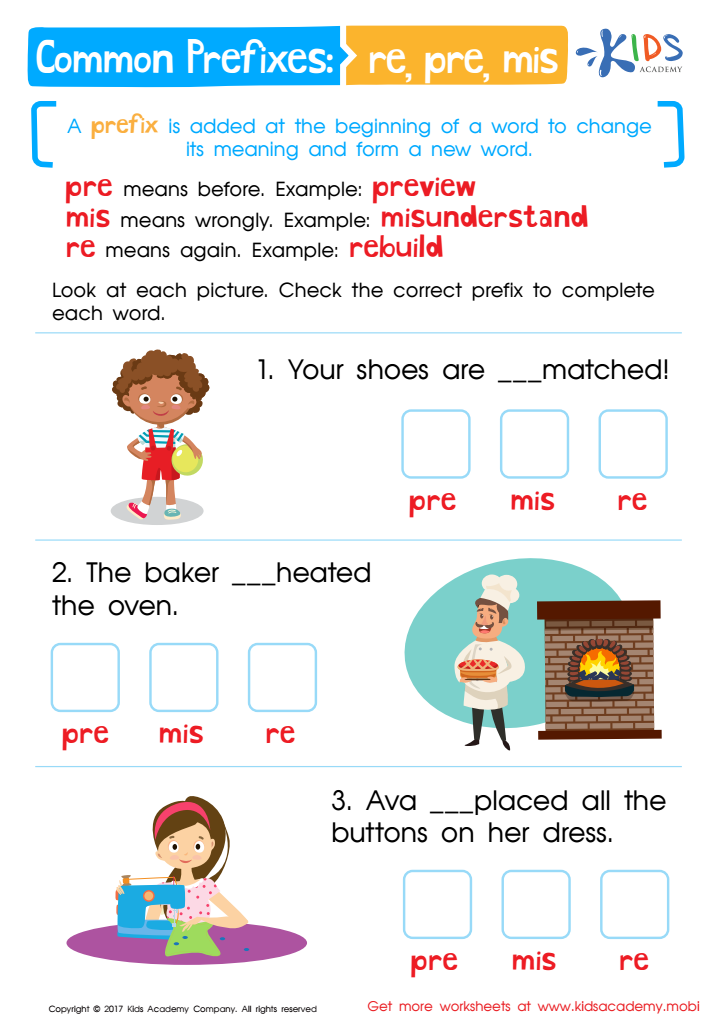
Common Prefixes Worksheet: RE, PRE, MIS
 Assign to My Students
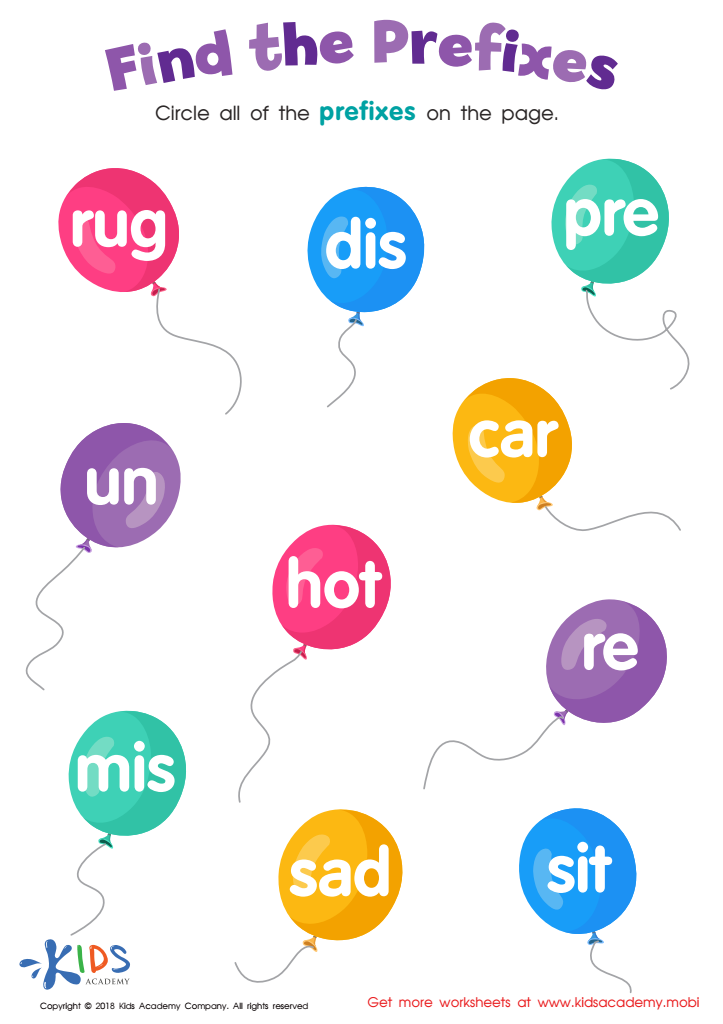
Reading: Find the Prefixes Worksheet
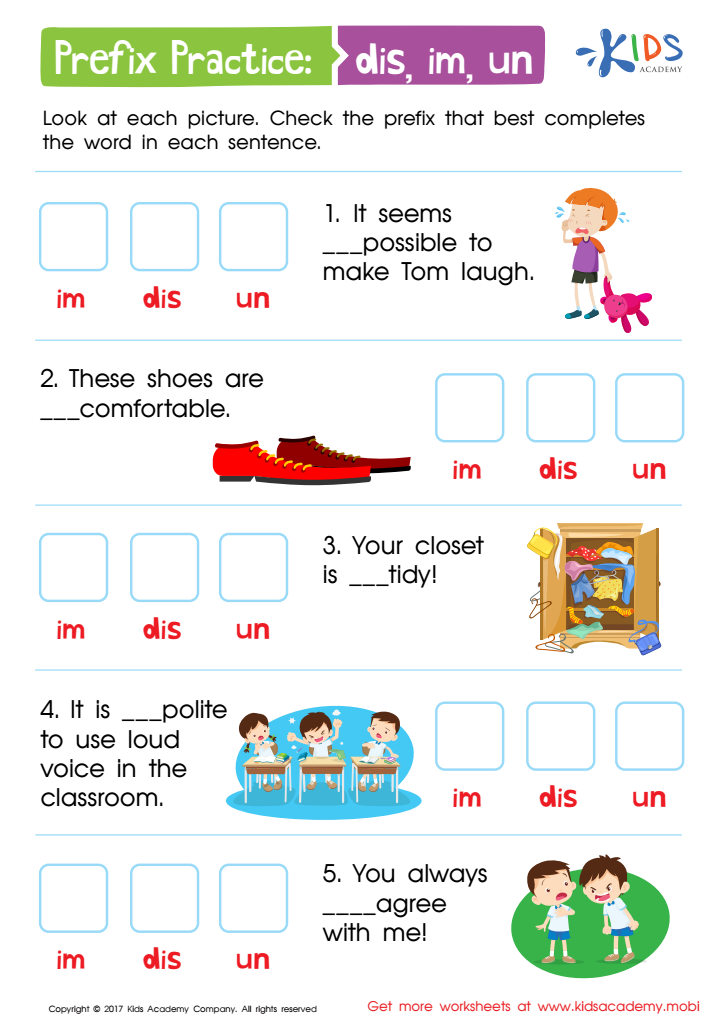
Prefix Practice Worksheet: DIS, IM, UM




.jpg)



Understanding prefixes is crucial for young children, particularly those aged 5-8, as it lays the foundation for strong reading and comprehension skills. Prefixes, which are letters added to the beginning of a word to alter its meaning, enhance vocabulary and help children decode unfamiliar words more easily. This knowledge accelerates reading proficiency and boosts confidence in tackling new texts.
When children grasp prefixes, they can better understand complex words, leading to improved comprehension and overall academic performance. For example, knowing that "un-" means "not" helps children understand words like "unhappy" or "unsafe," enhancing their ability to read and make sense of new sentences instantly.
Parents and teachers should prioritize this aspect of literacy because a broader vocabulary directly correlates with higher academic achievement across all subjects. Early mastery of prefixes can also foster a lifelong love for reading, as children feel more equipped and motivated to explore books on their own.
Engaging activities, such as prefix games and reading exercises, can be integrated into daily learning routines to reinforce this skill. By supporting children in understanding prefixes, adults can significantly impact their educational trajectory, setting them up for future success and a deeper appreciation for language and literature.








