Developing observation skills Normal Science Worksheets for Ages 5-8
3 filtered results
-
From - To
Unlock the power of keen observation with our "Developing Observation Skills" worksheets uniquely crafted for children aged 5-8. Designed against a backdrop of Normal Science principles, these captivating activities sharpen your child's sensory awareness and critical thinking through fun, hands-on exercises. Each worksheet dives deep into identifying details and recognizing patterns, ensuring that young learners grasp fundamental science concepts effortlessly. Perfect for early grade students, these printable materials promise to bolster both learning and curiosity. Elevate your child's understanding of the world around them through engaging and educational practice with Kids Academy's science worksheets.
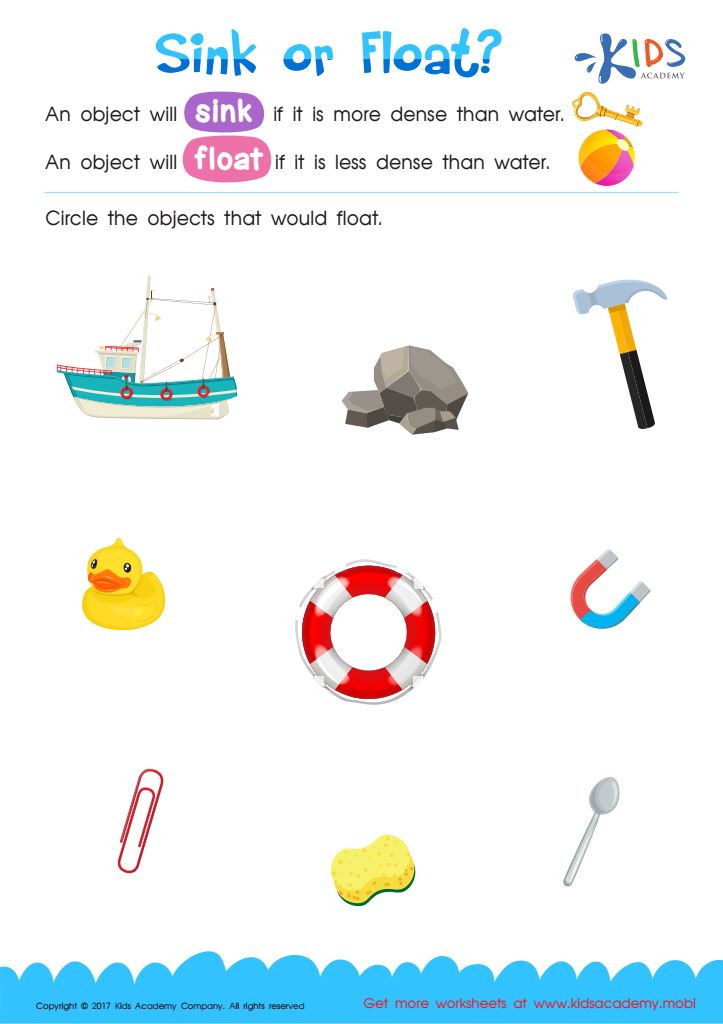
Sink or Float Printable
 Assign to My Students
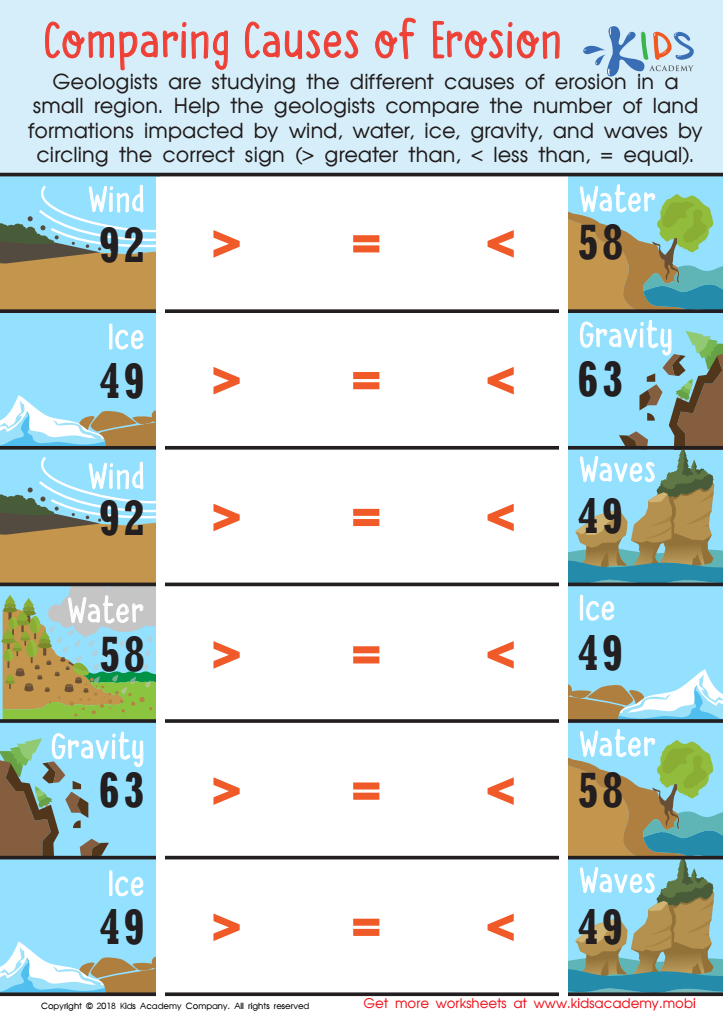
Comparing Causes of Erosion Worksheet
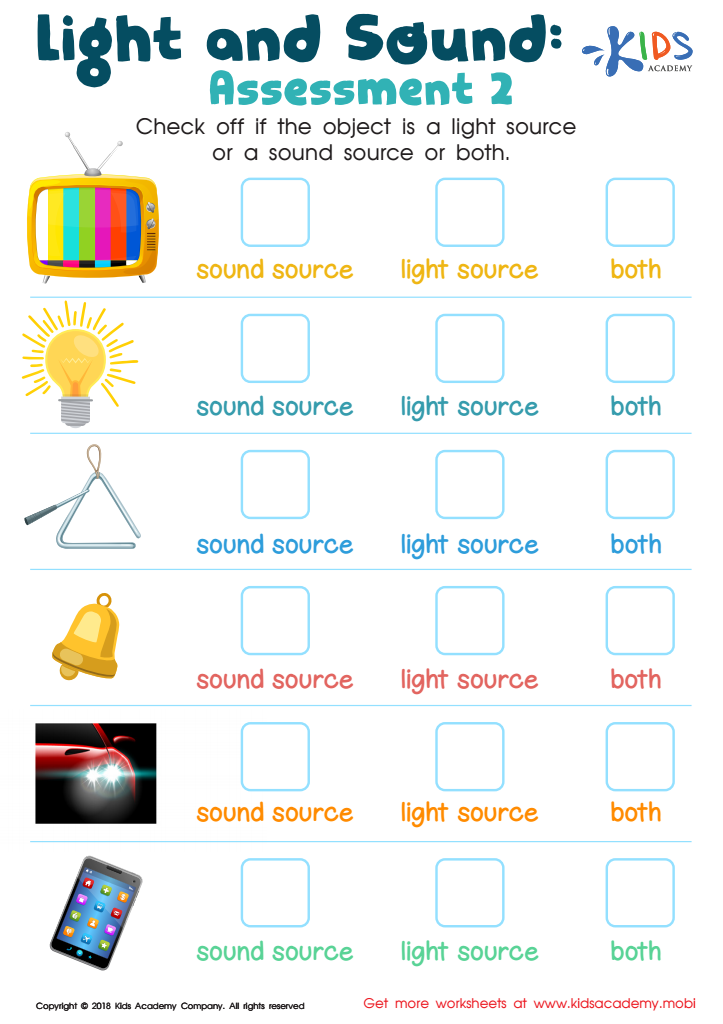
Light and Sound: Assessment 2 Worksheet




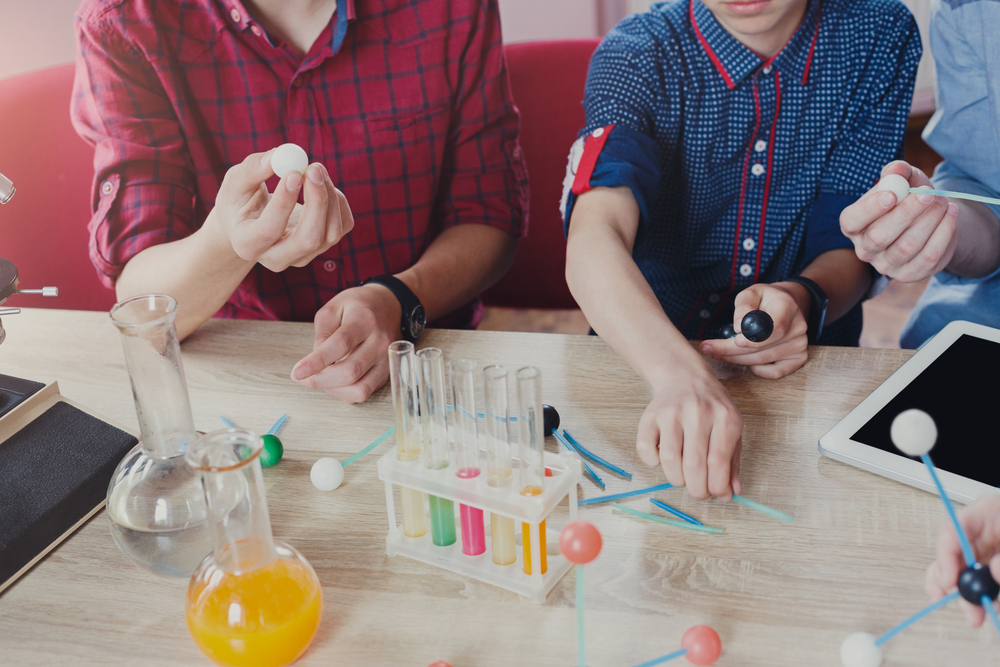

Developing observation skills in early childhood is crucial for laying a strong foundation in science education for children aged 5-8. At this stage, kids are naturally curious about the world around them. Enhancing their ability to observe nurtures this curiosity and helps them develop a systematic approach to learning.
Observation skills are the cornerstone of scientific inquiry. By teaching children to carefully notice and describe what they see, hear, touch, smell, and sometimes taste, parents and teachers enable them to gather crucial data for understanding the natural world. These skills are transferable across various subjects, enriching overall academic growth and problem-solving abilities.
Cultivating observation skills also aids in fostering other essential life skills such as attention to detail, critical thinking, and resilience. When children are encouraged to make meticulous observations, they learn to be patient and persistent in their efforts, leading to better outcomes in both academic and everyday tasks.
Additionally, these skills democratically level the playing field, allowing all children, regardless of their academic background, to engage meaningfully in science. Through activities like nature walks, simple experiments, and guided discussions, educators and parents provide hands-on and interactive experiences that anchor theoretical knowledge in real-world observations.
In summary, prioritizing the development of observation skills for young children creates a rich basis for scientific competency, supports holistic development, and instills a lifelong love of learning.







