Shape Recognition Normal Science Worksheets for Ages 5-8
3 filtered results
-
From - To
Unlock your child's scientific curiosity with our Shape Recognition Normal Science Worksheets, designed specifically for ages 5-8! These engaging printables help young learners identify and understand various shapes in a fun, interactive way. Through colorful illustrations and age-appropriate activities, children will enhance their observation skills while developing a solid foundation in geometry. Each worksheet is carefully crafted to promote critical thinking and creativity, making science accessible and enjoyable. Perfect for homeschooling parents and educators, our shape recognition worksheets provide a valuable resource to support early learning. Ignite a love for science and shapes in your child's learning journey today!
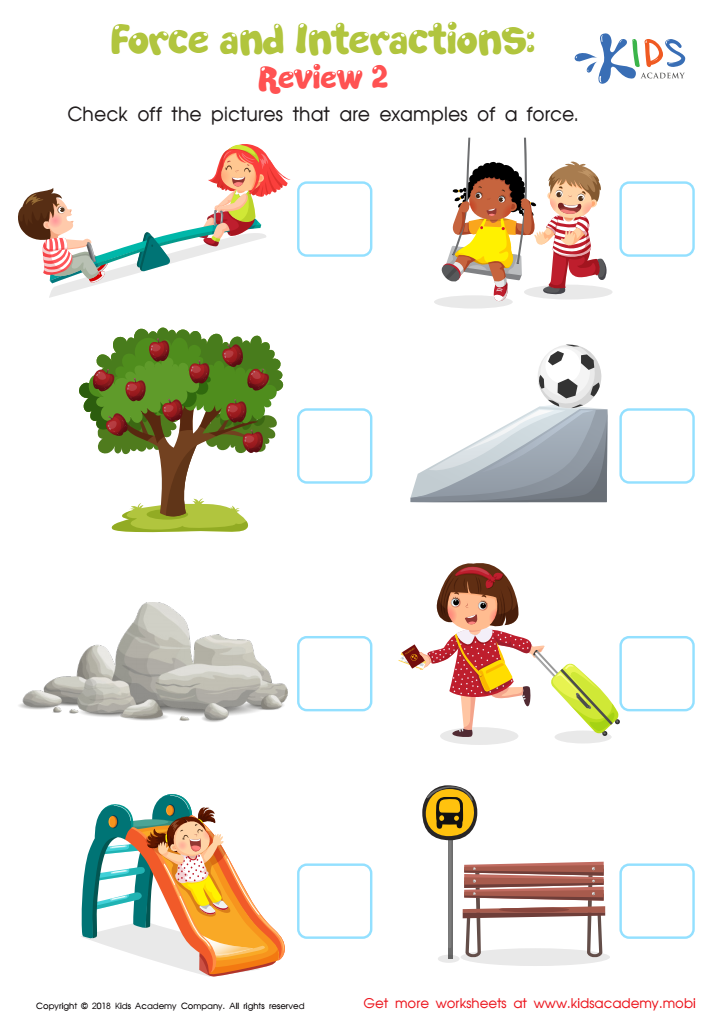
Force and Interactions: Review 2 Worksheet
 Assign to My Students
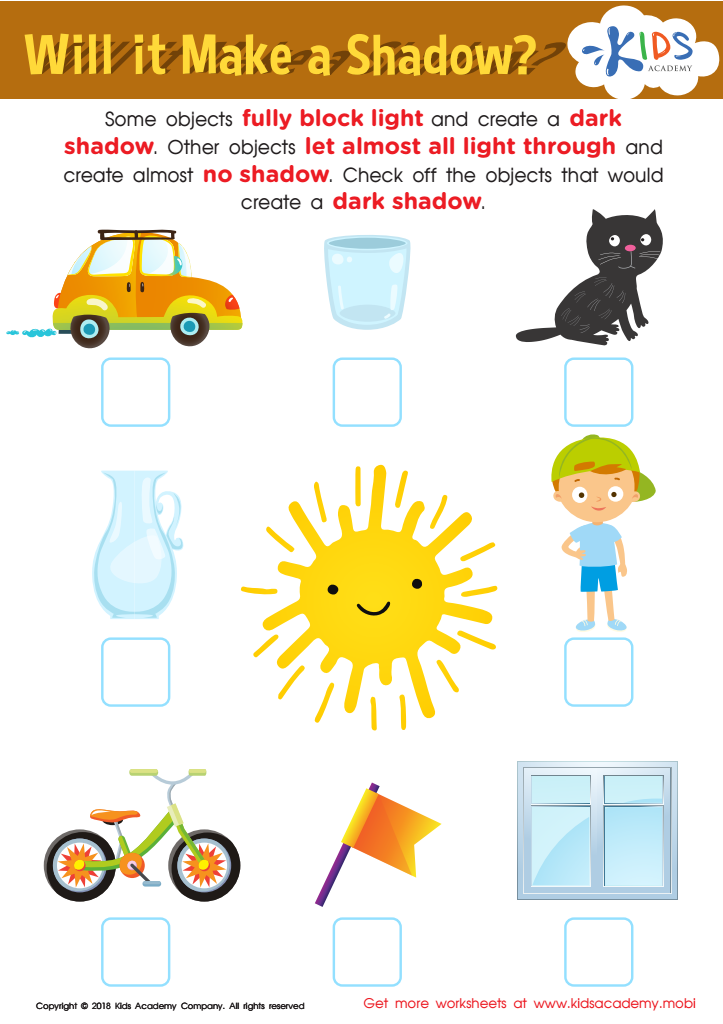
Will It Make a Shadow? Worksheet
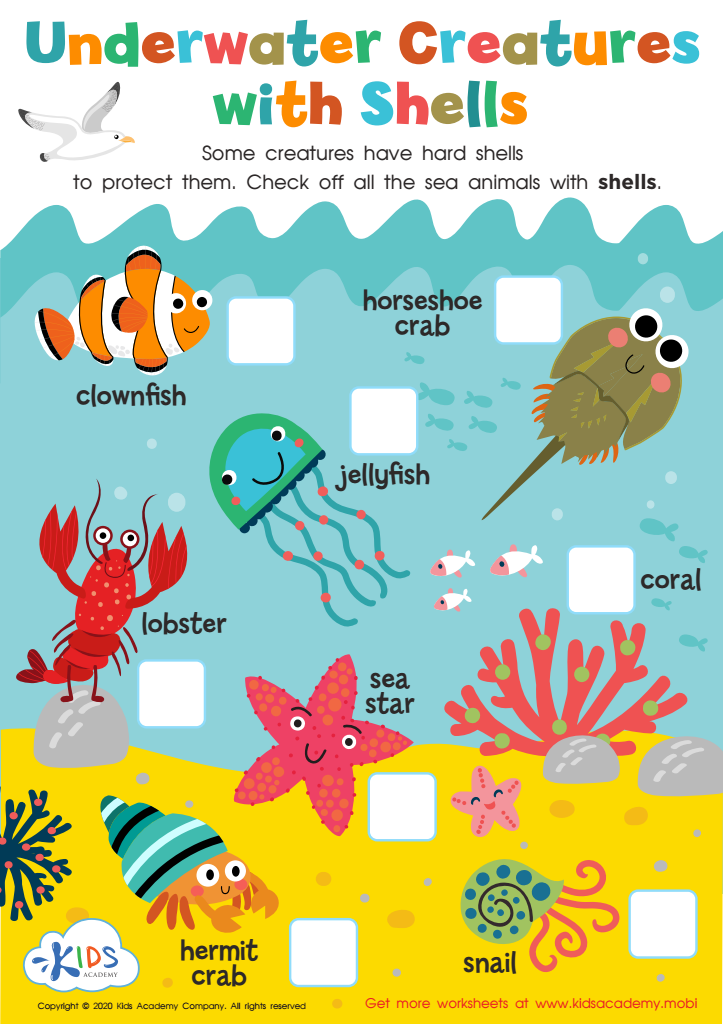
Underwater Creatures with Shells Worksheet








Shape recognition is a fundamental aspect of early childhood education that significantly impacts cognitive development in children aged 5 to 8. Understanding shapes helps kids navigate the world around them, enhancing their spatial awareness and critical thinking skills. Parents and teachers should care about this skill because it lays the groundwork for more complex mathematical concepts, such as geometry and measurement, which children will encounter later in their education.
Moreover, shape recognition is linked to various developmental milestones. Engaging children in activities that involve identifying, comparing, and constructing shapes fosters fine motor skills and reinforces memory retention. These activities also encourage problem-solving, as children learn to classify and categorize objects based on their attributes.
Additionally, shape recognition promotes creativity, as children explore and construct their environments through art and play. Integrating shape recognition into everyday learning experiences makes it enjoyable, motivating children to engage with mathematics in a fun and meaningful way. Ultimately, by prioritizing shape recognition in early childhood, parents and teachers help cultivate a solid foundation for lifelong learning, ensuring children are well-equipped to tackle future academic challenges. This makes shape recognition not just an academic task but a crucial part of holistic development.







