Understanding moon phases Normal Science Worksheets for Ages 5-8
3 filtered results
-
From - To
Help young learners grasp the fascinating concept of moon phases with our "Understanding Moon Phases" science worksheets designed specifically for ages 5-8. These engaging worksheets provide easy-to-follow illustrations and activities, making this complex subject accessible and fun for early grade students. Through visual aids and hands-on tasks, children will learn about the different phases of the moon, fostering both their observation skills and critical thinking. Perfect for both classroom use and homeschooling, our worksheets also align with standard educational goals, ensuring a comprehensive learning experience for budding young astronomers. Download today to brighten your child's scientific journey!
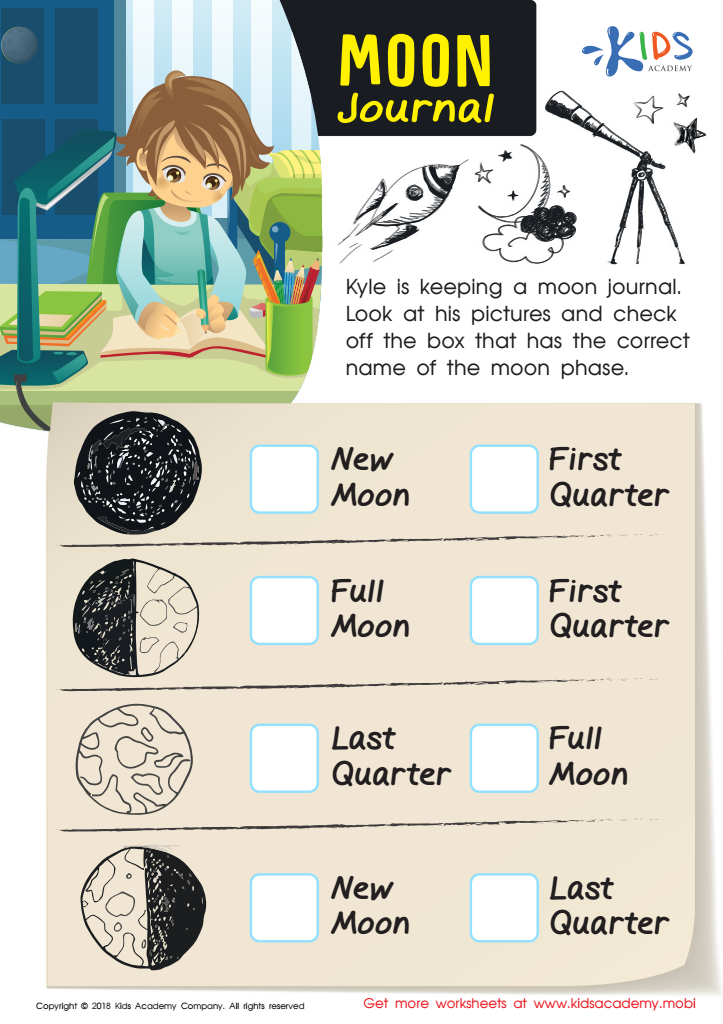
Moon Journal Worksheet
 Assign to My Students
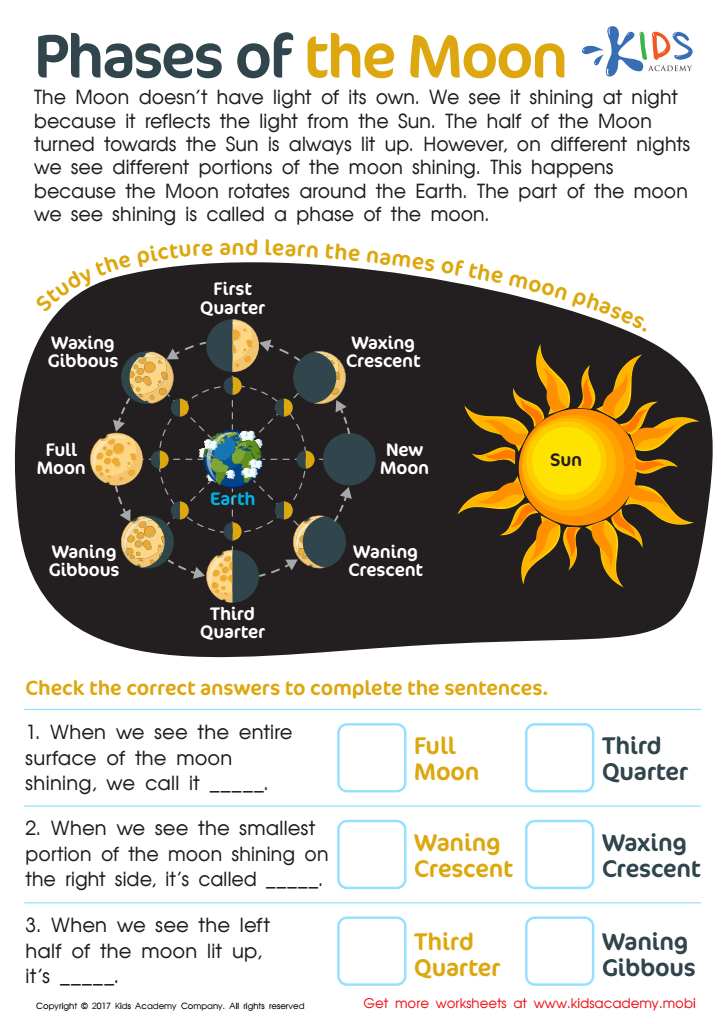
Phases of The Moon Worksheet
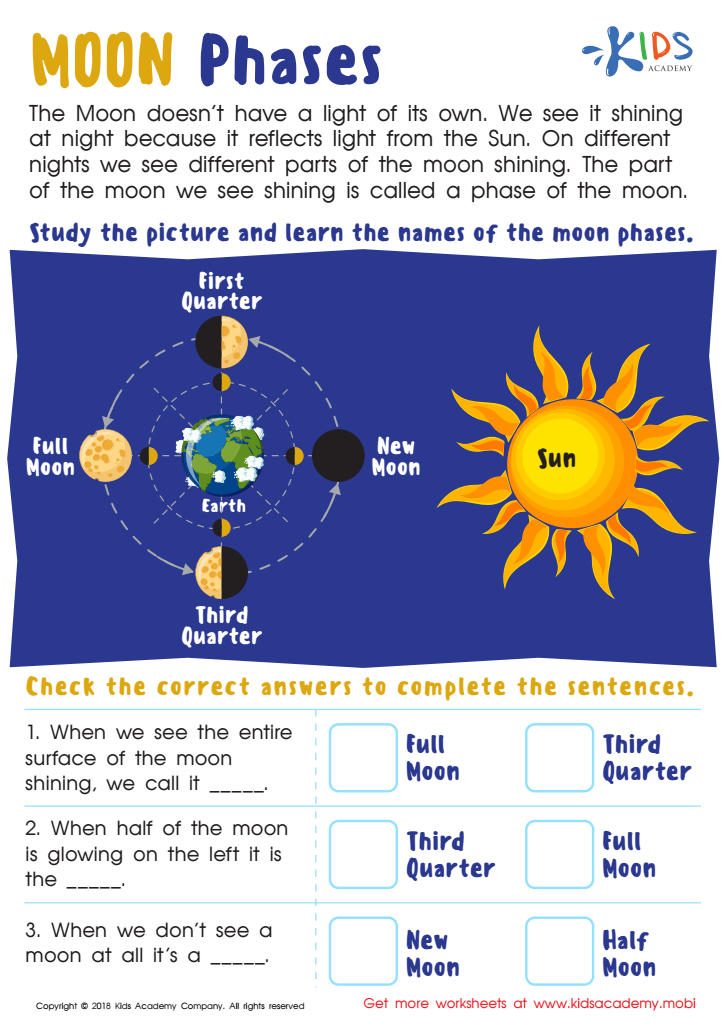
Moon Phases Worksheet




.jpg)

Understanding moon phases is more than just a fundamental aspect of astronomy; it holds significant educational value, especially for children aged 5-8. First, learning about moon phases sparks curiosity and wonder about the natural world. When children are naturally curious, they become more engaged learners, which aids their overall educational development.
Moreover, the concept of moon phases introduces basic scientific principles such as observation, pattern recognition, and cyclical changes. These principles are foundational for reasoning and analytical thinking. Recognizing patterns, for example, enhances mathematical skills and logical comprehension, which are crucial in early education.
Teaching moon phases also encourages outdoor activities, like stargazing. This not only enhances children's understanding of the Earth's environment but also motivates them to spend time outside, fostering a connection with nature and promoting physical well-being.
Parents and teachers can utilize this topic to integrate interdisciplinary learning. While exploring moon phases, children can also improve their vocabulary, art skills (by drawing the different phases), and even storytelling abilities (by learning myths and stories related to the moon).
In essence, understanding moon phases nurtures a holistic development by blending science with curiosity, physical activity, and interdisciplinary applications, making it a valuable topic for young learners.







