Weather identification Normal Science Worksheets for Ages 5-8
4 filtered results
-
From - To
Introduce young learners to the wonders of weather with our "Weather Identification: Normal Science Worksheets for Ages 5-8". These engaging and educational worksheets are perfect for budding scientists, helping them to identify different weather patterns and phenomena. Through fun and interactive activities, children will learn to recognize sunshine, clouds, rain, snow, and more, while also developing essential science skills. Ideal for both classroom and homeschool settings, these worksheets make learning about weather an exciting adventure. Equip your child with the knowledge to understand and appreciate the world around them with our carefully designed educational resources.
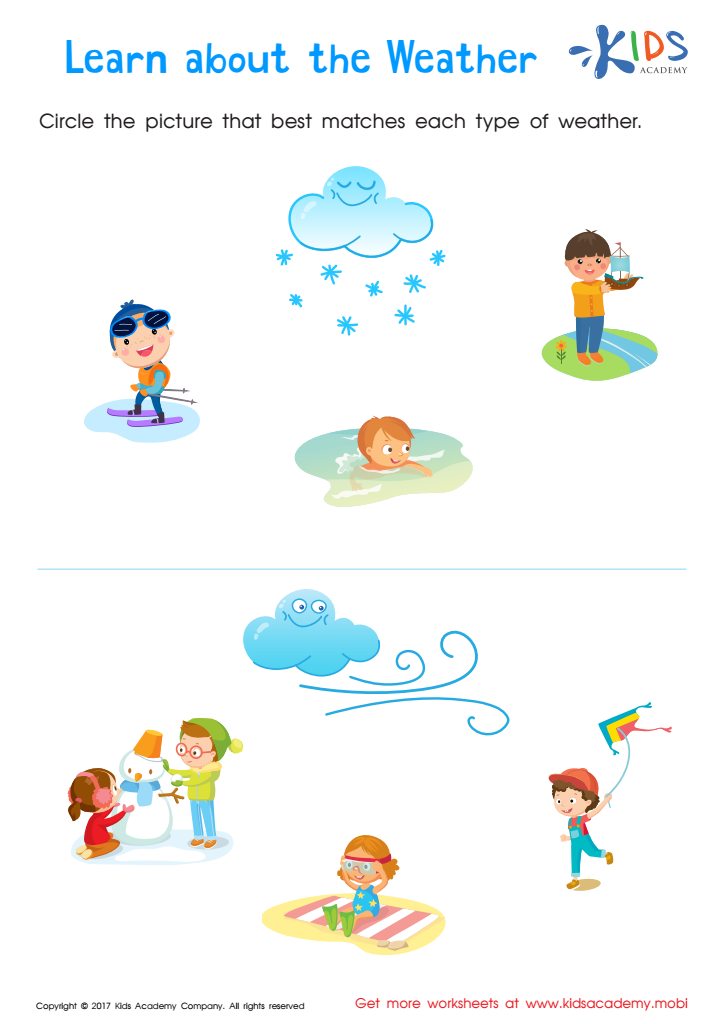
About the Weather Printable
 Assign to My Students
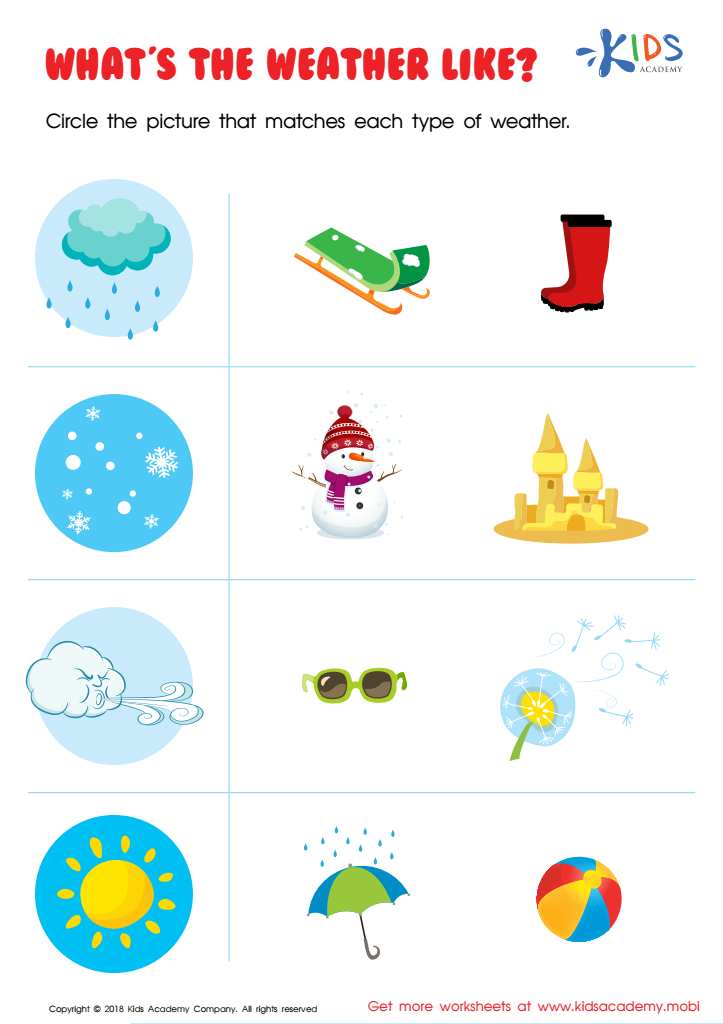
What's the Weather Like? Worksheet
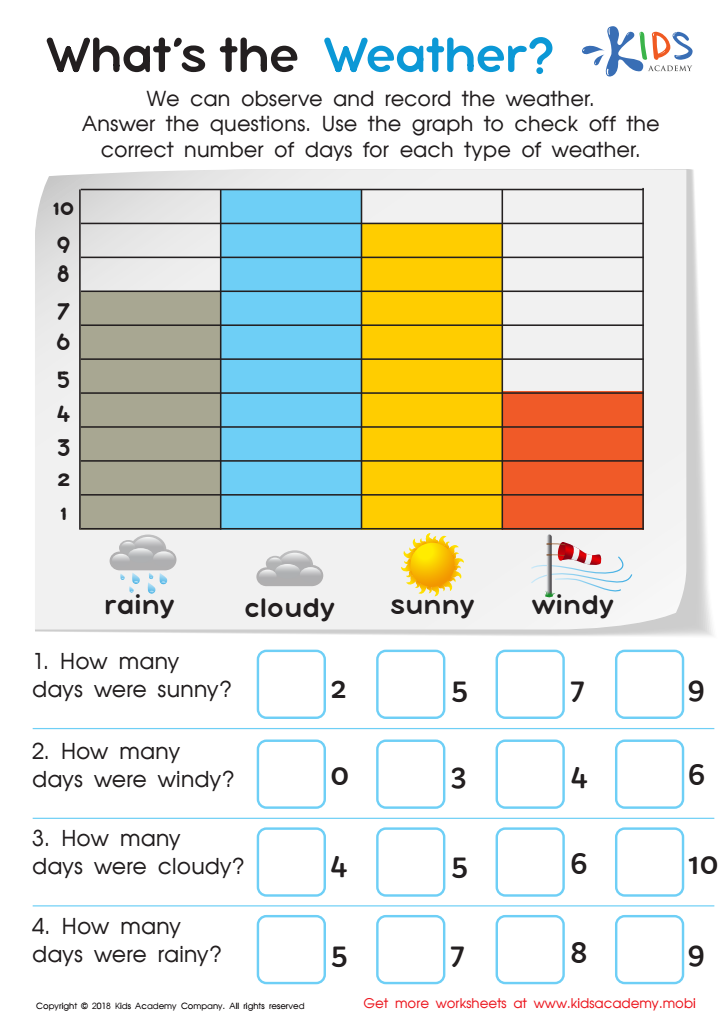
What's the Weather? Worksheet
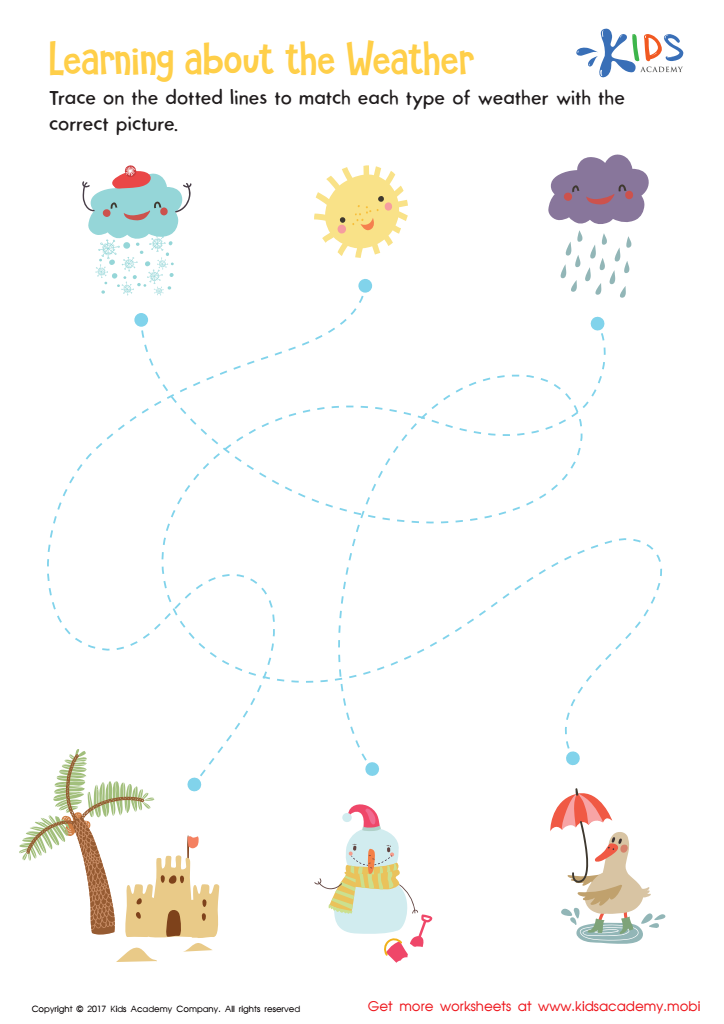







Weather identification is a foundational aspect of early science education for children ages 5-8, laying the groundwork for a deeper understanding of the natural world. It fosters critical observational skills and enhances awareness of daily changes in the environment. For parents and teachers, integrating weather identification into early learning is crucial because it encourages scientific thinking and inquiry from a young age.
Understanding weather patterns helps children make sense of the world, predict day-to-day activities, and comprehend the concepts of seasons and climate. Discussing weather can lead to broader conversations about related natural phenomena, such as the water cycle, plant growth, and animal behaviors, providing a multidisciplinary approach to learning.
Furthermore, weather identification activities engage children in outdoor exploration, enhancing their cognitive development and physical well-being. Visual and hands-on learning, such as charting weather, fosters better retention and mastery of scientific terms. It also accelerates literacy and numeracy, as these activities often involve reading weather-related texts and measuring and recording data.
For both parents and teachers, emphasizing weather knowledge lays a crucial educational foundation that promotes curiosity, instills a love for the environment, and prepares children for advanced scientific concepts. It turns everyday experiences into valuable learning moments, nurturing the next generation of inquisitive, environmentally conscious individuals.







