Understanding light sources Normal Physical Science Worksheets for Ages 5-8
4 filtered results
-
From - To
Discover how light illuminates our world with our "Understanding Light Sources" physical science worksheets for ages 5-8. These engaging worksheets, carefully designed for young learners, introduce children to different light sources, including natural and artificial kinds. Through fun activities, kids will explore how light affects the environment, helps us see, and even impacts our everyday lives. Perfect for early graders, this comprehensive collection supports both classroom learning and homeschooling. Give your children a clear understanding of light sources with our easy-to-follow science worksheets, setting a solid foundation for future scientific exploration.
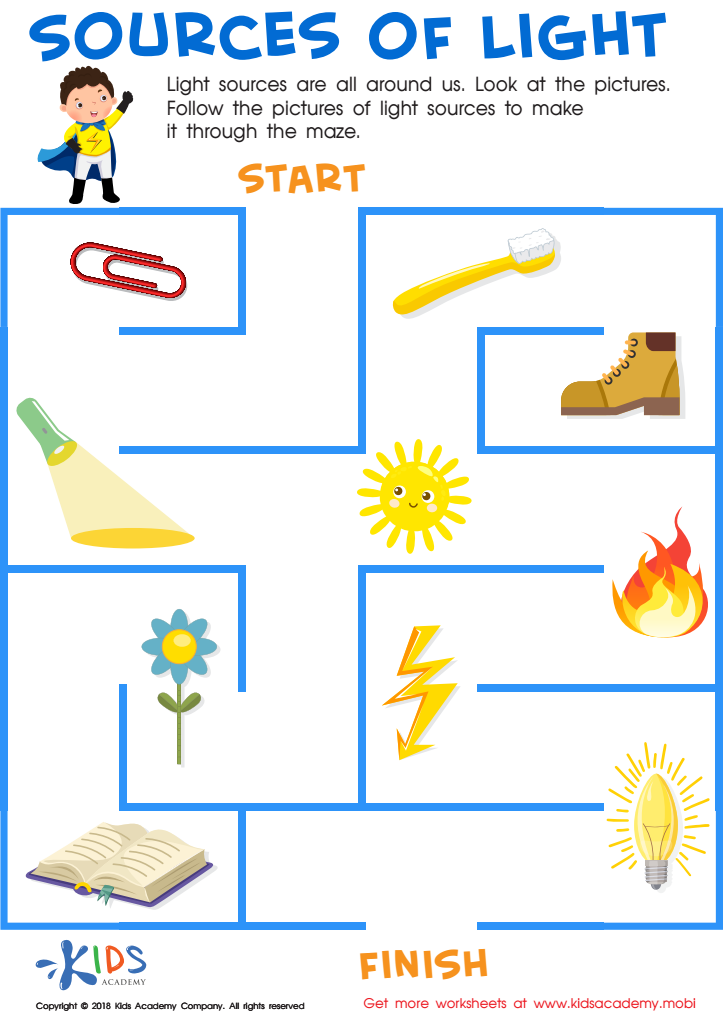
Sources of Light Worksheet
 Assign to My Students
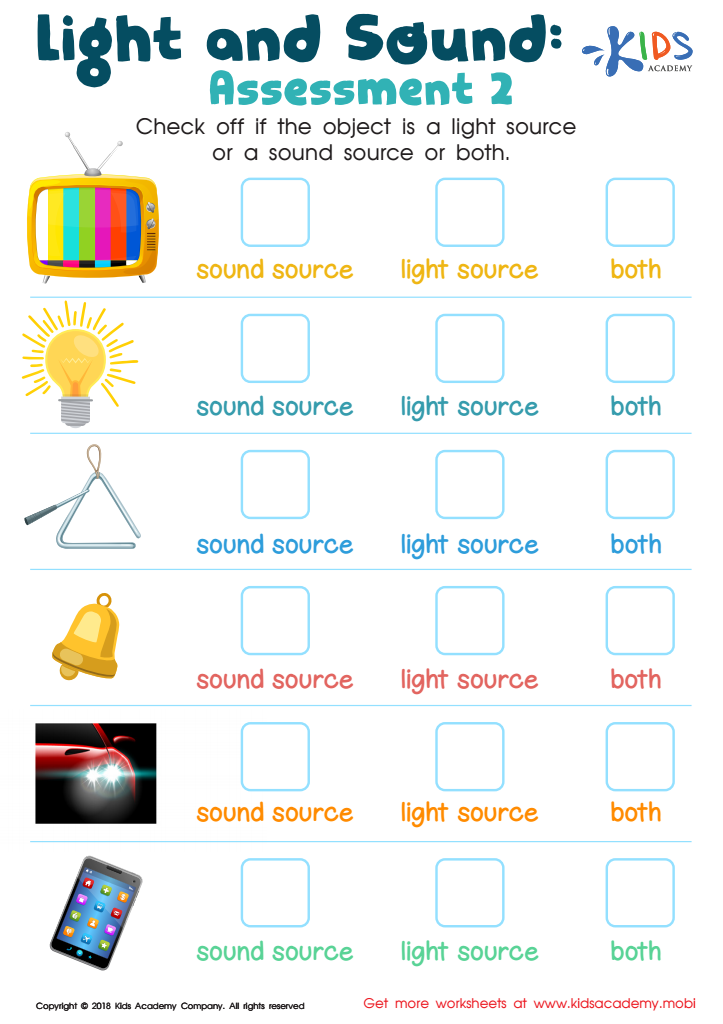
Light and Sound: Assessment 2 Worksheet
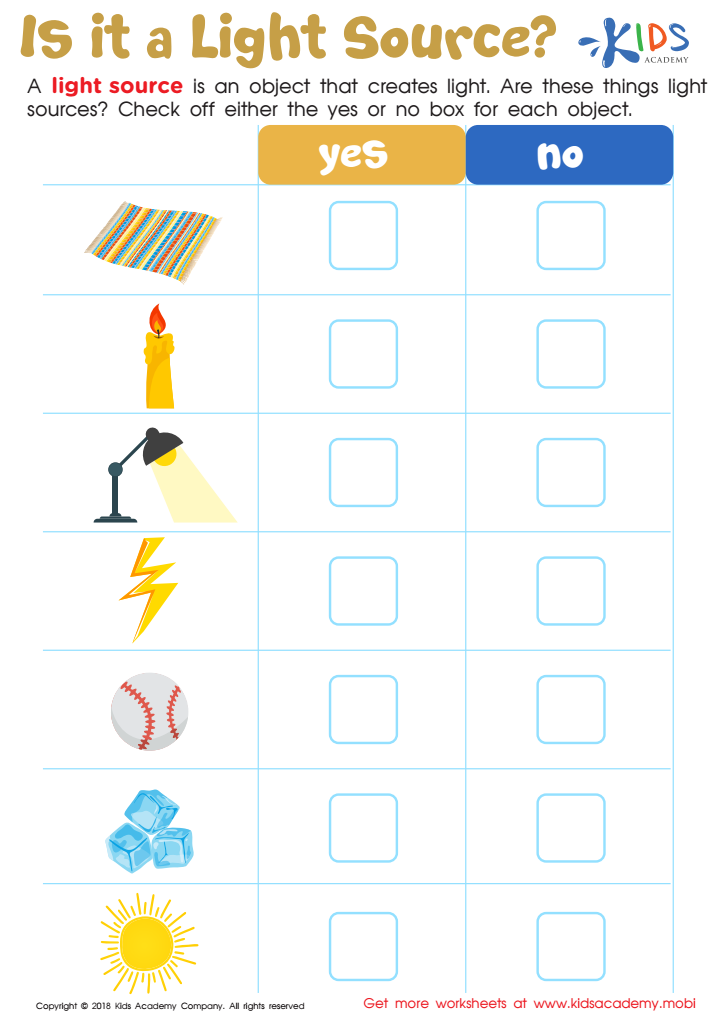
Is It a Light Source? Worksheet
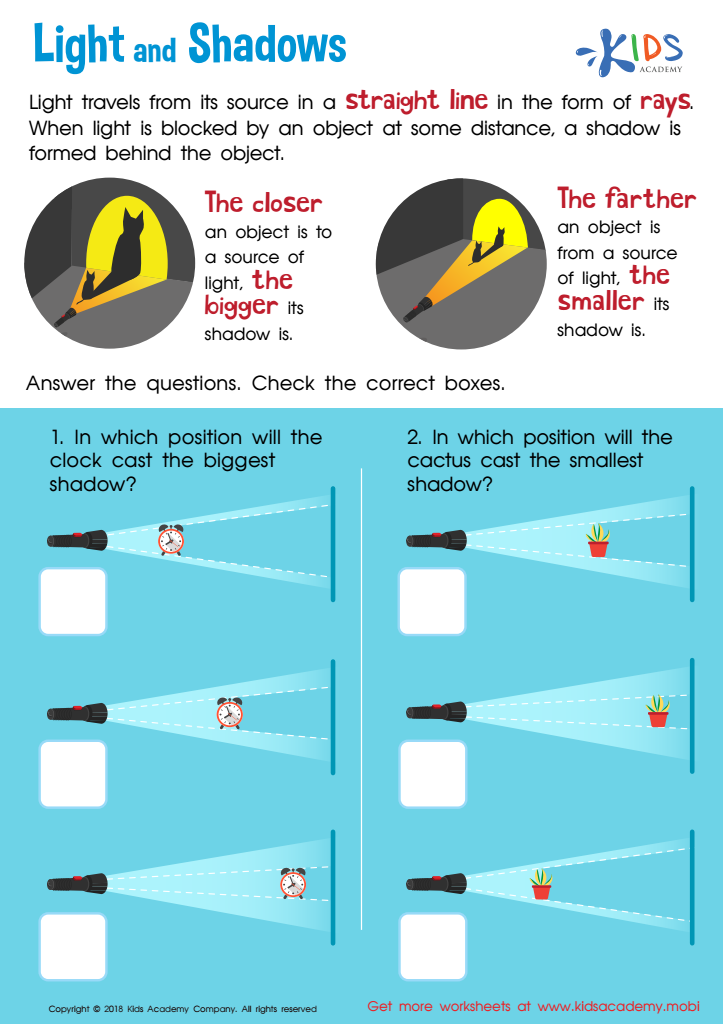
Light and Shadow Worksheet for Grade 3


.jpg)




Understanding light sources in early physical science is essential for young learners aged 5-8 as it lays the foundation for their future scientific knowledge and appreciation of the natural world. At this critical developmental stage, children are naturally curious and explorative. By learning about different light sources, such as the Sun, light bulbs, and candles, they not only grasp a fundamental scientific concept but also enhance their observation skills and learn to ask meaningful questions.
Parents and teachers should care about this topic because it stimulates children's cognitive development. Simple experiments with light, like observing shadows or using prisms to see rainbows, encourage curiosity and critical thinking. These hands-on activities also help develop fine motor skills and cooperation when performed in groups, fostering social development.
Moreover, understanding light sources can bridge learning with daily experiences. For instance, discussing why we shouldn't look directly at the Sun introduces basic safety principles, while recognizing light's role in photosynthesis can link to lessons about plants and nature. Integrating light science with storytelling and art projects makes learning engaging and multidisciplinary.
By nurturing an early interest in how light works, parents and educators support a solid academic foundation, inspire wonder about the world, and promote lifelong enthusiasm for scientific inquiry.







