Animal recognition Normal Plants and Animals Worksheets for Ages 5-8
4 filtered results
-
From - To
Enhance your child's knowledge of the natural world with our "Animal Recognition Normal Plants and Animals Worksheets for Ages 5-8." These engaging and informative worksheets are designed to help young learners identify and understand various animals and plants. Through fun activities, kids can develop their observation skills, expand their vocabulary, and boost their scientific knowledge. Perfect for both classroom and home use, these worksheets cater to early learners, ensuring a strong foundation in recognizing common flora and fauna. Make learning an adventure with our expertly crafted educational resources, tailored to ignite curiosity and foster a love for nature.
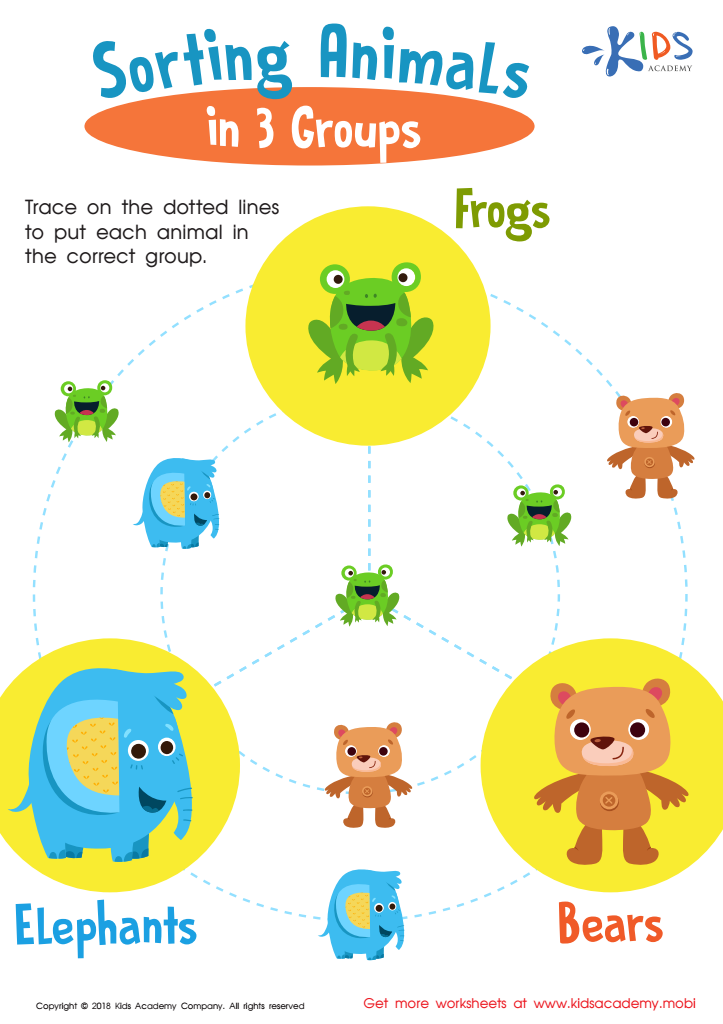
Sorting Animals in 3 Groups Worksheet
 Assign to My Students











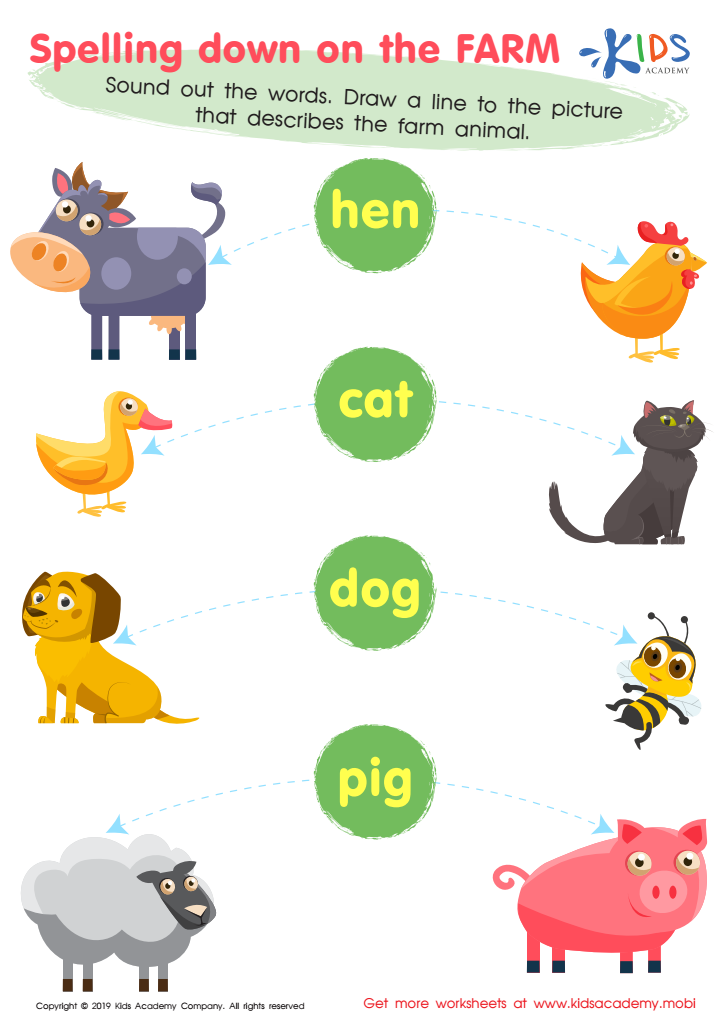
Spelling Down on the Farm Worksheet
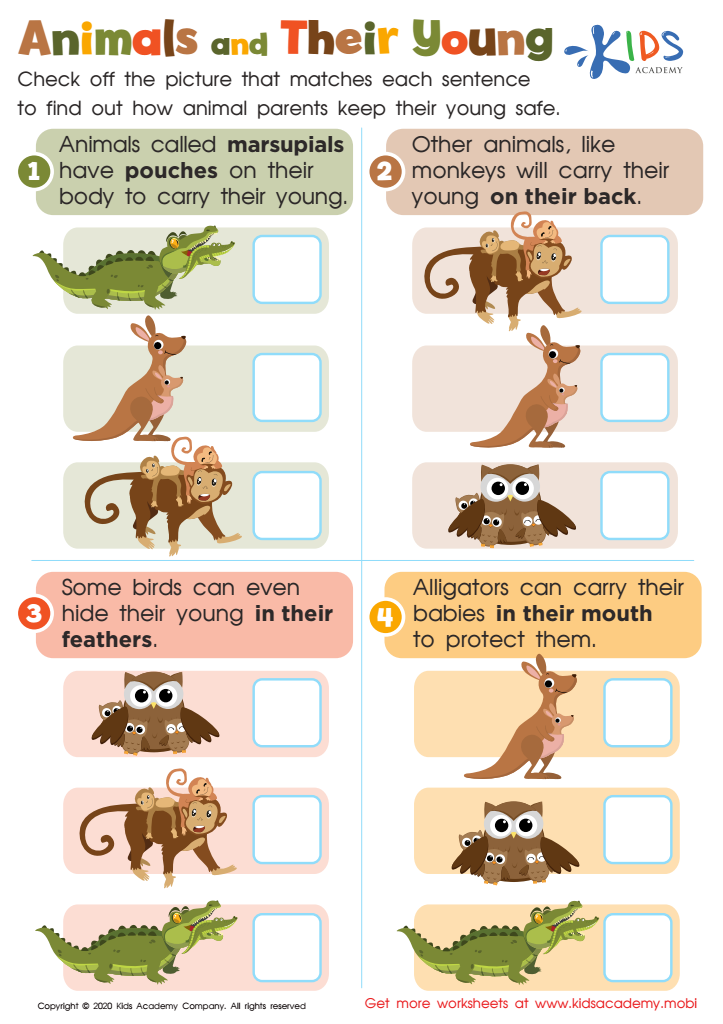
Animals and Their Young Worksheet
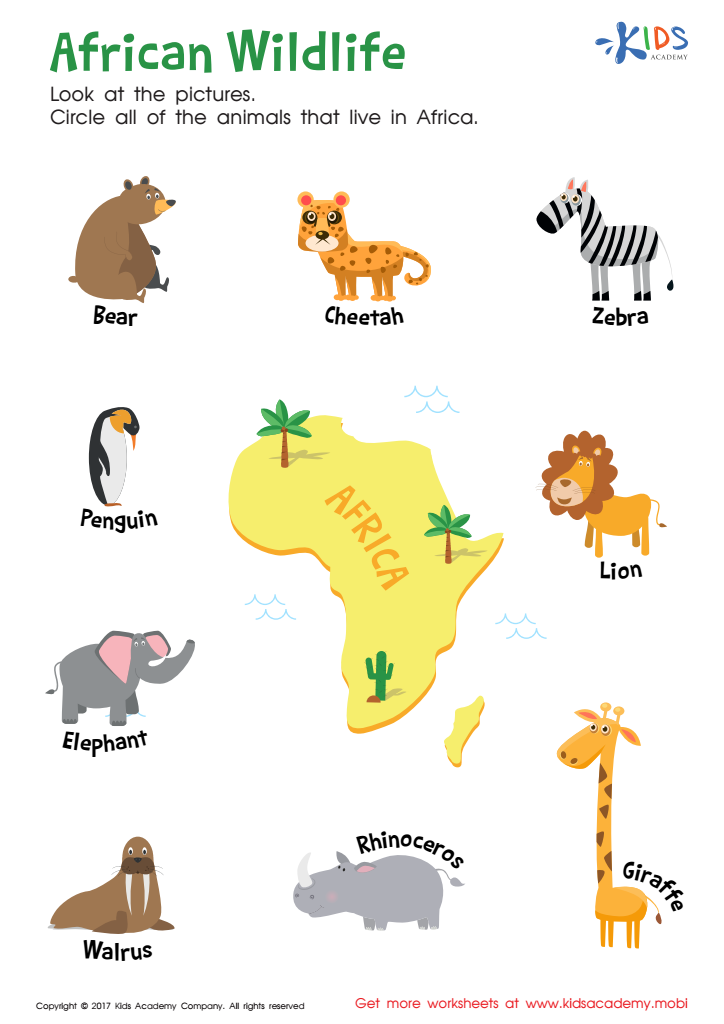








Parents and teachers should prioritize animal and plant recognition for children aged 5-8 because it plays a crucial role in early childhood development and environmental awareness. At this formative age, engaging with nature helps children develop curiosity about the world around them, encouraging experiential and observational learning. Recognizing animals and plants not only builds foundational knowledge in biology and ecology but also fosters empathy and an appreciation for living organisms, inspiring future environmental stewardship.
This knowledge aligns well with educational goals in science, promoting critical thinking, categorization skills, and an understanding of ecosystems. Teaching children to differentiate and name animals and plants strengthens their memory, vocabulary, and descriptive abilities. Moreover, these activities often involve outdoor exploration and hands-on experiences, which are beneficial for physical health and sensory development.
Furthermore, familiarity with common animals and plants enhances kids’ safety by helping them recognize potentially harmful species. It also builds resilience and problem-solving skills as they learn to identify and respond to real-life scenarios in nature. Early exposure to this aspect of the natural world lays a strong foundation for lifelong learning and environmental responsibility, making it a vital aspect of early childhood education.







