
Sound recognition Normal Consonants Worksheets for Ages 5-9
3 filtered results
Difficulty Level
Grade
Age
-
From - To
Subject
Activity
Standards
Discover the perfect resource for young learners with our Sound Recognition Normal Consonants Worksheets for Ages 5-9. These engaging worksheets are meticulously designed to help children identify and pronounce consonant sounds confidently. By integrating fun activities and colorful visuals, we make the learning process enjoyable and effective. Ideal for both classroom and at-home learning, these worksheets foster early reading skills, phonetic awareness, and cognitive development. Tailored specifically for children aged 5-9, our materials ensure a strong foundation in literacy, preparing young minds for future academic success. Explore now and watch your child thrive in their reading journey!
Favorites
With answer key
Interactive
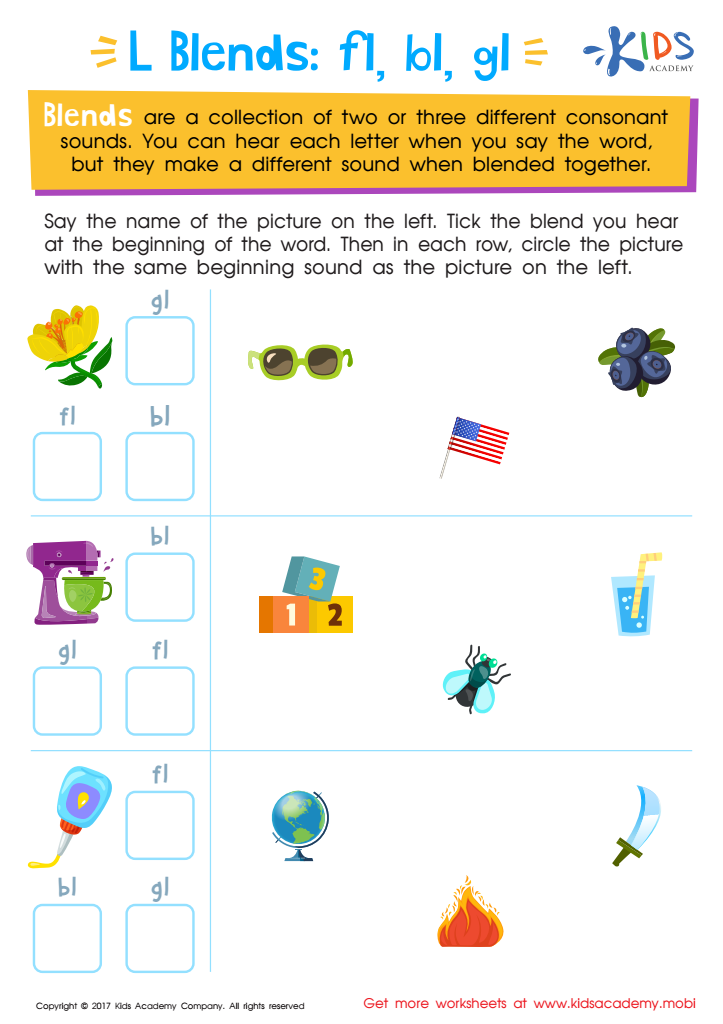
Blending Consonants: "Fl", "Bl" and "Gl" Printable
Help your child master consonant blends Fl, Bl, and Gl with this printable worksheet. Find words associated with the pictures and learn to better understand the difference between consonant blends. Vibrant images motivate and aid in learning. Download now for improved phonics success!
 Assign to My Students
Blending Consonants: "Fl", "Bl" and "Gl" Printable
Worksheet
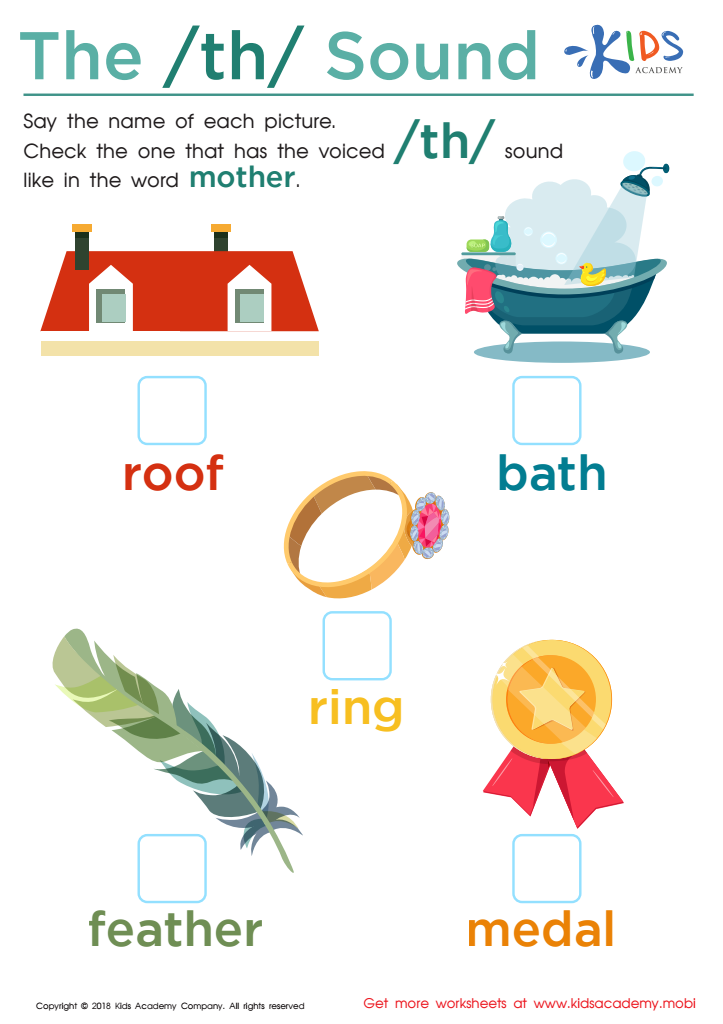
The /th/ Sound Worksheet
Confuse your students no more: have them use this worksheet to understand the /th/ sound and its two variants. With pictures, ask them to say the name of each one. Help them identify the voiced /th/ sound, like in 'mother', by having them say it aloud. Download the pdf to get started.
The /th/ Sound Worksheet
Worksheet
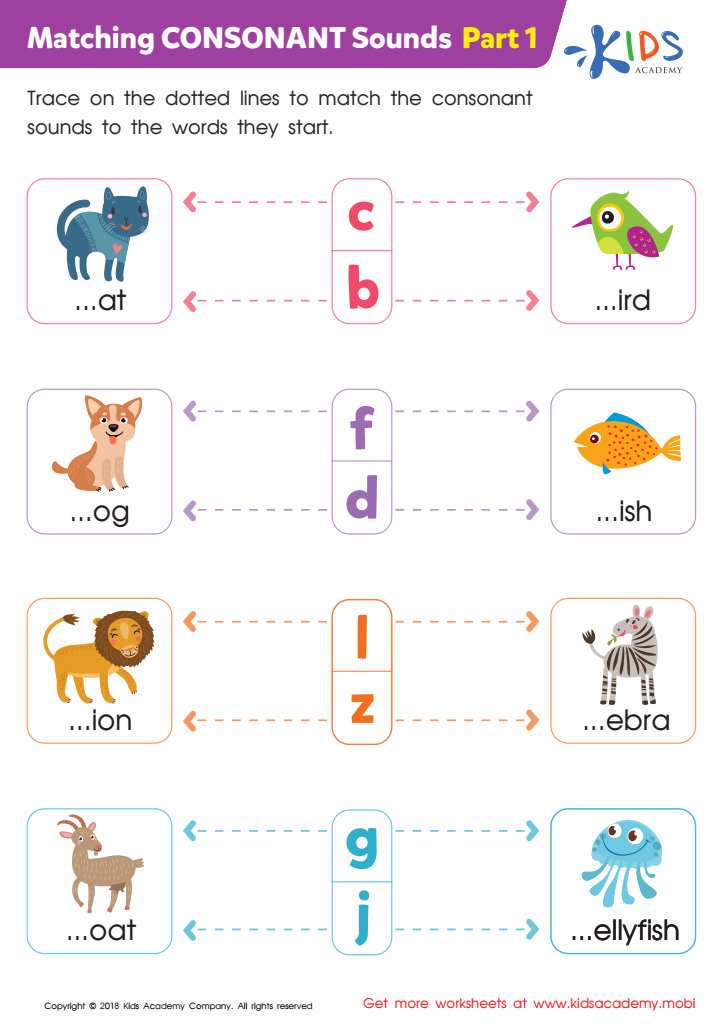
Matching Consonant Sounds: Part 1 Worksheet
Decide which letter matches each word and picture in this fun phonics worksheet. Slide your finger over each word, trying out each letter to check for matches. Once each pair is solved, trace the dotted lines with pencil to complete the printable. Who knew learning could be so enjoyable?
Matching Consonant Sounds: Part 1 Worksheet
Worksheet
Join Kids Academy for Free
Who is primarily going to use this learning content?



Sound recognition of normal consonants is a critical foundational skill in early childhood education, particularly for children aged 5-9. During these formative years, children are in the prime stage of developing their language and reading abilities. Mastering consonant sounds is essential as it aids in phonemic awareness, a key precursor to effective reading and writing skills.
When parents and teachers emphasize sound recognition, they help children understand the relationship between letters and their sounds, facilitating easier decoding of words. This understanding lays the groundwork for fluent reading, comprehension, and accurate spelling. For example, recognizing that the letter "b" corresponds to the /b/ sound helps children distinguish it from other consonant sounds like /d/ or /p/.
Additionally, proficiency in identifying consonant sounds enhances vocabulary acquisition and supports better communication. Children who are competent in this area tend to have an easier time with pronouncing new words, which subsequently boosts their confidence and eagerness to engage with reading material.
Furthermore, early detection of any phonological issues through consonant recognition exercises allows for timely interventions, giving children the support they need to keep up with their peers. By prioritizing sound recognition with normal consonants, parents and educators can set a solid linguistic foundation, paving the way for lifelong academic and communicative success.






