Lowercase identification Normal Alphabet Worksheets for Ages 5-9
4 filtered results
-
From - To
Introducing our engaging Lowercase Identification Normal Alphabet Worksheets designed especially for children aged 5-9! These printable worksheets help young learners master lowercase letter recognition and improve their literacy skills. Filled with fun activities such as tracing, matching, and coloring, they provide a hands-on approach to learning the alphabet. Ideal for classrooms or at-home learning, our resources cater to different learning styles, fostering confidence and skill retention. Encourage your child's love for reading and writing while they explore the world of letters. Discover these valuable worksheets today and watch your little ones excel in their alphabet journey!
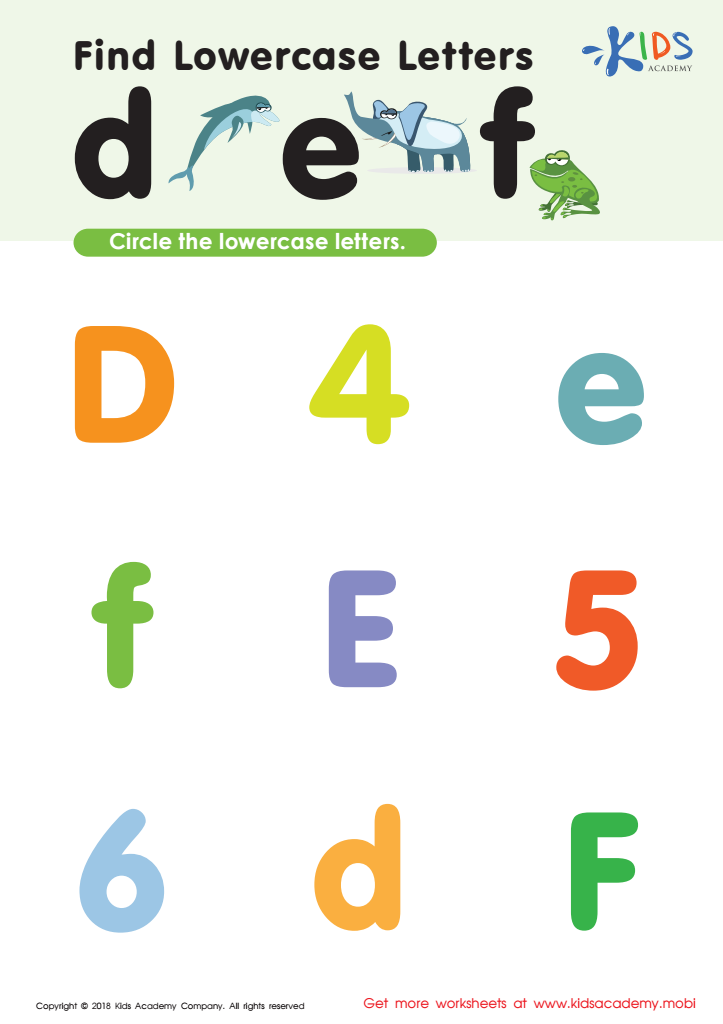
Find Lowercase Letters d e f Worksheet
 Assign to My Students
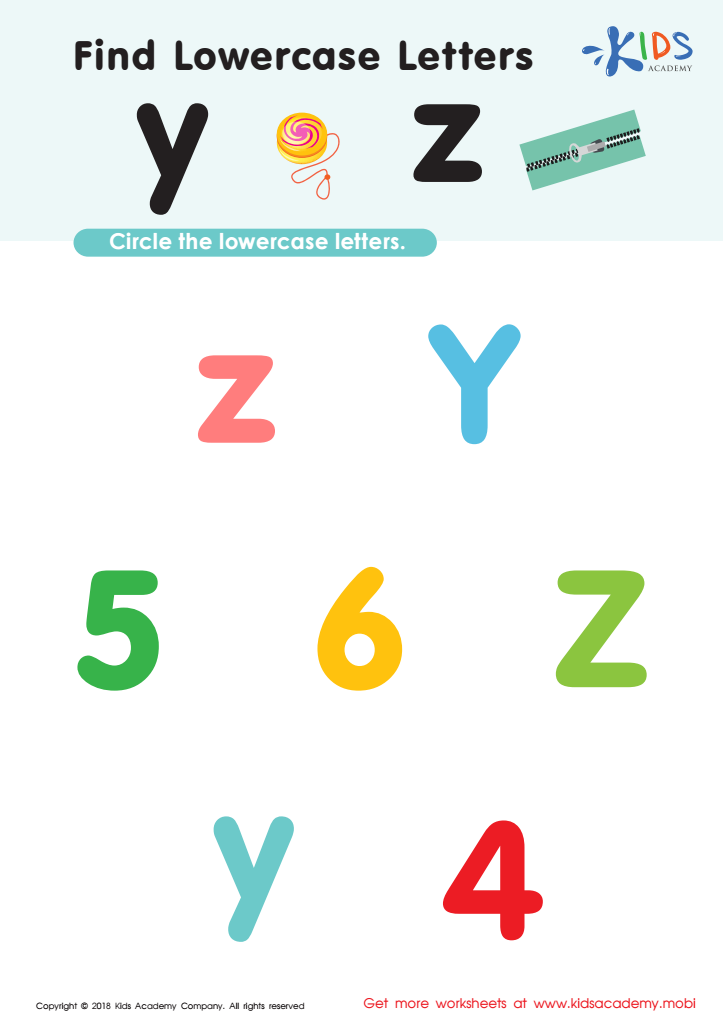
Find Lowercase Letters y z Worksheet
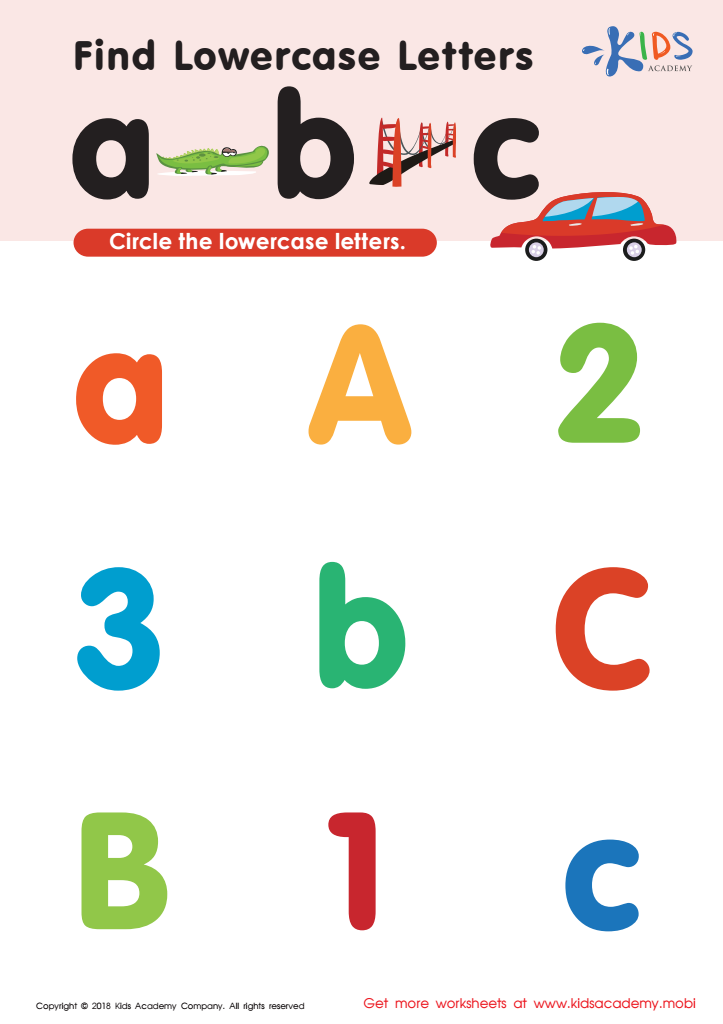
Find lowercase letters a b c Worksheet
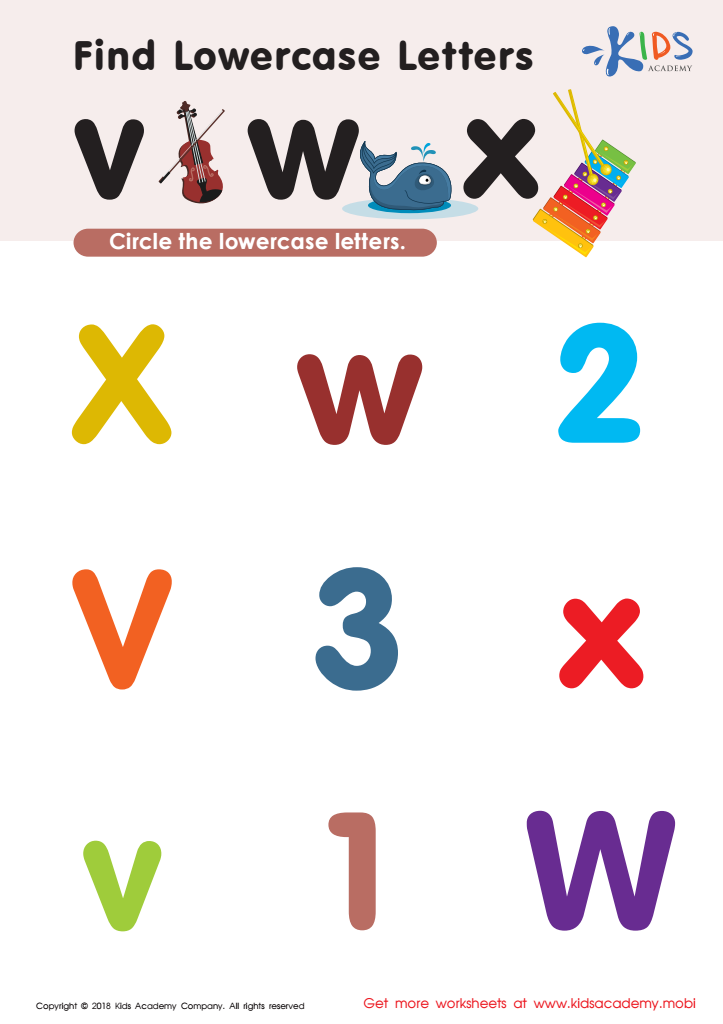
Find Lowercase Letters v w x Worksheet







Lowercase letter identification is a crucial aspect of early literacy development for children aged 5-9. This foundational skill enables young learners to recognize and understand the texts they encounter daily, enhancing their ability to read and write. Recognizing lowercase letters is essential for developing reading fluency, as most written materials utilize lowercase letters rather than uppercase.
Teachers and parents should care about this skill because it directly impacts children's confidence and competence in literacy. Mastery of lowercase letters lays the groundwork for spelling, decoding, and overall language comprehension, which are vital for academic success. Additionally, as children become proficient in recognizing these letters, they are better equipped to navigate different literacy contexts, whether in books, homework, or digital media.
Moreover, lowercase identification aids in phonemic awareness—the understanding of how sounds correspond to letters—critical for successful reading. Engaging activities that reinforce letter identification can foster a love for reading, promoting cognitive curiosity and creativity.
Investing time and resources in helping children master lowercase letters significantly influences their educational trajectory, ultimately nurturing lifelong learners and effective communicators. Therefore, prioritizing this skill should be a shared goal for both parents and teachers.







