Discover engaging "Writing Practice Normal Alphabet Worksheets for Ages 5-9" that make learning fun and effective. These printable sheets from Kids Academy seamlessly blend education and entertainment to help young learners master the alphabet. Tailored for children ages 5-9, these worksheets focus on honing writing skills, encouraging proper letter formation, and boosting confidence in early writing endeavors. Vibrant illustrations and guided instructions ensure each child stays motivated, making it easier than ever to build a strong foundation in handwriting. Watch your young writer grow and excel with these expertly designed resources, perfect for home or classroom use.

Check out this FREE Trial Lesson on Alphabet for age 5-9!

A

Favorites
With answer key
Interactive
  • 5-9
  • Writing practice
  • Alphabet
  • Normal
Short Vowel /a/ Worksheet

Short Vowel /a/ Worksheet

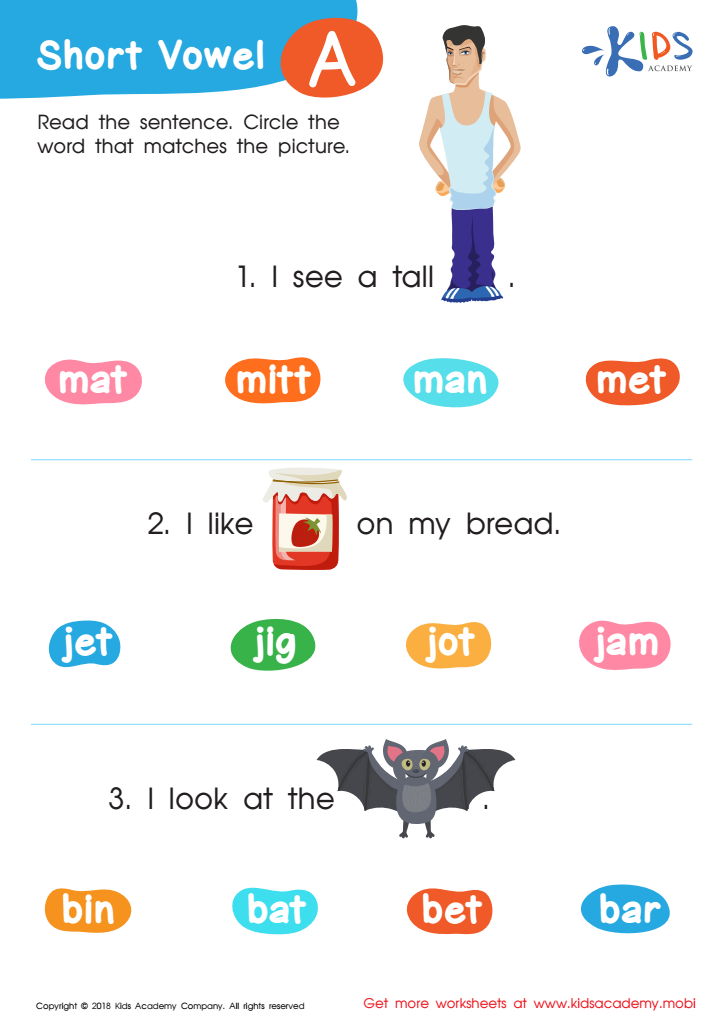
This free PDF helps new readers use sight words and pictures to read basic sentences. Then, they use accompanying word choices to find the correct word with the short a vowel sound. A key early reading skill, discriminating between short vowel sounds can be tricky in monosyllabic words, so use this PDF to help your reader reinforce it.
Short Vowel /a/ Worksheet
Worksheet
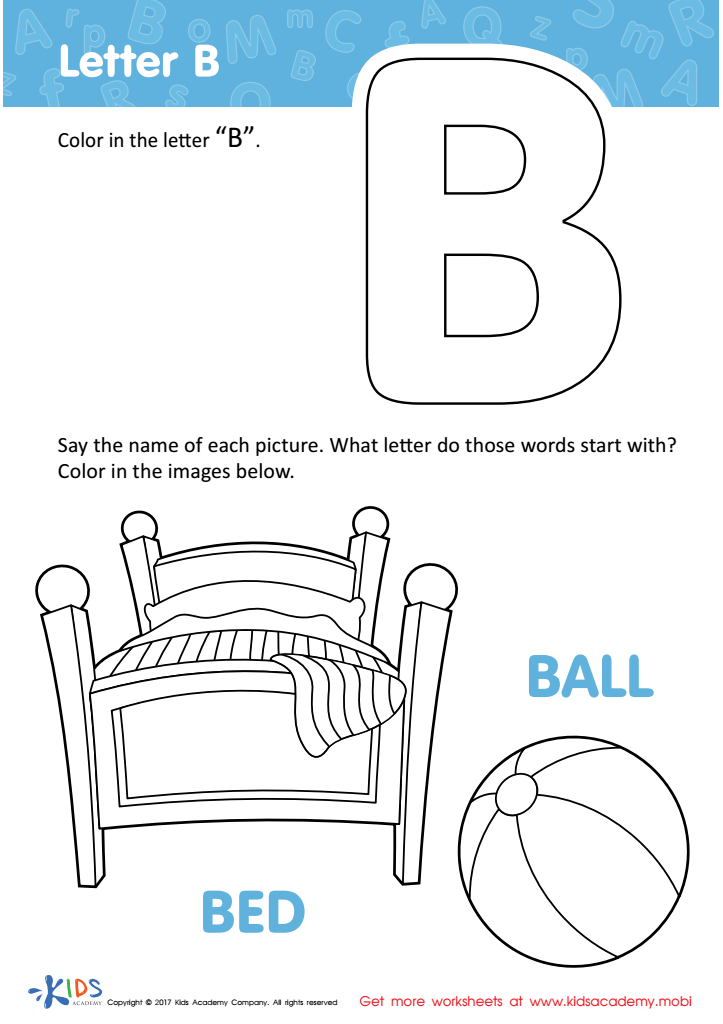
Letter B Coloring Page

Letter B Coloring Sheet

Kids will love coloring this page that features things they like - balls, bubbles, bugs and bedtime - all words starting with "B"! It's a great way to introduce the alphabet and increase their exposure to letters and sounds. Let them have fun and learn at the same time!
Download (PDF)
Assign to My Students
Letter B Coloring Sheet
Worksheet
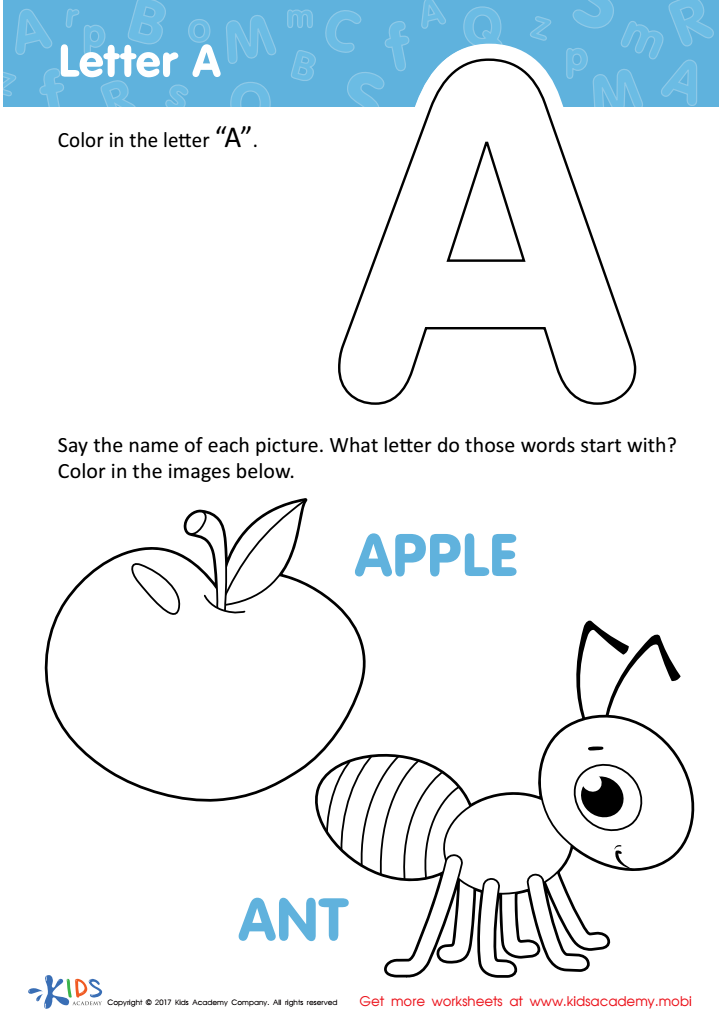
Letter a Coloring Page

Letter A Coloring Sheet

This letter "A" coloring page is great for introducing kids to the alphabet! Let them exercise their creativity while they learn to recognize letters and sounds - it's a fun and easy way to help them get started.
Download (PDF)
Assign to My Students
Letter A Coloring Sheet
Worksheet
Letter H worksheets
Letter H worksheets

Letter H Tracing Page

Trace the letter "H", then practice writing its lowercase form. Finally, choose your favorite form of transport and ride away! Get our worksheets to make learning fun and easy.
Letter H Tracing Page
Worksheet
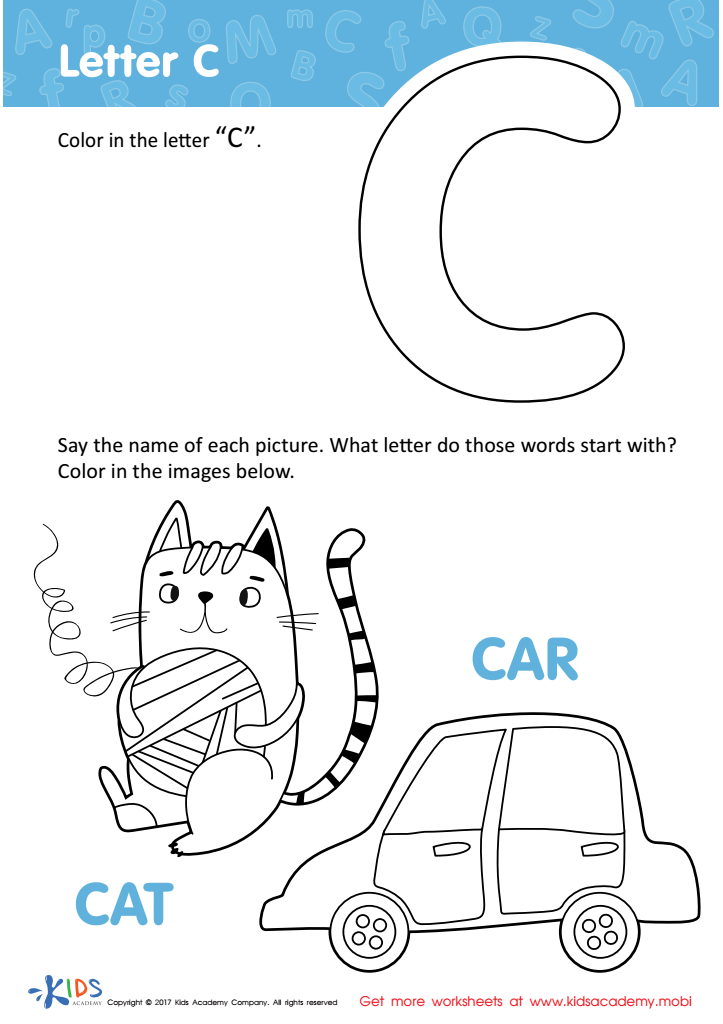
Letter C Coloring Page

Letter C Coloring Sheet

Introduce kids to the letter 'C' with this fun coloring page! Exposing little ones to letters, words, and sounds helps them learn long before they can read. Start with simple words like 'cat' and 'car' - these are great first sight words for young children.
Download (PDF)
Assign to My Students
Letter C Coloring Sheet
Worksheet
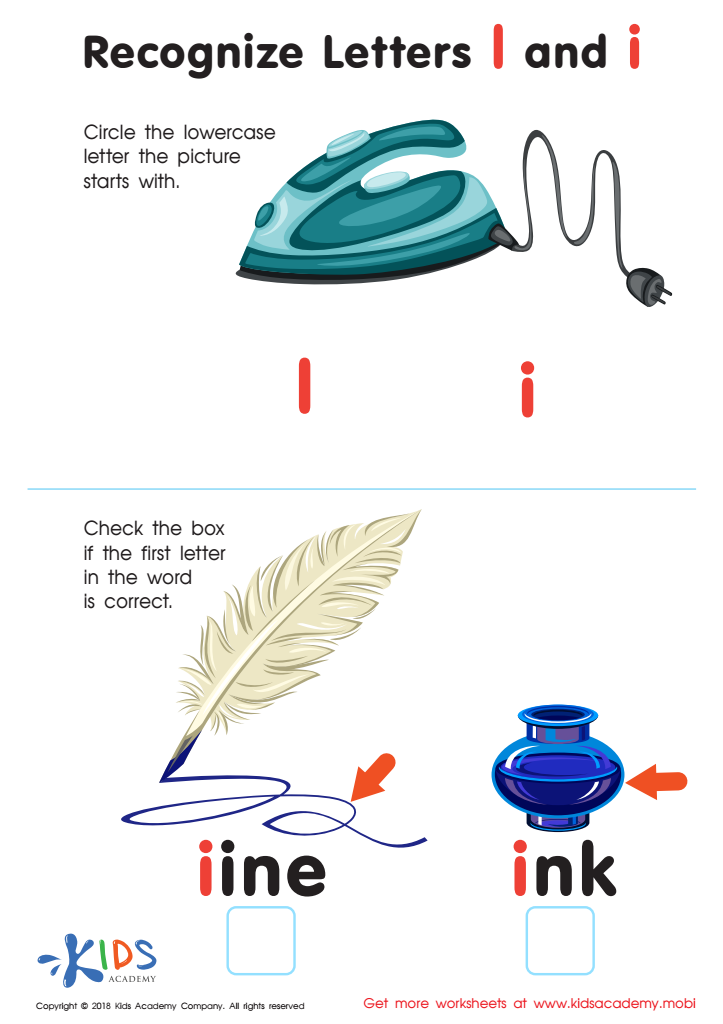
Recognize Letters l and i Worksheet

Recognize Letters l and i Worksheet

Help your child become familiar with uppercase and lowercase letters. Have them look at the pictures in the worksheet and circle the lowercase letter the picture starts with. For example: which one is the lowercase "i", the capital "I" or the small "i"?
Recognize Letters l and i Worksheet
Worksheet
Letter H and I Sounds Worksheet


Letter H and I Sounds Worksheet

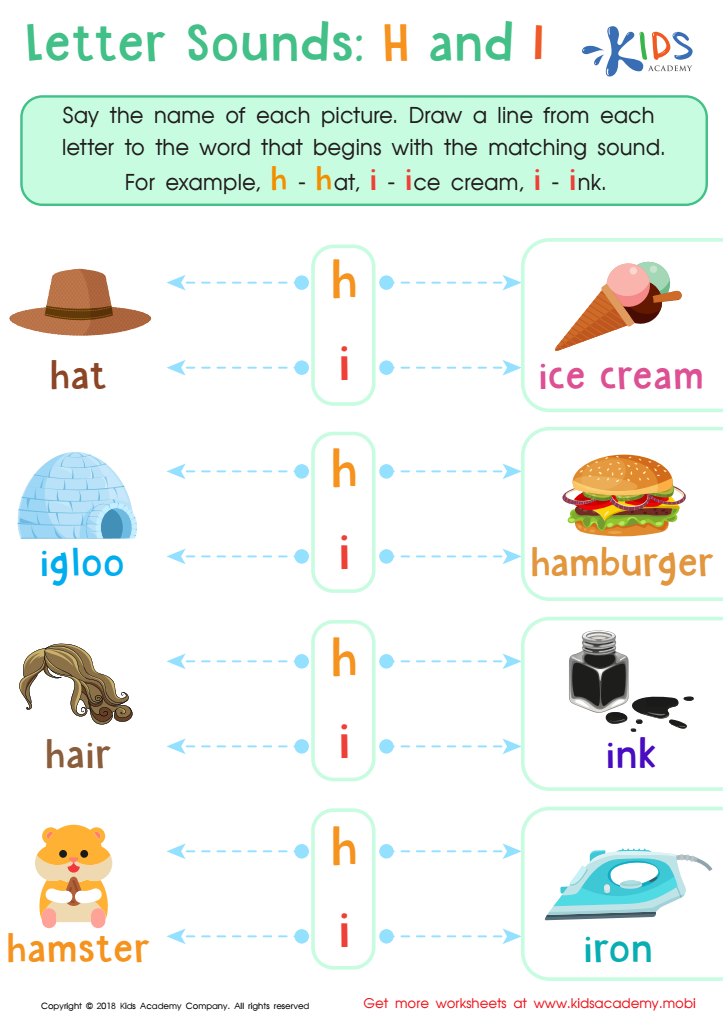
Preschoolers will have fun and develop reading and writing skills at the same time! They'll use pictures to recognize familiar words and differentiate between 'H' and 'I' sounds. Then they'll trace lines to connect each sound to the picture, improving their fine-motor skills. Bright and cheerful visuals make learning a breeze!
Letter H and I Sounds Worksheet

Worksheet


Developing writing skills with the normal alphabet for children ages 5-9 is crucial for several reasons. Firstly, writing by hand builds fine motor skills. The process of gripping a pencil, forming letters, and writing sentences enhances finger dexterity, which is essential for tasks like tying shoes and using scissors. Secondly, learning to write the alphabet lays the foundation for literacy. It helps children recognize letters, connect them to sounds, and understand word formation, which are critical steps in learning to read.

Additionally, writing practice promotes cognitive development. It encourages kids to process thoughts, organize ideas, and communicate effectively. This boosts their problem-solving abilities and helps in expressing emotions and stories creatively. Academic performance also benefits from early writing practice. Children who develop strong writing skills tend to perform better in other subjects because they can take notes, complete written assignments, and engage more deeply with the material.

From a social perspective, writing can be a means for children to express themselves and communicate with peers and teachers. This can foster self-confidence and social connections. Lastly, writing is a skill used daily in adulthood for personal and professional communication. Early practice ensures children grow up with a strength in an essential life skill.