Lowercase identification Normal Letter Recognition Worksheets for Ages 5-9
4 filtered results
-
From - To
Welcome to our "Lowercase Identification Normal Letter Recognition Worksheets" designed for children ages 5-9! These engaging worksheets aim to enhance early literacy skills by focusing on recognizing lowercase letters. With a variety of fun activities, children will learn to identify each letter through tracing, matching, and coloring exercises. Our user-friendly format supports varying learning styles, making it an ideal resource for teachers and parents alike. By practicing lowercase letter recognition, kids will build a strong foundation for reading and writing. Download our printable worksheets today and watch your child gain confidence in their literacy journey!
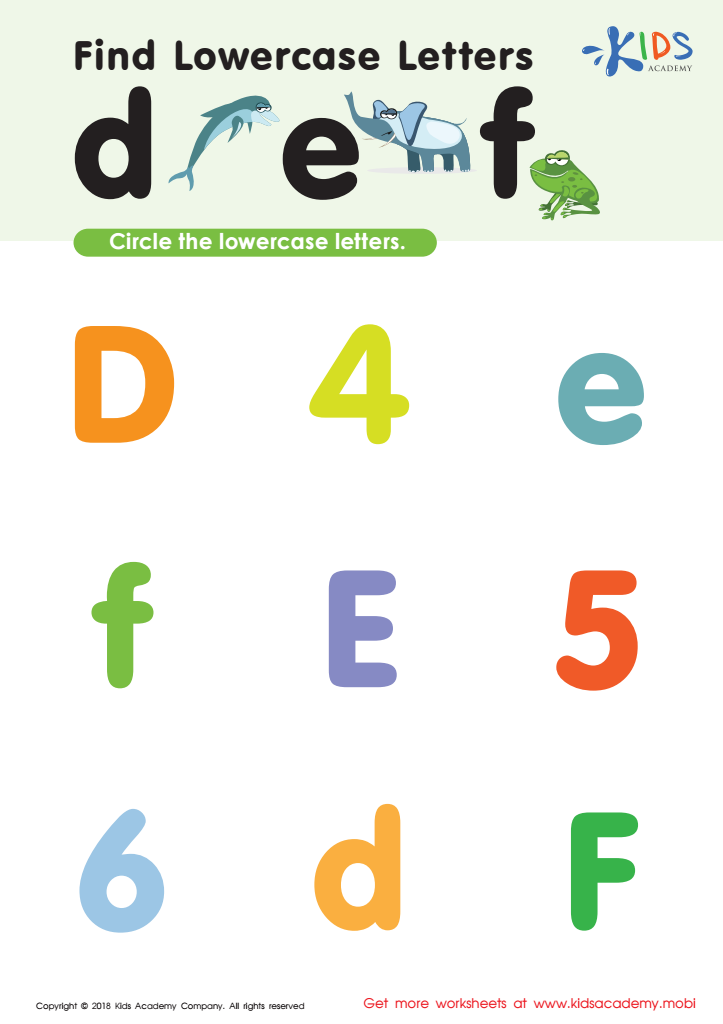
Find Lowercase Letters d e f Worksheet
 Assign to My Students
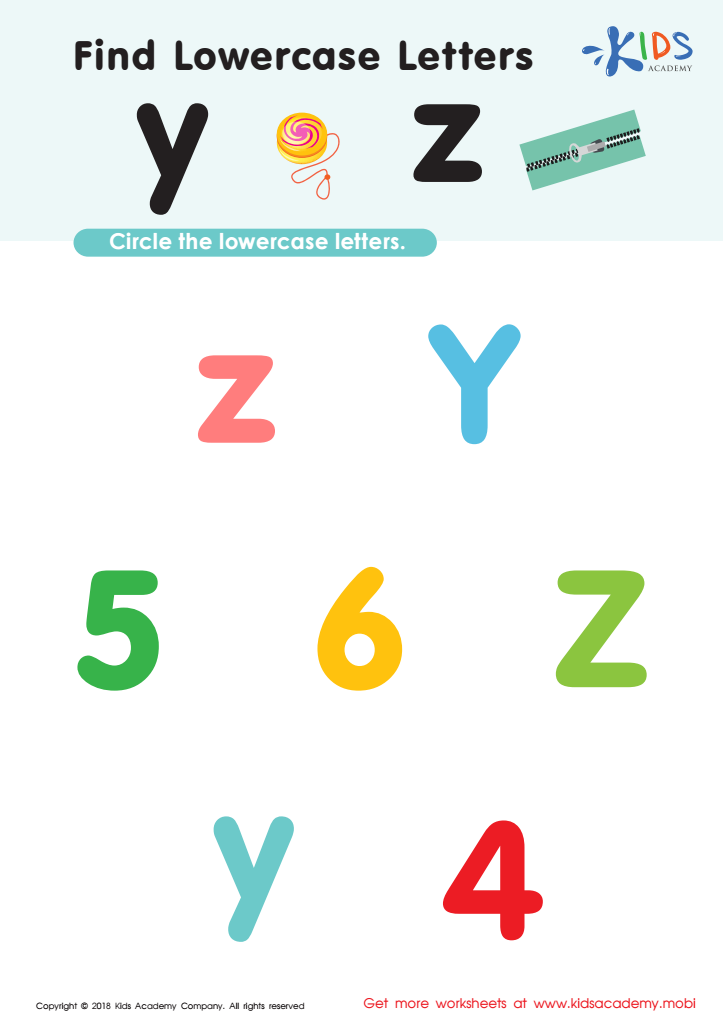
Find Lowercase Letters y z Worksheet
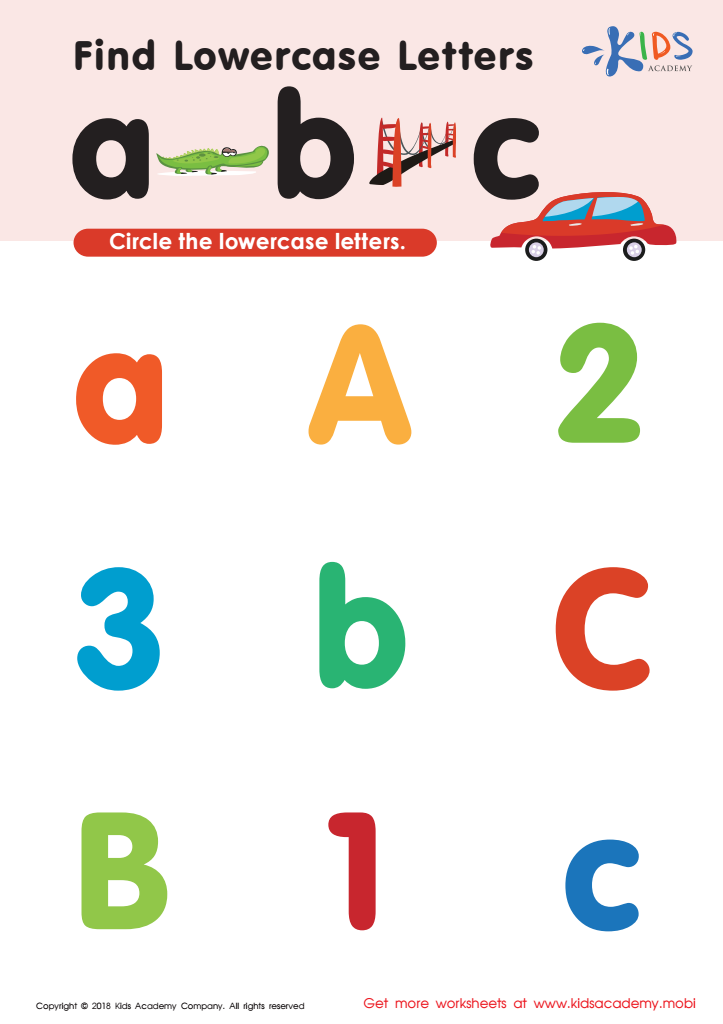
Find lowercase letters a b c Worksheet
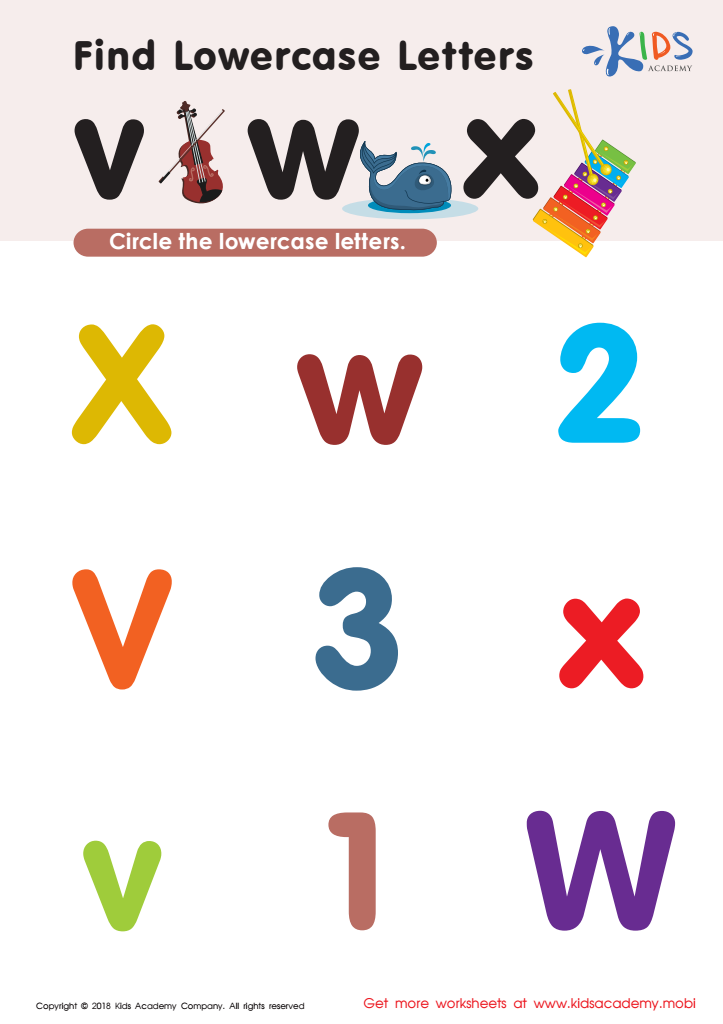
Find Lowercase Letters v w x Worksheet








Lowercase letter identification and normal letter recognition are essential skills for children aged 5-9, as they form the foundation for successful reading and writing. At this formative stage, children are transitioning from recognizing letters to comprehending their use in context. Mastery of lowercase letters is crucial because language in books, signs, and everyday writing predominantly employs lowercase text.
When parents and teachers focus on lowercase letter recognition, they facilitate phonemic awareness and language development, crucial for literacy. This identification helps children decode words, making reading enjoyable and less daunting. As they recognize letters, they begin to associate them with sounds, leading to improved vocabulary and comprehension.
Moreover, educators and parents who prioritize these skills can monitor progress and identify areas where a child may struggle, allowing for early interventions. Engaging in playful activities like letter games, reading aloud, and interactive writing fosters a love for literacy while enhancing recognition skills.
Ultimately, nurturing lowercase letter identification not only bolsters academic achievement but also builds confidence—empowering children to express themselves effectively in written communication, which is vital for social interaction and future learning opportunities. Therefore, consistent support in this area is vital in helping children thrive in their educational journeys.








