Vocabulary development Normal Letter Sounds Worksheets for Ages 5-9
6 filtered results
-
From - To
Boost your child's reading foundation with our Vocabulary Development Normal Letter Sounds Worksheets for ages 5-9. Skillfully crafted, these engaging worksheets help young learners identify, understand, and practice letter sounds, promoting early literacy. By focusing on clear pronunciation and recognition, our exercises encourage vocabulary expansion and phonemic awareness. Perfect for classroom or home activities, these resources support crucial learning milestones. Transform spare moments into educational fun, and watch as your child gains confidence in reading and language skills. Make vocabulary development enjoyable and effective with tailored worksheets from Kids Academy.
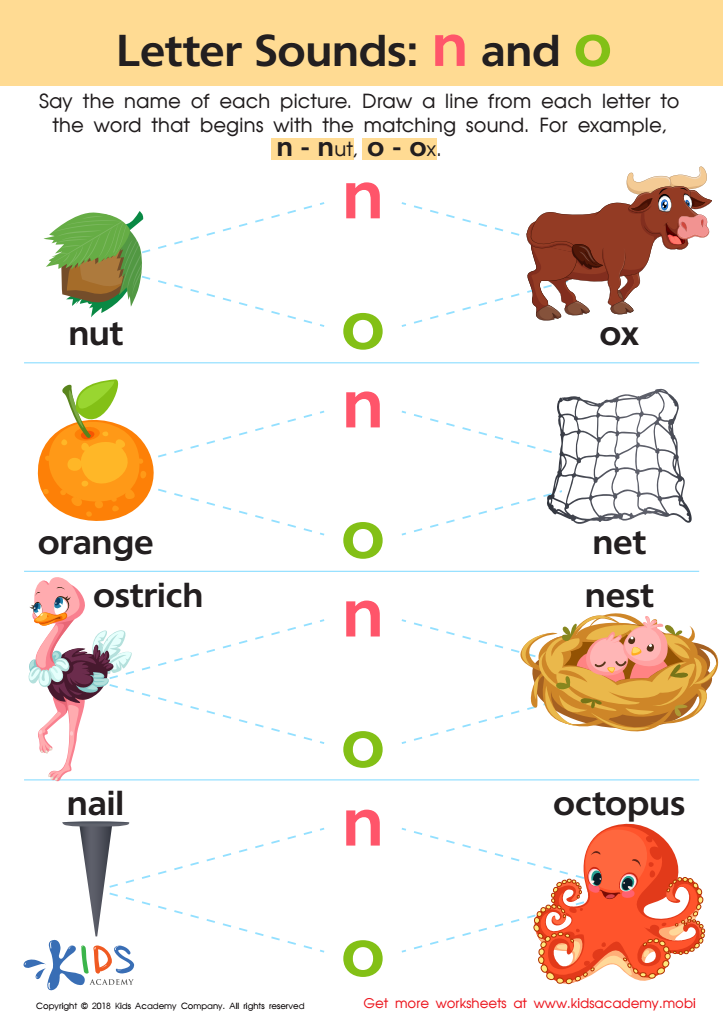
Letter N and O Sounds Worksheet
 Assign to My Students
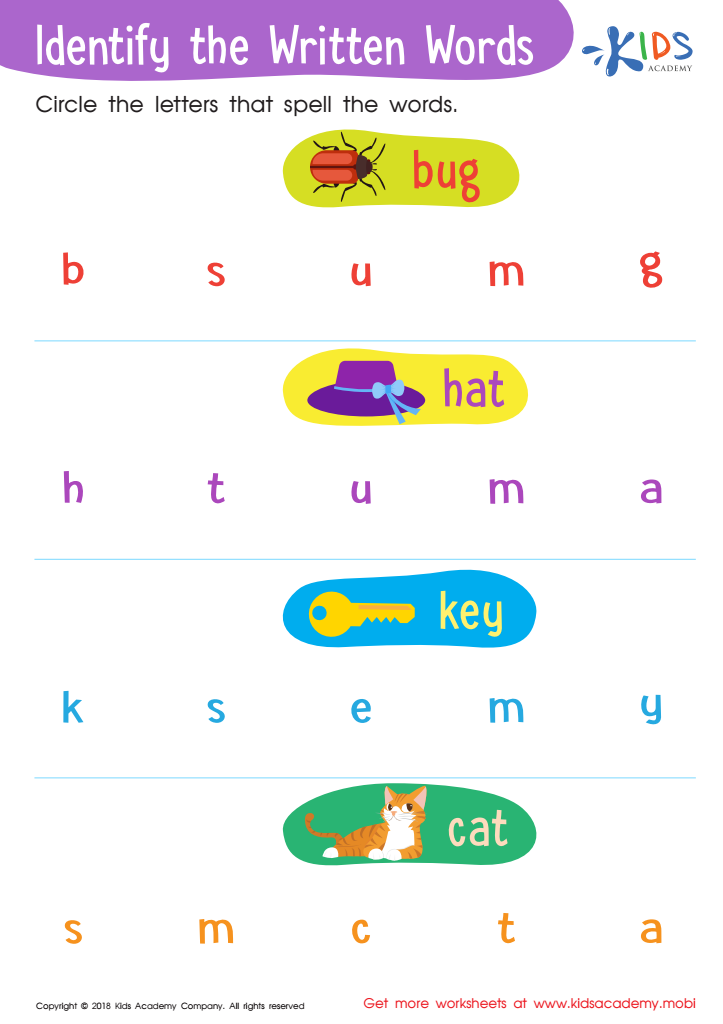
Identify the Written Words Worksheet
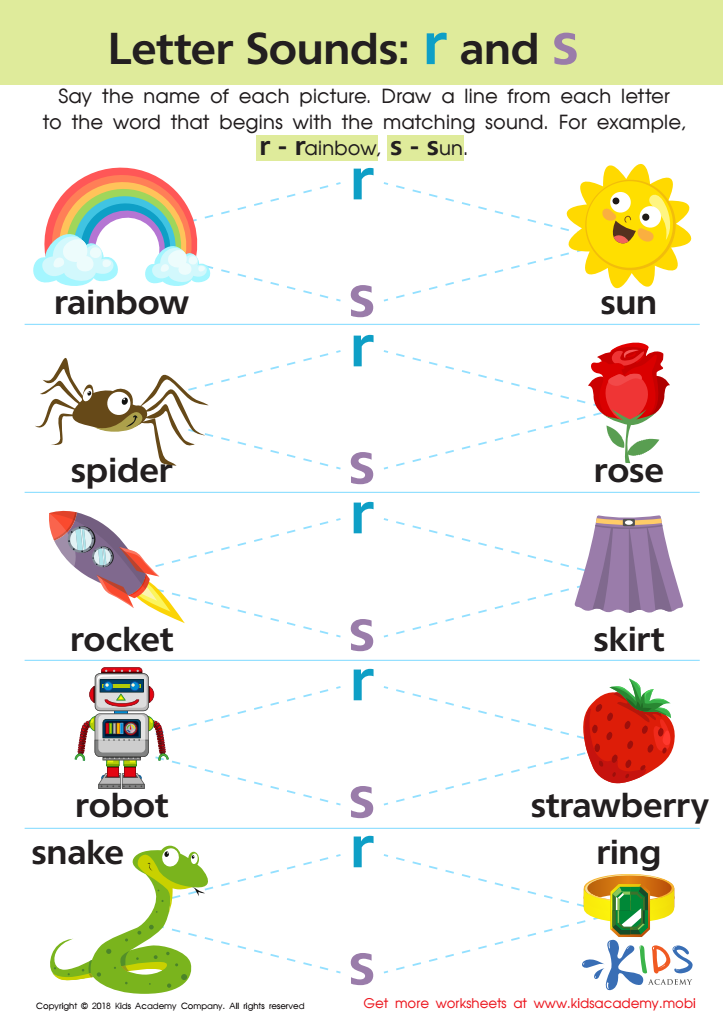
Letter R and S Sounds Worksheet
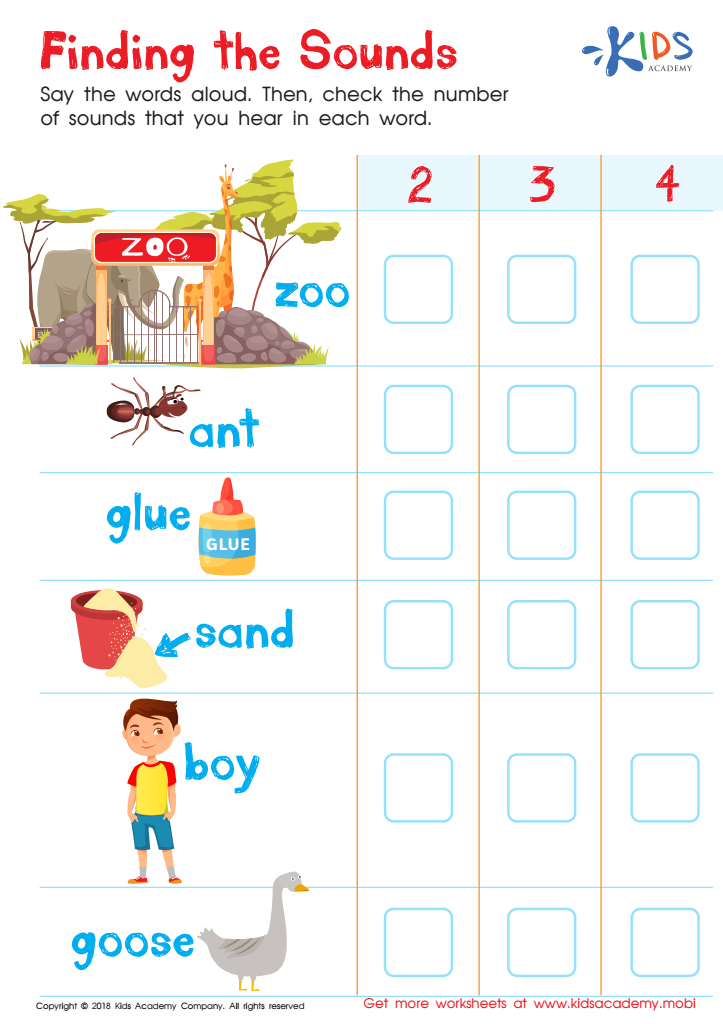
Finding the Sounds Worksheet
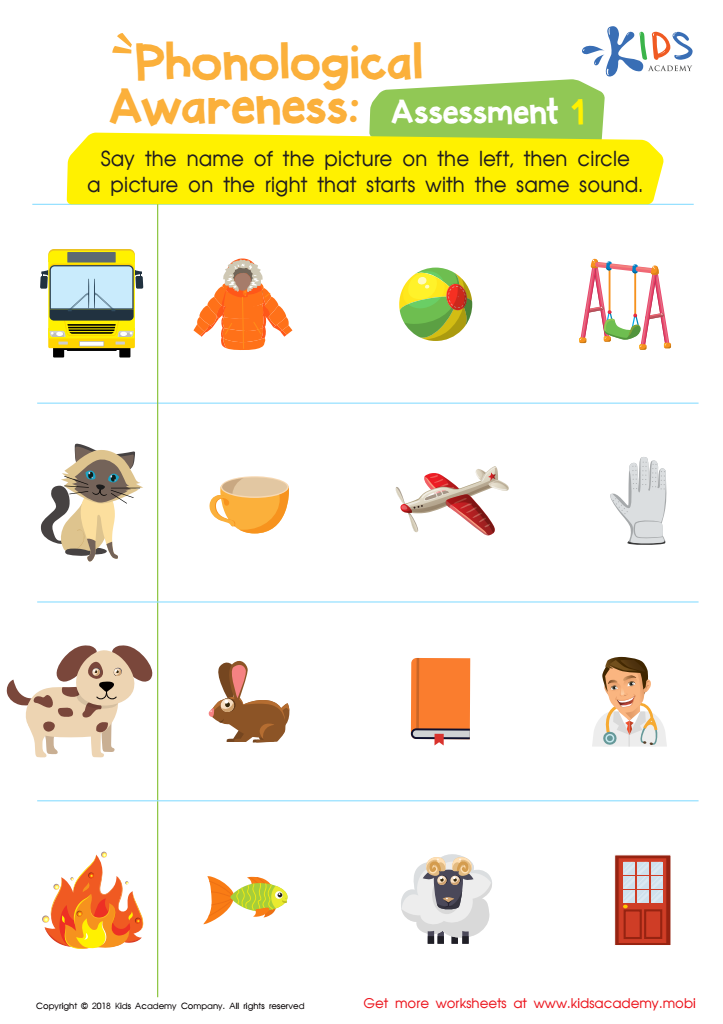
Phonological Awareness: Assessment 1 Worksheet
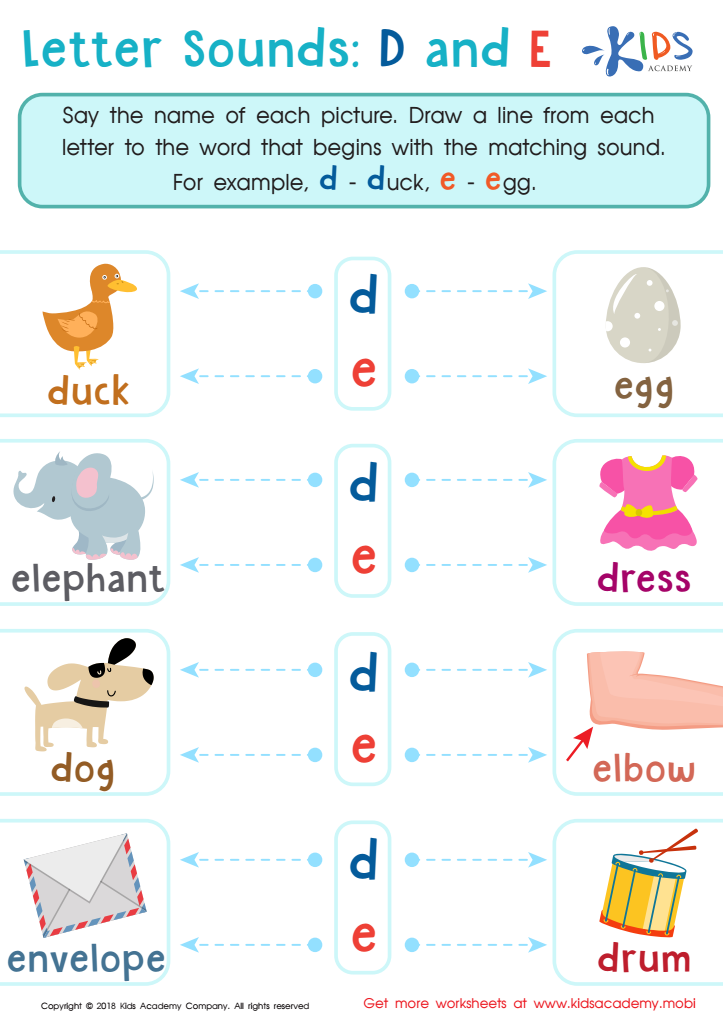
Letter D and E Sounds Worksheet








Vocabulary development and letter sound recognition are foundational skills for children aged 5-9, critical for future academic success and overall literacy. Parents and teachers should prioritize these areas because they directly impact reading comprehension, writing ability, and effective communication. When children have a strong vocabulary, they can understand and internalize new information more efficiently. This comprehension is vital not just for language arts but for learning across all subjects, including math and science, where complex instructions and terminologies are frequently encountered.
Recognizing normal letter sounds is integral to phonemic awareness, allowing children to decode words accurately. Effective decoding leads to fluent reading, which not only boosts confidence but also fosters a love for reading. Children who find reading enjoyable are more likely to engage with books independently, further strengthening their vocabulary and critical thinking skills.
Additionally, a rich vocabulary and strong phonics skills are crucial for expressive language development. Children can articulate their thoughts, needs, and emotions more clearly, which improves social interactions and reduces frustration from miscommunication.
Ignoring these fundamental skills can lead to difficulties in learning that may persist into later grades. Therefore, focused attention on vocabulary development and letter sounds during these formative years is essential for laying a robust educational foundation.






