Sound differentiation Normal Phonics Worksheets for Ages 5-9
3 filtered results
-
From - To
Enhance your child's reading skills with our Sound Differentiation Normal Phonics Worksheets, designed for ages 5-9. These worksheets help young learners distinguish between different sounds, a crucial step in mastering phonics and developing strong literacy foundations. Engaging activities designed by educational experts focus on sound recognition, blending, and segmenting. Kids will enjoy learning through fun exercises, making phonics practice effective and enjoyable. Ideal for home or classroom use, our worksheets support various reading levels and learning styles. Begin your child’s journey to reading success today with our expertly crafted Sound Differentiation Phonics Worksheets!
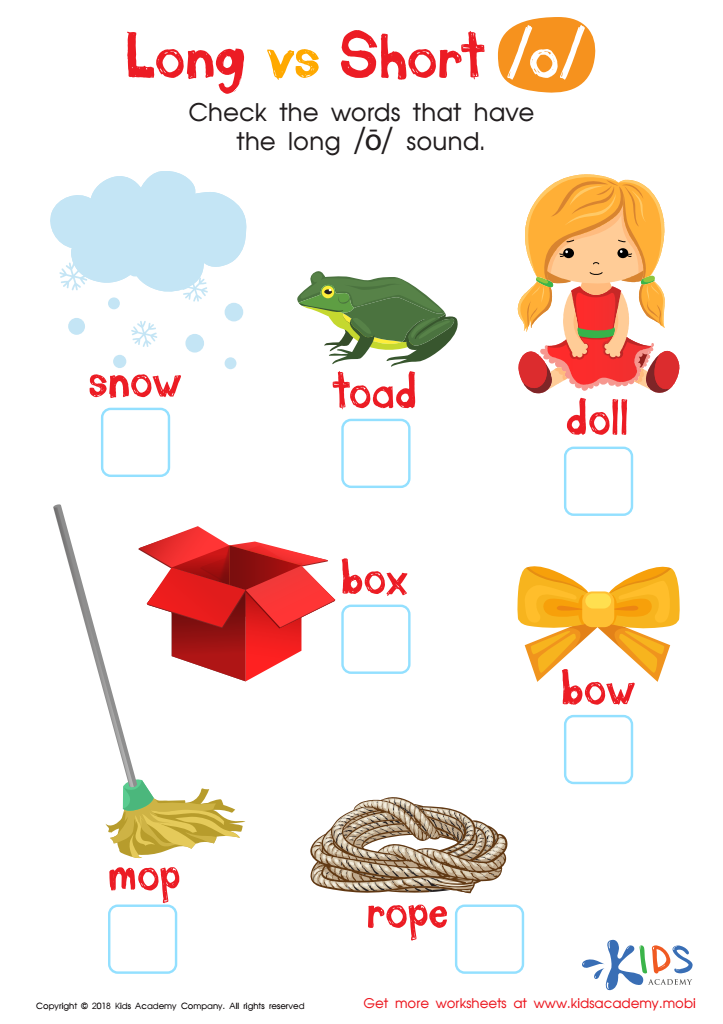
Long vs Short O Reading Worksheet
 Assign to My Students
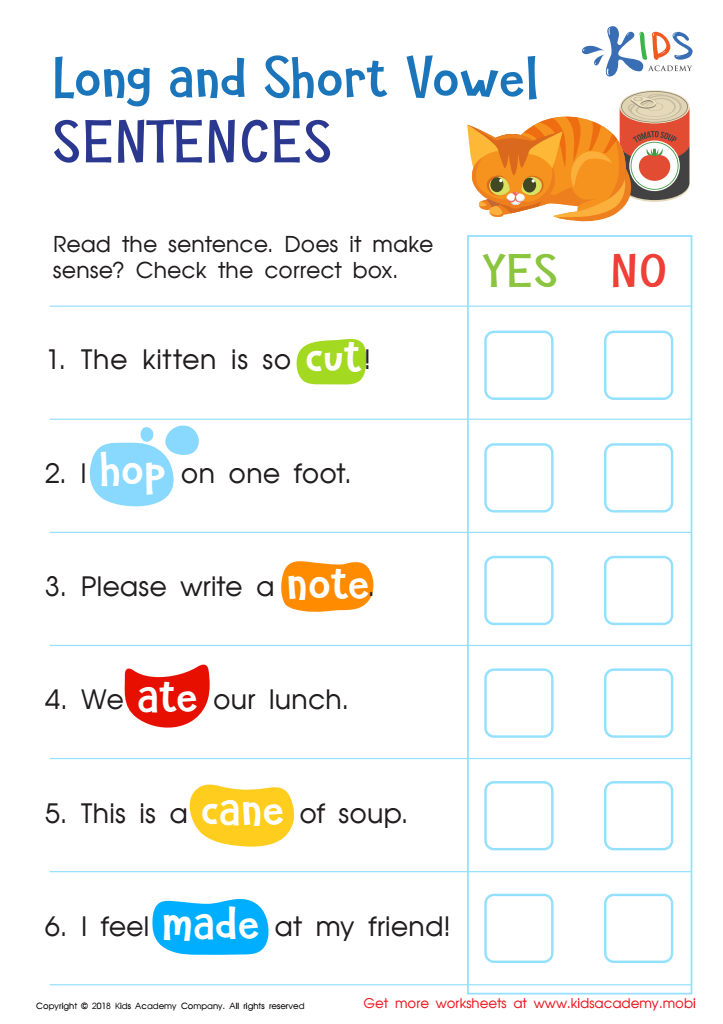
Long and Short Vowel Sentences: Assessment Worksheet
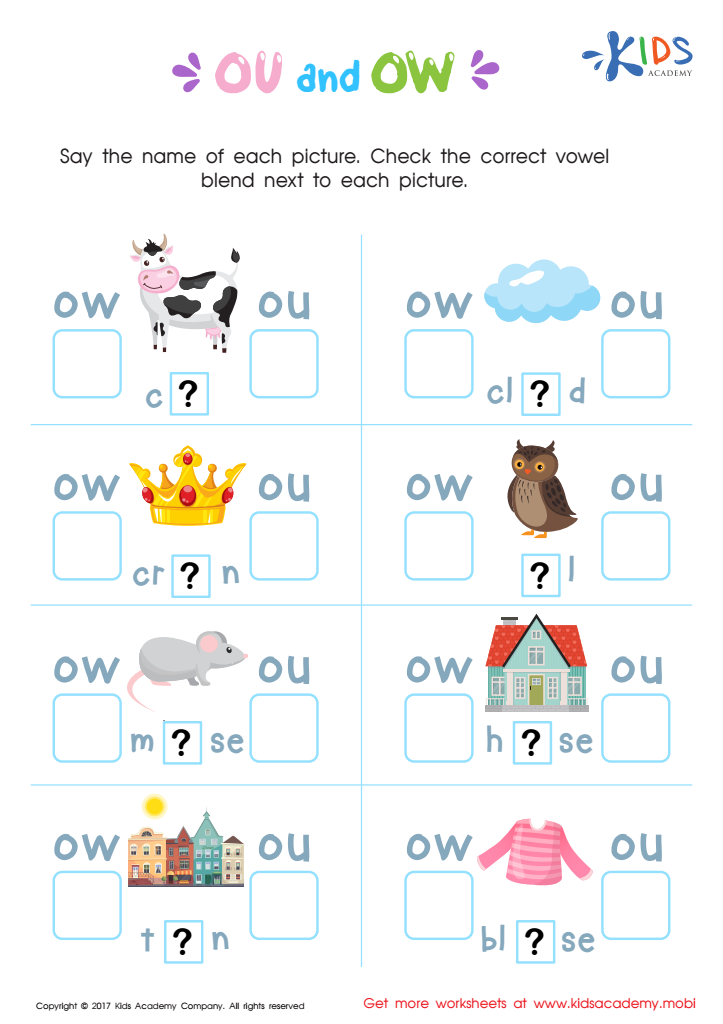
OU and OW Words Worksheet








Sound differentiation and normal phonics are cornerstones in the foundational stages of reading and language development for ages 5-9. Parents and teachers should place significant focus on these skills because they lay the groundwork for future literacy and academic success.
Sound differentiation is the ability to recognize and distinguish between different sounds in spoken language. This skill is crucial as it directly impacts a child's ability to understand phonemes—the smallest units of sound that make up words. Strong sound differentiation allows children to better decode words, spell correctly, and comprehend what they read. For instance, differentiating between the sounds 'b' and 'd' is essential for not confusing "bat" with "dat" or "dog" with "bog."
Normal phonics, on the other hand, teaches children the relationship between sounds and their corresponding letters or groups of letters. Through phonics instruction, children learn to 'sound out' words, which helps with both reading fluency and accuracy. This systematic approach enables children to tackle new and unfamiliar words independently, boosting their confidence and love for reading.
In essence, emphasizing sound differentiation and phonics during these critical early years helps create proficient readers. Proficiency in reading not only enhances academic performance across subjects but also fosters a lifelong love of learning. Neglecting these skills can lead to reading difficulties, which often translate into broader educational and self-esteem issues later in life.







