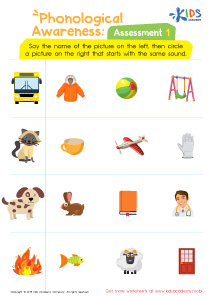
Reading comprehension Normal Rhyming Worksheets for Ages 5-9
7 filtered results
-
From - To
Discover the perfect resource to boost your child's reading skills with our Reading Comprehension Normal Rhyming Worksheets designed for ages 5-9. These engaging worksheets from Kids Academy make learning fun through rhyming activities that enhance vocabulary and phonetic awareness. Suitable for early learners, each worksheet is crafted to improve reading comprehension, helping children understand and analyze text seamlessly. The exercises encourage creativity and critical thinking, making them ideal for both classroom use and at-home practice. Allow your child to explore the joy of reading with these carefully structured activities that support their academic journey.
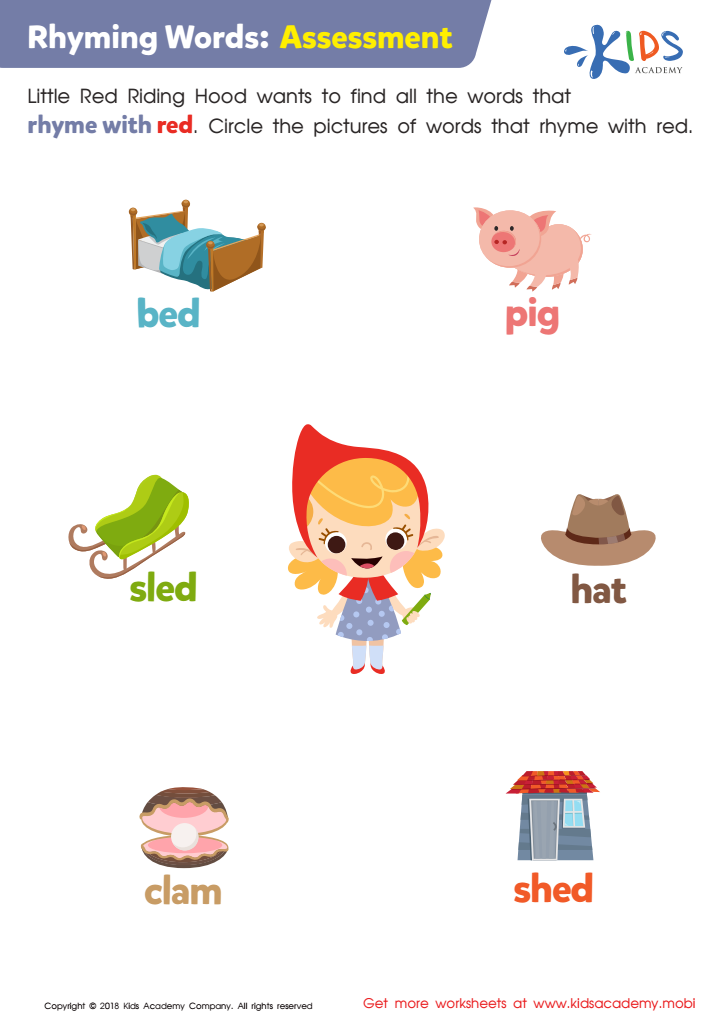
Rhyming Words: Assessment Worksheet
 Assign to My Students
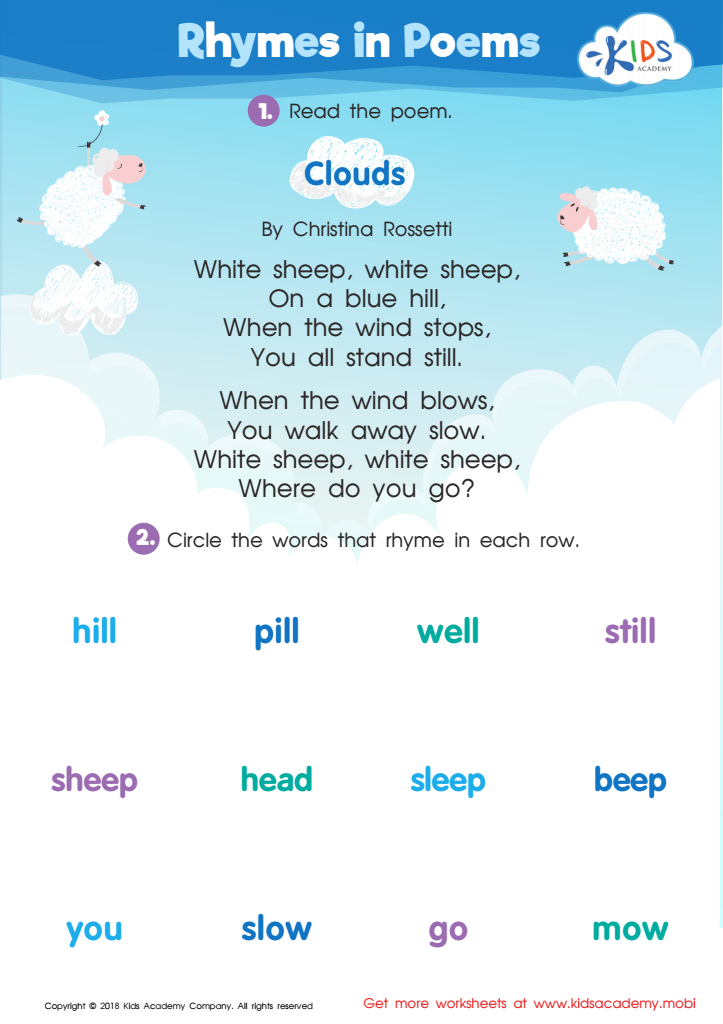
Rhymes in Poems Worksheet

Rhyming Words Rhyming Worksheet
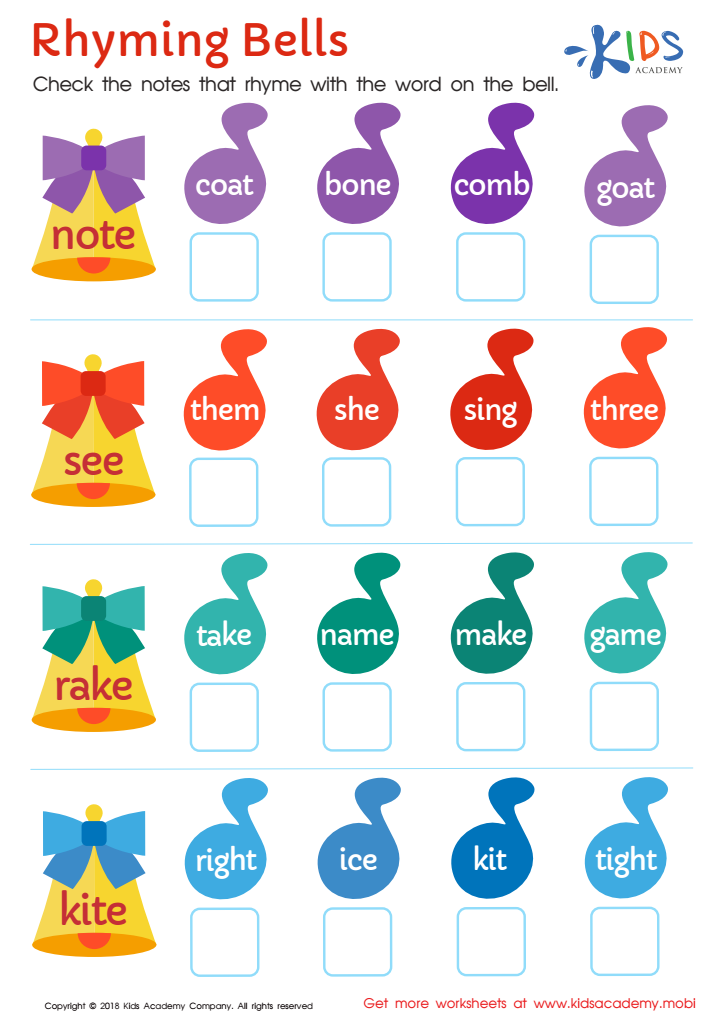
Rhyming Bells Worksheet

First Words: Picture Rhymes Worksheet
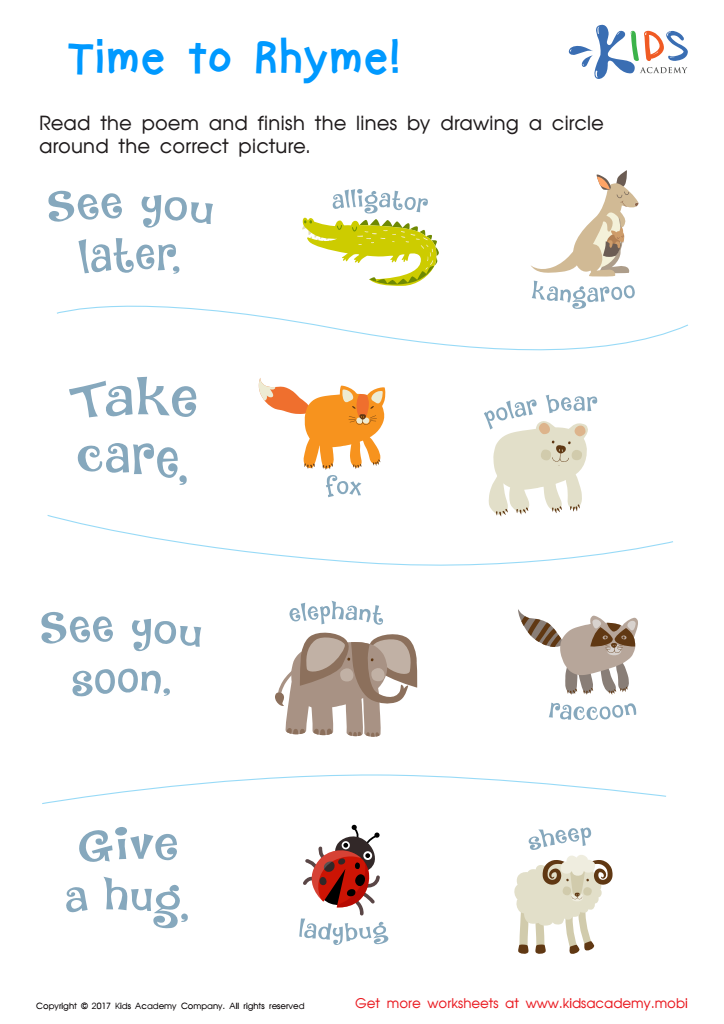
Time to Rhyme Rhyming Worksheet
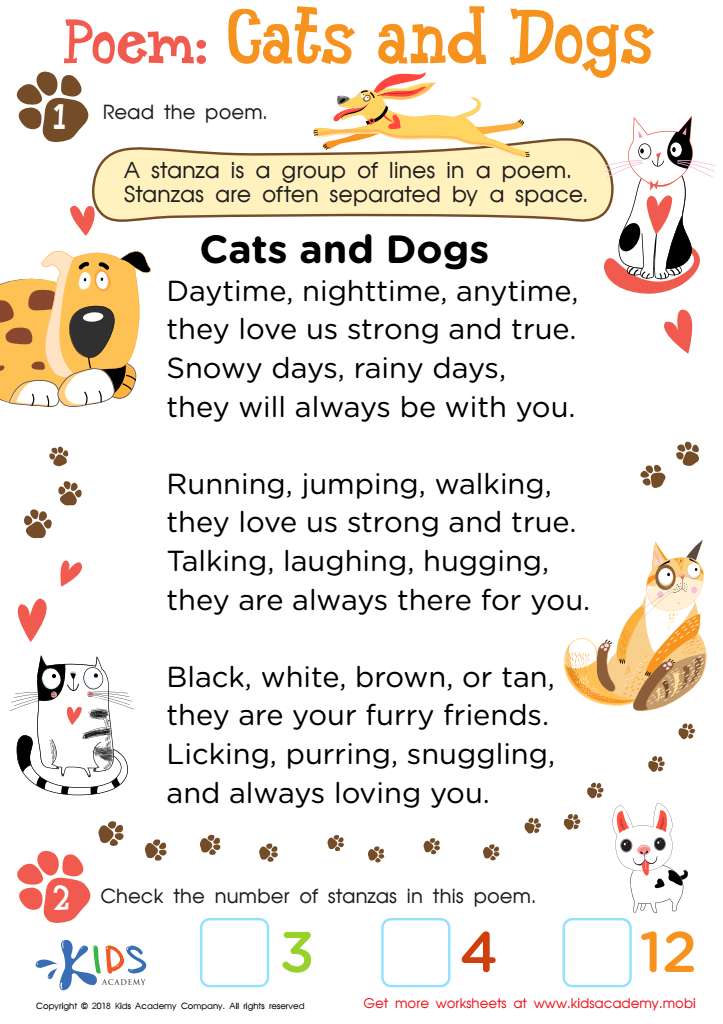
Poem: Cats and Dogs Worksheet







Reading comprehension is a critical skill that forms the foundation of a child’s educational journey, especially for ages 5-9. At this stage, children's minds are highly receptive to language patterns and storytelling elements. Rhyming, being one such element, plays a crucial role in enhancing reading comprehension for young learners.
Firstly, rhyming helps children recognize sound patterns, an essential component of phonemic awareness, which is crucial for reading fluency. When children understand and predict rhyming words, they develop the ability to decode new words, making reading smoother and more enjoyable.
Moreover, rhyming supports memory and retention. The rhythmic and repetitive nature of rhymes help children remember words and phrases, aiding vocabulary development. This fun, musical aspect of learning not only sustains children's interest but also reinforces language patterns more effectively than non-rhyming text.
Additionally, engaging with rhymes enhances listening skills and auditory discrimination, allowing children to distinguish between different sounds and words. This auditory skill is pivotal for understanding spoken and written language.
Rhyming also fosters a love for reading. Fun, playful rhyming stories captivate young minds, encouraging a positive attitude towards reading. When children enjoy reading, they are more likely to embrace it as a rewarding activity, setting the stage for lifelong learning and success.