Letter tracing skills Normal Upper & Lowercase Letters Worksheets for Ages 5-9
3 filtered results
-
From - To
Enhance your child's alphabet mastery with our Letter Tracing Skills Worksheets designed for ages 5-9. Our carefully crafted worksheets support your child's journey in recognizing and writing both uppercase and lowercase letters. Each worksheet provides ample practice with clear, traceable patterns that develop fine motor skills and boost handwriting confidence. By tracing letters, kids improve their penmanship while reinforcing letter shapes and sounds. Great for homeschooling or extra practice, our worksheets create a strong foundation for literacy success in a fun, engaging way. Start developing essential writing skills with our comprehensive collection today!
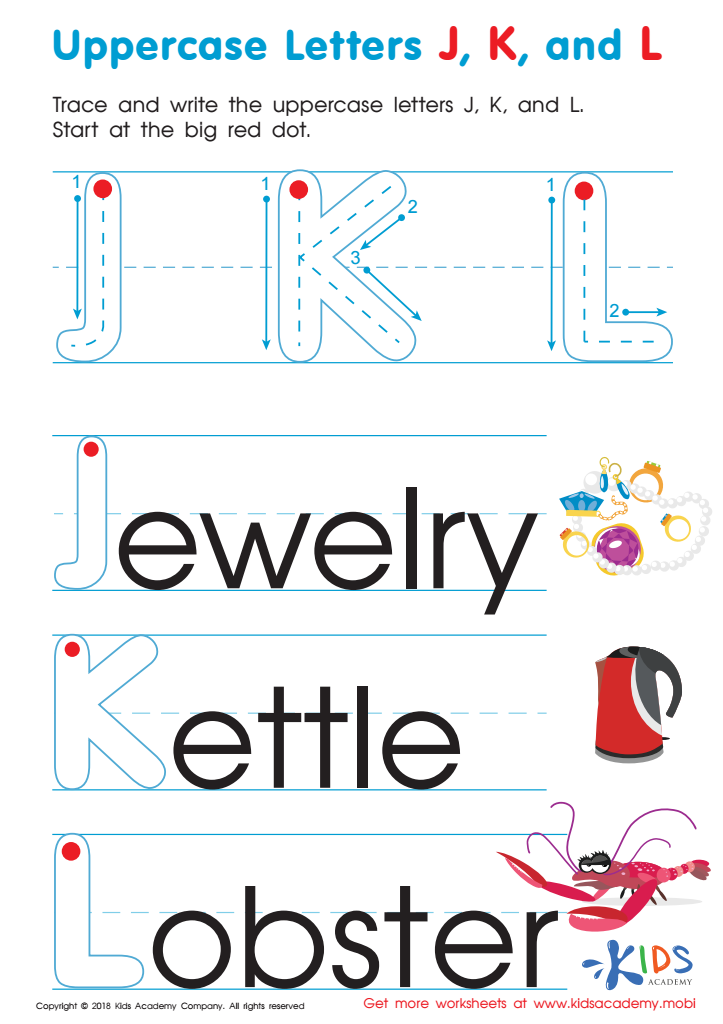
Uppercase Letters J, K, and L Worksheet
 Assign to My Students











Uppercase Letters Y Z Worksheet
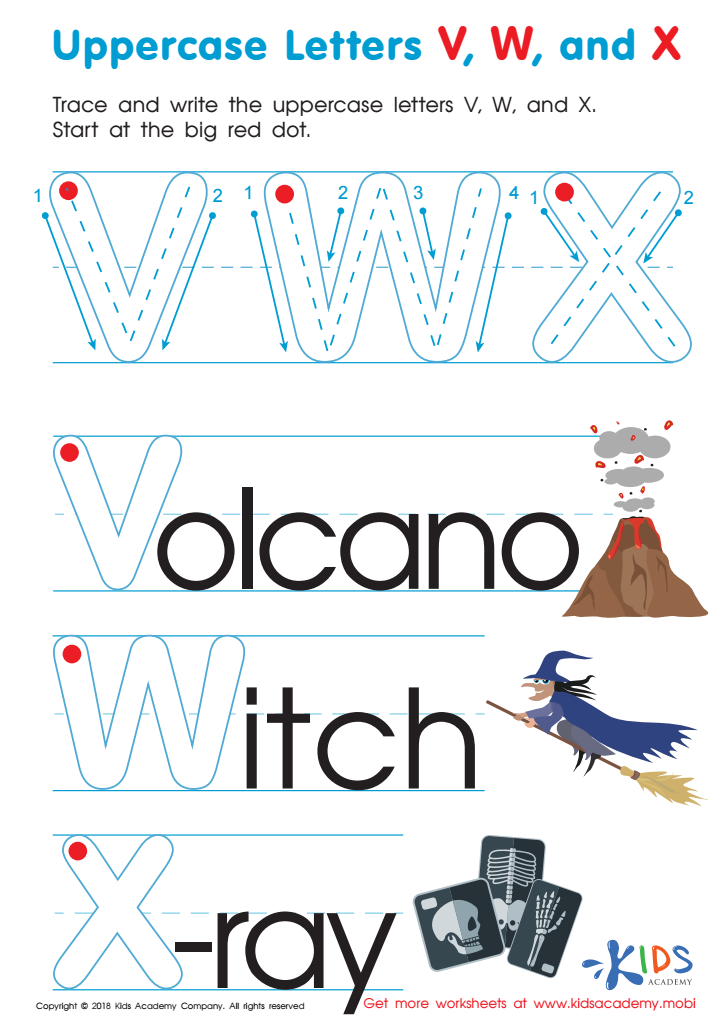
Uppercase Letters V, W, and X Worksheet






Letter tracing skills in normal upper and lower case letters are crucial for children aged 5-9 for several reasons, compelling both parents and teachers to prioritize them. First and foremost, letter tracing builds the foundational handwriting skills necessary for clear and legible written communication. This foundational education is pivotal as students progress through their academic journey. Coordinated hand movements are developed, which significantly aid fine motor skills improvements, important not only in writing but in many everyday tasks.
Mastering letter tracing also strengthens a child’s understanding of the visual properties of letters, significantly enhancing their literacy. Familiarity with both upper and lower case letters is essential for reading fluency, text comprehension, and ease of writing. Additionally, early proficiency in these skills can boost a child’s confidence, making them more willing to engage in classroom activities and take on new challenges.
From a cognitive standpoint, letter tracing promotes concentration, memory recall, and discipline, further encouraging a child’s overall developmental growth. As a foundational skill for more complex learning tasks, early mastery of letter tracing supports all-around academic achievement, making it essential that parents and teachers foster these skills diligently during the critical developmental window of ages 5-9.







