Lowercase identification Normal Upper & Lowercase Letters Worksheets for Ages 5-9
4 filtered results
-
From - To
Enhance your child's literacy skills with our engaging Lowercase Identification worksheets, designed specifically for ages 5-9. These interactive activities help young learners recognize and differentiate between normal upper and lowercase letters. Each worksheet features colorful illustrations and simple exercises that make learning fun and effective. Perfect for classroom use or at-home practice, these resources aim to strengthen foundational reading skills, boost confidence, and spark a love for learning. Support your child's educational journey as they explore the world of letters and words. Download our printable worksheets today and watch your little one's reading abilities flourish!
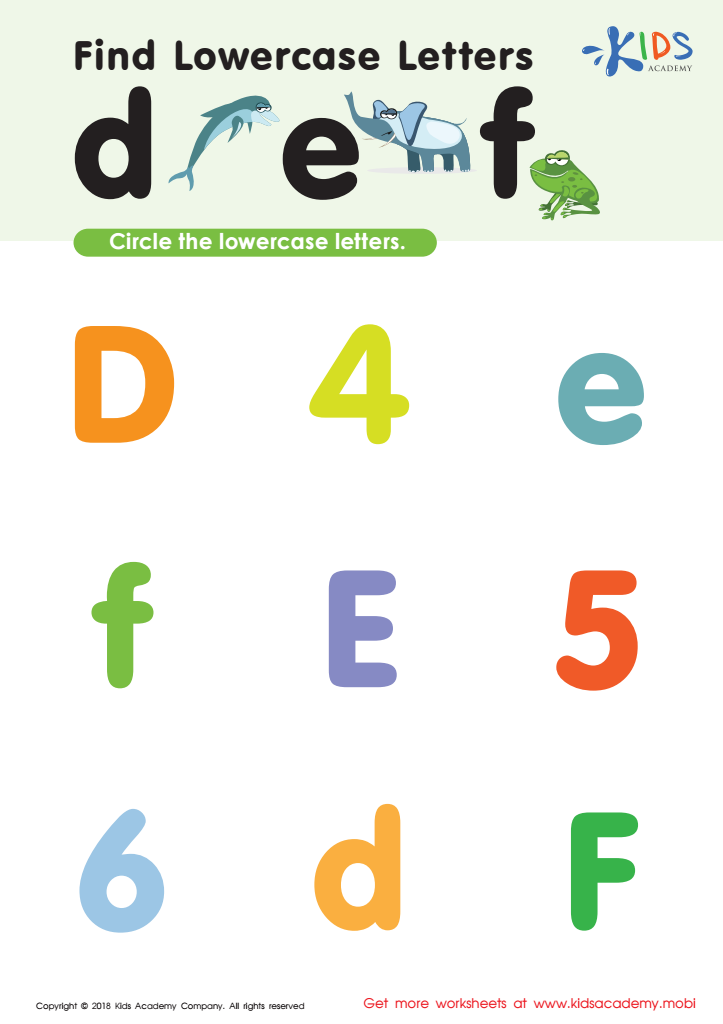
Find Lowercase Letters d e f Worksheet
 Assign to My Students

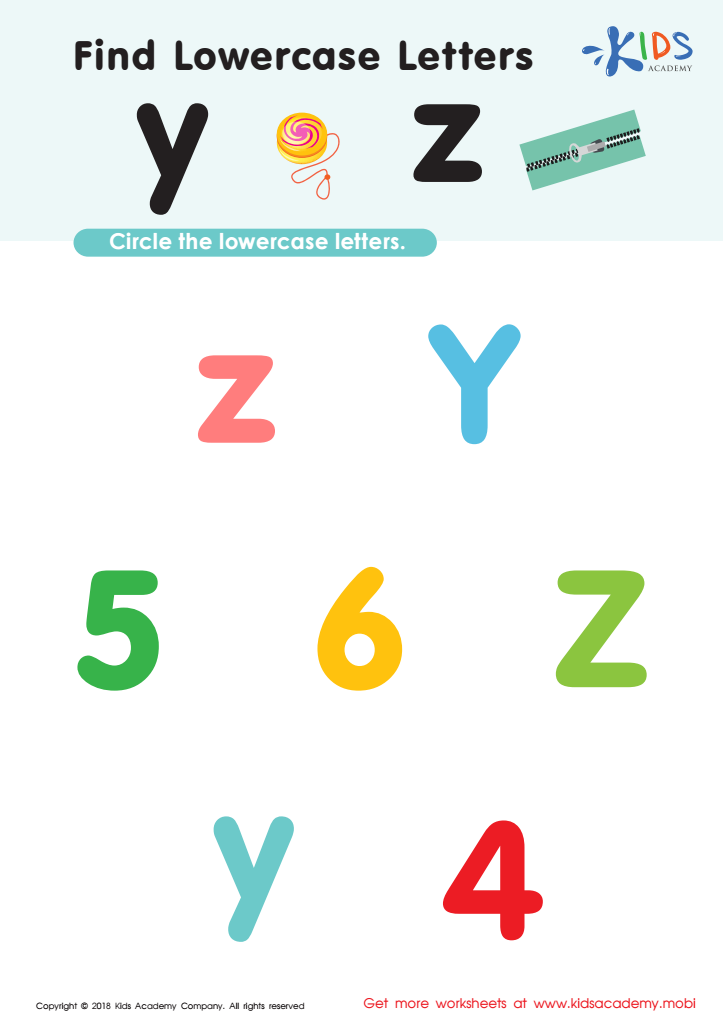
Find Lowercase Letters y z Worksheet
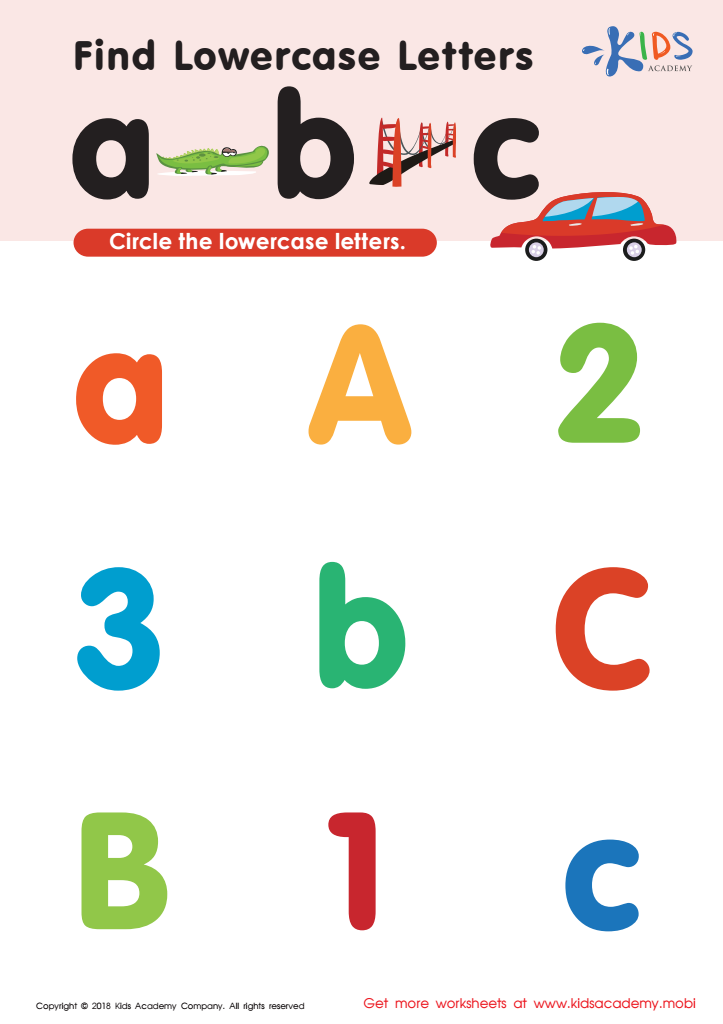
Find lowercase letters a b c Worksheet
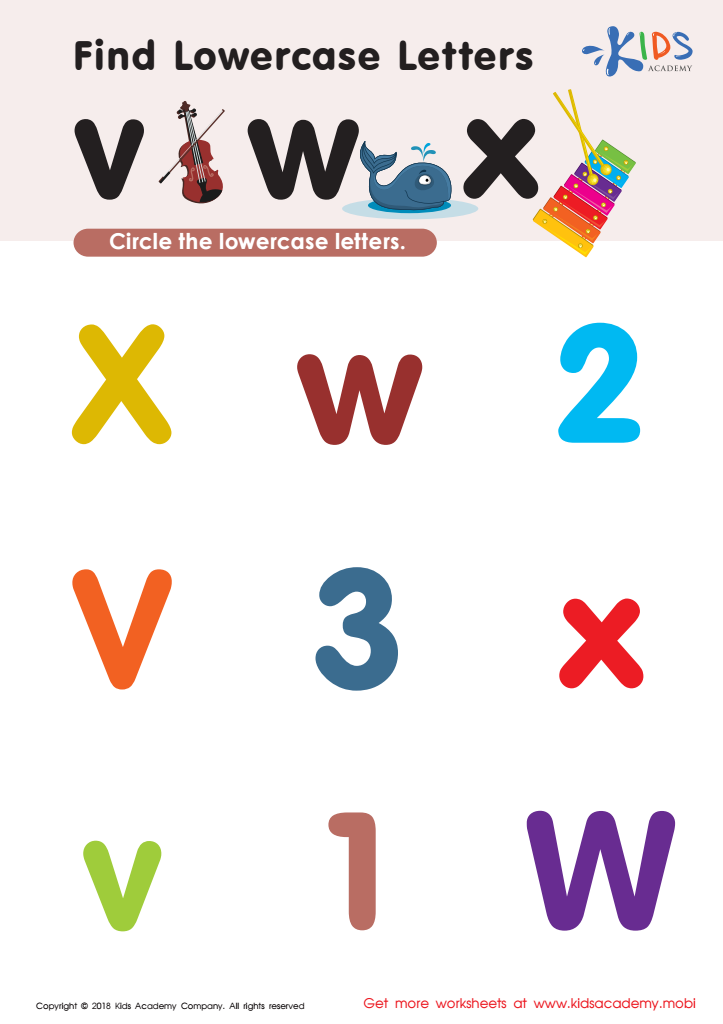
Find Lowercase Letters v w x Worksheet






Lowercase letter identification is a critical skill for children aged 5-9, as it lays the foundation for reading and writing development. Understanding lowercase letters is essential because most written communication in English is presented in lowercase, making this knowledge foundational for literacy.
When students learn to identify and differentiate lowercase letters, they enhance their phonemic awareness, which is crucial for developing effective reading skills. This knowledge allows them to recognize words in their written form, bolstering their vocabulary and comprehension abilities. Furthermore, becoming proficient with lowercase letters directly supports writing skills, empowering students to formulate sentences and express their thoughts effectively.
For parents and teachers, helping children master lowercase letter identification can positively impact academic success. Strong literacy skills are linked to overall achievement across subjects, paving the way for future learning opportunities. Engaging with children through games, reading, and creative activities encourages a love for language and builds confidence.
Finally, fostering this skill promotes a lifelong appreciation for reading and writing, influencing children's ability to communicate effectively in various contexts. Thus, emphasis on lowercase letter identification should be a priority for both parents and educators.







