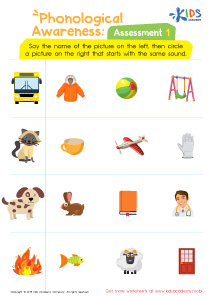
Phonics practice Normal Vowels Worksheets for Ages 5-9
9 filtered results
-
From - To
Discover our engaging Phonics Practice Normal Vowels Worksheets designed for children ages 5 to 9! These expertly crafted activities focus on normal vowel sounds to boost your child's reading and spelling skills while making learning fun. Each worksheet includes a variety of exercises, from vowel recognition to word formation, captivating young learners with vibrant illustrations and interactive tasks. Perfect for classroom or home use, our phonics practice resources help students gain confidence in their literacy abilities. Help your child excel in early reading with our Phonics Practice Normal Vowels Worksheets at Kids Academy!
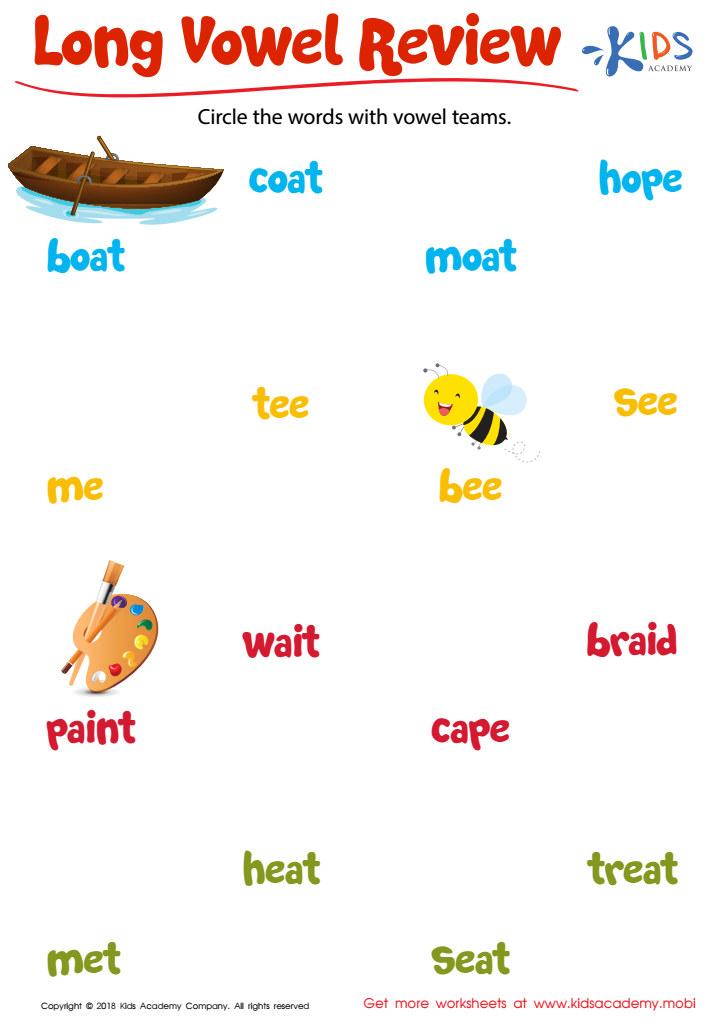
Long Vowel Review Worksheet
 Assign to My Students
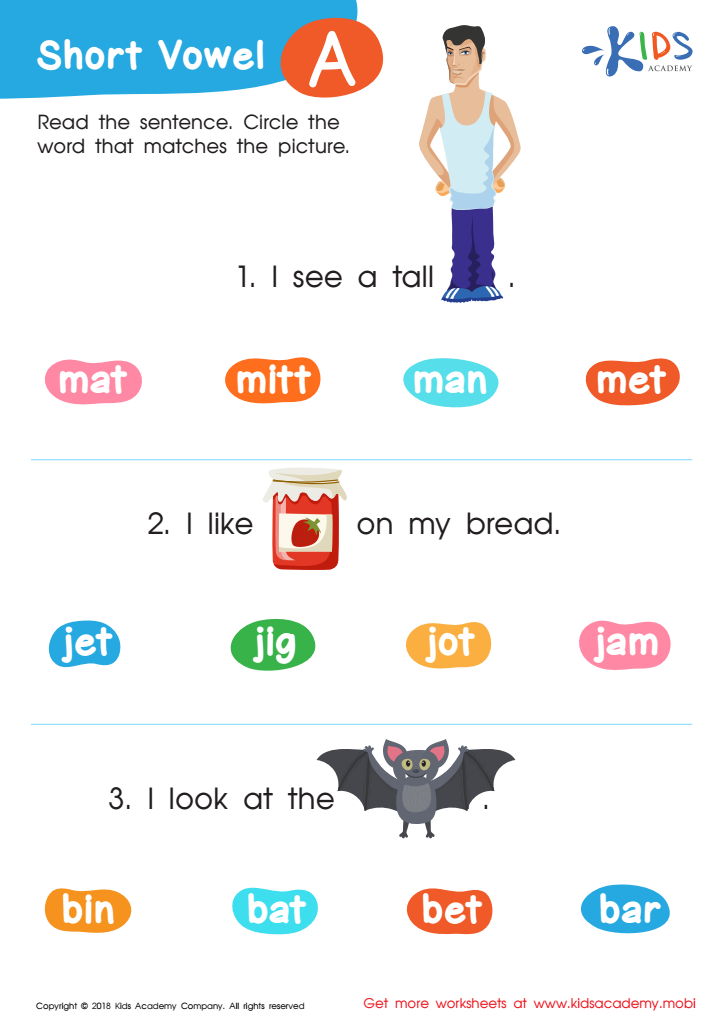
Short Vowel /a/ Worksheet
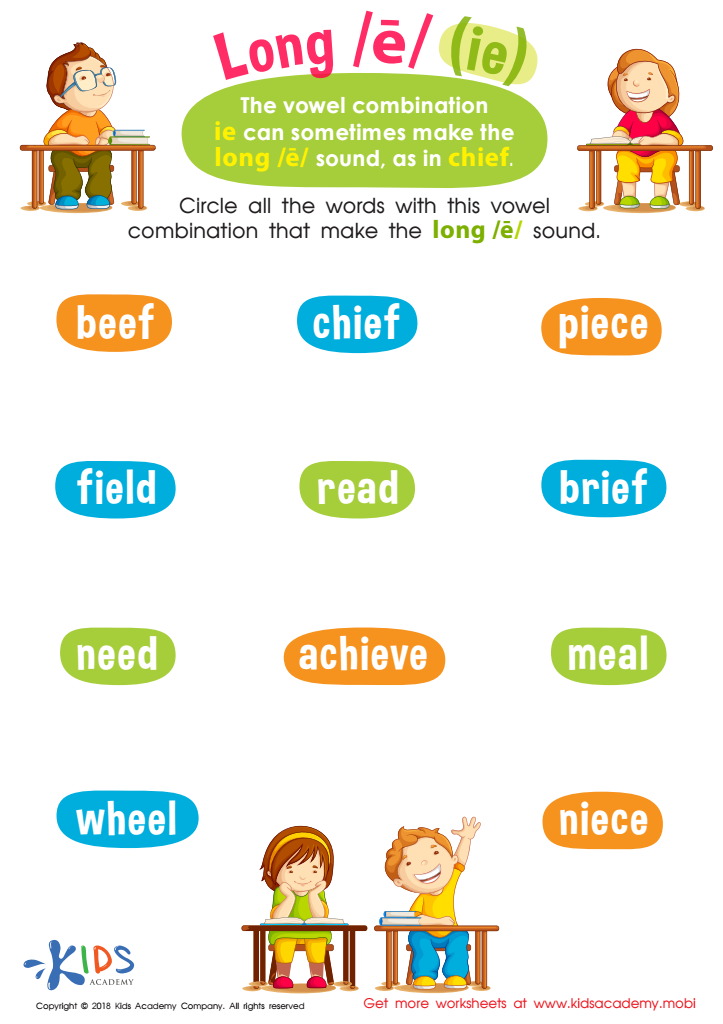
Reading: Long E and IE Worksheet
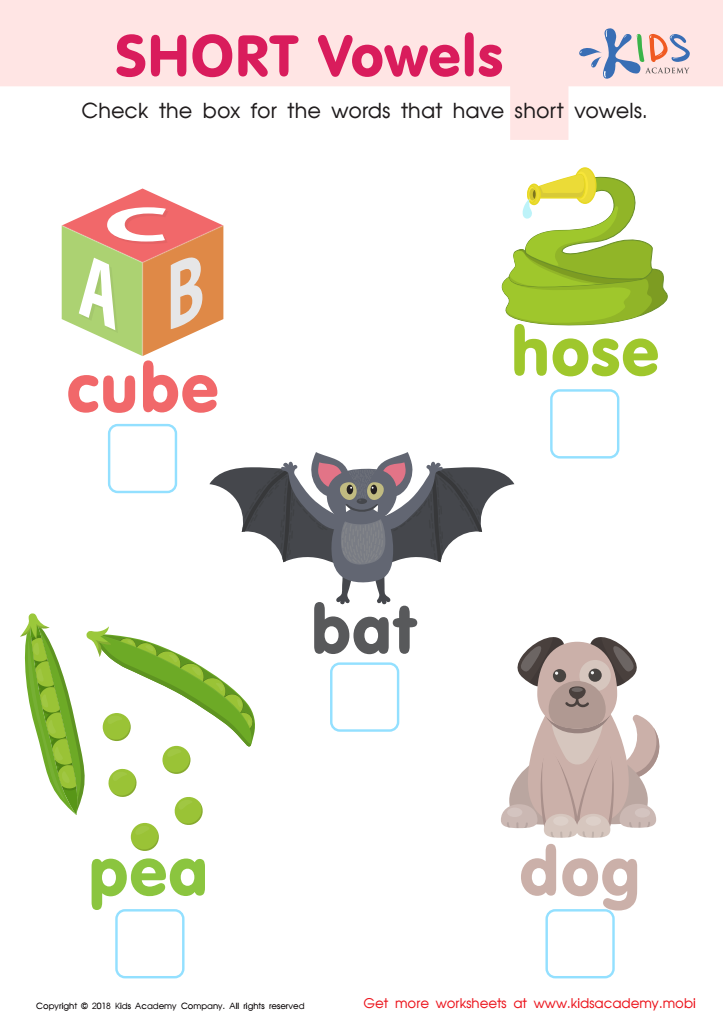
short vowels Worksheet
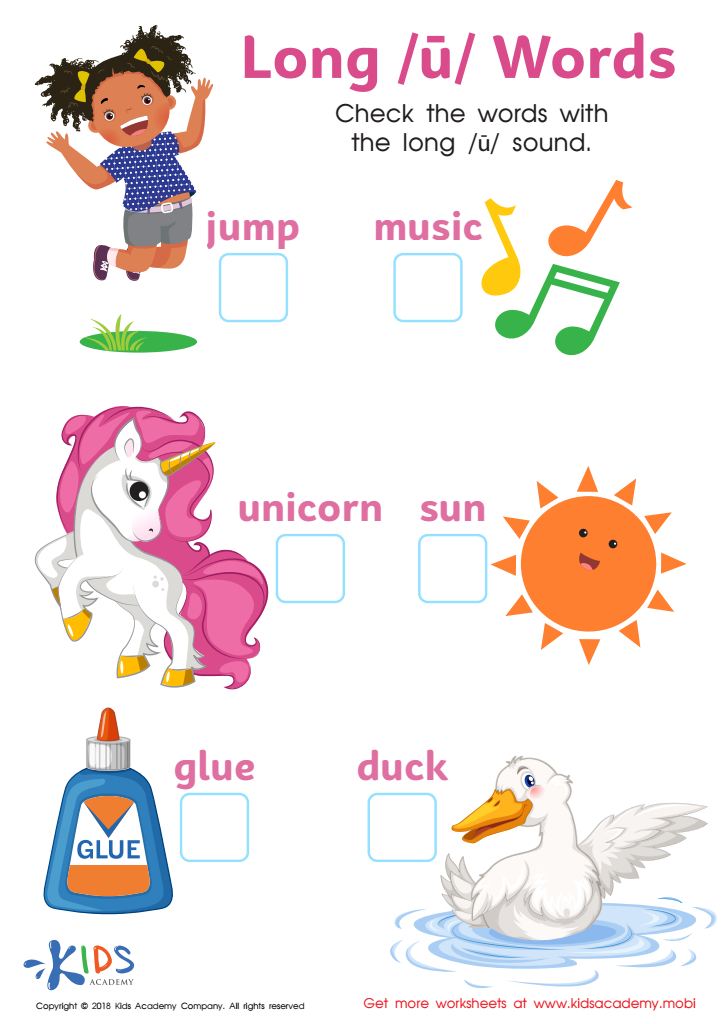
Long U Words Reading Worksheet
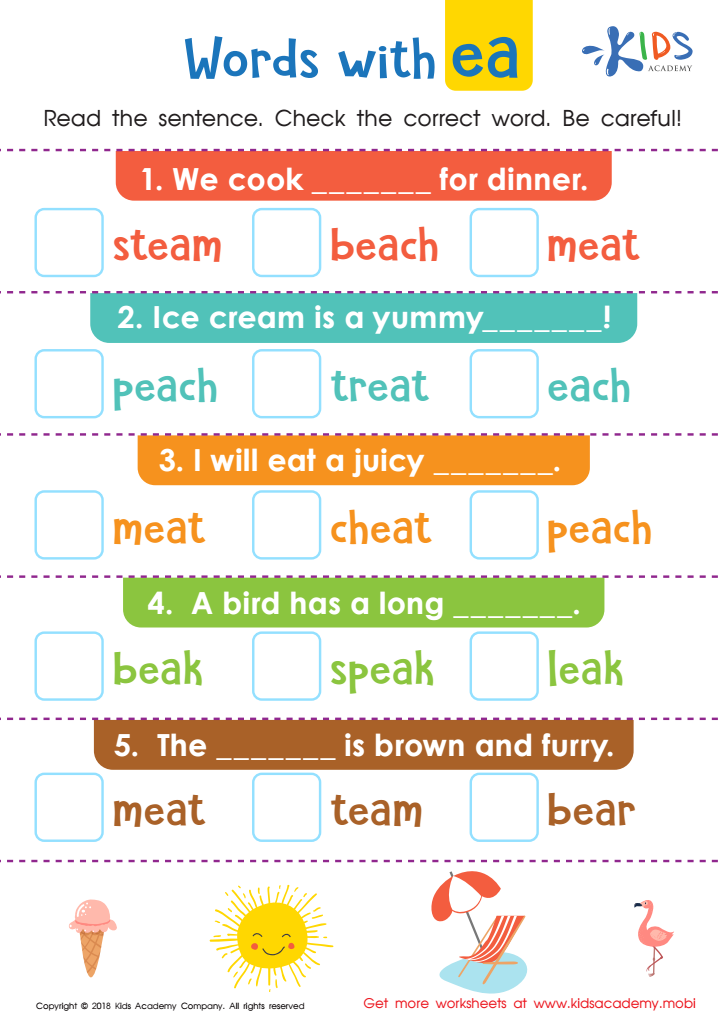
Words with ea Worksheet
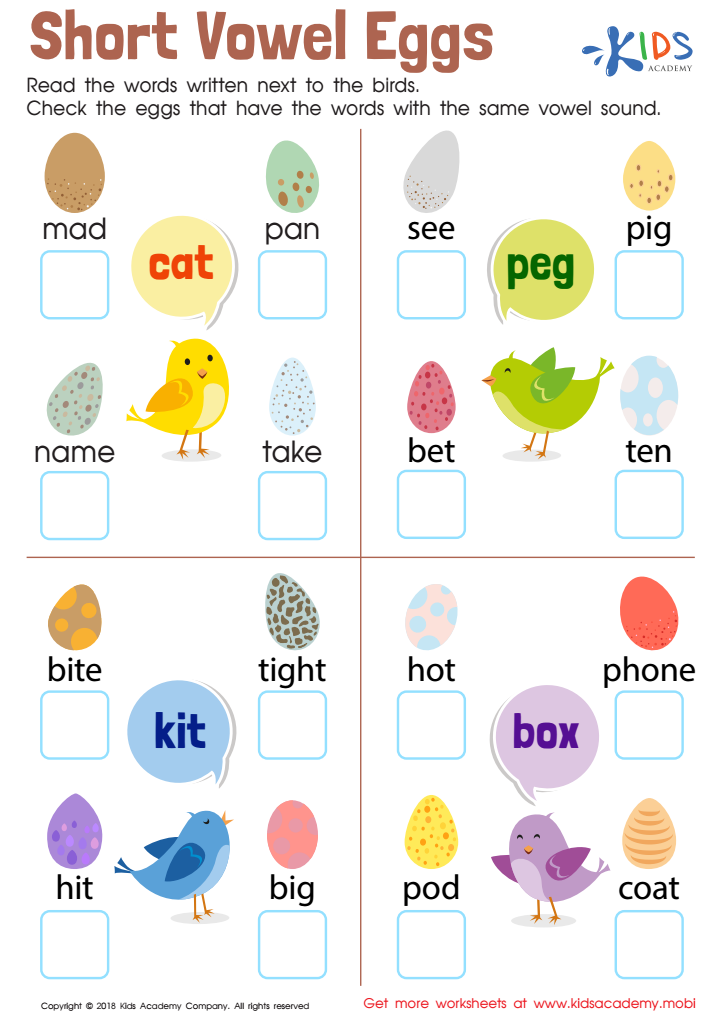
Short Vowel Eggs Worksheet
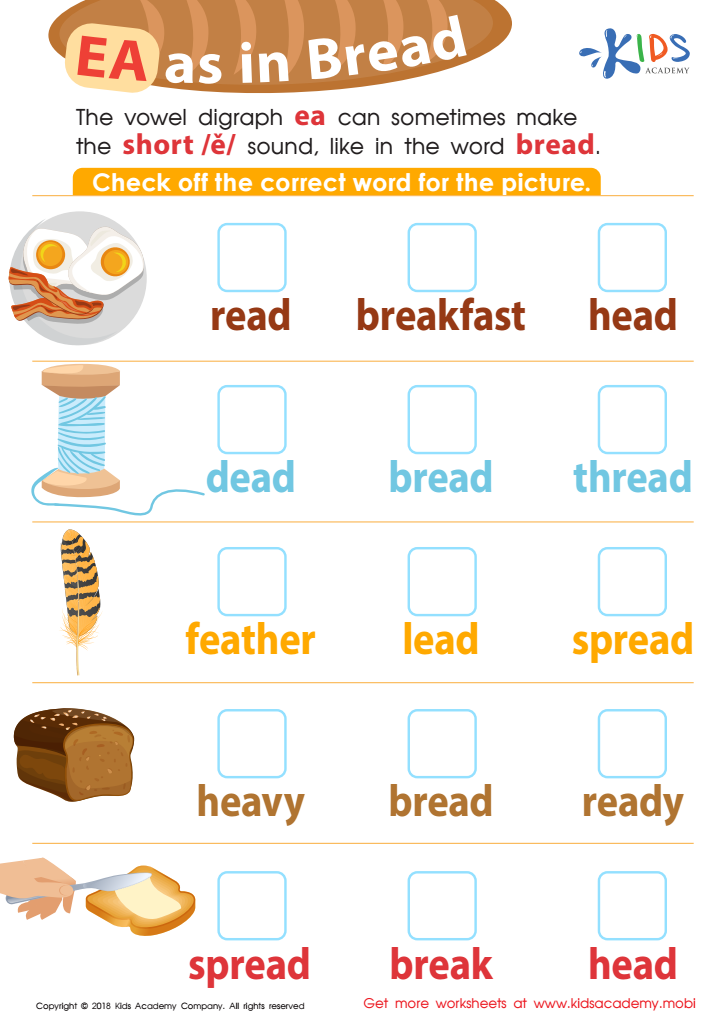
Reading: EA as in Bread Worksheet
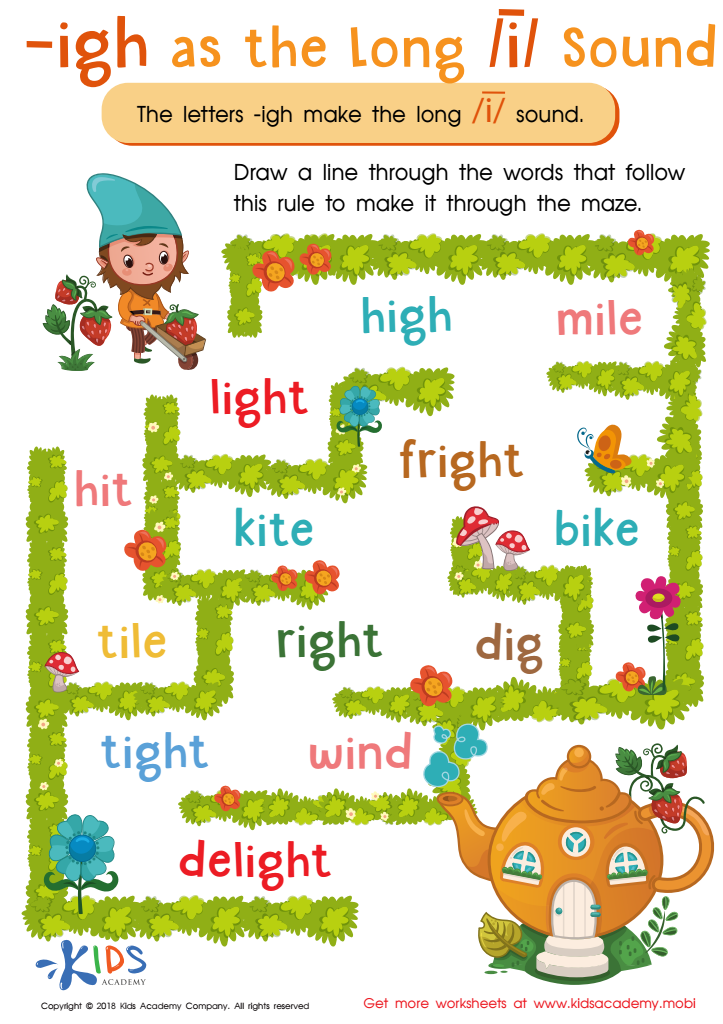
Reading: IGH as Long I Worksheet





Phonics practice focusing on normal vowels for children ages 5-9 is fundamental because it lays the groundwork for effective reading and writing skills. At this developmental stage, children are beginning to make critical connections between letters and their corresponding sounds. Mastery of normal vowels – the basic 'a,' 'e,' 'i,' 'o,' and 'u' sounds – is essential because vowels form the core of most words and affect pronunciation and meaning.
When children practice phonics with a focus on normal vowels, they develop the ability to decode new words, enhancing their reading fluency. This foundational skill allows them to read more quickly and accurately, leading to better comprehension and enjoyment of reading. Without a strong grasp of vowel sounds, children might struggle with reading, which can hinder their educational progress in all subject areas and affect their confidence.
Furthermore, practicing normal vowels helps improve spelling and writing abilities. Understanding how vowel sounds form and change words aids children in spelling phonetically and understanding word patterns. This knowledge is crucial for effective communication and academic success.
For parents and teachers, supporting phonics practice ensures that children have the necessary tools to become proficient readers and writers. By investing time in these foundational skills, they set the stage for ongoing learning and lifelong literacy, making phonics practice a high priority in early education.