
Alphabet Learning Normal Worksheets for Ages 5-9
5 filtered results
Difficulty Level
Grade
Age
-
From - To
Subject
Activity
Standards
Nurture your child's literacy with our engaging Alphabet Learning Normal Worksheets for Ages 5-9. Designed to build foundational skills, these worksheets offer interactive activities suitable for early learning stages. With age-appropriate exercises, children will enhance letter recognition, phonics understanding, and writing skills. Each worksheet is crafted to make learning fun and effective, helping young learners master the alphabet through hands-on practice. Boost confidence and academic growth with our educational resources tailored for kids from kindergarten to third grade. Perfect for parents and teachers aiming to support their children's journey in becoming proficient readers and writers.
Favorites
With answer key
Interactive
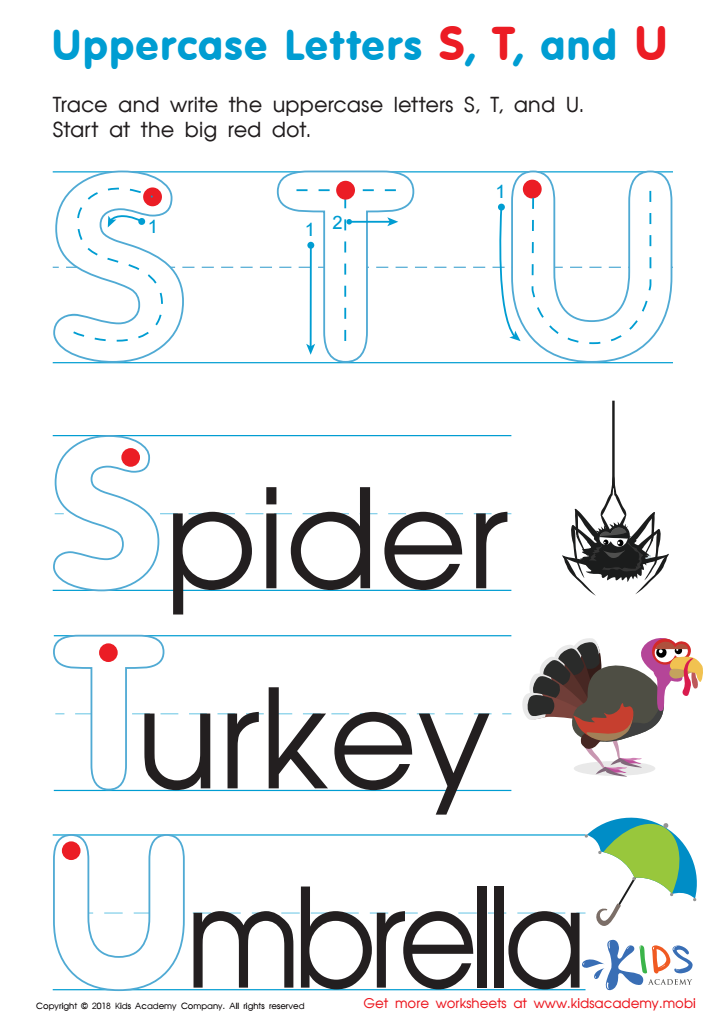
Uppercase Letters S, T, and U Worksheet
Help your kids learn to write upper-case letters with this fun tracing sheet. Start at the big red dot for each letter: S, T, and U. Show them the pictures and ask what letter each word starts with. Guide their hand and watch them learn!
 Assign to My Students
Uppercase Letters S, T, and U Worksheet
Worksheet
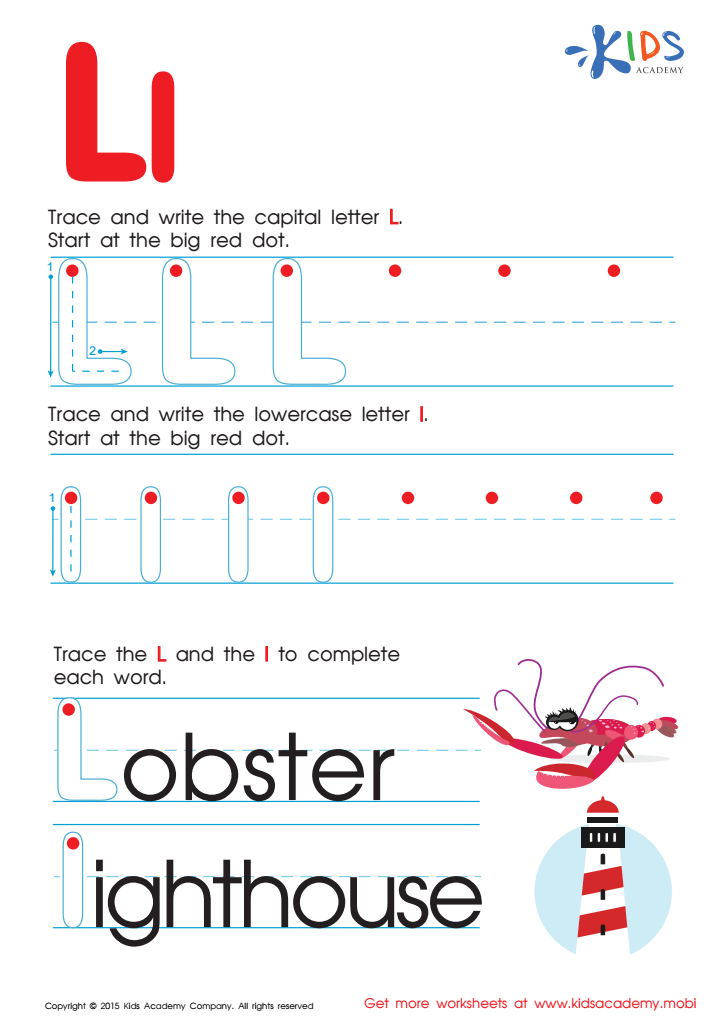
Letter L Tracing Page
Trace uppercase and lowercase letters to practice writing. Pay attention to the lowercase letters, like the "L", that are not as tall as an uppercase "I" or as short as a lowercase "i". Words like "lobster" and "lighthouse" are waiting to be completed. Enjoy!
Letter L Tracing Page
Worksheet
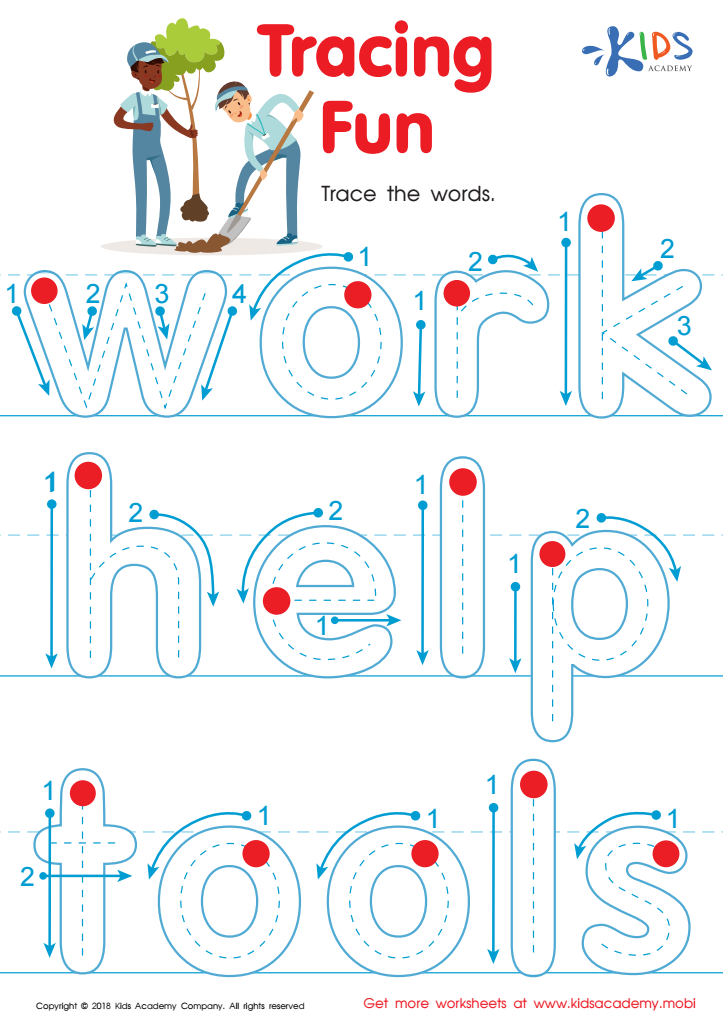
Tracing Fun Worksheet
Believe it or not, good handwriting helps with reading! Starting at the top left and writing legibly builds reading skills. This free worksheet helps little learners practice basic sight words. Red dots show them where to start and the words provide reinforcement without them realising. An enjoyable way to boost their reading and writing.
Tracing Fun Worksheet
Worksheet
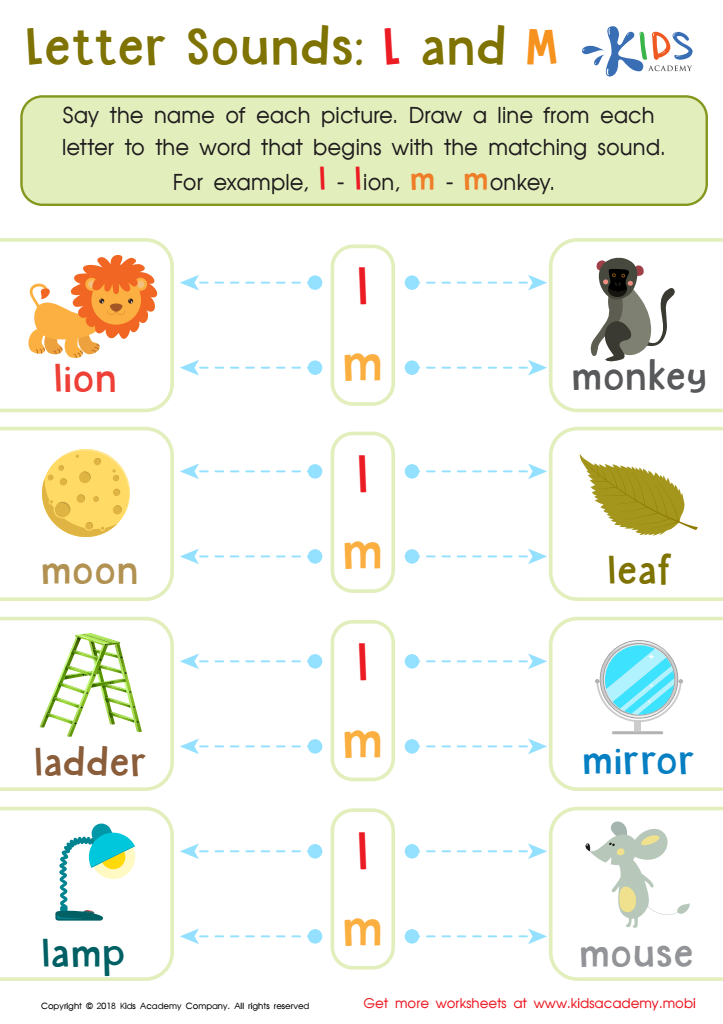
Letter l and M Sounds Worksheet
Our Kids Academy phonics practice pages give clear instructions and captivating pictures to pique children's interest. This fun worksheet helps kids identify a picture, then match its beginning sound. Listen and say each word - does it start with "L" or "M"? Trace the dotted line from the letter to the correct match and listen closely to the sound it makes.
Letter l and M Sounds Worksheet
Worksheet
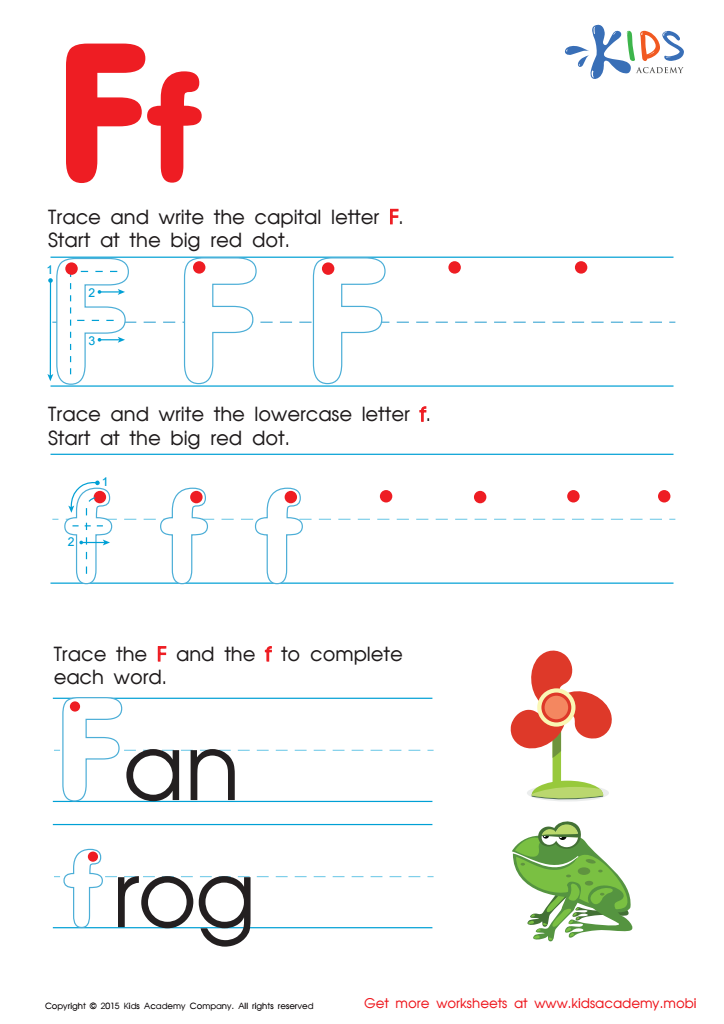
Letter F Tracing Page
Trace "F" with your pencil! Start at the red dot and draw lines — it's fun! Check it out — it looks great! Keep practicing to make it even better. Then, try completing words. Help out the broken fan and funny frog! Get free alphabet worksheets and activities for your kids. Come see our new tracing pages!
Letter F Tracing Page
Worksheet
Join Kids Academy for Free
Who is primarily going to use this learning content?








Alphabet learning is the bedrock upon which a child's literacy skills are built, making it critical for parents and teachers to pay close attention to the alphabet learning norms for children aged 5-9. During these formative years, children typically transition from recognizing and naming letters to understanding the sounds they represent and blending these sounds to form words. Mastery of the alphabet is a pivotal milestone that not only enhances reading fluency but also bolsters writing and communication skills.
When a child struggles with alphabet learning, it can signal underlying issues, such as dyslexia or other learning disabilities, which, if addressed early, can significantly mitigate long-term educational setbacks. Conversely, children who excel with proper alphabet mastery are more likely to find pleasure and confidence in reading, fostering a lifelong love for learning.
Parents and teachers should nurture this foundational skill through engaging and supportive activities. Utilizing a variety of sensory experiences—games, songs, and hands-on activities—can make alphabet learning more effective and enjoyable. Monitoring progress and providing timely interventions ensure that each child remains on track, laying a firm foundation for academic success and a prosperous educational journey. Thus, prioritizing alphabet learning norms within this age range is integral to a child's overall cognitive and academic development.








