Basic measurement concepts Normal Worksheets for Ages 5-9
3 filtered results
-
From - To
Explore our engaging "Basic Measurement Concepts Normal Worksheets" designed for children ages 5-9. These carefully crafted worksheets introduce young learners to essential measurement skills, including length, weight, and volume. Our resources feature colorful visuals and interactive activities that make learning fun and intuitive. Perfect for classroom use or at-home practice, these worksheets help children understand real-world applications of measurement through hands-on exercises and engaging scenarios. Foster a strong foundation in math with our comprehensive resources that align with early learning standards. Join educators and parents who trust Kids Academy to inspire a love for learning in their children!
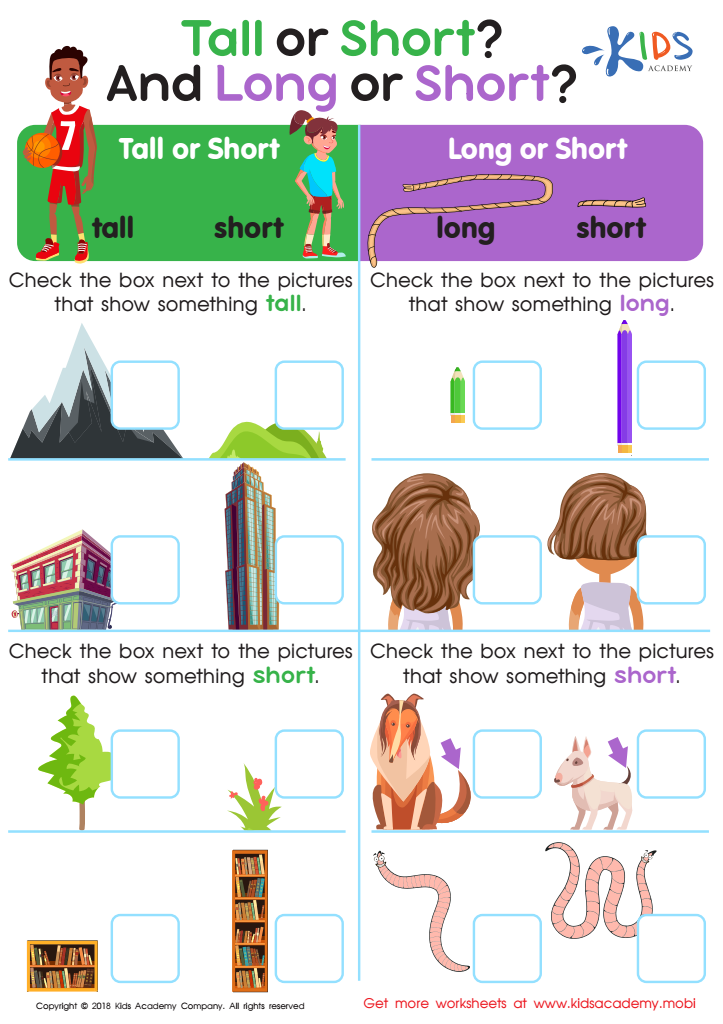
Tall or Short and Long or Short? Worksheet
 Assign to My Students
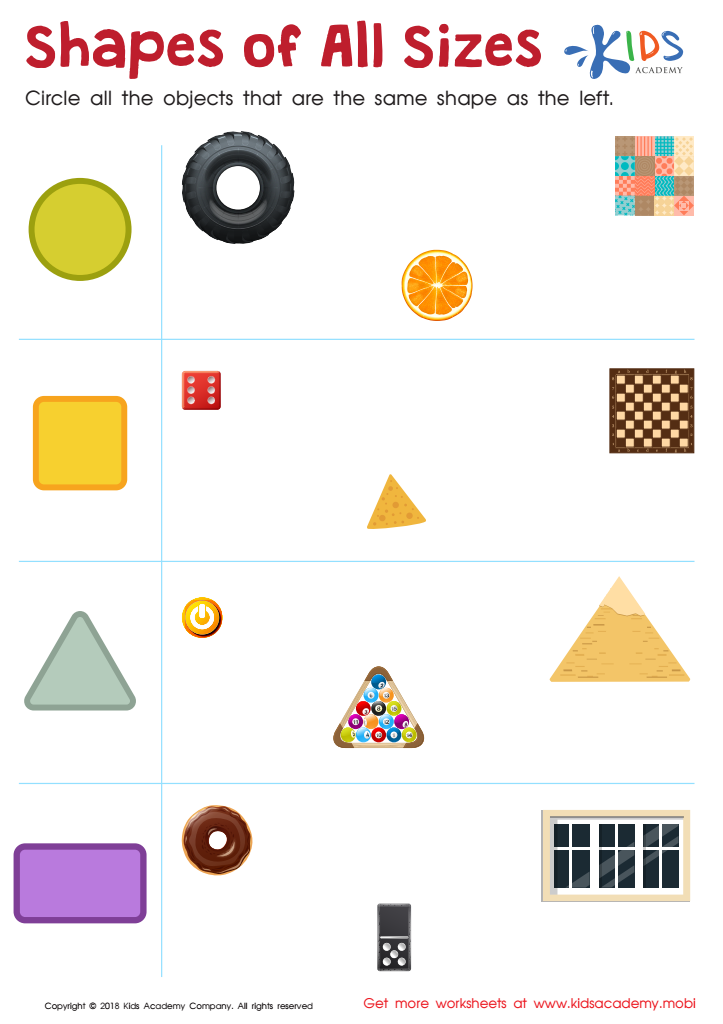
Shapes of All Sizes Worksheet
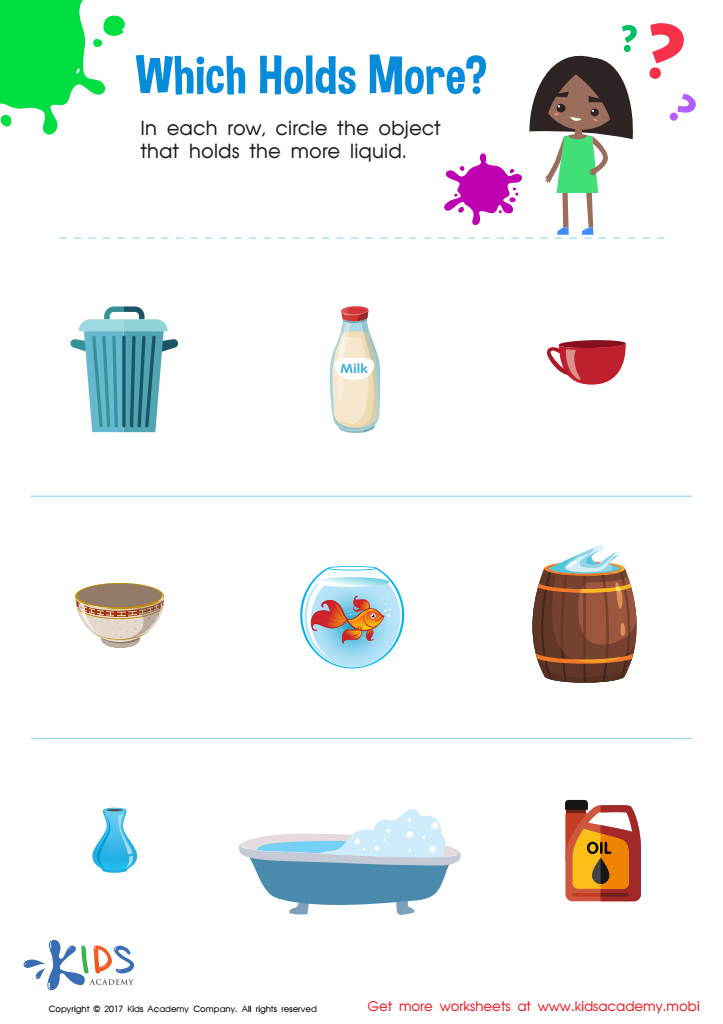
Which Holds More: Capacity Worksheet






Parents and teachers should prioritize basic measurement concepts for children ages 5-9 as these foundations play a crucial role in early math development and daily life skills. At this age, children are naturally curious and eager to explore their surroundings, and measurement is a tangible way to engage them in learning. Understanding concepts like length, weight, volume, and time helps build critical thinking and problem-solving skills.
Measurement activities encourage hands-on learning, which is essential for cognitive development in young children. For instance, measuring ingredients in a recipe can foster both math skills and cooperation during family cooking activities. Through measuring, children also learn about comparing and ordering quantities, which enhances their logical reasoning and spatial awareness.
Additionally, early exposure to measurement fosters an understanding of practical applications, preparing children for future academic success. Understanding basic measurement concepts can support more advanced topics in math and science as they progress through school. Overall, integrating measurement into everyday activities not only enriches learning but also helps children connect math to the real world, making it relevant and enjoyable, ultimately fostering a lifelong appreciation for learning and exploration.








