Color Identification Normal Worksheets for Ages 5-9 - Page 2
26 filtered results
-
From - To
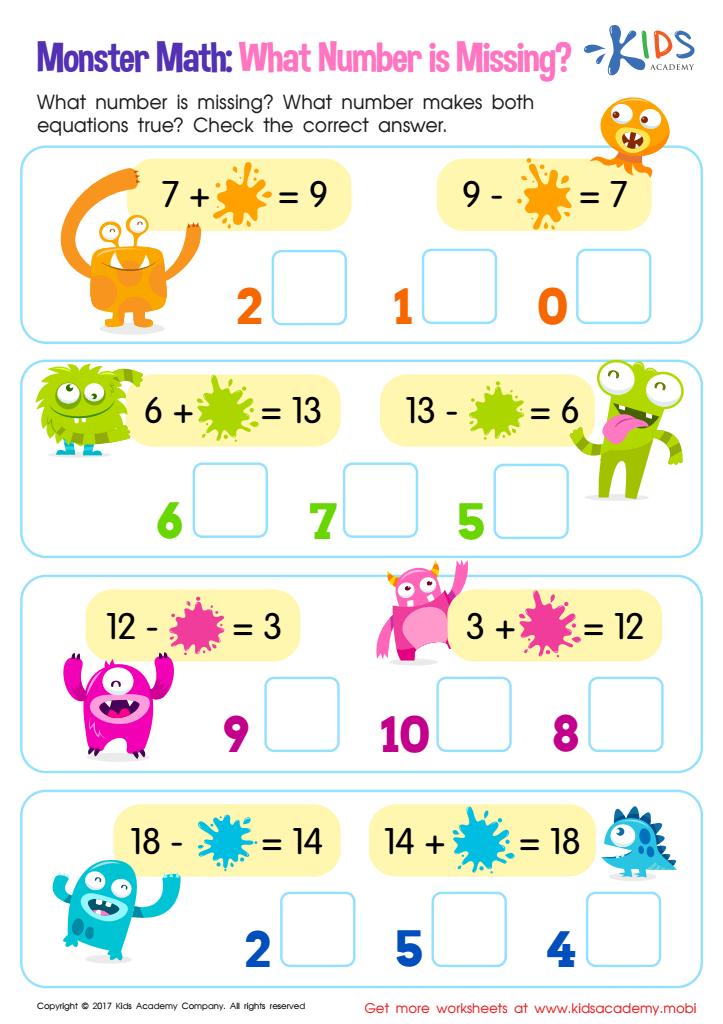
Missing Number: Monster Math Worksheet
 Assign to My Students
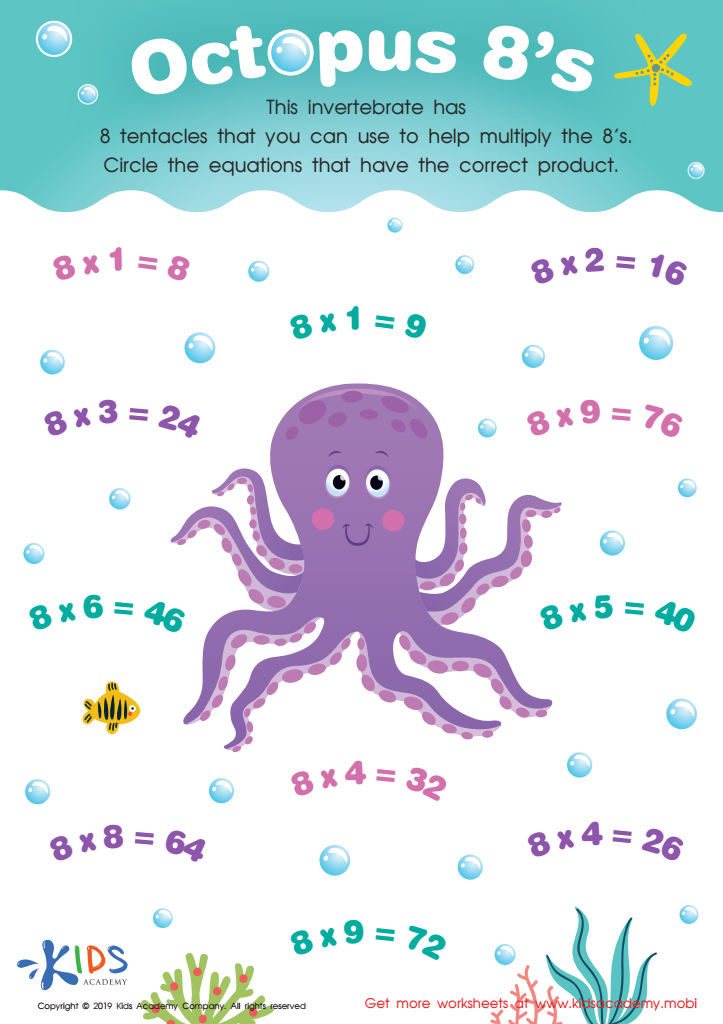
Octopus 8’s Worksheet








Color identification is a fundamental skill for children ages 5-9, serving as an essential building block for cognitive development, communication, and emotional growth. Understanding and identifying colors is crucial in early childhood education as it relates to several core areas:
Cognitive Development: Color recognition enhances memory by associating objects with their hues. This fundamental grouping skill forms the basis for more complex cognitive processes, such as categorization and logical reasoning.
Communication: Recognizing and naming colors is integral to language development. When children describe objects or express their preferences using colors, they expand their vocabulary and improve their descriptive language skills. This is essential for effective communication both in the classroom and in everyday social interactions.
Emotional Growth: Colors can significantly affect mood and behavior. Teaching color recognition helps children articulate their feelings, contributing to emotional intelligence. For instance, children may use colors to express emotions or preferences, which nurtures their ability to understand and manage their emotions.
Learning Enhancement: Much of early education is visually oriented. Tasks such as reading, math, and spatial awareness are more accessible when children recognize and understand colors. Color-coded systems and materials help in conveying information effectively and making learning interactive and engaging.
Hence, ensuring children develop robust color identification skills can lay a foundation for successful educational and personal growth. Given these diverse benefits, teachers and parents should prioritize color identification in early childhood education.








