Identifying Animals Normal Worksheets for Ages 5-9
3 filtered results
-
From - To
Discover our engaging "Identifying Animals" worksheets tailored for children ages 5-9! These printable resources are designed to enhance animal recognition skills through fun activities that captivate young learners. Each worksheet features vibrant illustrations and age-appropriate challenges, helping kids distinguish various species and understand their characteristics. Perfect for classroom use or homework, these worksheets promote critical thinking and observational skills. Encourage curiosity about wildlife while supporting essential learning objectives. Whether your child is a budding zoologist or simply enjoys learning about animals, our worksheets make education enjoyable and interactive. Explore our collection today and watch your child's knowledge grow!
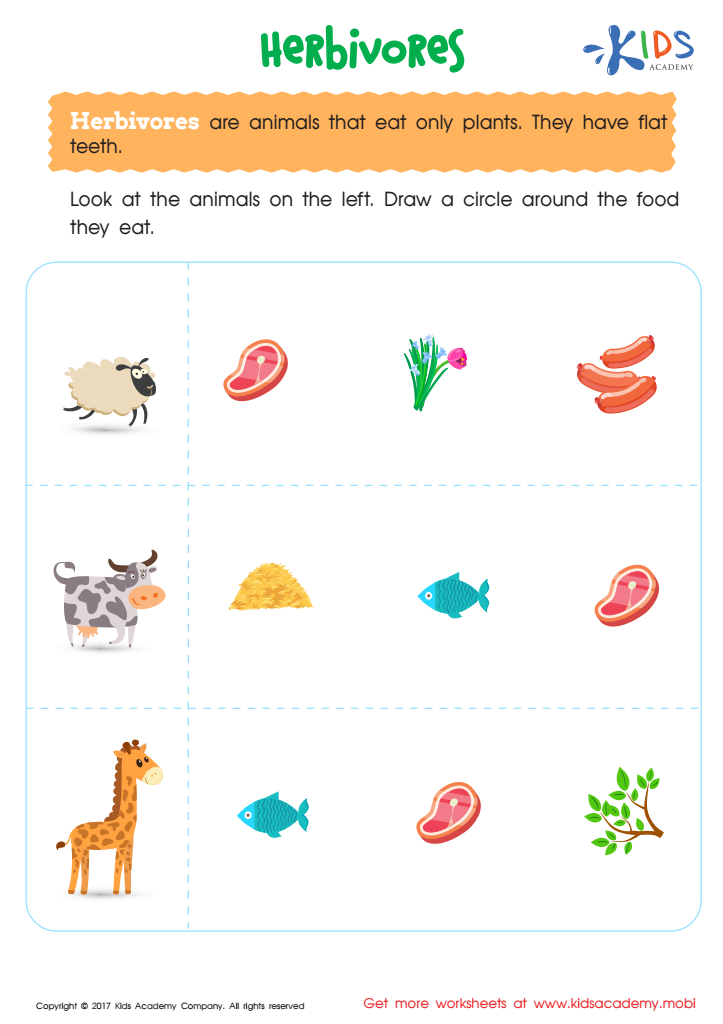
Herbivores Printable
 Assign to My Students
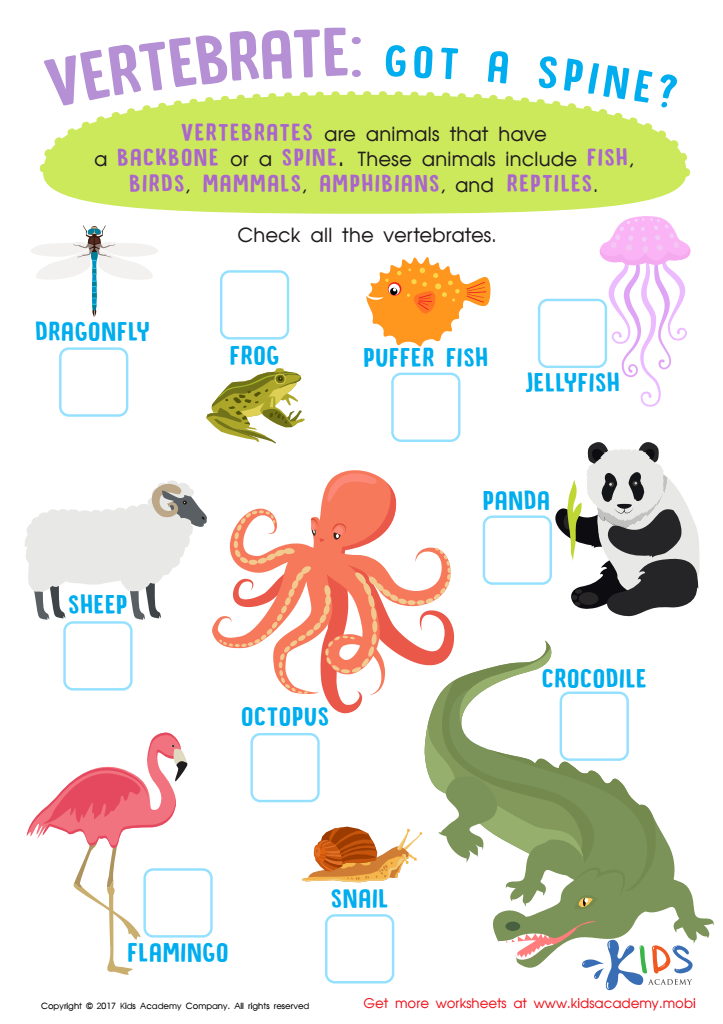
Vertebrates Animals Worksheet for 3rd Grade
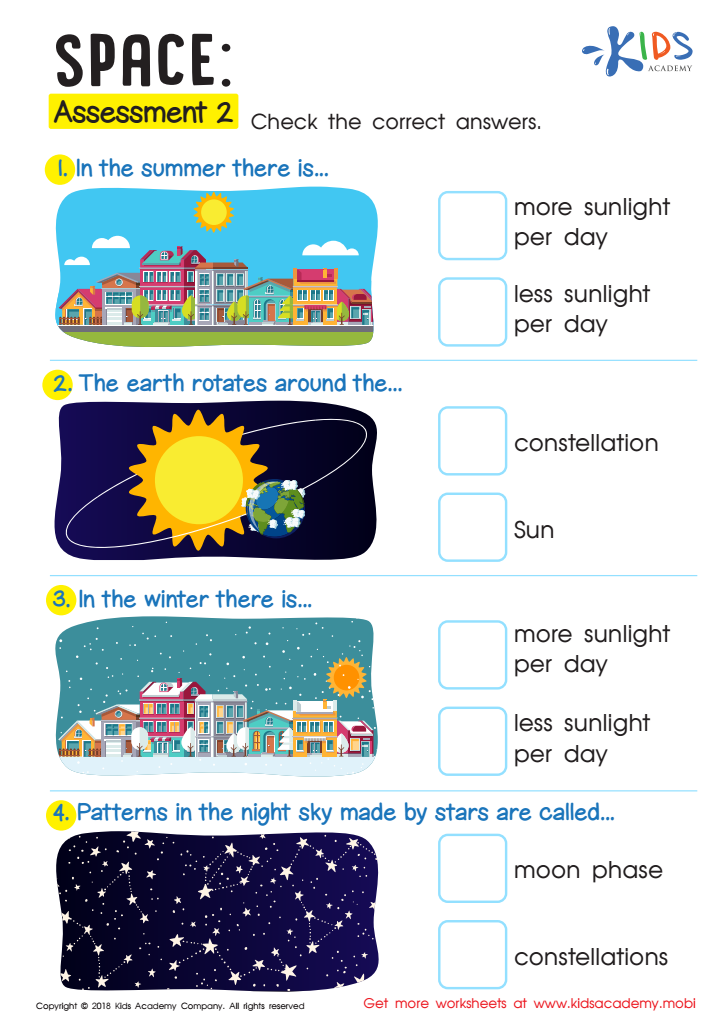
Space: Assessment 2 Worksheet








Identifying animals is an essential skill for children aged 5-9, and it's important for both parents and teachers to prioritize this learning. At this developmental stage, children are naturally curious about the world around them. Understanding different animals helps foster their curiosity and insight into biology, ecosystems, and environmental awareness. This knowledge sparks a lifelong interest in science and nature, which is crucial for future academic success.
Moreover, learning to identify animals can enhance a child's vocabulary and observation skills. Engaging in activities such as nature walks or interactive games designed to identify animals encourages critical thinking and enhances their ability to categorize and classify information. Strengthening these skills at a young age lays the groundwork for more complex scientific concepts in later grades.
Additionally, animal identification fosters empathy as children learn to appreciate the diversity of life forms. It instills a sense of responsibility for the natural world, encouraging sustainable behaviors that are increasingly crucial in today’s climate. For these reasons, parents and teachers should actively promote animal identification as part of a holistic educational experience that combines fun, knowledge, and respect for the environment.








