
Letter identification Normal Worksheets for Ages 5-9
4 filtered results
Difficulty Level
Grade
Age
-
From - To
Subject
Activity
Standards
Discover engaging and educational letter identification worksheets designed specifically for children aged 5-9. Our normal worksheets help young learners recognize and differentiate letters, fostering essential literacy skills. Each worksheet is thoughtfully crafted with fun visuals and activities that make learning interactive and enjoyable. These resources support early reading and writing development, ensuring each child gains confidence in identifying letters, both uppercase and lowercase. Perfect for classrooms or home practice, our printable worksheets are an invaluable tool for parents and educators aiming to enhance children's language abilities in a meaningful way. Help your child shine with hands-on letter identification exercises today!
Favorites
With answer key
Interactive
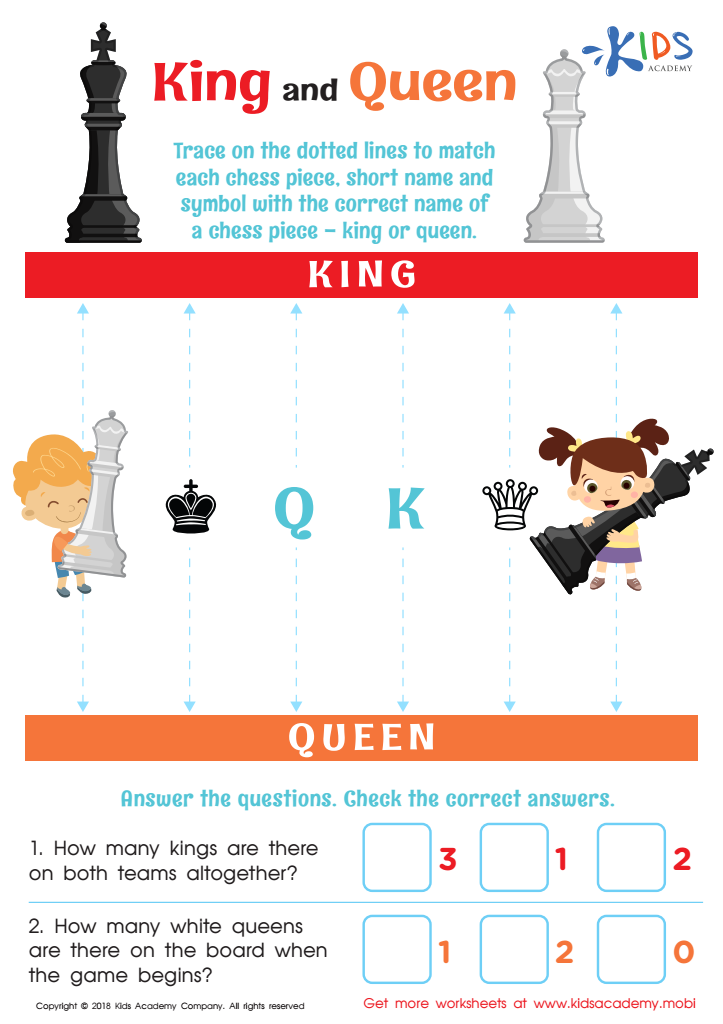
King and Queen Worksheet
Instruct your kids to trace the dotted lines to match each chess piece, short name, and symbol with either king or queen.Answer the questions at the bottom and check the answers. This exercise will help your children to differentiate between a king and queen chess piece and know their symbols.
 Assign to My Students
King and Queen Worksheet
Worksheet
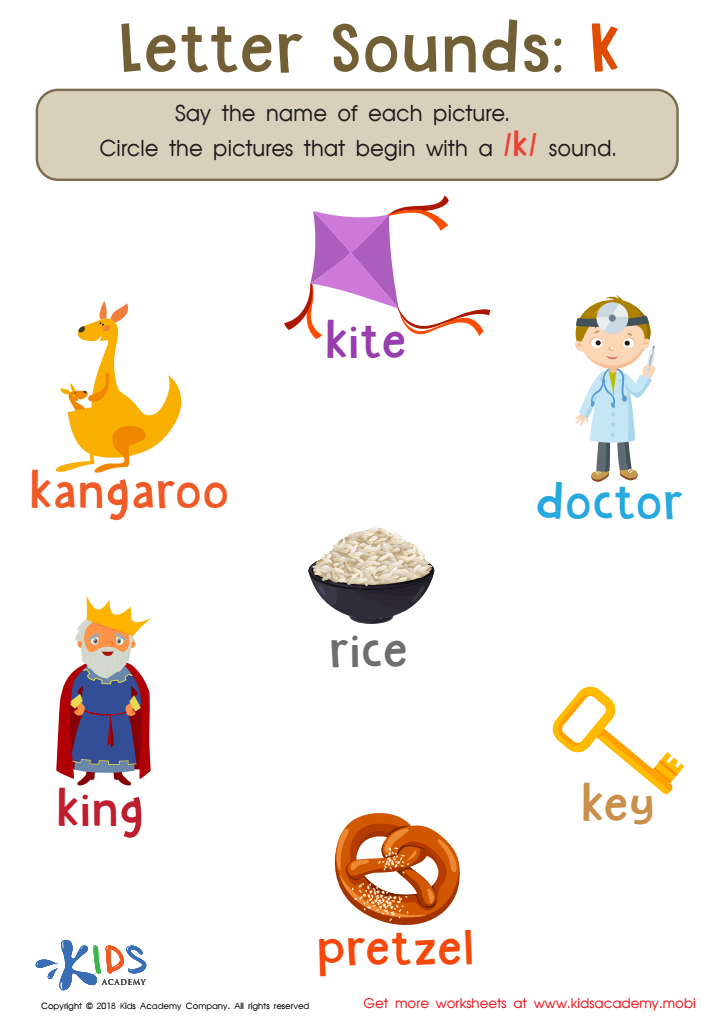
Letter K Sounds Worksheet
Help your child practice phonics with Kids Academy's illustrated worksheet! Have them look at the pictures, read the words and say them aloud. Only circle those that start with a hard 'K' sound. Perfect for preschoolers and kindergarteners! Plus, they'll learn the silent K used in a few words.
Letter K Sounds Worksheet
Worksheet
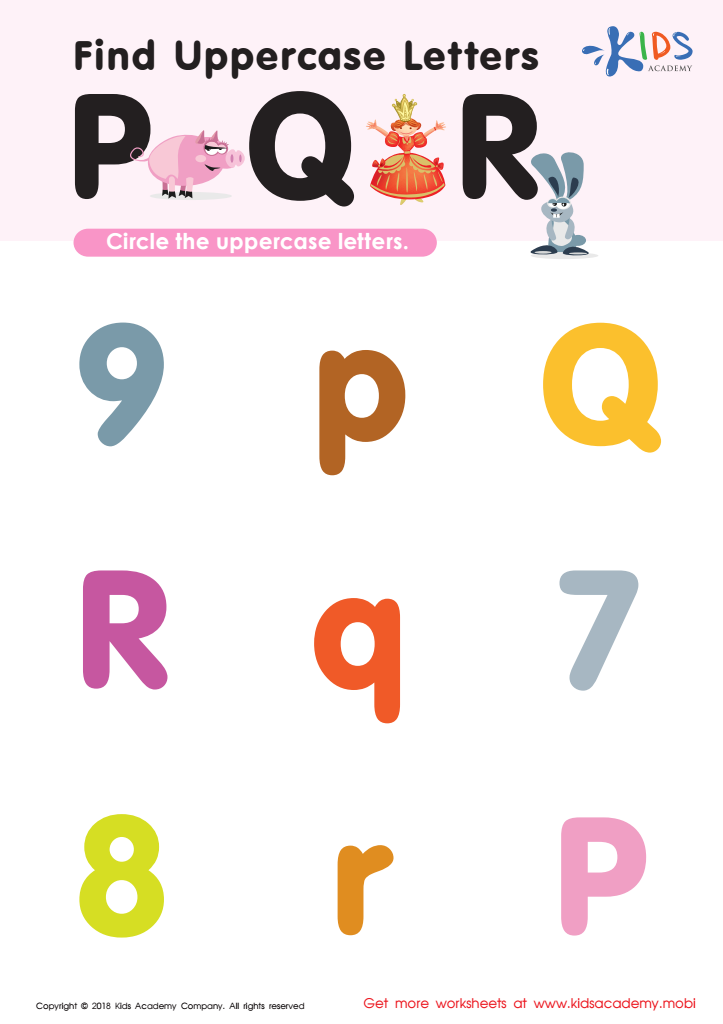
Find Uppercase Letters P, Q, and R Worksheet
Kids learn best when they can make connections. This free printable worksheet guides kids to solve the puzzle using the example letters P, Q, and R, supported by graphics and colors. Point out the page is pink, like the pig (which starts with P!) and solve by finding and circling the uppercase letters – be careful of the numbers!
Find Uppercase Letters P, Q, and R Worksheet
Worksheet
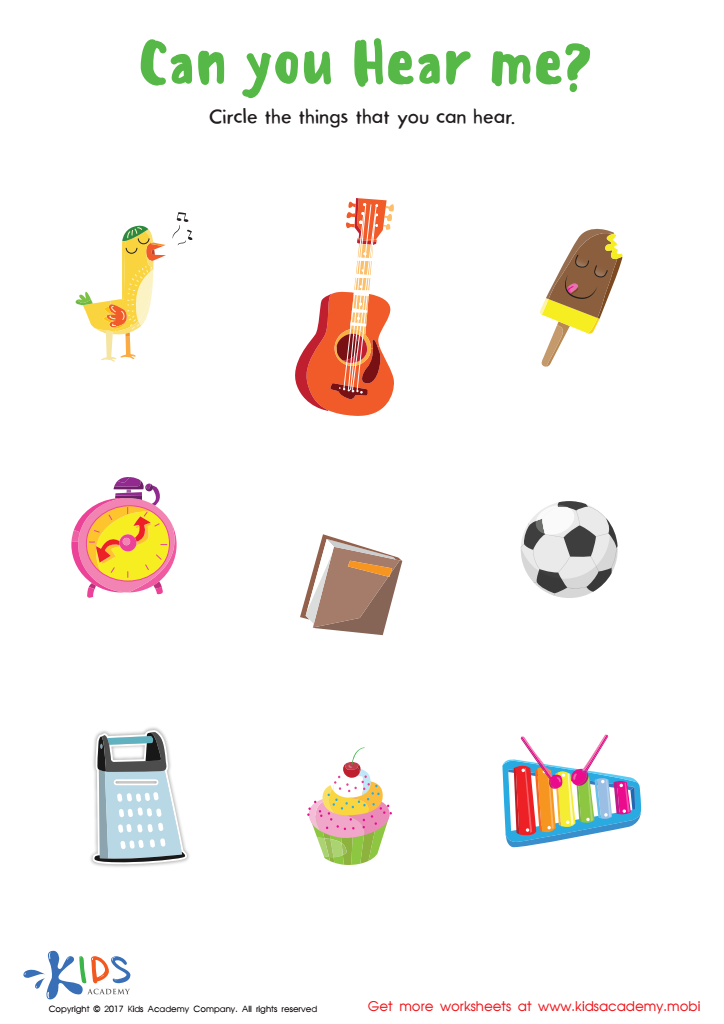
Can You Hear Me Worksheet
Challenge your child's thinking and help them learn by using this cute "Can You Hear Me?" worksheet. It encourages use of prior knowledge to identify objects that make sounds, developing critical thinking skills. As they imagine balls and cupcakes making sounds, your child will have plenty of laughs. Extend learning by talking about the sounds and why certain objects make them.
Can You Hear Me Worksheet
Worksheet
Join Kids Academy for Free
Who is primarily going to use this learning content?








Letter identification is a foundational skill for young learners, particularly for children aged 5-9. At this age, children are primed for acquiring literacy skills, which significantly influence their future academic success. Proper letter identification lays the groundwork for reading, writing, and communication. When kids can recognize and name letters quickly and accurately, they can decode words, which boosts their confidence and motivation in learning.
Parents and teachers play a vital role in ensuring that children develop strong letter identification skills. By engaging in activities that promote letter recognition—such as reading aloud, playing games, and utilizing flashcards—they can make learning enjoyable and effective. This support helps children feel more competent in their literacy skills, fostering a lifelong love for reading.
Additionally, early proficiency in letter identification often correlates with stronger performance in later grades. Children who struggle with this fundamental skill may find themselves at a disadvantage, potentially leading to gaps in their education. By focusing on letter identification during these critical years, parents and teachers can help prevent future learning difficulties and ensure that every child has a strong foundation for their academic journey. Thus, investing in letter identification is essential for nurturing confident, capable learners.








