Map reading Normal Worksheets for Ages 5-9
3 filtered results
-
From - To
Explore our engaging Map Reading Normal Worksheets designed for children aged 5-9! These interactive resources help young learners develop essential map reading skills in a fun and accessible way. Each worksheet encourages kids to identify symbols, understand directions, and familiarize themselves with various map elements. Perfect for enhancing geography knowledge and spatial awareness, these age-appropriate materials provide a solid foundation for future learning. Whether used in the classroom or at home, our map reading worksheets promote critical thinking and problem-solving. Download now to embark on an exciting journey through maps and landscapes, nurturing curiosity and confidence in young explorers!
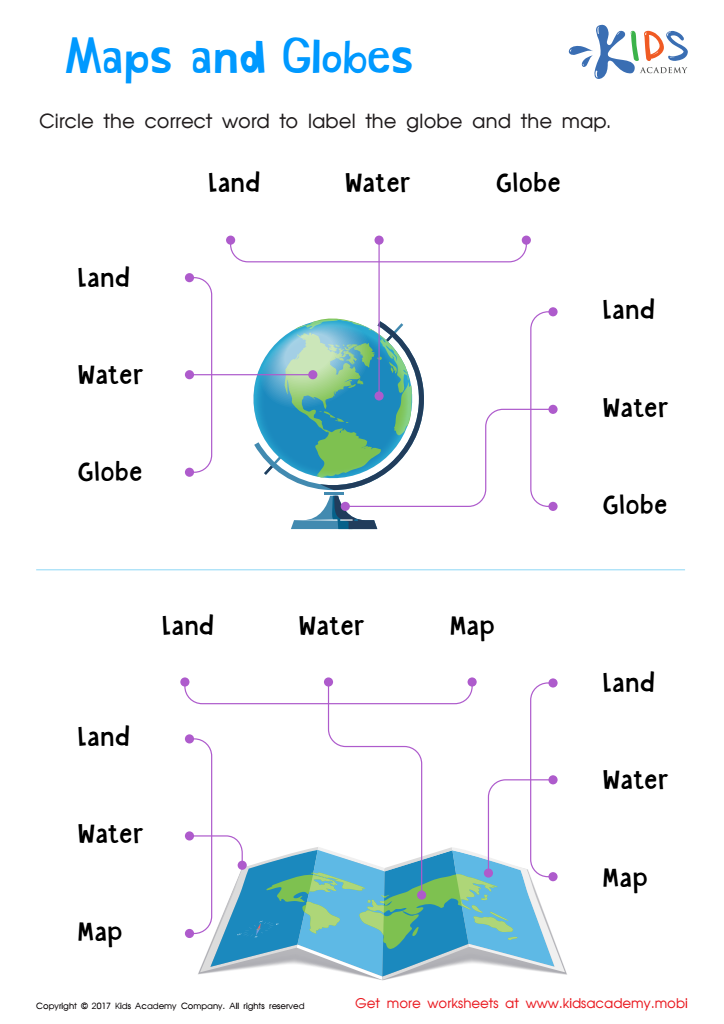
 Assign to My Students
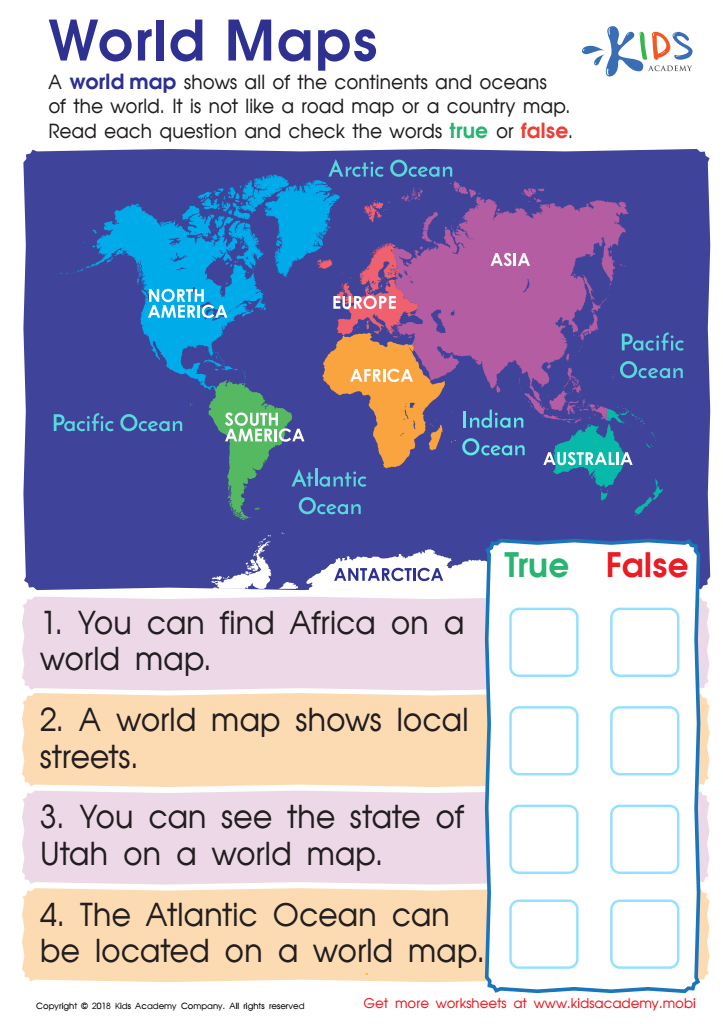
World Maps Worksheet
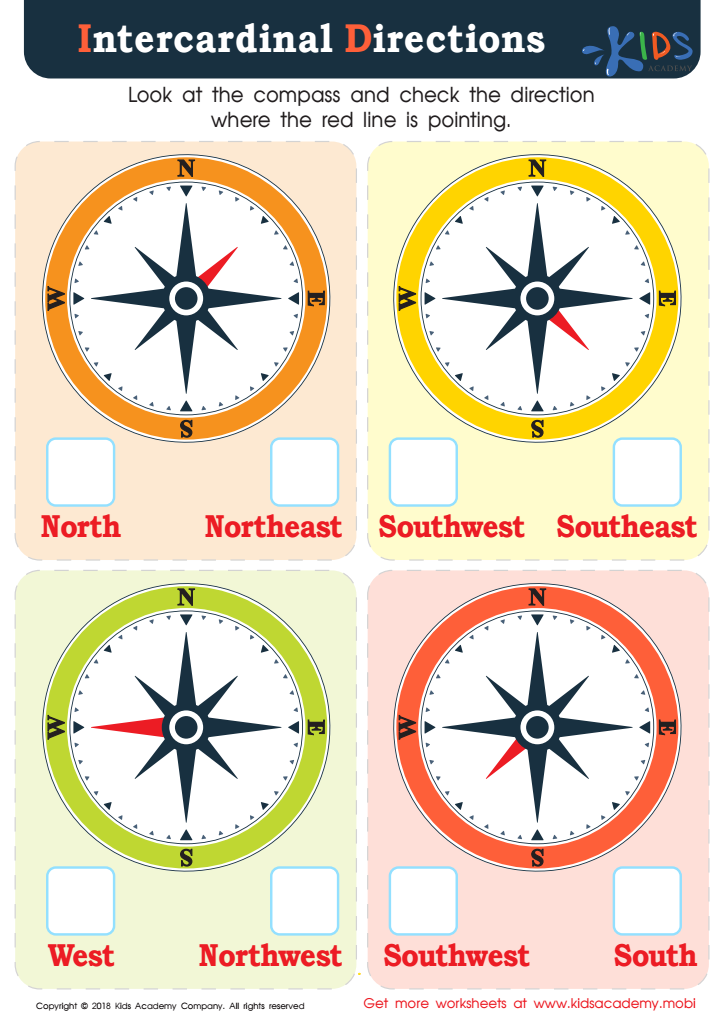
Intercardinal Directions Worksheet







Map reading is an essential skill for children aged 5-9, and both parents and teachers should prioritize its development for several reasons. First, map reading fosters critical thinking and spatial awareness, helping children understand their environment and how to navigate it. As young learners engage with maps, they develop problem-solving skills and learn to comprehend symbols, creating a foundational understanding of geography.
Additionally, mapping activities encourage communication skills. When children describe their location in relation to landmarks or discuss directions, they practice articulating thoughts clearly. This skill not only aids in their navigation abilities but also enhances overall language development.
Moreover, introducing map reading enhances real-world learning. Whether they are planning a trip or simply exploring their neighborhood, children are more equipped to engage meaningfully with their surroundings. Through map use, they also gain a sense of independence and confidence as they can navigate unfamiliar areas.
Finally, engaging with maps can be a fun and interactive way to spark interest in subjects such as science and social studies. By nurturing these skills early on, parents and teachers are laying the groundwork for informed, engaged, and confident learners who are ready to explore the world around them.








