
Number Writing Practice Normal Worksheets for Ages 5-9
5 filtered results
Difficulty Level
Grade
Age
-
From - To
Subject
Activity
Standards
Enhance your child's number writing skills with our expertly designed "Number Writing Practice Normal Worksheets" for ages 5-9. Created to cater to young learners, these worksheets offer a variety of fun, engaging activities that help children write numbers correctly and confidently. With an emphasis on repetition and skill-building, each worksheet is tailored to improve fine motor skills, number recognition, and handwriting accuracy. Perfect for both classroom use and at-home practice, our worksheets support children in mastering essential numerical skills, paving the way for future math success. Transform learning into an enjoyable journey with Kids Academy!
Favorites
With answer key
Interactive
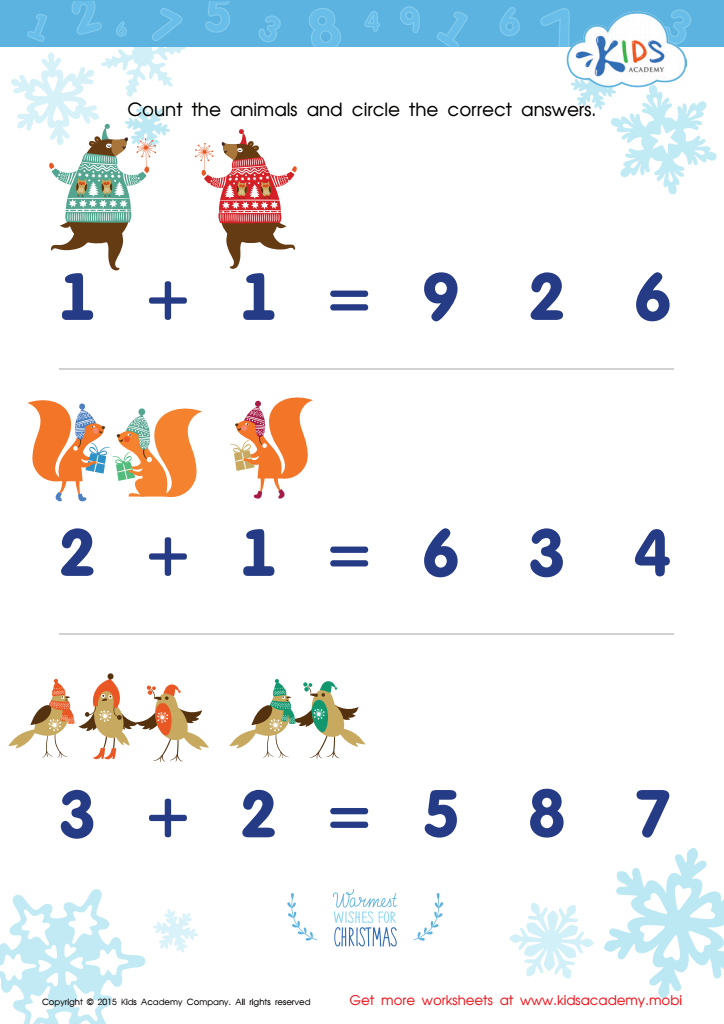
Count Funny Animals Worksheet
Get your kid in the Christmas spirit with this festive addition worksheet! They'll have fun counting the colorful animals and writing in the numbers. Our graphic layout makes it easy for them to visualize and solve the task. Print it out and help your kid keep their math skills sharp this winter with Kids Academy!
 Assign to My Students
Count Funny Animals Worksheet
Worksheet
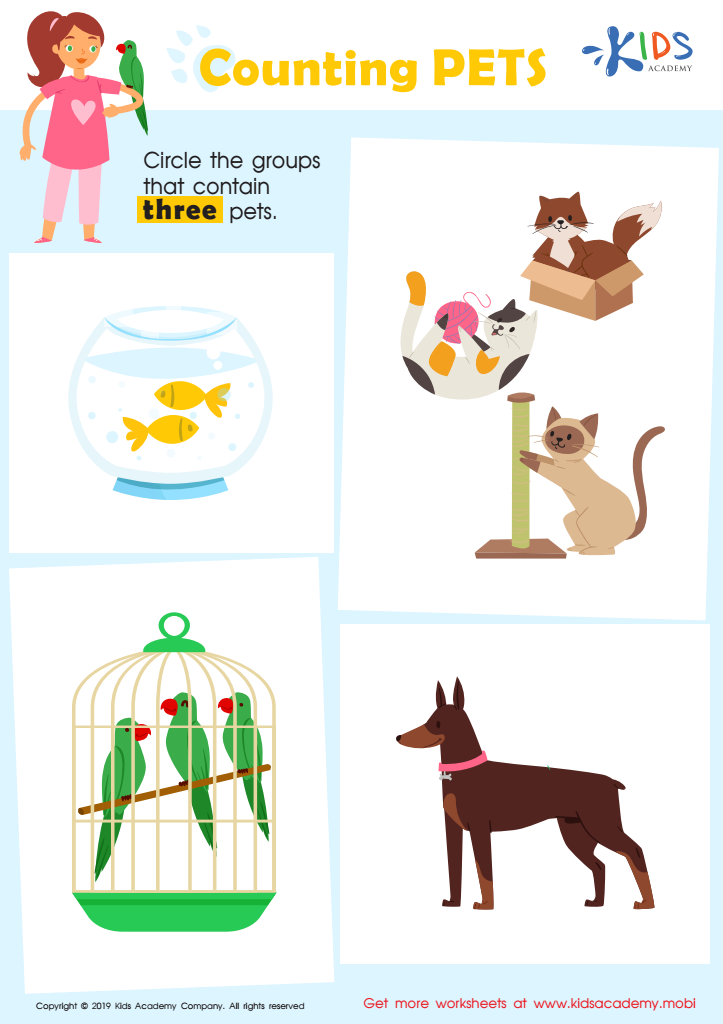
Counting Pets Worksheet
Kids adore their pets, making this free pet counting worksheet the perfect way to combine something they love with math skills. They'll count the number of pets, circle the pictures with three pets, and use one-to-one picture representation to help. This exercise will cultivate their learning and reinforce their love of animals!
Counting Pets Worksheet
Worksheet
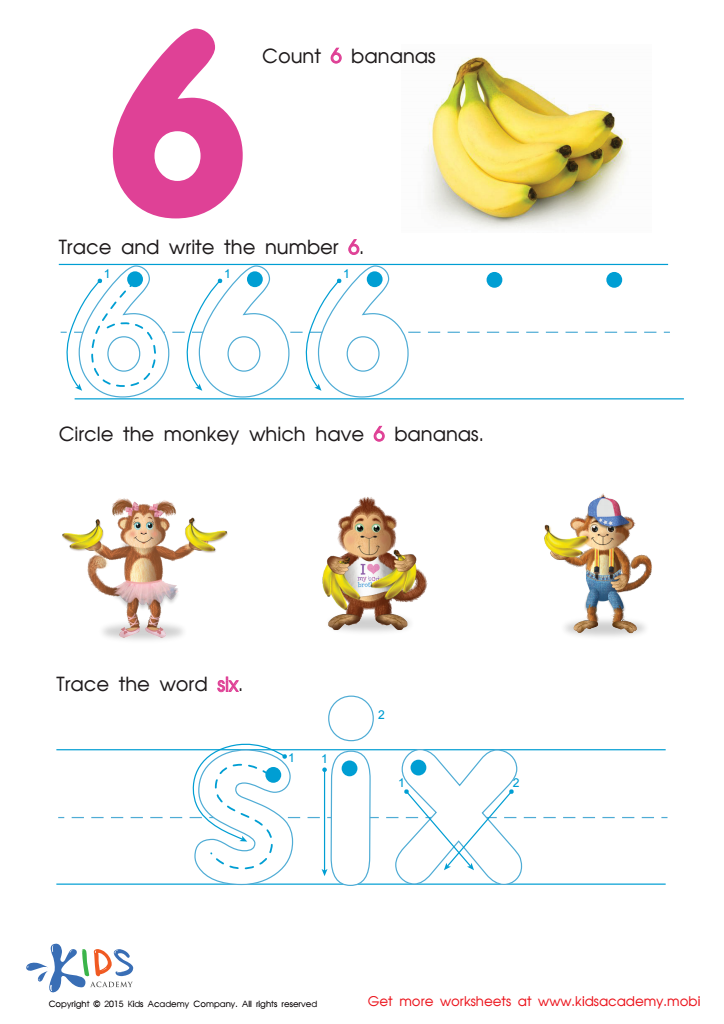
Tracing And Writing Number 6 Worksheet
Learn numbers in a fun way with our preschool number worksheets. Count six bananas, trace and write the number, find the monkey with six bananas, and trace the word "six." Explore more activities at Kids Academy.
Tracing And Writing Number 6 Worksheet
Worksheet
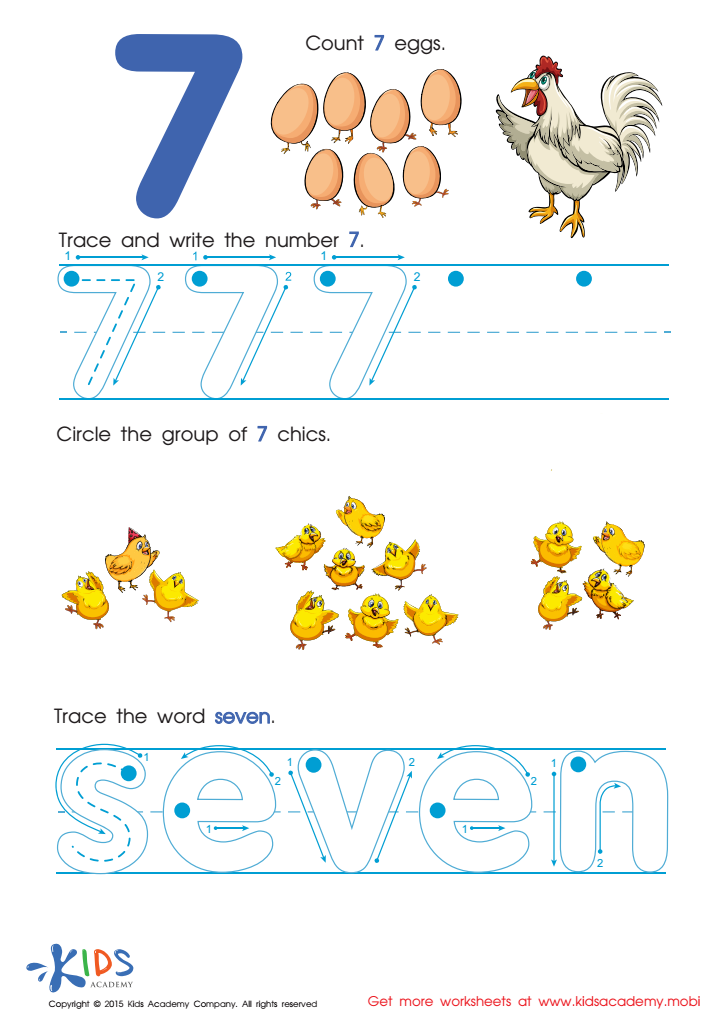
Trace And Write Number 7 with Fun Worksheet
Try one with a cute hen and its seven eggs! Trace and write the number 7, circle the group of seven chicks, and trace the word "seven". Fun and educational!
Trace And Write Number 7 with Fun Worksheet
Worksheet
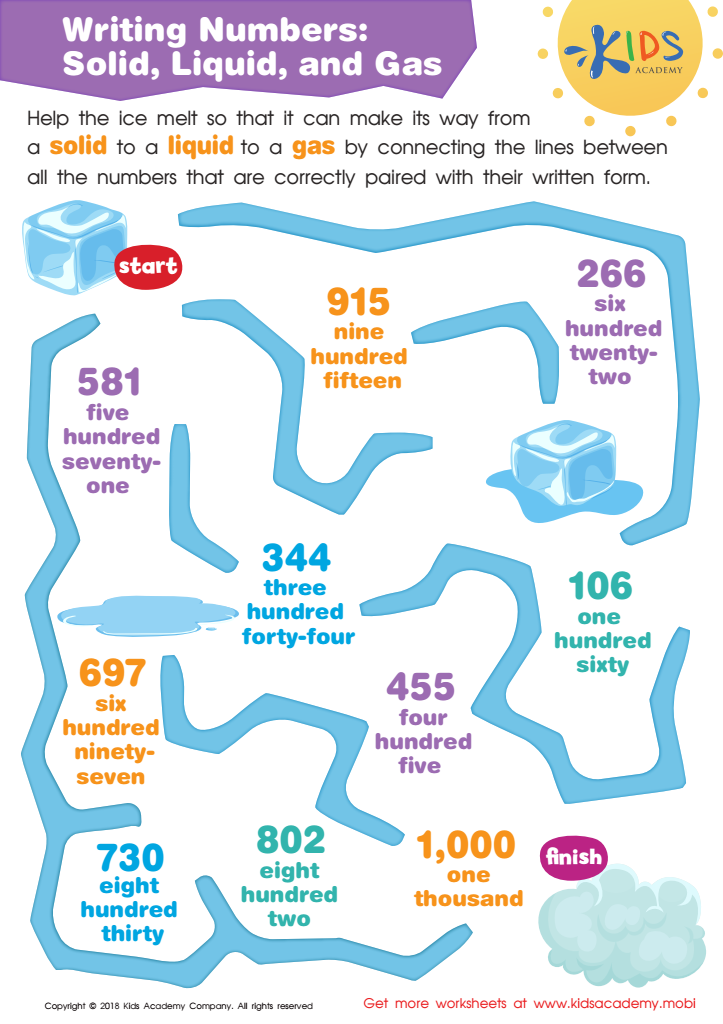
Solid, Liquid, and Gas Writing Numbers Worksheet
Your student can see the math/science connection in this fun maze! Download the PDF and help the ice melt by navigating a maze of number words and numeral representations. To the finish line! Only the paired words and numbers that match get you there.
Solid, Liquid, and Gas Writing Numbers Worksheet
Worksheet
Join Kids Academy for Free
Who is primarily going to use this learning content?




Number writing practice for children aged 5-9 is incredibly important for several reasons tied to both cognitive development and educational success. During these early years, children's brains are highly plastic, making it a crucial period for skill acquisition. By practicing number writing, children not only learn to identify and familiarize themselves with numerical symbols but also develop fine motor skills essential for all forms of writing and everyday tasks.
Additionally, proficiency in number writing builds a foundation for essential math skills. Early exposure to numbers and their formations helps children understand basic mathematical concepts, including counting, addition, subtraction, and later, more complex operations. These are the building blocks for higher-level math and logical reasoning required in many subjects and real-life scenarios.
Supporting children in mastering this skill also fosters a sense of confidence and achievement. When children can correctly write and use numbers, they feel more competent in class activities and are more likely to engage actively in lessons. This positive reinforcement can ignite a lifelong affinity for learning and problem-solving.
For teachers and parents, investing the time in number writing practice now can ease future learning hurdles, making it a small but impactful part of a child's educational journey. Ignoring this stage can result in a child lagging behind, which could subsequently affect their self-esteem and academic performance.








