Reading thermometers Normal Worksheets for Ages 5-9
3 filtered results
-
From - To
Introduce your child to the fundamental skill of reading thermometers with our specially designed "Reading Thermometers Normal Worksheets" for ages 5-9! These engaging and interactive worksheets enable young learners to grasp temperature concepts effectively through colorful illustrations and straightforward exercises. Kids will practice reading different types of thermometers, all while building essential math and science skills. Our worksheets cater to varying learning styles, ensuring that every child has fun while mastering this key skill. Perfect for home or classroom use, these resources foster curiosity about the world around us. Download now and start your child's temperature journey with confidence!
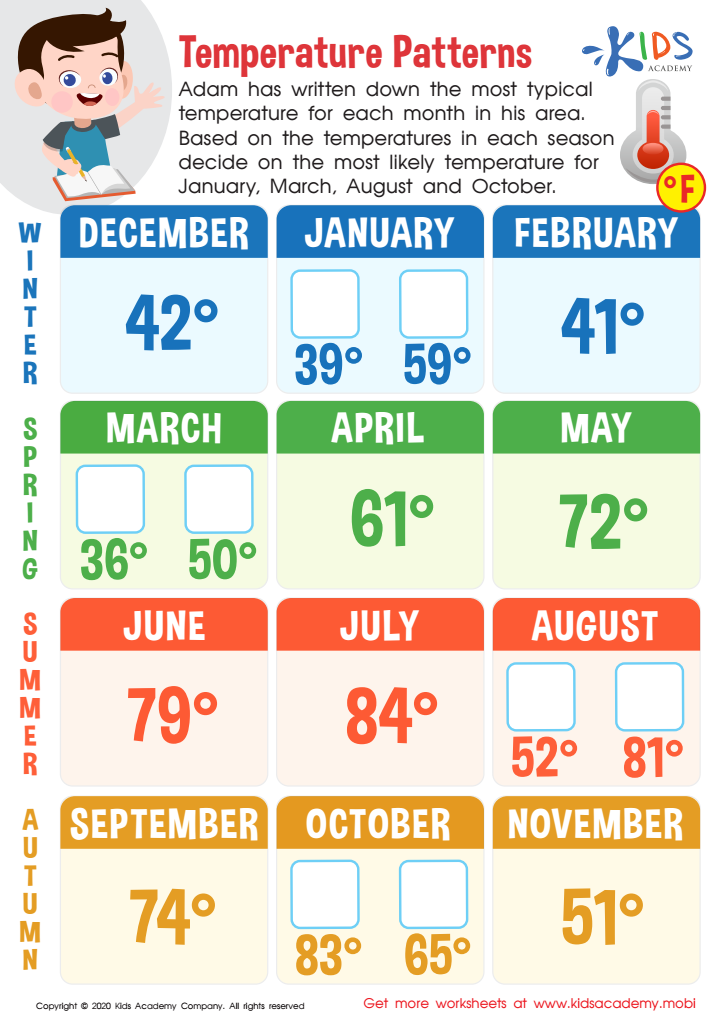
Temperature Patterns Worksheet
 Assign to My Students
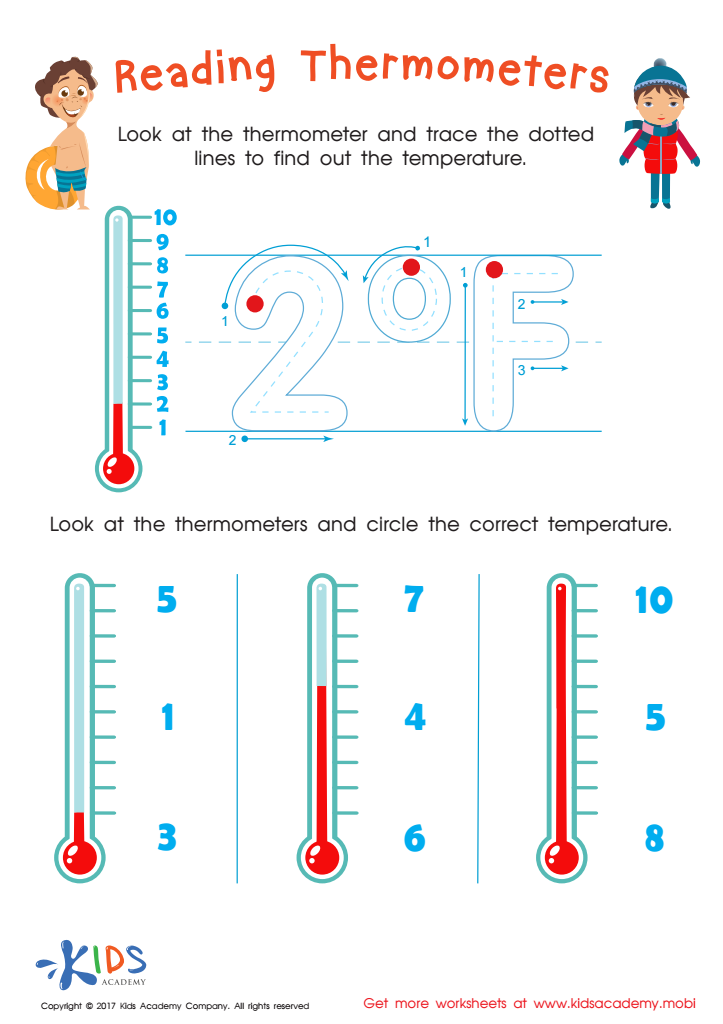
Reading Thermometers Printable
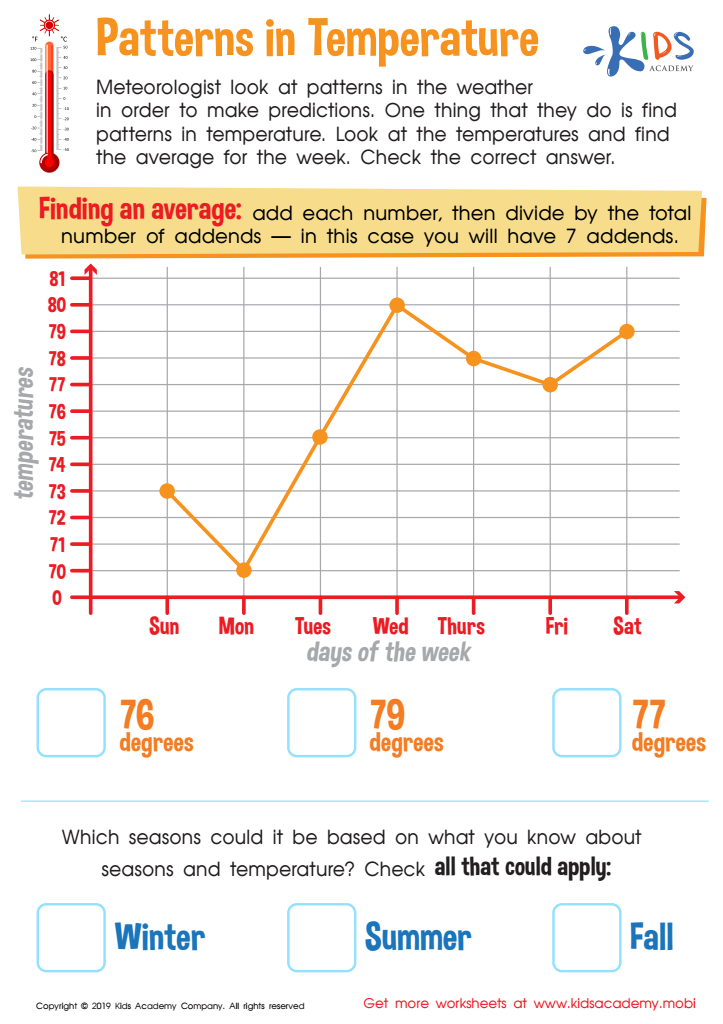
Patterns in Temperature Worksheet








Reading thermometers is an essential skill for children aged 5 to 9 that parents and teachers should prioritize for several reasons. First, understanding how to read a thermometer fosters early math skills, including number recognition, counting, and understanding increments. It helps children develop an awareness of measurement, which is foundational in math and science learning.
Moreover, knowing how to read a thermometer teaches important health and safety concepts. Children can learn to monitor their body temperature or that of someone else, which is crucial in understanding signs of illness. This knowledge empowers them to communicate health-related concerns effectively, such as telling a parent or teacher they feel unwell.
Additionally, engaging in activities related to measuring temperature encourages interactive and hands-on learning. Parents and teachers can facilitate fun experiments or real-life applications, helping children grasp abstract concepts in a concrete way.
Finally, fostering this skill promotes independence and responsibility, as children start to take charge of their well-being. By equipping children with the ability to read thermometers, parents and educators are not just teaching a practical skill; they are nurturing critical thinking, health awareness, and active participation in their own learning journey.








