Understanding adjectives Normal Worksheets for Ages 5-9
5 filtered results
-
From - To
Help your child enhance their language skills with our "Understanding Adjectives" Normal Worksheets for ages 5-9! These engaging, printable worksheets are designed to make learning about adjectives fun and interactive. Through colorful illustrations and age-appropriate activities, children will improve their vocabulary as they identify and use descriptive words effectively. From simple exercises to more complex challenges, our worksheets cater to different learning levels, ensuring every child can grasp the concept of adjectives confidently. Perfect for home or classroom use, these resources inspire creativity and enhance comprehension. Download now and watch your young learners thrive in their understanding of adjectives!
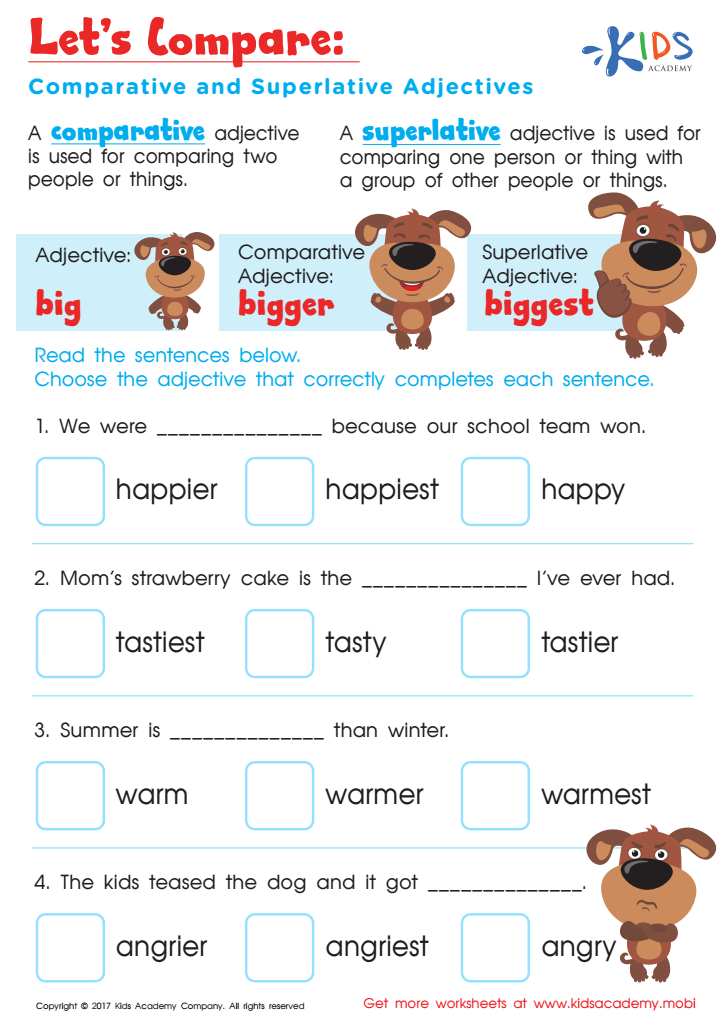
Comparative and Superlative Worksheet
 Assign to My Students
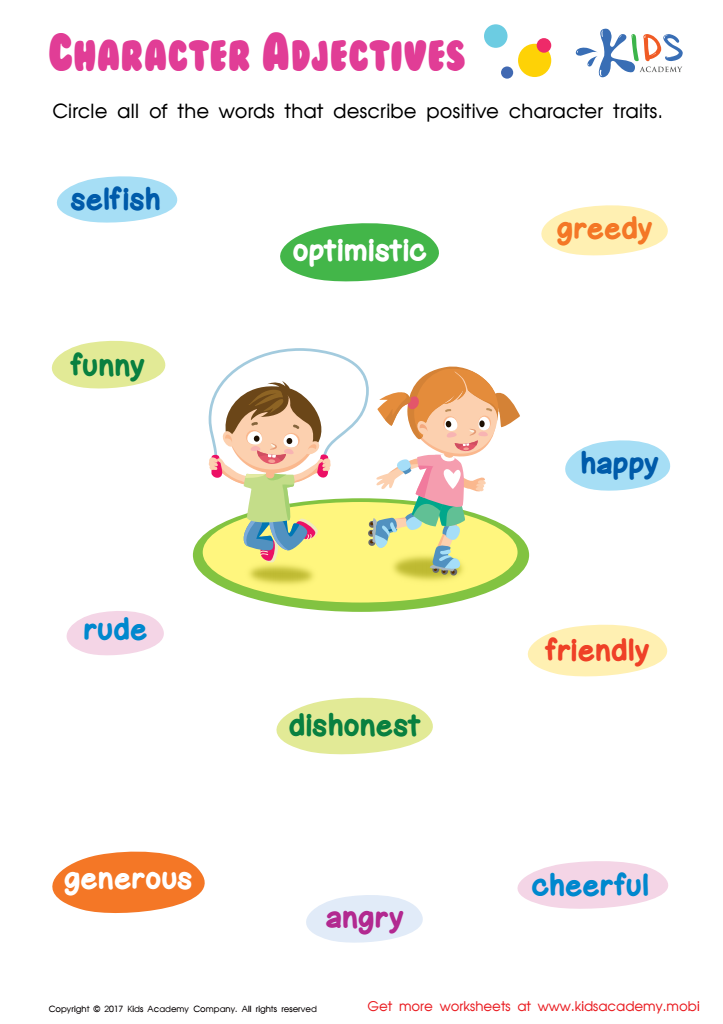
Character Adjectives Worksheet
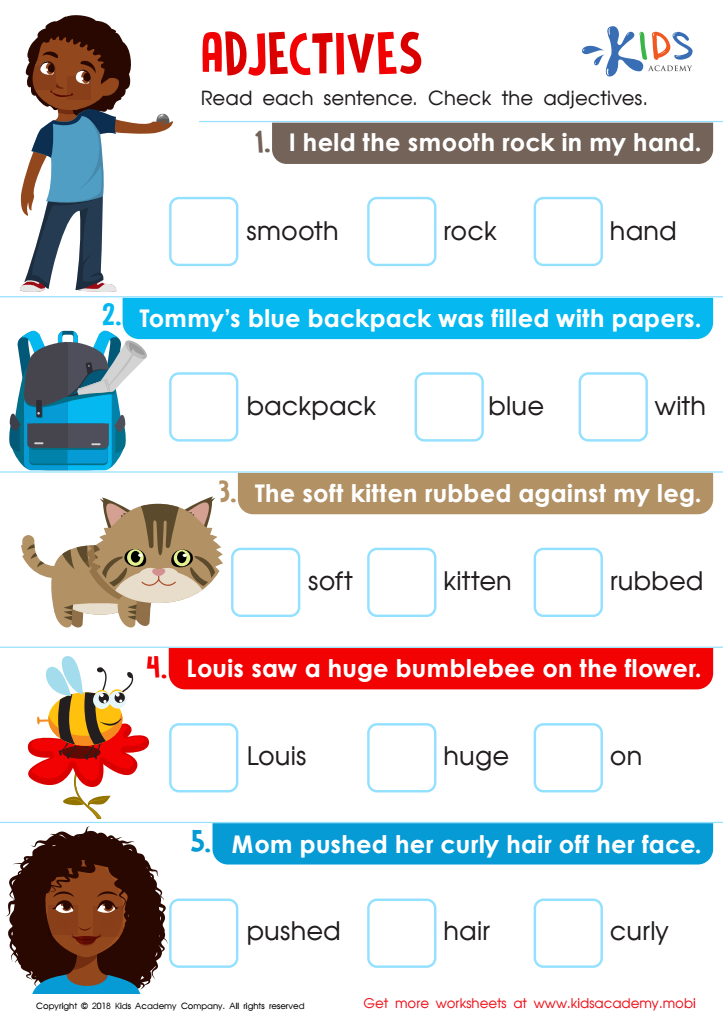
Adjectives Worksheet
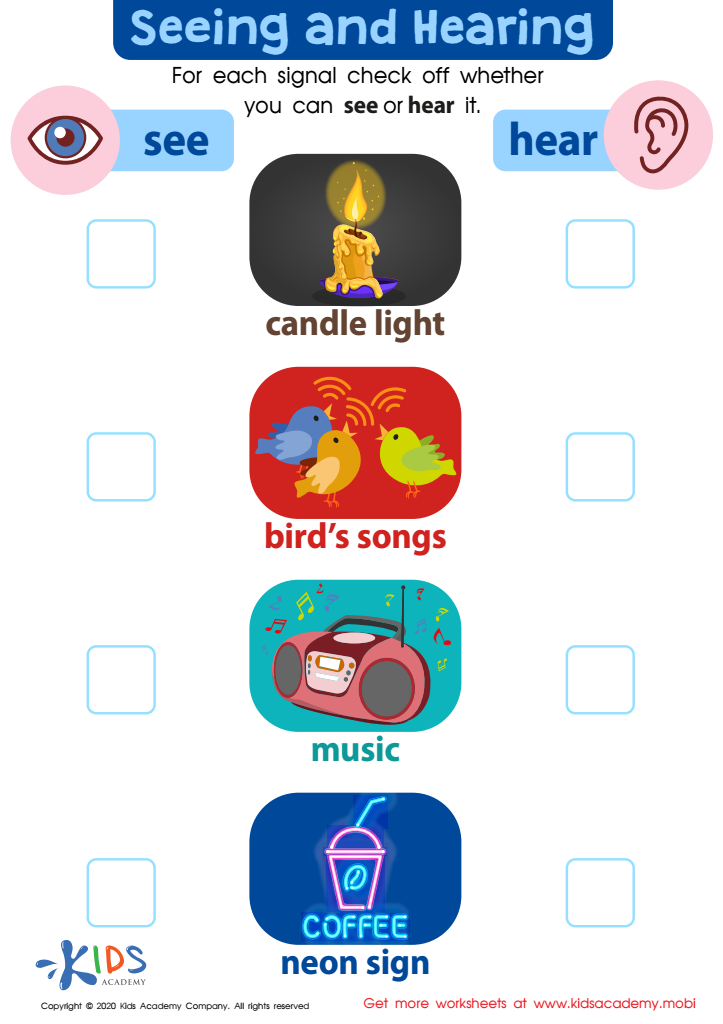
Seeing and Hearing Worksheet
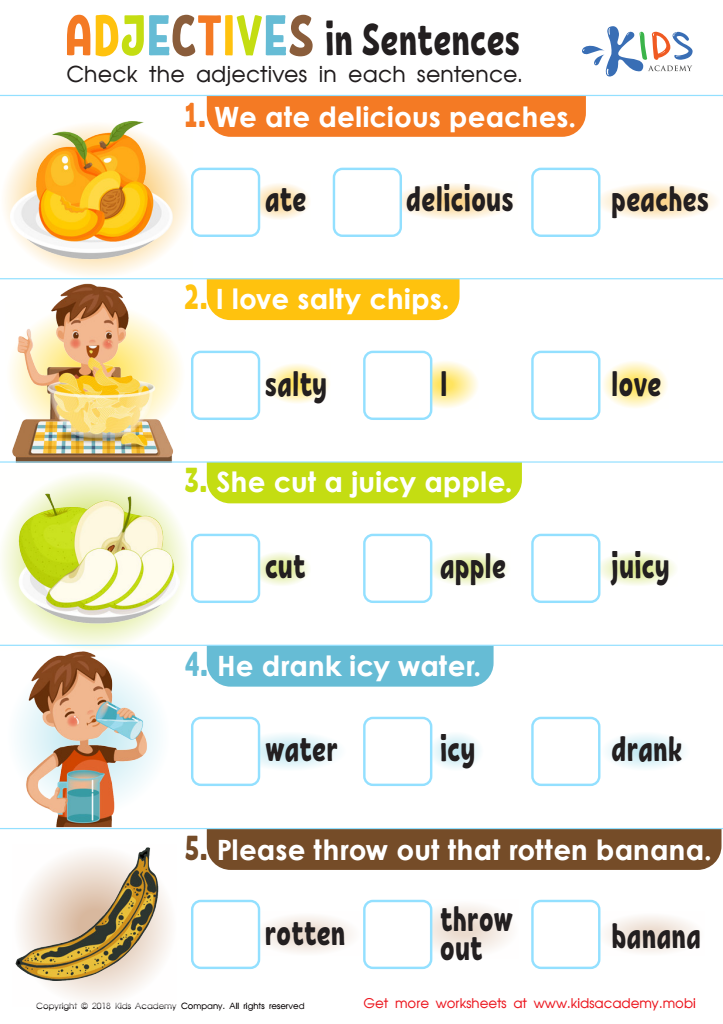
Adjectives in Sentences Worksheet






Understanding adjectives is crucial for children ages 5-9 as they lay the foundation for effective communication and literacy skills. Adjectives help children describe and enrich their language, allowing them to express their feelings, opinions, and observations more clearly. By grasping the use of adjectives, young learners can expand their vocabulary and enhance their ability to convey detailed information. This skill is essential not only for spoken language but also for writing, enabling children to craft vivid sentences that capture their thoughts and experiences.
Moreover, a solid understanding of adjectives aids in comprehension. When children learn to recognize descriptive words in texts, they can better understand the context and emotions portrayed, leading to improved reading skills. Engaging with adjectives also fosters creativity; children can use them to paint imaginative pictures, whether in stories or conversations.
For parents and teachers, encouraging the use of adjectives in daily interactions and lessons can spark curiosity and motivate children to explore language. Fun activities—like descriptive games or storytelling—make learning about adjectives enjoyable and memorable. By prioritizing this aspect of language development, adults can set the stage for improved communication skills that benefit children throughout their academic journey and beyond.








