Understanding communities Normal Worksheets for Ages 5-9
6 filtered results
-
From - To
Explore our "Understanding Communities Normal Worksheets" designed for children ages 5-9. These engaging and interactive worksheets help young learners grasp the concept of communities, fostering awareness of their surroundings and the people within them. Filled with colorful illustrations and easy-to-follow activities, these worksheets cover essential topics like community roles, local landmarks, and family structures. Our thoughtfully crafted resources promote critical thinking and social skills while making learning fun. Perfect for classroom settings or at-home learning, these worksheets encourage kids to connect with their communities and understand their contributions. Download now to support your child's learning journey!
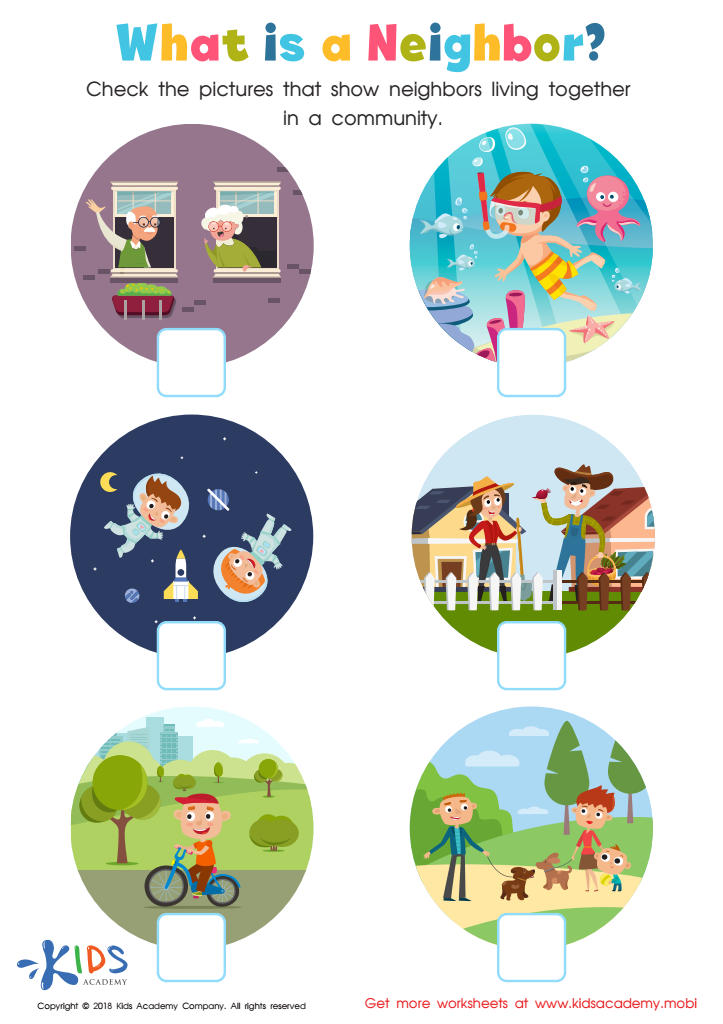
What is a neighbor Worksheet
 Assign to My Students
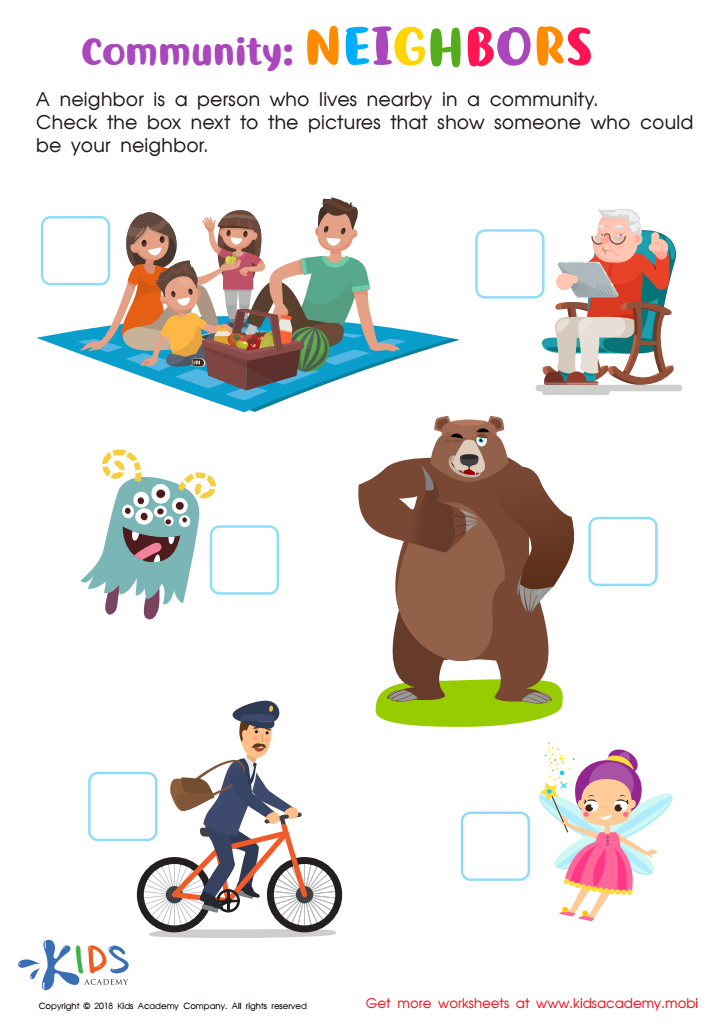
Community: Neighbors Worksheet
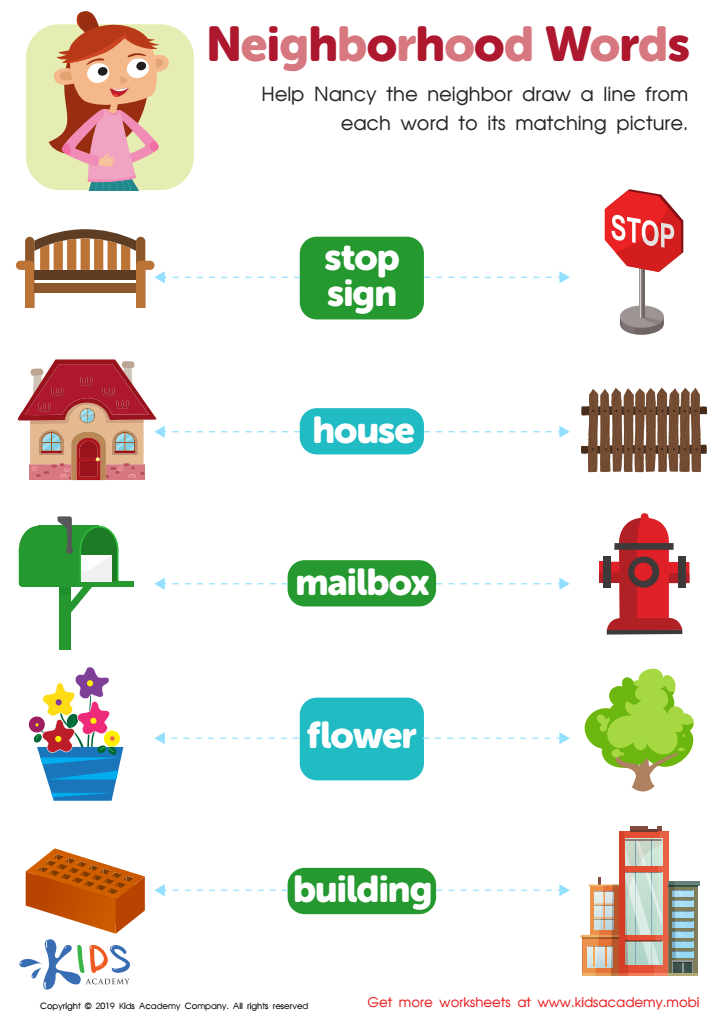
Neighborhood Words Worksheet
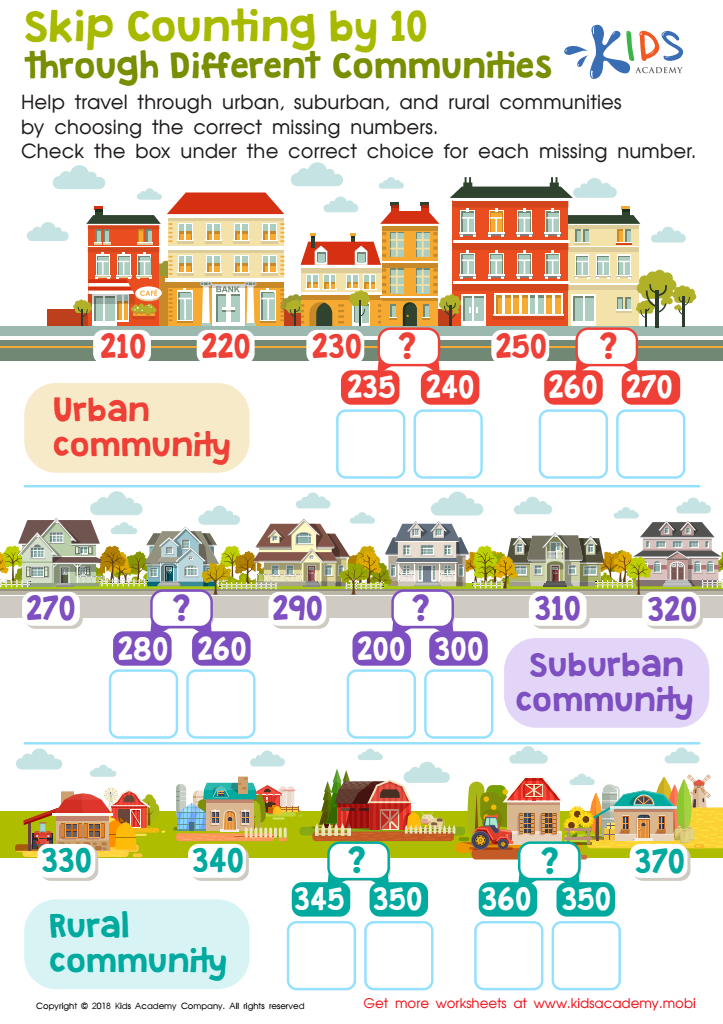
Skip Counting by 10 through Different Communities Worksheet
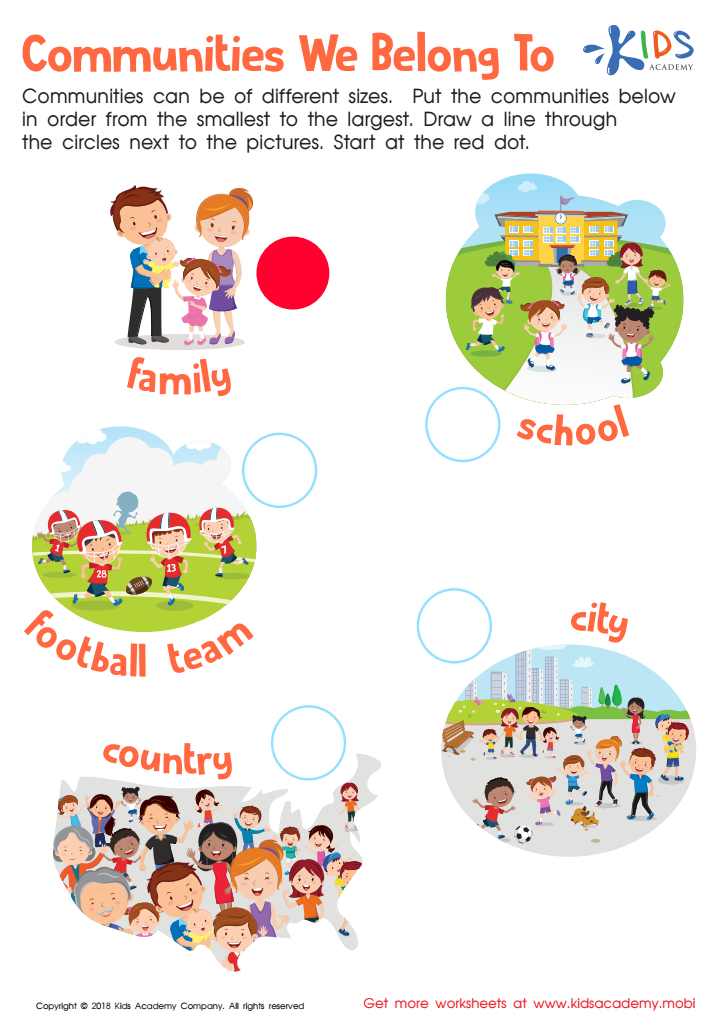
Communities We Belong to Worksheet
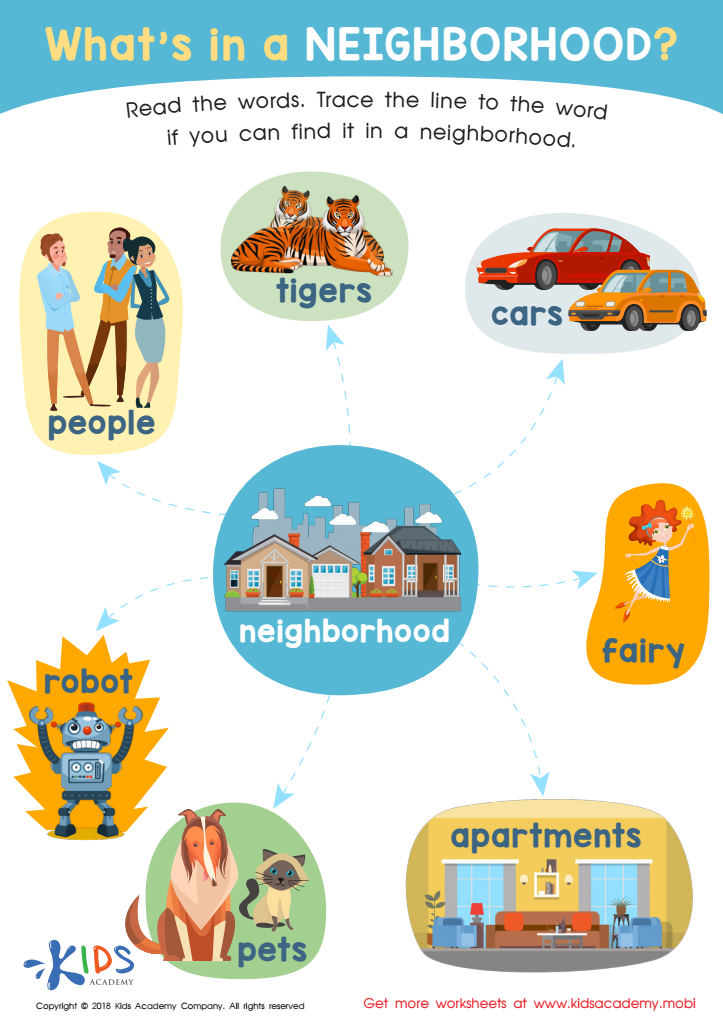
What's in a Neighborhood? Worksheet


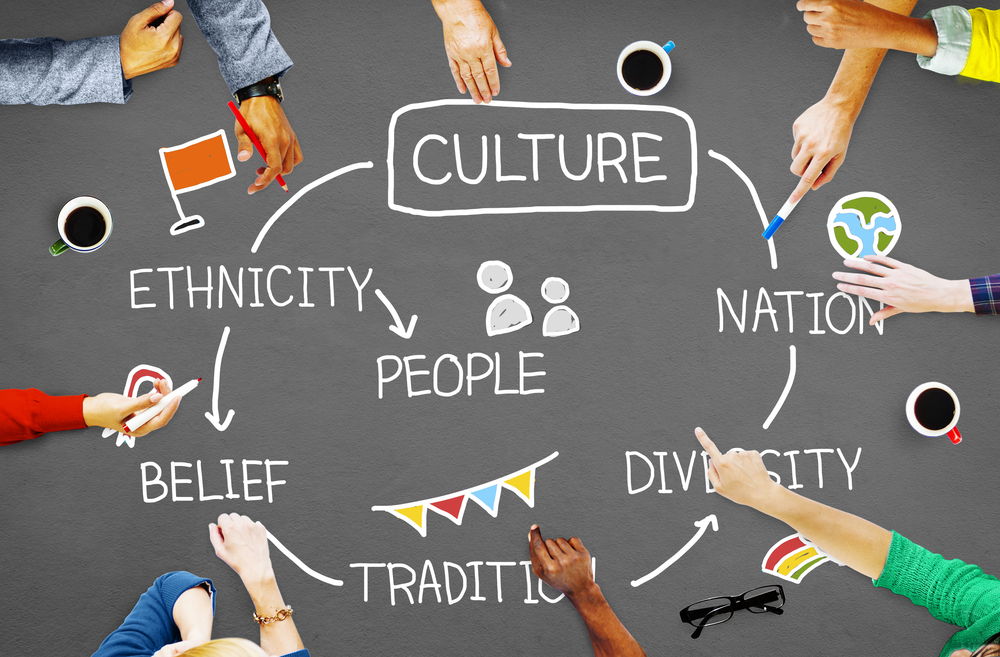



Understanding communities is vital for children ages 5-9 as it lays the foundation for social, emotional, and cognitive development. For parents and teachers, fostering this understanding helps children learn about diversity, inclusivity, and cooperation. At this age, children are naturally curious about the world around them, making it an ideal time to introduce concepts related to communities, such as roles, relationships, and cultural differences.
When children grasp the dynamics of their own communities, they develop empathy and respect for others. This understanding cultivates a sense of belonging and helps them navigate social interactions more effectively. It encourages them to appreciate different perspectives, enhancing their problem-solving and critical-thinking skills.
Moreover, engaging with community topics arms children with essential life skills. They learn about responsibility, teamwork, and the importance of contributing positively to their surroundings. By understanding their role within a community, children become more informed citizens, fostering a commitment to helping others.
As children explore various cultures, traditions, and community structures, they build a more profound sense of identity. Parents and teachers play a crucial role in guiding this exploration, providing resources and experiences that instill a lifelong appreciation for the rich tapestry of our neighborhoods and the world at large.








