Understanding number relationships Normal Worksheets for Ages 5-9
3 filtered results
-
From - To
Explore our "Understanding Number Relationships" worksheets designed for children ages 5-9. This educational resource helps young learners develop essential math skills by introducing key concepts such as greater than, less than, and equal to through engaging activities. Our Normal Worksheets feature vibrant visuals and age-appropriate challenges that encourage critical thinking and problem-solving in a fun way. With a variety of exercises, children will build confidence in recognizing number patterns and relationships. Perfect for homeschooling or classroom use, these worksheets provide a strong foundation for future math success. Help your child thrive in math with our comprehensively designed worksheets today!
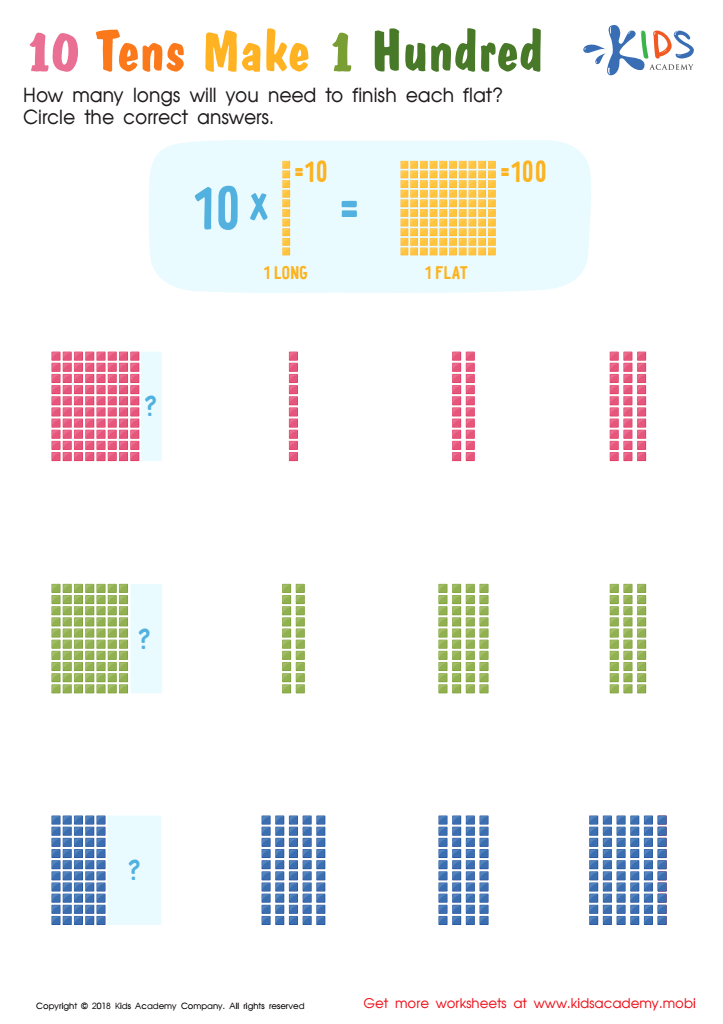
10 Tens Make 1 Hundred Worksheet
 Assign to My Students
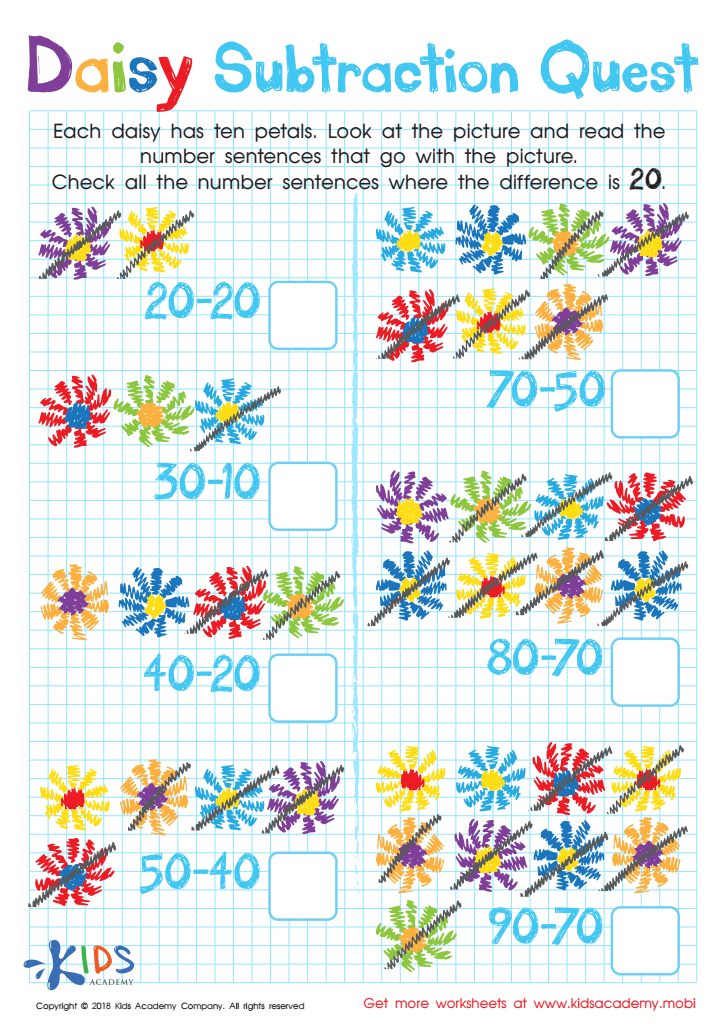
Daisy Subtraction Quest Worksheet
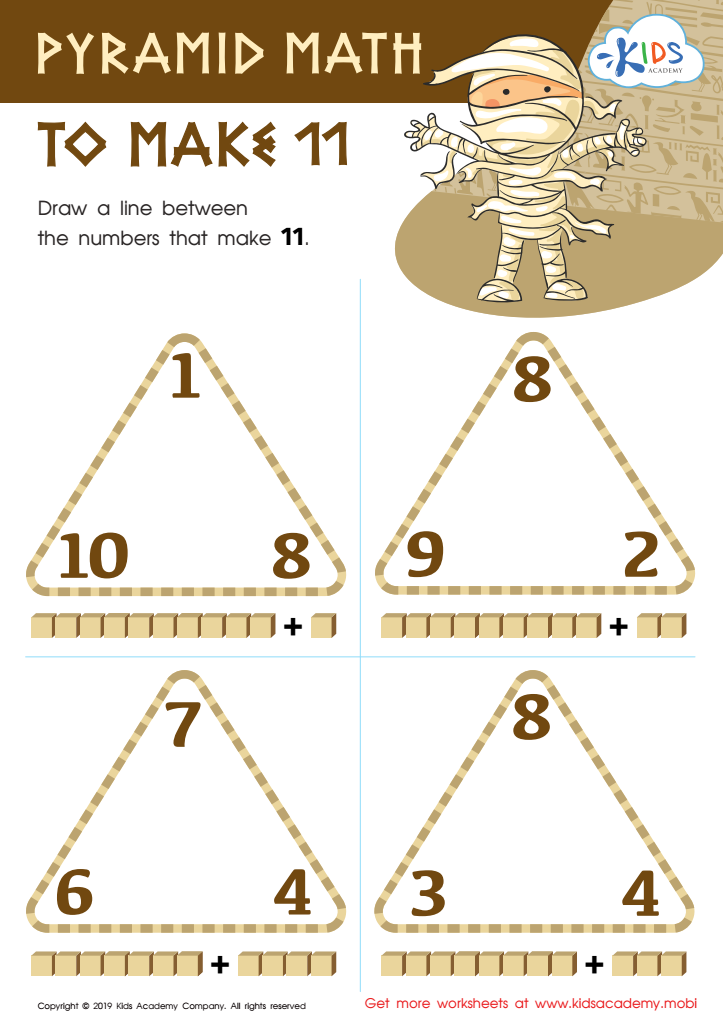
Pyramid Math to Make 11 Worksheet








Understanding number relationships is crucial for children aged 5 to 9, as it forms the foundation for their mathematical development and cognitive skills. This understanding goes beyond merely recognizing numbers; it involves comprehending how numbers relate to one another through concepts such as addition, subtraction, and the place value system. This foundational knowledge supports problem-solving abilities and critical thinking, which are essential across all academic subjects and in everyday life.
Parents and teachers play a vital role in nurturing this understanding. Engaging children in activities that emphasize number relationships—like using manipulatives, games, and real-life scenarios—helps them grasp these concepts in a tangible way. This approach instills confidence and competence in young learners, fostering a positive attitude towards math.
Moreover, as children build strong number sense, they become adept at identifying patterns and making predictions, skills that are transferable to later mathematical topics such as multiplication, division, and even algebra. By caring about and supporting this aspect of math education, parents and teachers are not only enhancing children's academic performance but also laying the groundwork for lifelong skills necessary for personal and professional success. Ultimately, fostering a strong understanding of number relationships is an investment in a child’s future potential.








