Understanding suffixes Normal Worksheets for Ages 5-9
8 filtered results
-
From - To
Help young learners grasp the basics of suffixes with our "Understanding Suffixes" worksheets, specifically designed for ages 5-9. These engaging activities make learning fun and effective by guiding children through the concept of suffixes, which are letters added at the end of words to change their meaning. Perfect for developing essential literacy skills, these easy-to-understand exercises strengthen vocabulary, comprehension, and spelling. Whether at home or in the classroom, our worksheets provide an enjoyable and educational experience through age-appropriate examples and interactive tasks. Lay a solid foundation for language mastery with our expertly crafted resources.
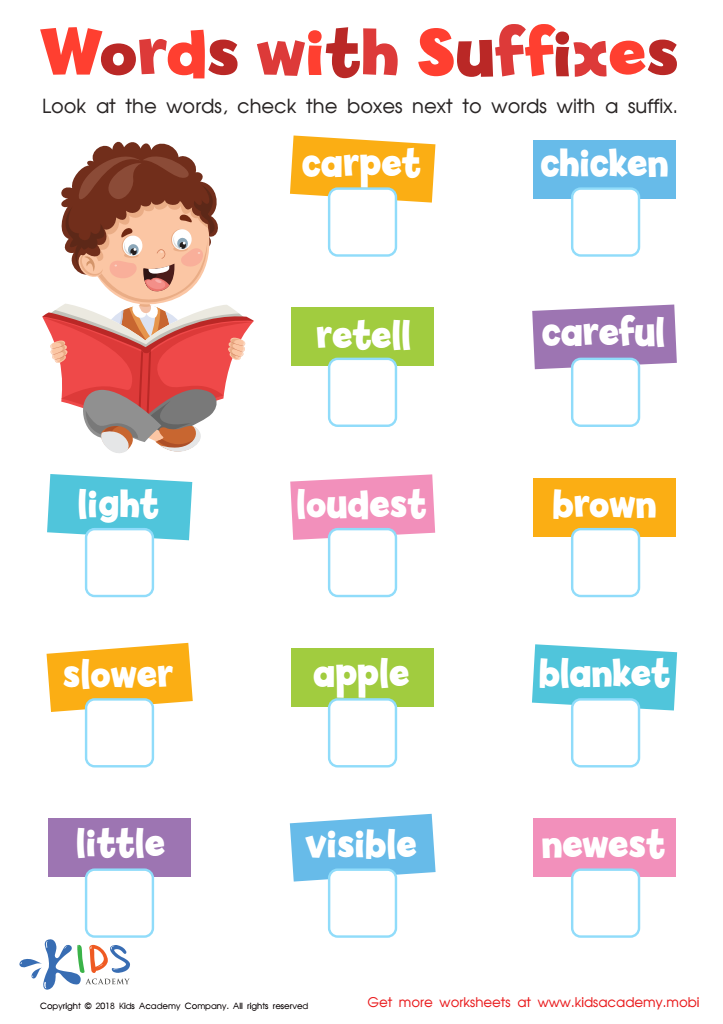
Reading: Words With Suffixes Worksheet
 Assign to My Students
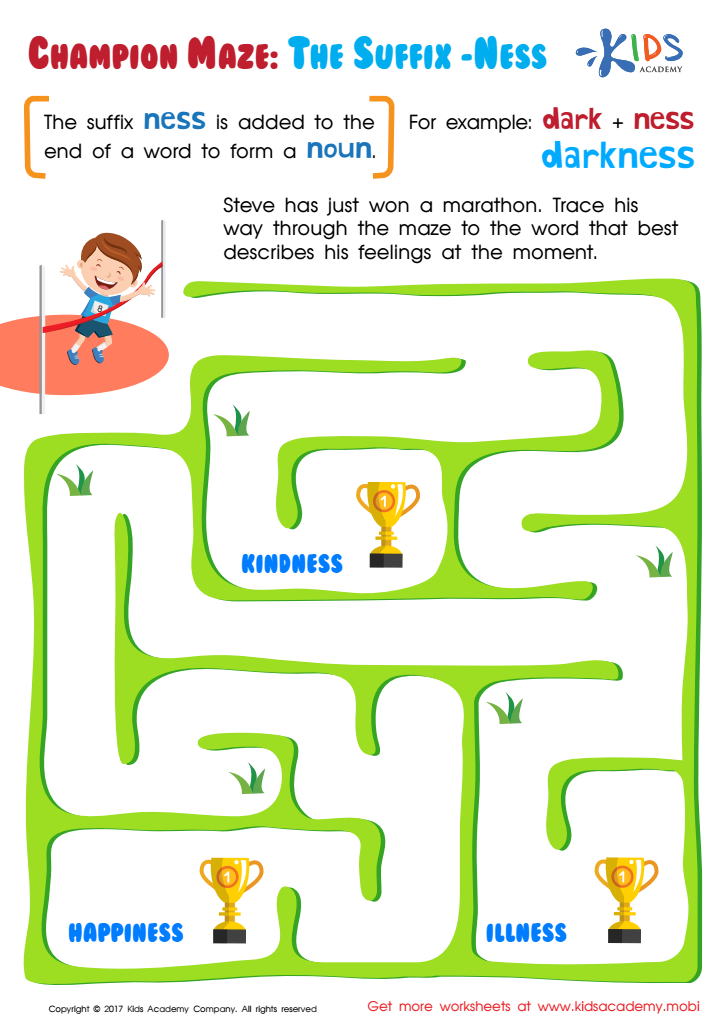
Suffix Ness Worksheet
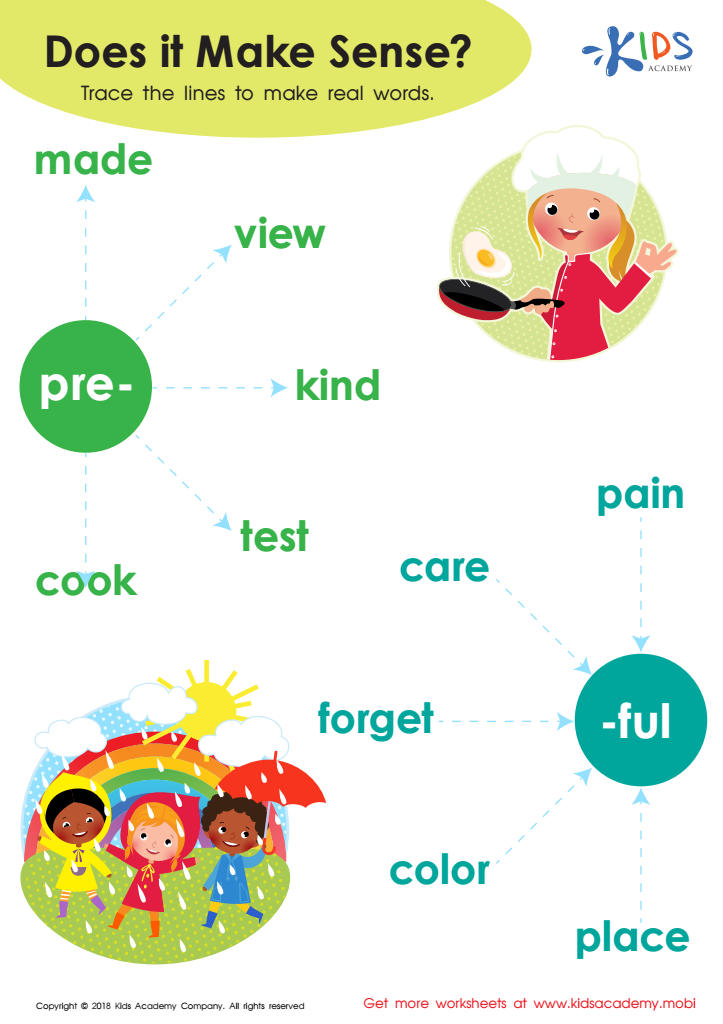
Prefix pre– and Suffix ful– Worksheet
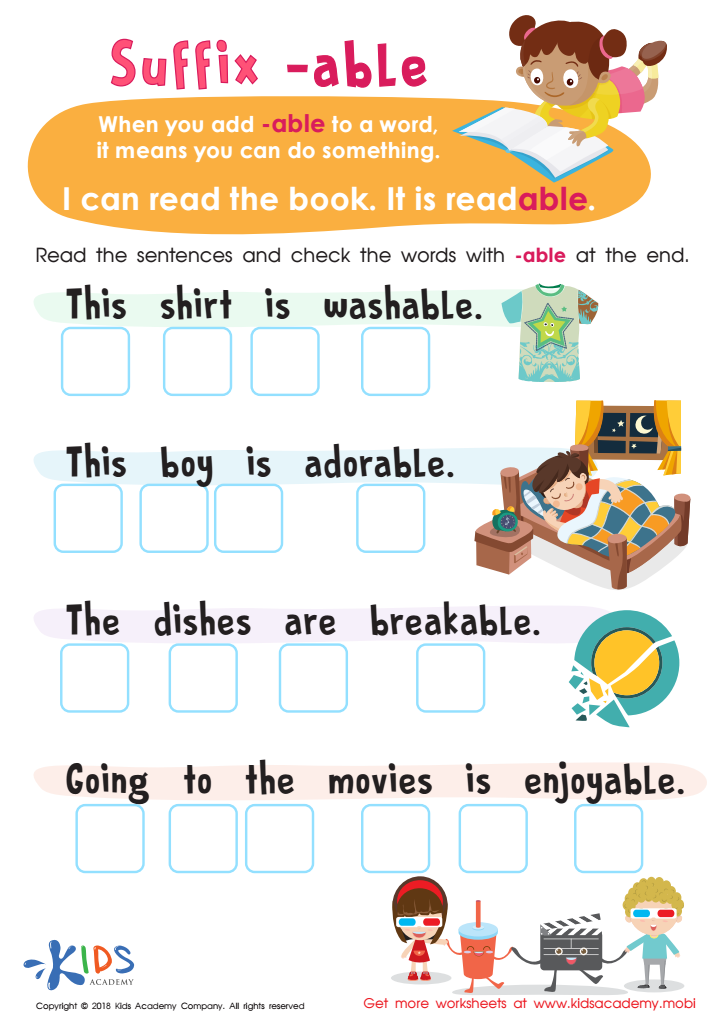
Suffix -Able Worksheet
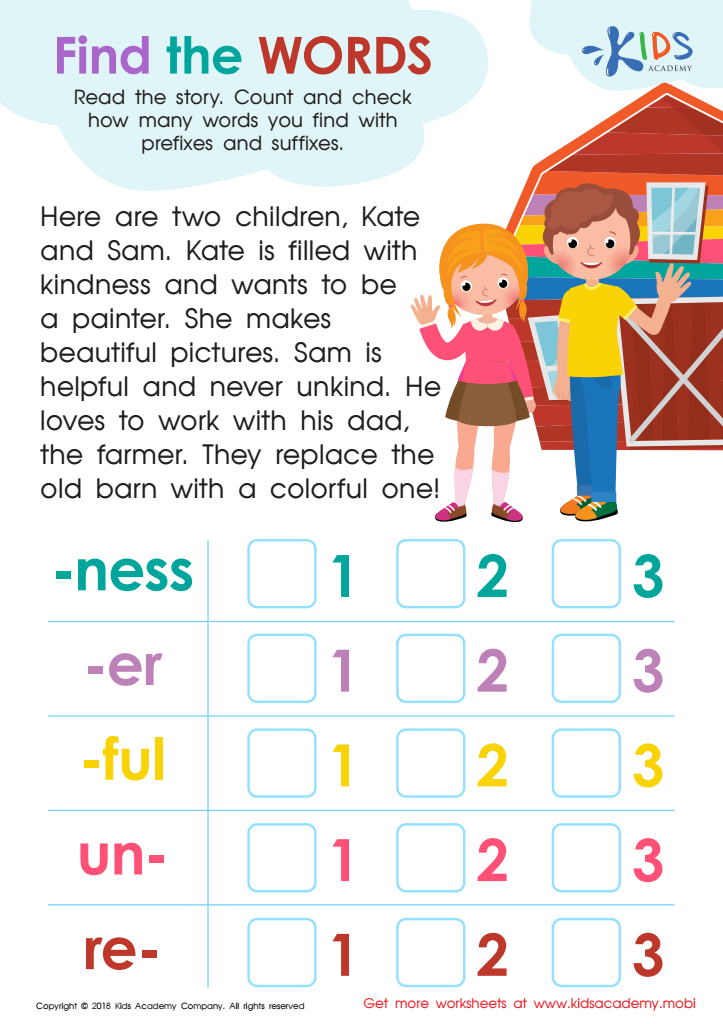
Prefix and Suffix Worksheet For Grade 3
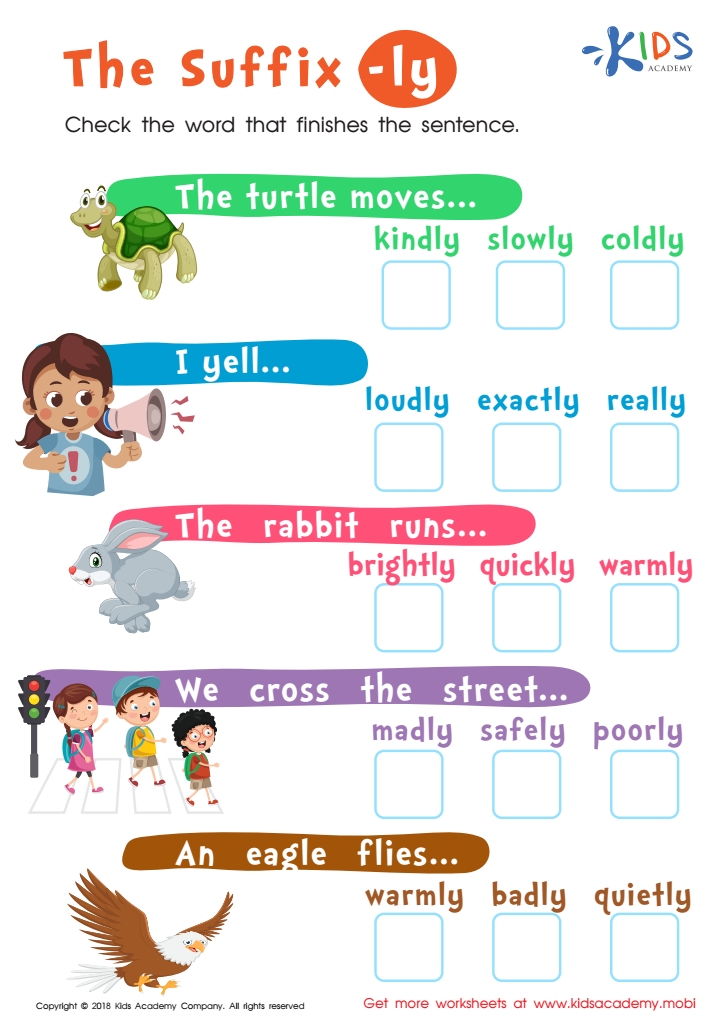
The Suffix -Ly Worksheet
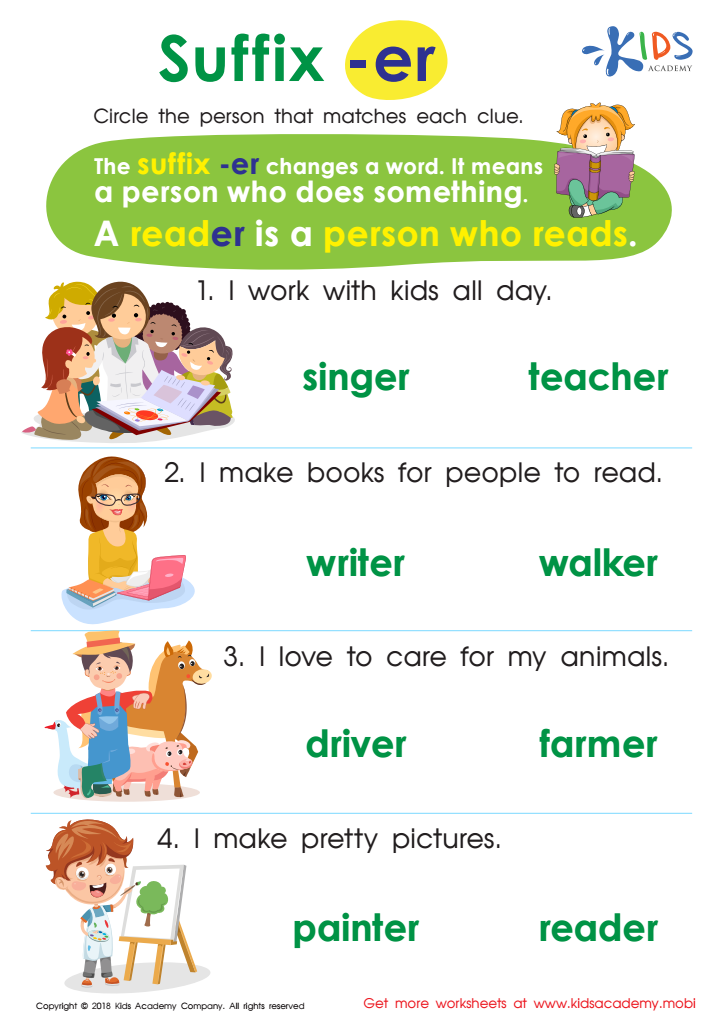
Suffix –er Printable Worksheet
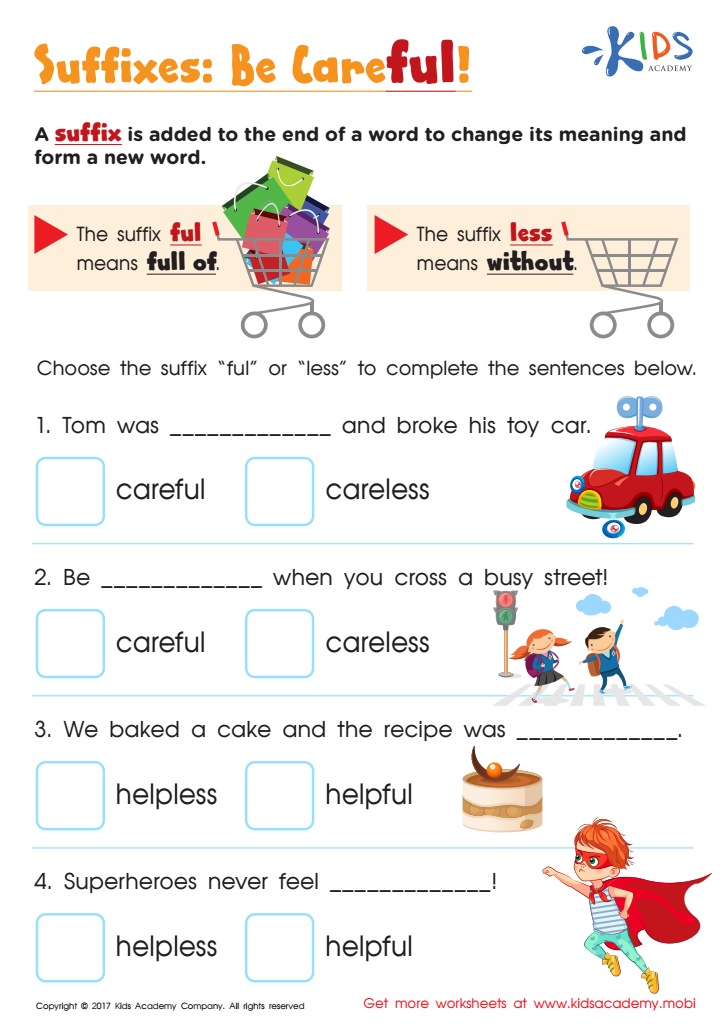
Suffixes Ful and Less Worksheet






Understanding suffixes is important for young children, ages 5-9, as it establishes a strong foundation for their literacy development. Suffixes are small word endings that change the meaning or function of a base word, such as -s, -ed, and -ing. When children grasp how suffixes work, they improve their reading, spelling, and vocabulary skills significantly.
For parents and teachers, helping children learn suffixes is vital because it boosts their reading comprehension. Kids are better equipped to decode and understand complex words, making reading more enjoyable and meaningful. For example, if a child knows the suffix -ed indicates past tense, they can infer that "jumped" happened in the past, enhancing their grasp of stories or information.
Moreover, knowledge of suffixes aids in spelling accuracy. Kids are more likely to spell words correctly when they understand commonly used suffixes. This contributes to their confidence in writing and reduces frustration.
Finally, suffix awareness expands a child's vocabulary. When children learn how suffixes change meanings, they can derive new words from familiar ones. This not only enriches their language but also fosters their cognitive development, preparing them for more advanced literacy challenges in later grades. Consequently, understanding suffixes is a crucial stepping stone towards comprehensive language proficiency for young learners.








