Uppercase identification Normal Worksheets for Ages 5-9
5 filtered results
-
From - To
Enhance your child's literacy skills with our Uppercase Identification Normal Worksheets, specially designed for ages 5-9. These engaging worksheets help young learners confidently recognize and distinguish uppercase letters through fun and interactive exercises. Ideal for both classroom and home use, our resources promote early reading and writing skills, setting a strong foundation for language development. With a variety of activities, including tracing, matching, and coloring, your child will enjoy learning while building essential letter recognition abilities. Parents and teachers can easily print these worksheets to complement their educational activities, ensuring a comprehensive learning experience. Start boosting your child’s uppercase letter mastery today!
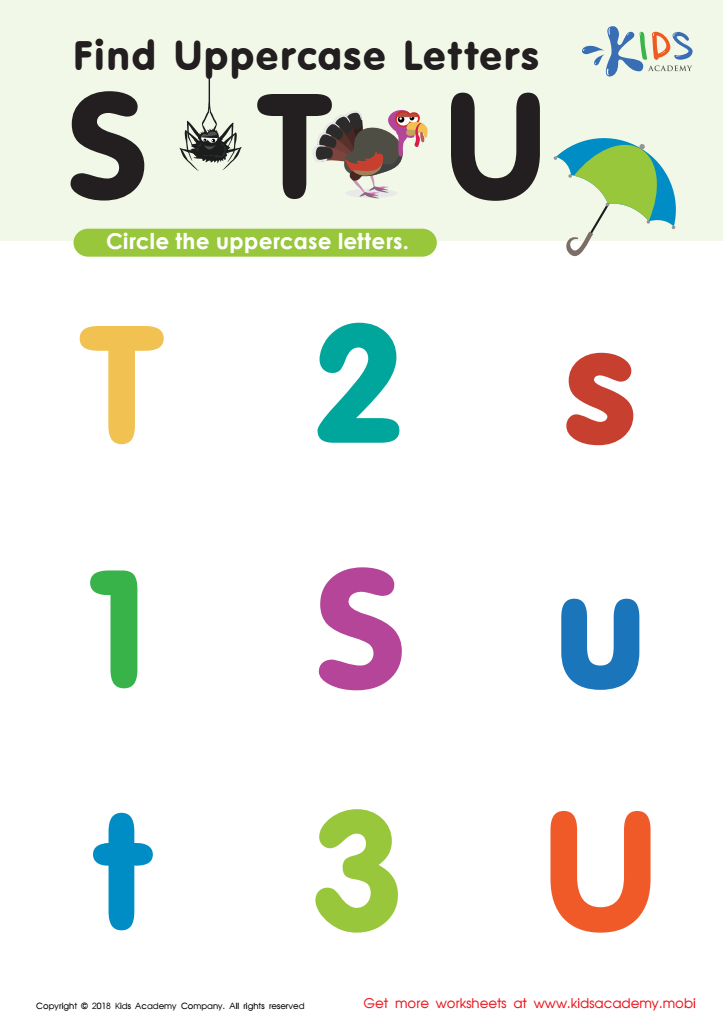
Find Uppercase Letters Worksheet
 Assign to My Students
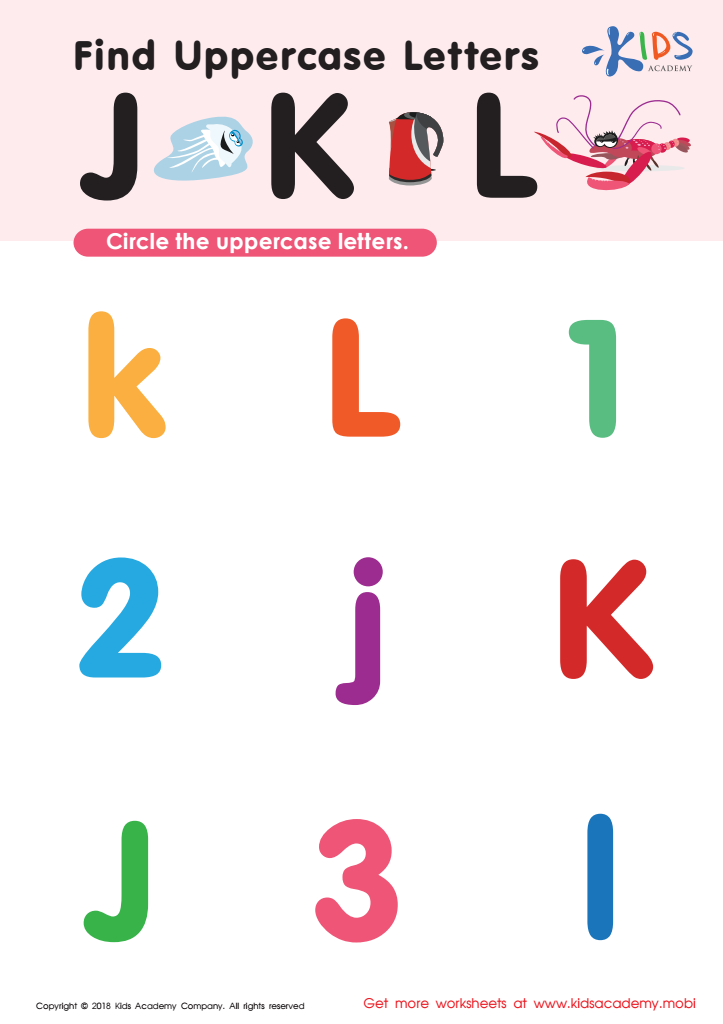
Find Uppercase Letters J, K, and L Worksheet
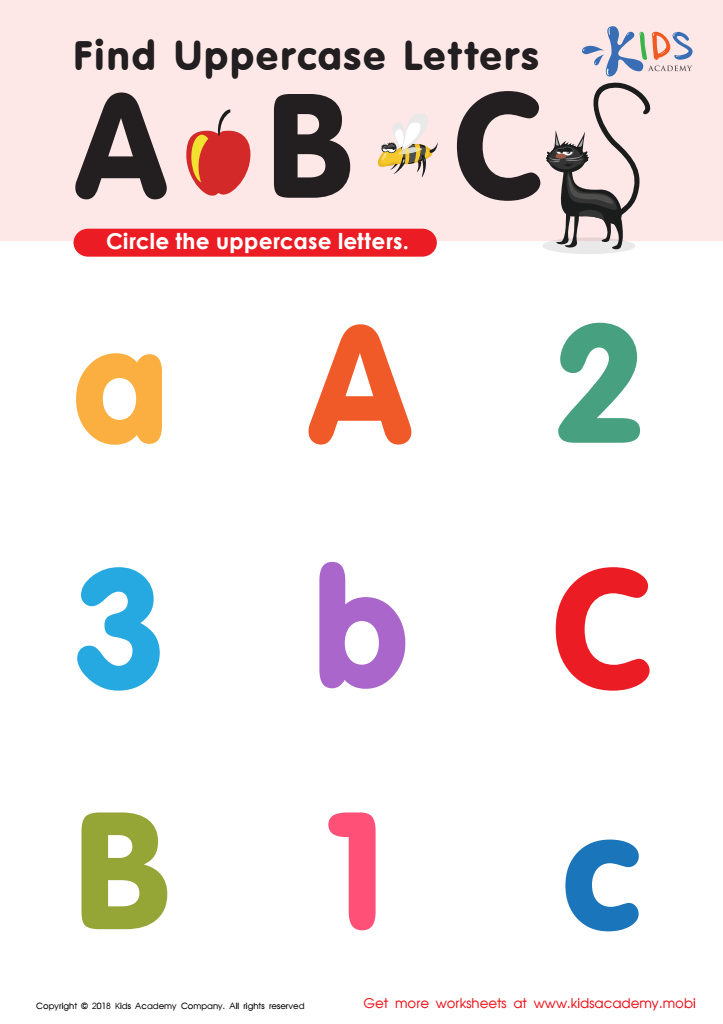
Find Uppercase Letters A, B, and C Worksheet
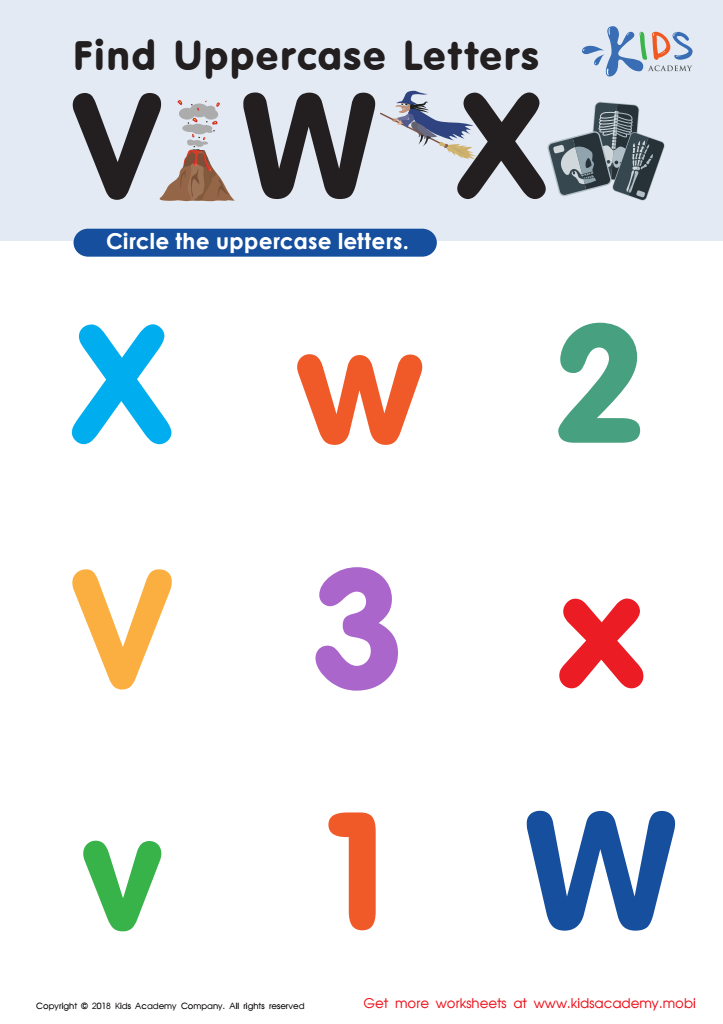
Find Uppercase Letters V, W, X Worksheet
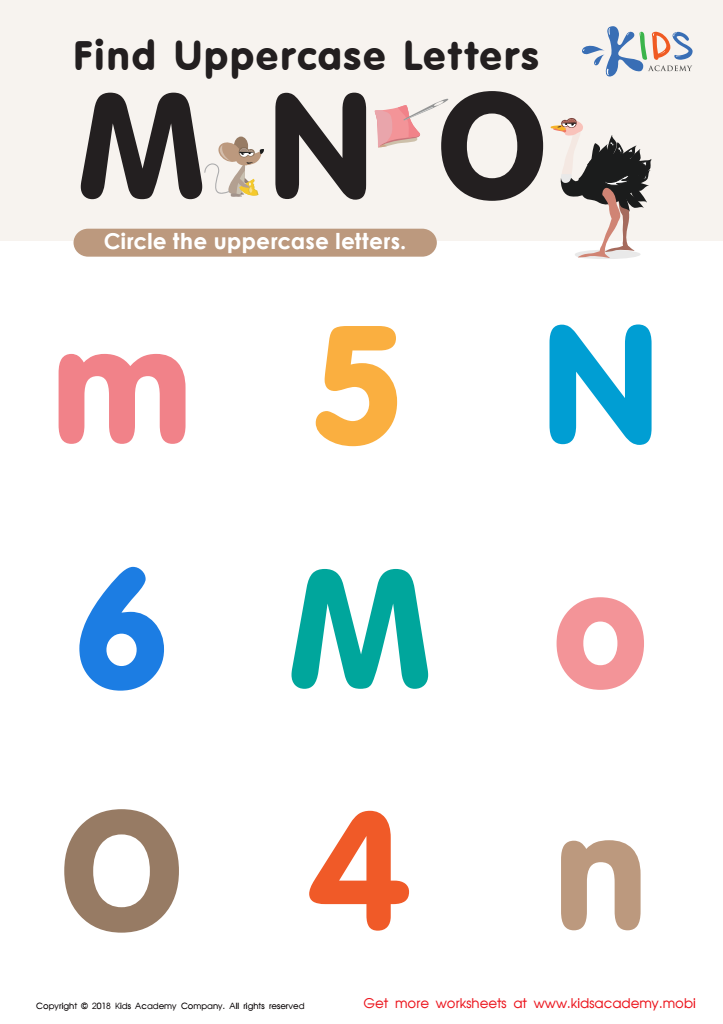
Find Uppercase Letters M, N, and O Worksheet


.jpg)




Uppercase letter identification is a crucial component of early literacy for children aged 5-9. This skill lays the foundation for reading and writing and fosters a child's comprehension and communication abilities. Recognizing uppercase letters helps children understand the alphabetic principle, which is essential for decoding words and emerging as proficient readers.
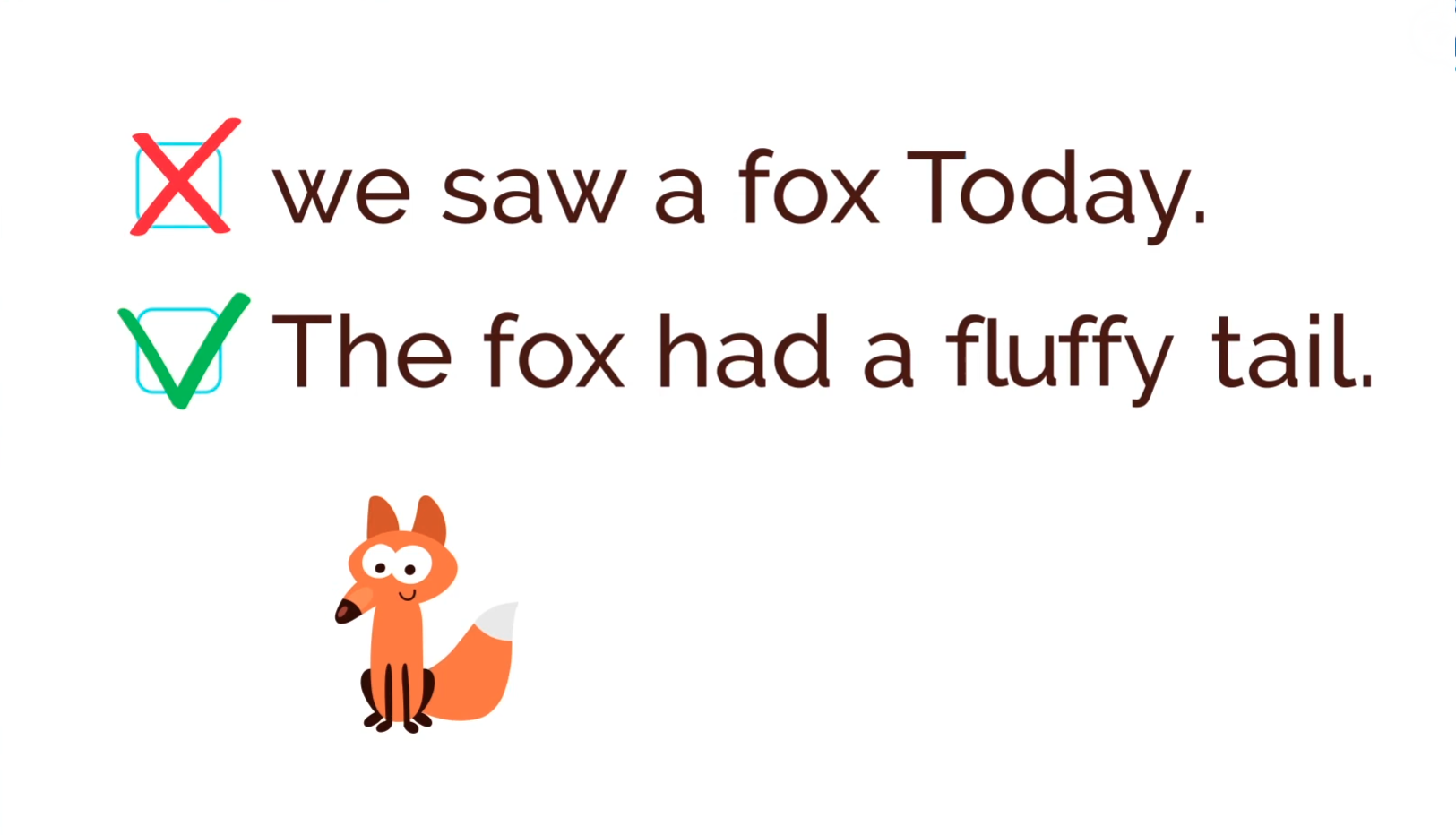
Understanding uppercase letters contributes to children's ability to distinguish between proper nouns and common nouns, enriching their vocabulary and grammar skills. Moreover, children exposed to consistent uppercase letters become more confident in their writing, as they learn to appropriately capitalize names, the beginning of sentences, and titles.
For parents and teachers, attending to uppercase letter identification supports children's overall cognitive growth. Early identification and practice can prevent future learning difficulties, making it easier for children to transition to more complex literacy skills. Additionally, helping children recognize these letters creates a sense of achievement that encourages further exploration of reading and writing.
By actively engaging with uppercase identification through playful activities and insight into everyday contexts—like signs, books, and art—adults can enhance learning experiences, ensuring a successful path toward literacy that can benefit children throughout their academic journey and beyond. Engaging with children in this way fosters a sense of curiosity and motivation essential for lifelong learning.








