Number Recognition Normal Addition and Subtraction Word Problems Worksheets for Ages 5-9
5 filtered results
-
From - To
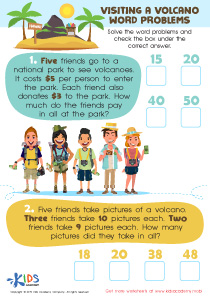
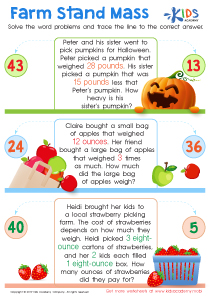
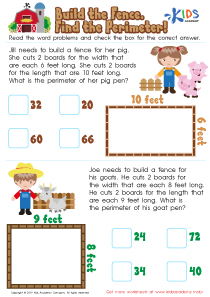
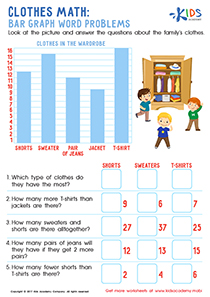
This collection of "Number Recognition Normal Addition and Subtraction Word Problems Worksheets" is tailored for children aged 5-9. These engaging worksheets are designed to bolster number recognition skills and build a solid foundation in mathematical operations. Through a variety of word problems, young learners will practice and master addition and subtraction in a fun, age-appropriate context. Ideal for both classroom use and at-home practice, these worksheets cater to different learning styles and help children develop critical thinking and problem-solving abilities while enhancing their math fluency.
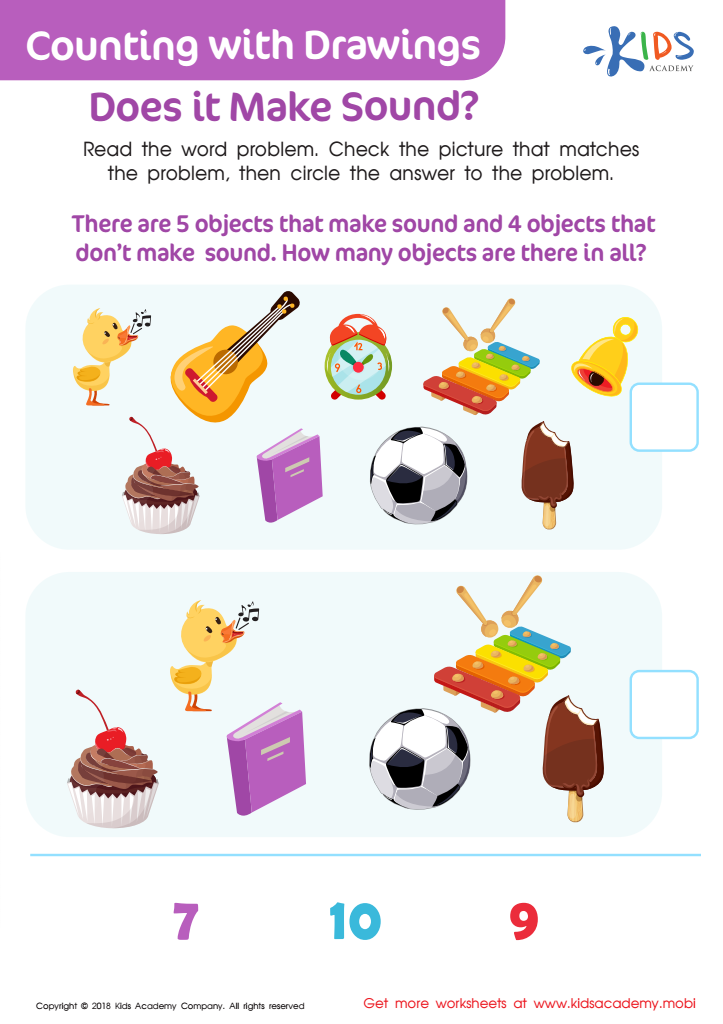
Counting With Drawings. Does It Make Sound? Worksheet
 Assign to My Students
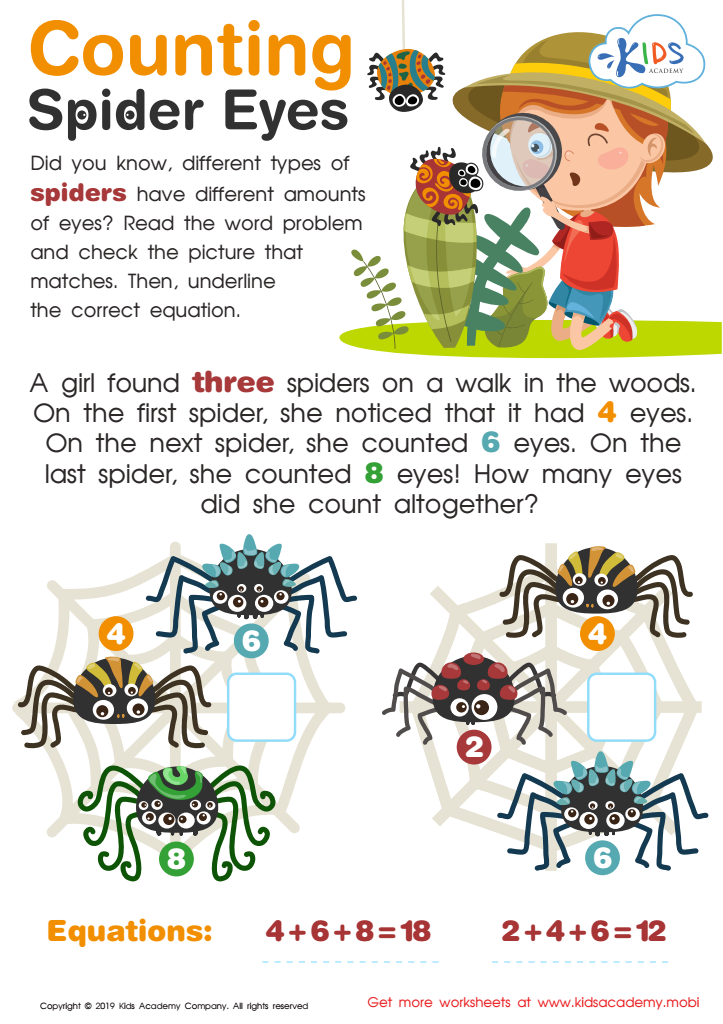
Counting Spider Eyes Worksheet
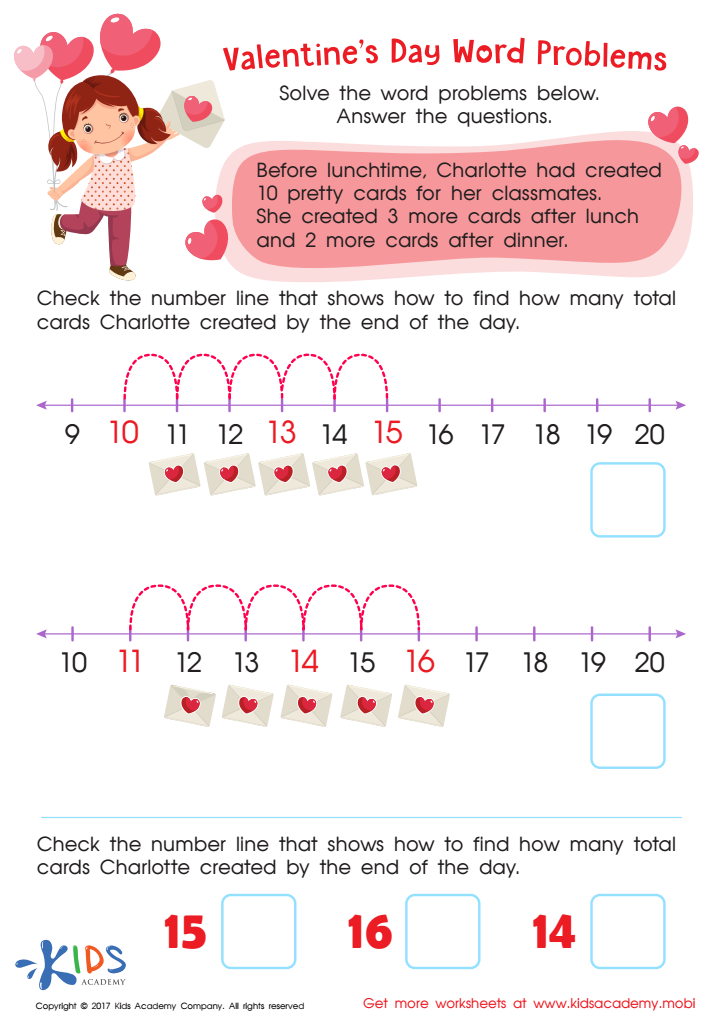
Valentines Day Word Problem Worksheet
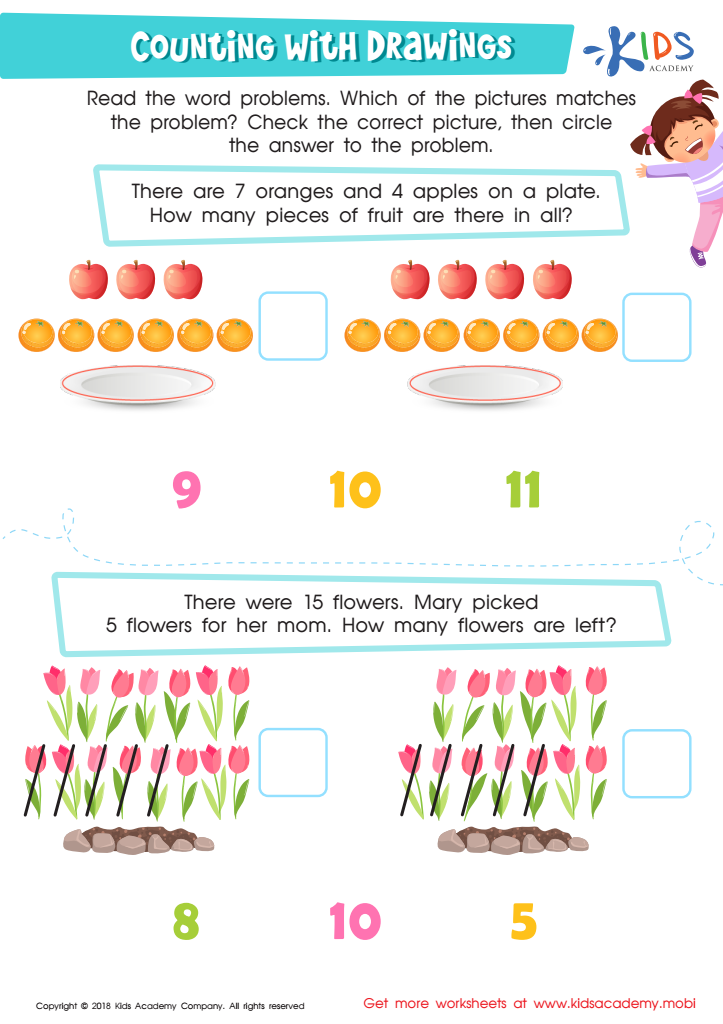
Counting with Drawings: Fruits & Chocolates Worksheet
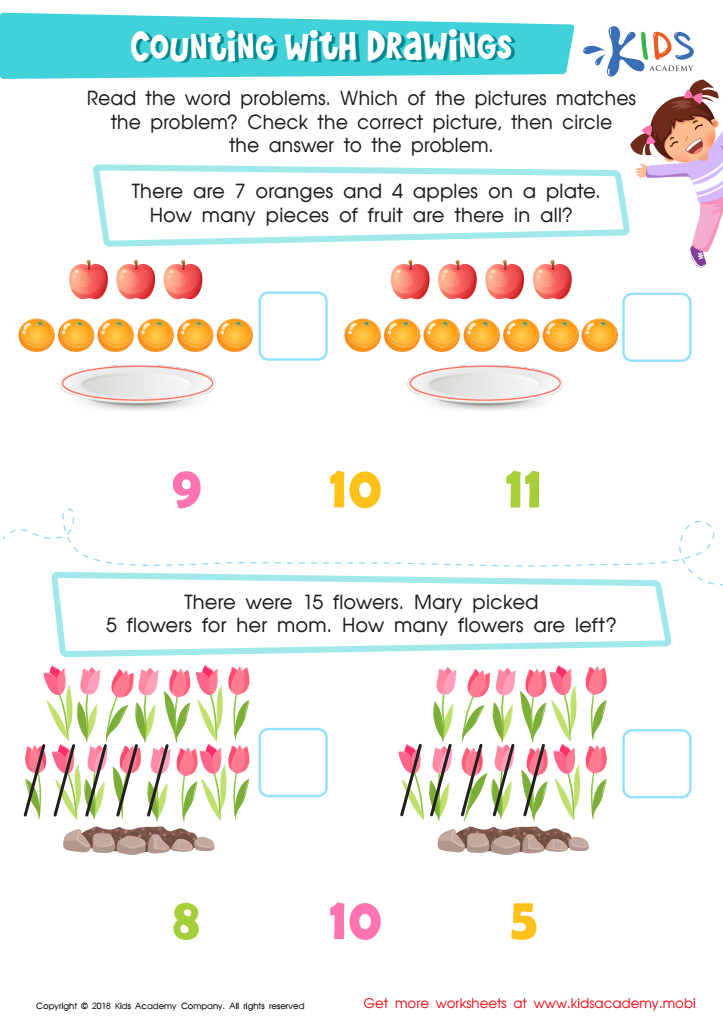
Counting with Drawings:Fruits & Flowers Worksheet








Parents and teachers should prioritize number recognition and foundational addition and subtraction word problems for children ages 5-9 because these skills are essential building blocks for future math success. Early math proficiency influences a child's confidence and interest in the subject, paving the way for more complex problem-solving abilities later. Recognizing numbers lays the groundwork for all subsequent mathematical learning, enabling children to understand quantity, order, and value.
Word problems intertwine literacy and math, enhancing comprehension and critical thinking. Young learners practice translating real-world scenarios into mathematical equations, thereby improving their ability to process and solve everyday challenges. These activities don't merely teach arithmetic; they foster logical reasoning, pattern recognition, and analytical thinking, all crucial across academic disciplines and in life.
Moreover, success in early math creates a positive feedback loop. Achieving competence in these fundamental skills boosts self-esteem and encourages a growth mindset, translating to better academic performance across subjects. For parents and teachers, engaging children in number recognition and basic math word problems ensures they acquire a sturdy educational foundation, critical for navigating increasingly complex academic and real-world scenarios. By focusing on these areas, adults help children develop strong, adaptable problem-solving skills crucial for lifelong learning and development.