Addition Practice Normal Addition & Subtraction Worksheets for Ages 5-9 - Page 2
30 filtered results
-
From - To
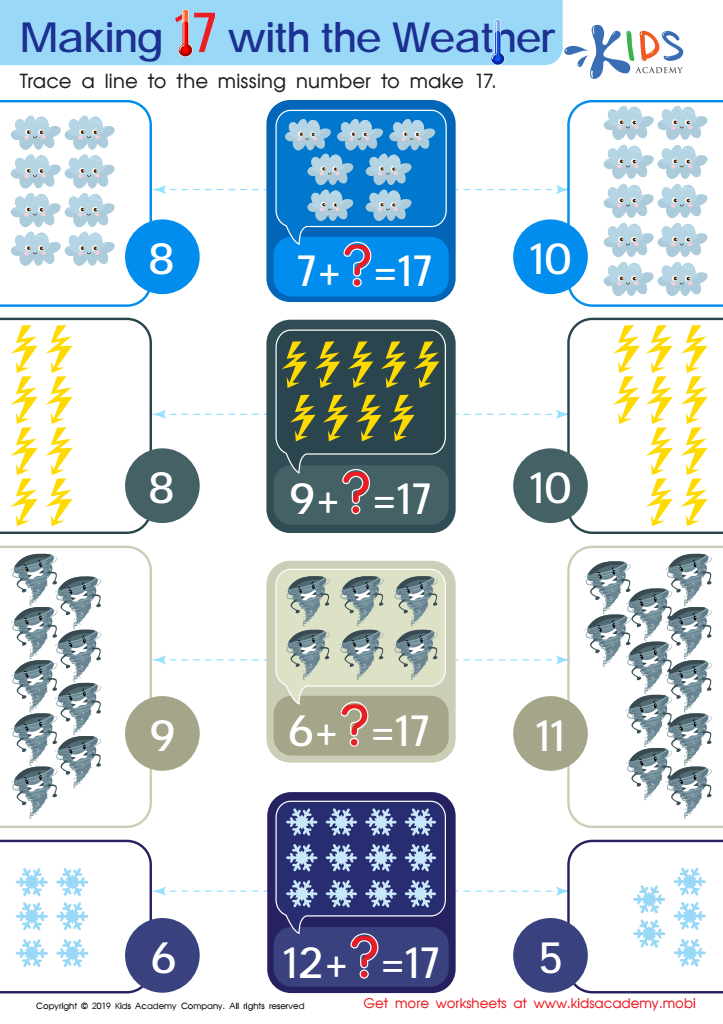
Making 17 with the Weather Worksheet
 Assign to My Students
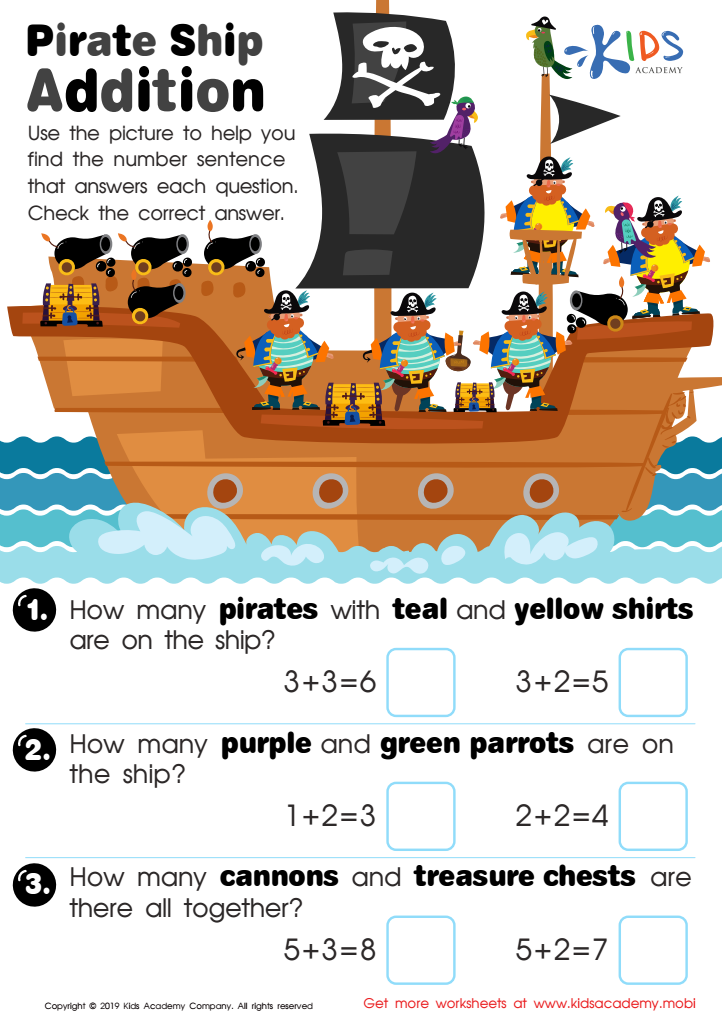
Pirate Ship Addition Worksheet
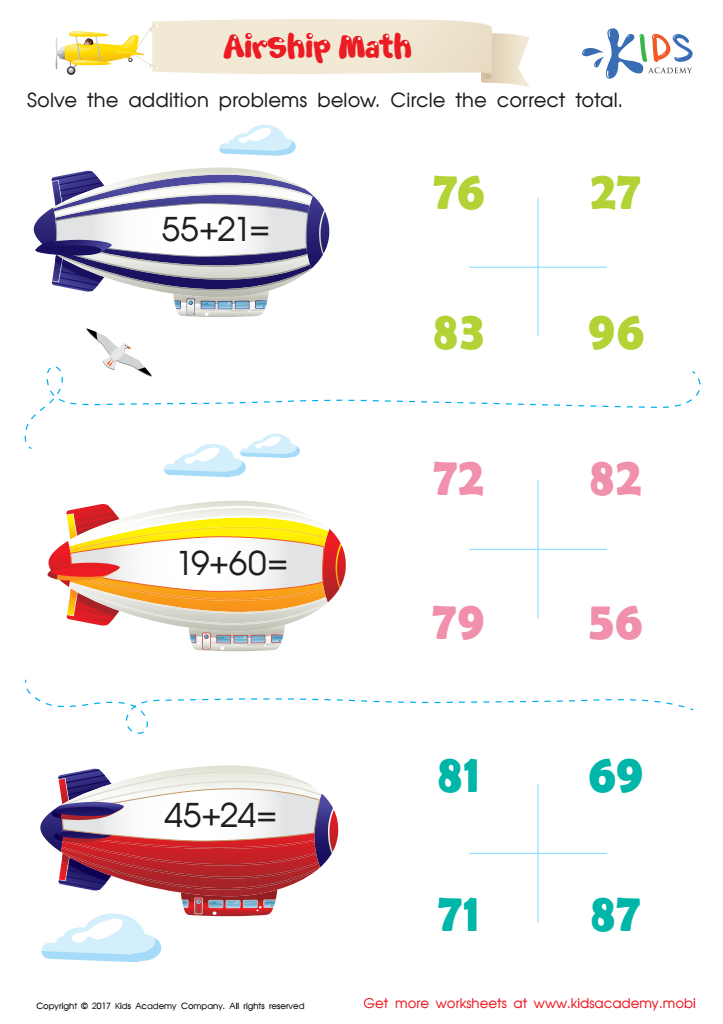
Airship Math Addition Printable
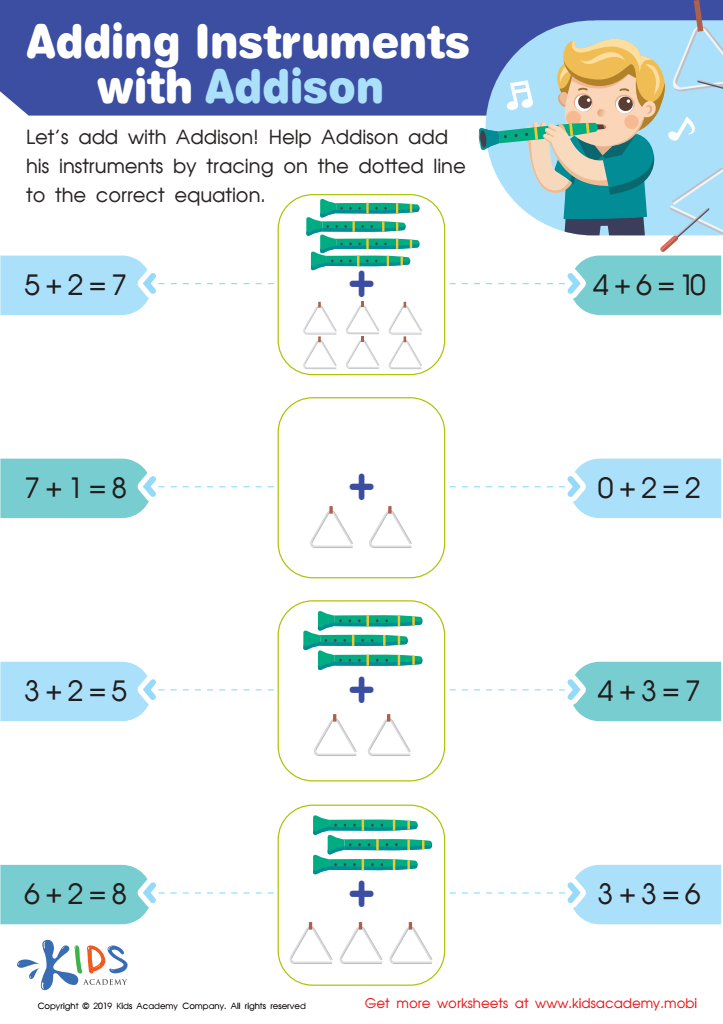
Adding Instruments with Addison Worksheet
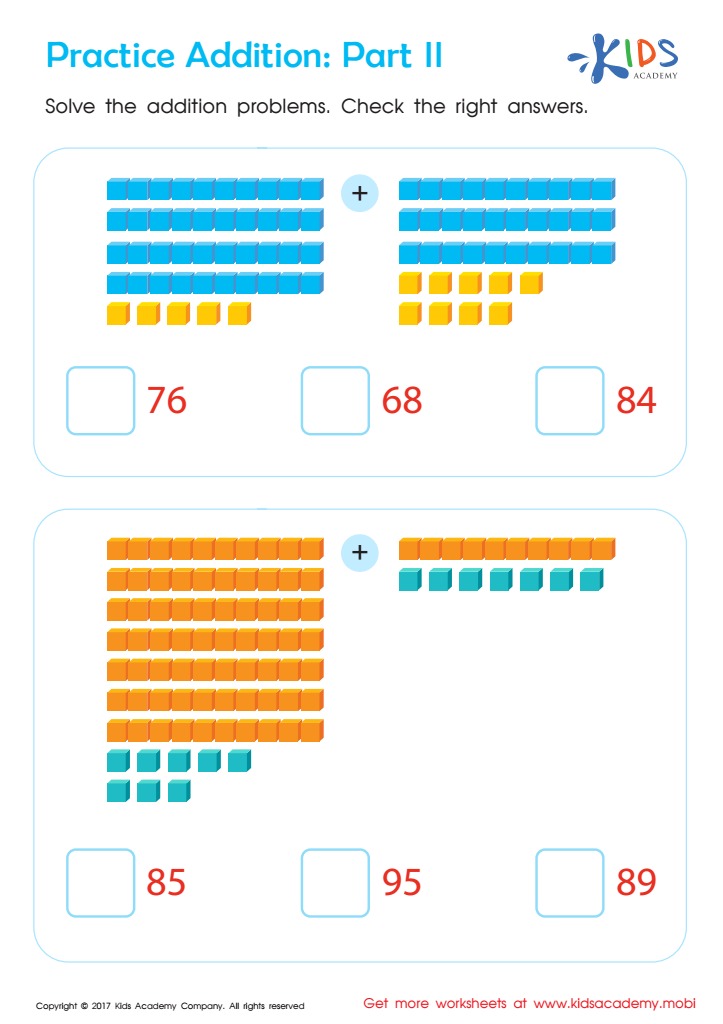
Practice Addition: Part 2 Worksheet
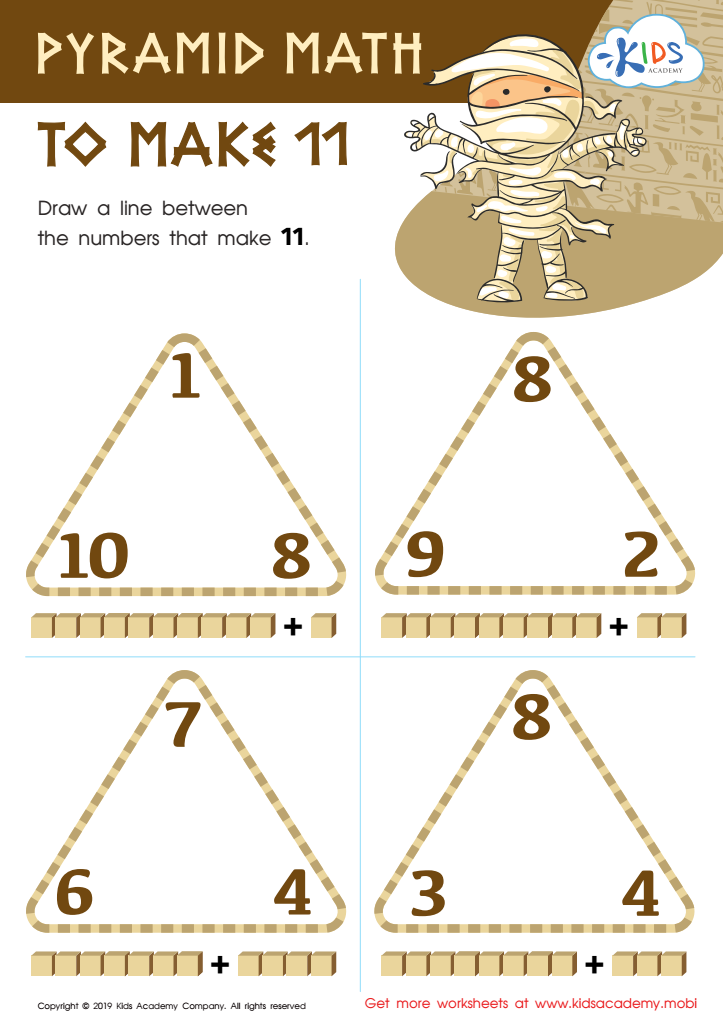
Pyramid Math to Make 11 Worksheet








Parents and teachers play a pivotal role in nurturing foundational math skills among children aged 5-9, and engaging them in regular addition and subtraction practice is crucial. At this developmental stage, children are absorbing fundamental concepts that serve as building blocks for future learning. Mastery of addition and subtraction helps children develop numerical fluency, which is the ability to quickly understand and manipulate numbers. This fluency is critical because it lays the groundwork for more complex mathematical operations in later years, such as multiplication, division, and algebra.
Furthermore, consistent practice enhances problem-solving skills and boosts children's confidence. When children repeatedly work on addition and subtraction, they begin to recognize patterns and relationships between numbers, thereby strengthening their logical thinking and reasoning abilities. This exposure also helps with better academic performance overall, as math skill development is closely linked to improved performance in subjects requiring analytical skills.
On a practical level, being proficient in these basic operations makes everyday tasks easier—such as counting change, measuring ingredients while cooking, or even in playing games that involve counting and strategy. Thus, dedicated practice in addition and subtraction not only aids in cognitive development but also equips children with essential life skills. Parents and teachers should, therefore, prioritize and create engaging ways to instill these critical numeracy skills in children early on.








