Following instructions Normal Addition & Subtraction Worksheets for Ages 5-9
4 filtered results
-
From - To
Enhance your child's mathematical foundation with our "Following Instructions Normal Addition & Subtraction Worksheets for Ages 5-9." These engaging worksheets are designed to develop not only addition and subtraction skills but also the ability to follow instructions. Suitable for children aged 5-9, these printable activities encourage proficiency and confidence in basic math operations through easy-to-understand exercises. Perfect for both homeschooling and classroom settings, our worksheets make learning math enjoyable and interactive, paving the way for academic success. Boost your child's problem-solving abilities today with our specially designed math resources at Kids Academy.
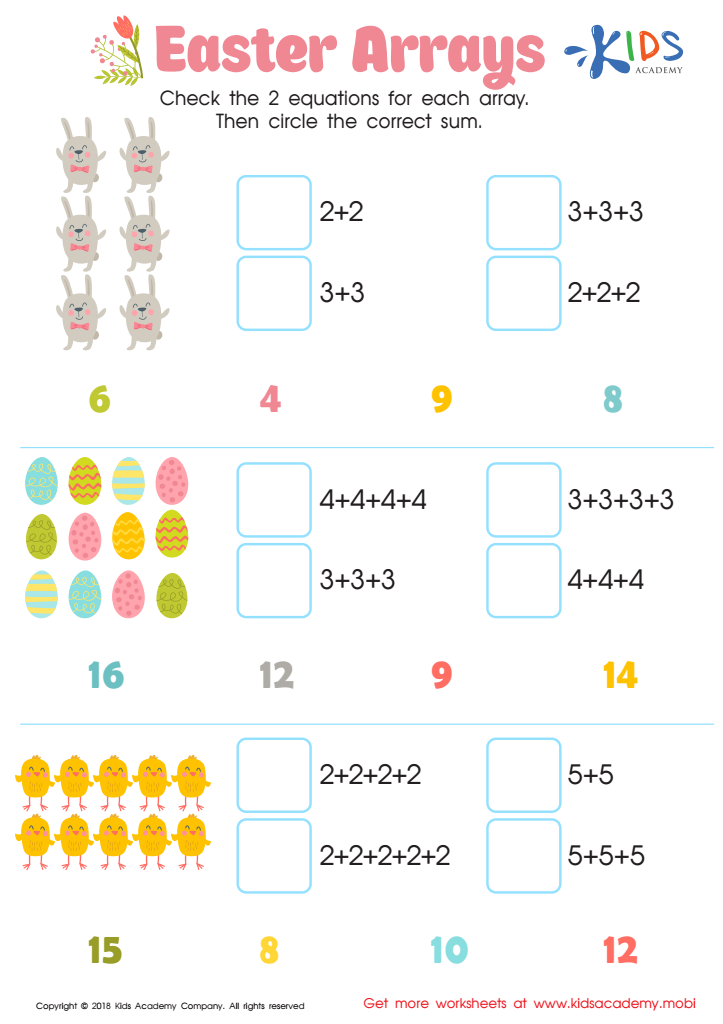
Easter Arrays Worksheet
 Assign to My Students
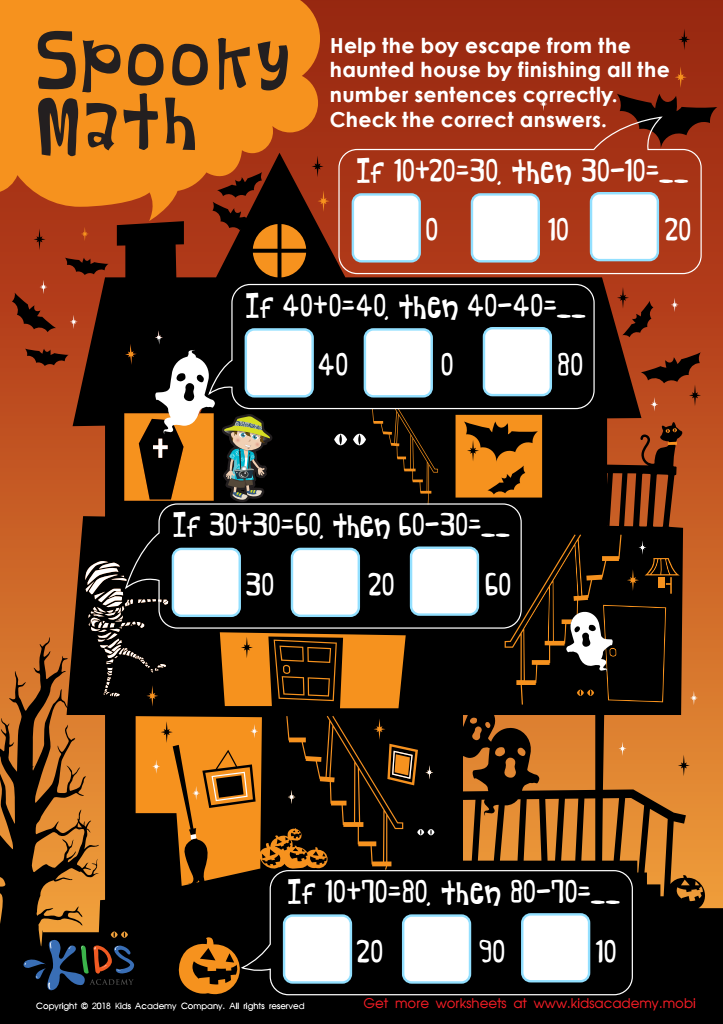
Subtract Tens: Spooky Math Worksheet
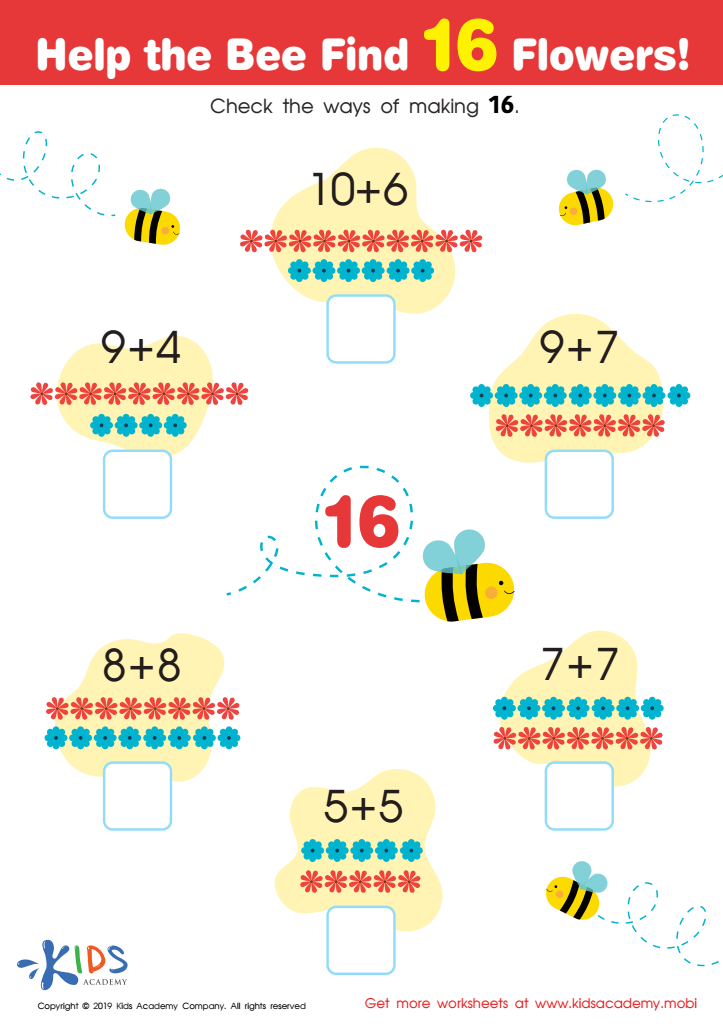
Help the Bee Find 16 Flowers Worksheet
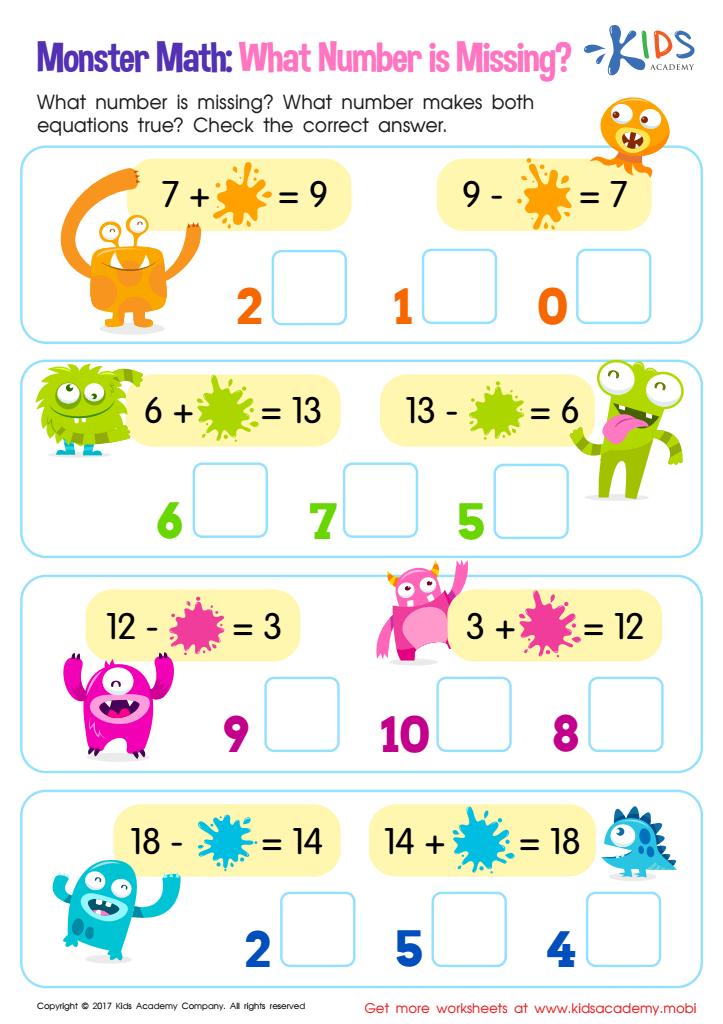
Missing Number: Monster Math Worksheet








Parents and teachers should prioritize teaching children aged 5-9 how to follow instructions for basic addition and subtraction because these are foundational skills critical for future academic success and everyday life. Learning to follow instructions fosters independence, attention to detail, and the ability to complete tasks accurately. At this age, children are developing cognitive skills that help them process and understand sequences and patterns, which are essential for mathematical reasoning.
Mastering normal addition and subtraction enables children to solve simple problems and boosts their confidence. These skills form the basis for more complex mathematical concepts such as multiplication, division, and fractions encountered in later grades. Additionally, they play a crucial role in practical situations, such as managing money, understanding time, and measuring items, fostering daily-life skills that are vital as children grow.
Moreover, honing these abilities helps improve children's problem-solving and critical-thinking skills. When parents and teachers emphasize these basic mathematical operations, they encourage a positive attitude towards learning, persistence, and the ability to tackle challenges methodically. By nurturing these skills early on, children are more likely to enjoy mathematics and demonstrate sustained academic achievement. Family engagement in such learning processes further solidifies these concepts and underscores their importance in experiential learning.








