Hand-eye Coordination Normal Addition & Subtraction Worksheets for Ages 5-9
3 filtered results
-
From - To
Enhance your child's learning experience with our Hand-eye Coordination Normal Addition & Subtraction Worksheets, designed specifically for children aged 5-9. These engaging worksheets combine essential math skills with fun exercises that promote hand-eye coordination. Perfect for at-home practice or classroom activities, each worksheet encourages young learners to explore basic addition and subtraction concepts while developing fine motor skills. Our age-appropriate problems are crafted to capture children's attention and keep them motivated as they practice their math skills. Unlock your child's potential with these versatile, colorful worksheets that make learning both enjoyable and productive! Ideal for early grade teachers and parents alike.
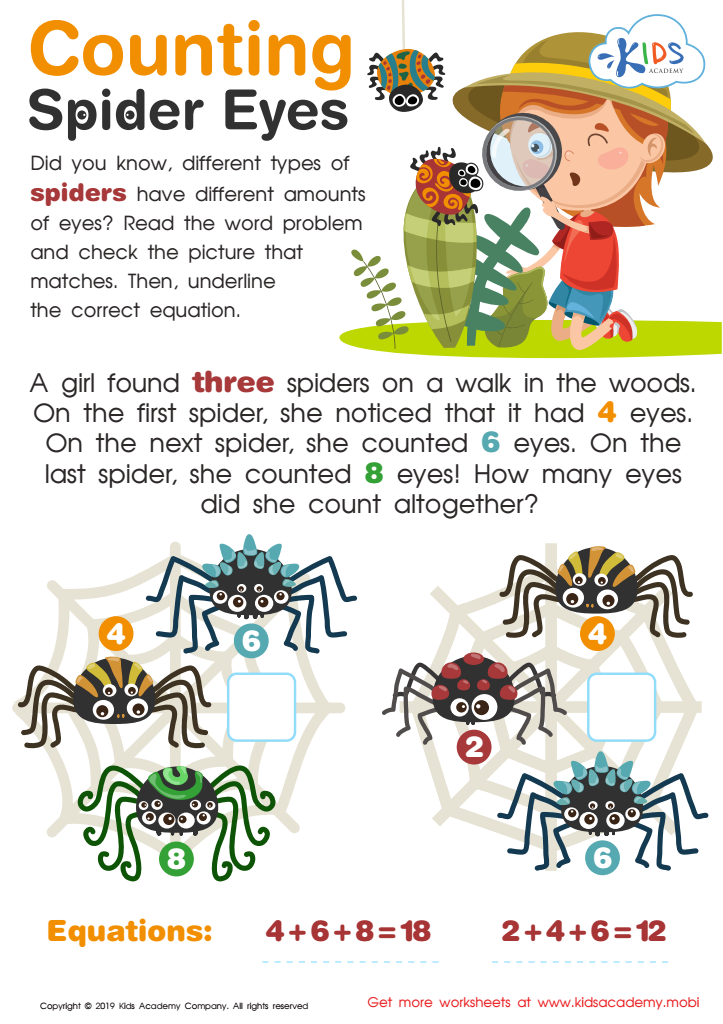
Counting Spider Eyes Worksheet
 Assign to My Students
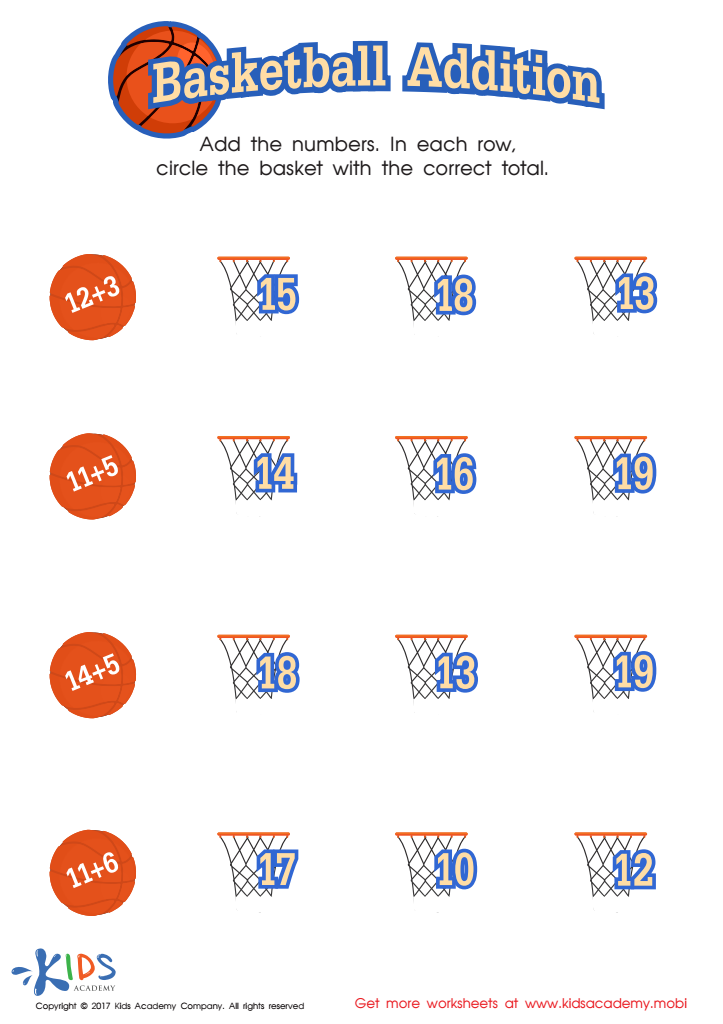
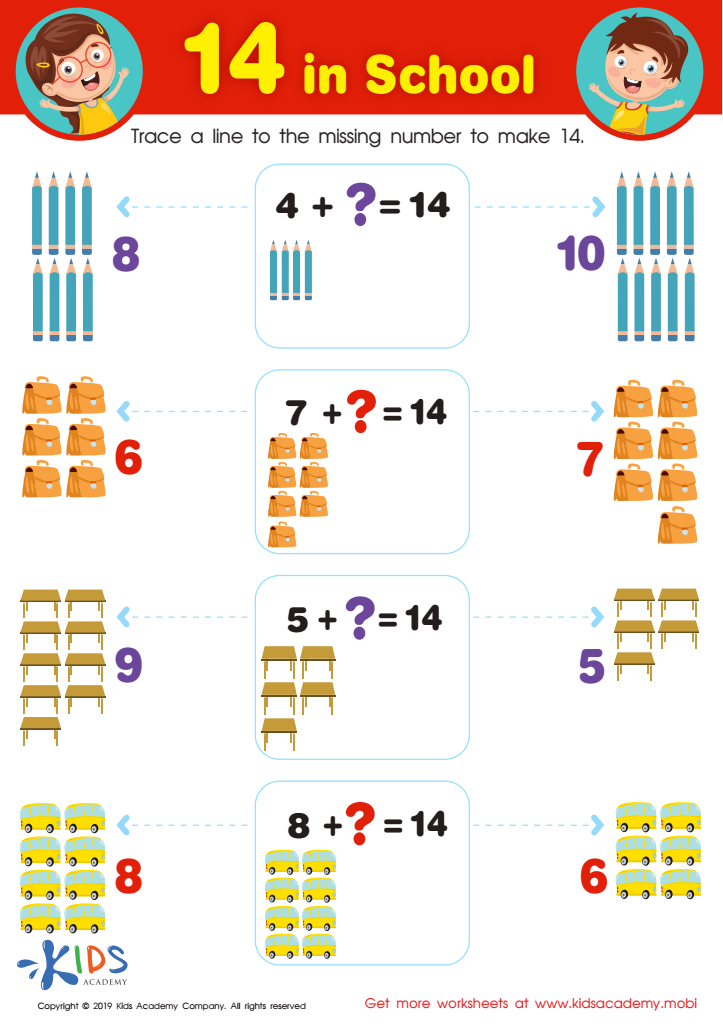
14 in School Worksheet








Hand-eye coordination and basic addition and subtraction skills are essential developmental milestones for children aged 5-9. Parents and teachers should care about these aspects as they are foundational to a child's overall learning and growth.
Firstly, hand-eye coordination influences a child’s ability to perform everyday tasks such as writing, drawing, or participating in sports. Fine motor skills developed through activities like cutting, coloring, and even playing with blocks enhance spatial awareness and dexterity, which are important for future academic success.
Secondly, mastering normal addition and subtraction forms the basis of mathematical understanding. These skills build critical thinking and problem-solving abilities, fostering confidence in tackling more complex math concepts later on. Introducing these concepts early allows for a stronger foundation in numeracy, making children more adaptable in higher-level math as they progress.
Moreover, both skills promote patience and perseverance, important traits for effective learning. Engaging in activities that develop hand-eye coordination while incorporating math games or exercises combines physical and cognitive engagement, making learning enjoyable and comprehensive. By prioritizing these skills, parents and teachers can help shape well-rounded, capable learners who are prepared to face future challenges both academically and in everyday life.








