
Shape identification Normal Geometry Worksheets for Ages 5-9
5 filtered results
Difficulty Level
Grade
Age
-
From - To
Subject
Activity
Standards
Discover our "Shape Identification Normal Geometry Worksheets for Ages 5-9" at Kids Academy! Designed to make learning fun, these engaging worksheets help young minds easily identify and understand shapes. Ideal for children aged 5-9, our captivating activities foster critical thinking and spatial awareness. Each worksheet includes vibrant illustrations and interactive tasks to keep kids motivated while mastering shapes such as circles, squares, triangles, and more. Developed by educational experts, these resources are perfect for home or classroom use, providing a solid foundation in geometry. Explore our collection today and inspire a love for learning shapes in your child!
Favorites
With answer key
Interactive
Geometry Worksheet
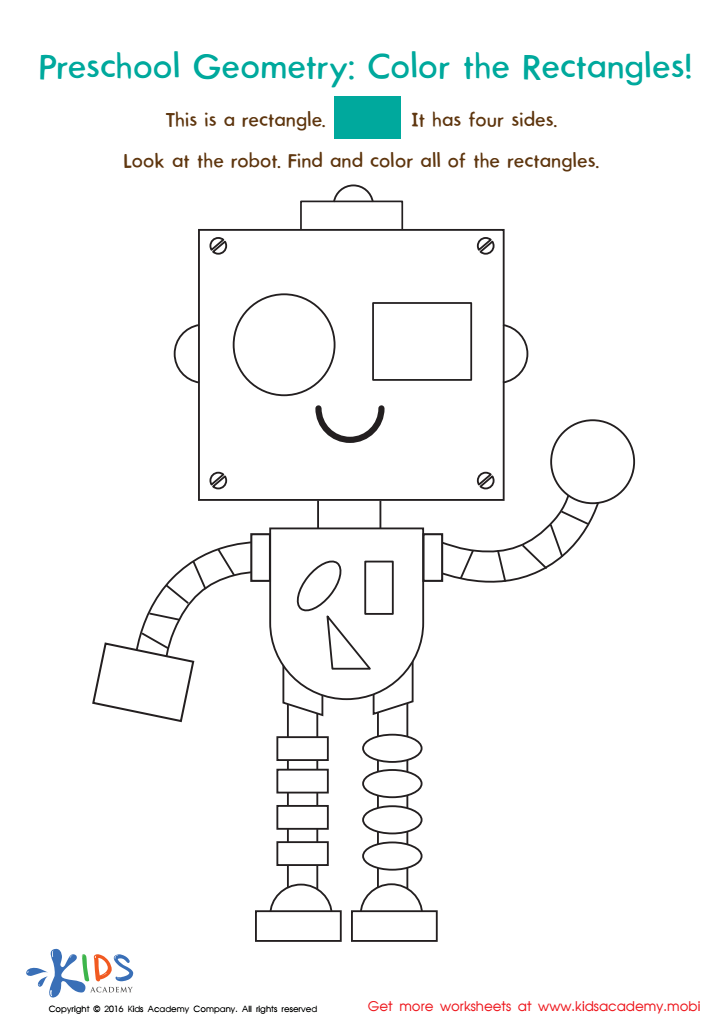
Geometry can be fun for kids! They explore shapes that create their favorite pics and objects. This preschool worksheet explains that rectangles have four sides, then kids color rectangles on a funny robot!
 Assign to My Students
Geometry Worksheet
Worksheet











Comparing Triangles Squares Worksheet
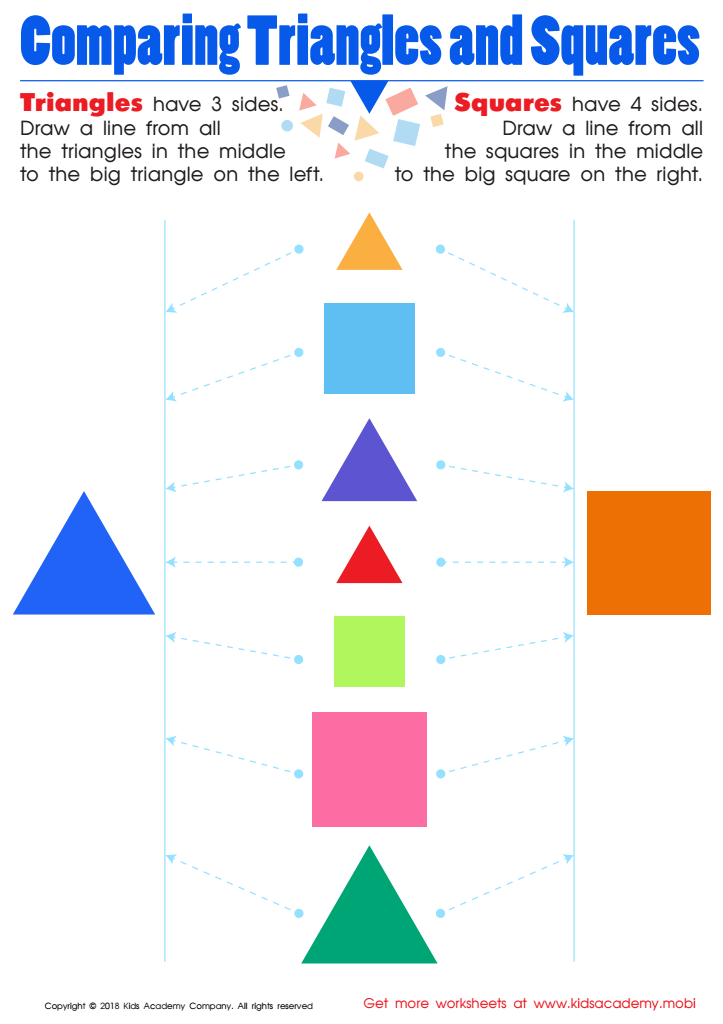
Squares and triangles are different in the number of sides they have. Challenge kids to compare them with this fun worksheet! Read the descriptions at the top, then use the left and right shapes to match up the middle ones. Go down the page, joining the middle shapes to the side using the dotted lines!
Comparing Triangles Squares Worksheet
Worksheet
Triangle Rectangle Worksheet
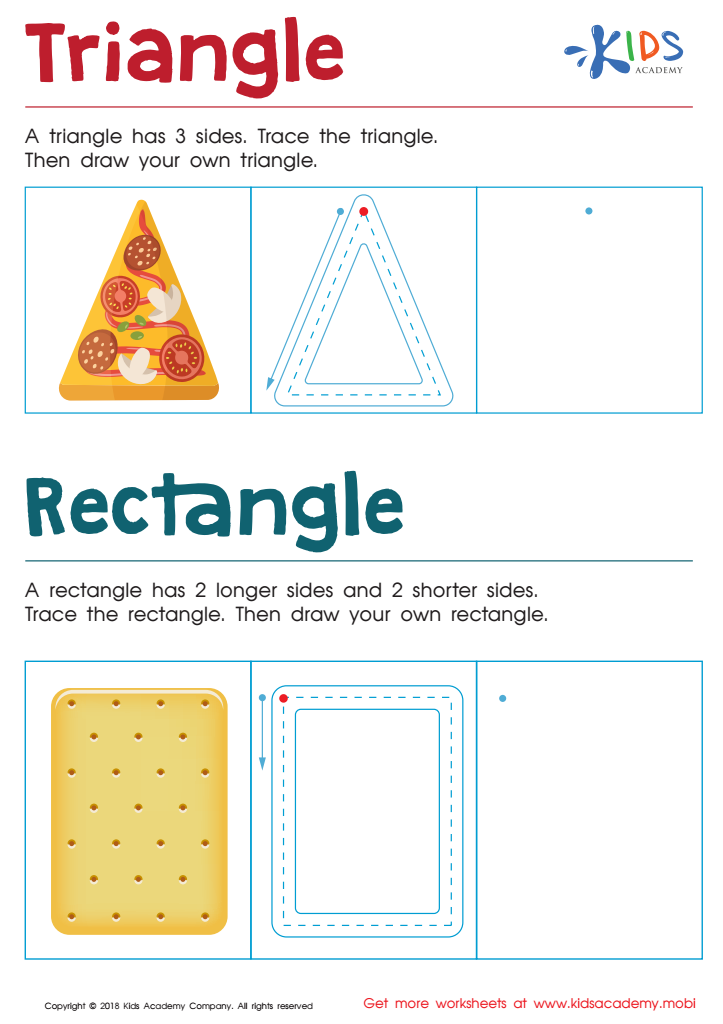
This printable worksheet helps kids draw rectangles and triangles. Have your child trace the pizza and cracker shapes to become familiar, then try their own. Perfect for second graders! Coloring and creativity make this fun and educational.
Triangle Rectangle Worksheet
Worksheet
Draw a Rhombus And a Hexahedron Printable
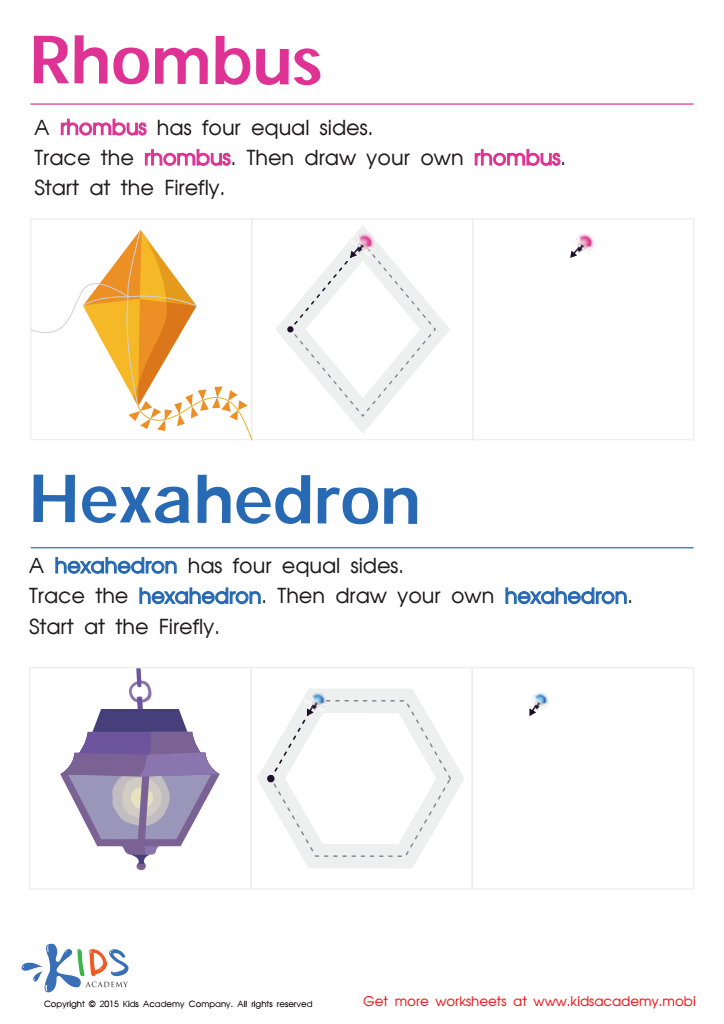
Trace, draw and recognize shapes like rhombus, hexahedron and more! Start with the firefly to trace a rhombus, then use the yellow kite to remember the shape. Use the light to trace and draw a hexahedron. Learn with the best!
Draw a Rhombus And a Hexahedron Printable
Worksheet
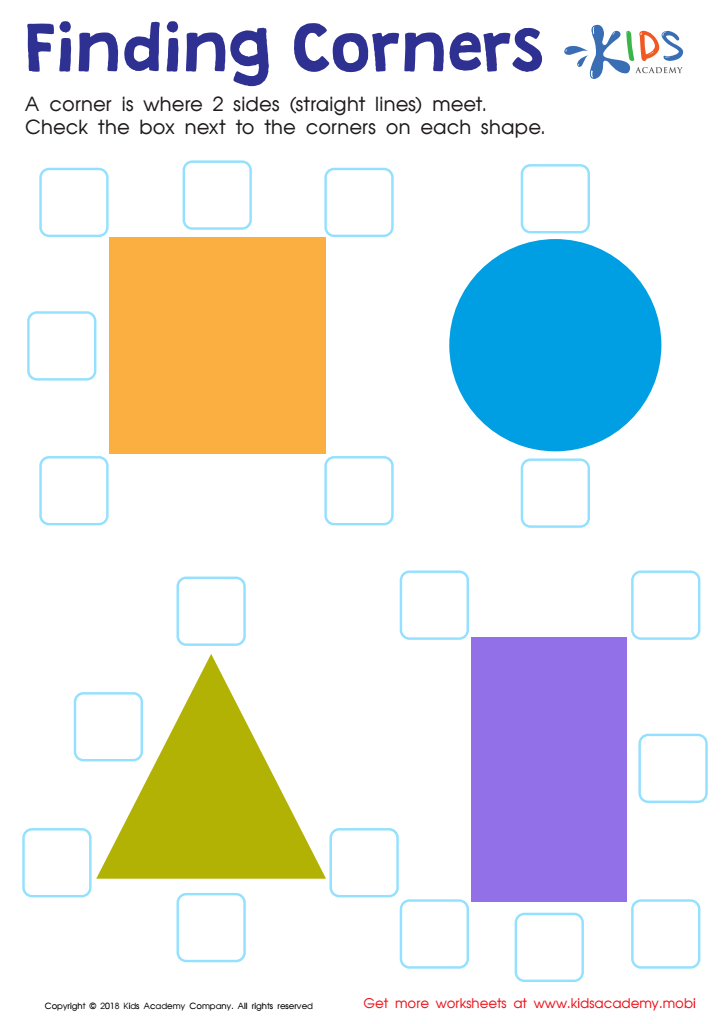
Finding Corners Worksheet
This vibrant worksheet introduces young learners to the fundamentals of geometric shapes. Through the downloadable PDF, they'll develop an understanding of corners - the intersection of two line segments - and how to identify them on different shapes. Fun colors and boxes let them label corners, helping them master this concept for future geometric reasoning.
Finding Corners Worksheet
Worksheet
Join Kids Academy for Free
Who is primarily going to use this learning content?








Shape identification and understanding basic geometry are fundamental aspects of early childhood education that parents and teachers should prioritize. For children aged 5-9, learning about shapes provides a foundation for future mathematical skills and enhances cognitive development. Recognizing and distinguishing different shapes, such as circles, squares, triangles, and rectangles, contributes to a child's spatial awareness and visual discrimination skills, which are essential for everyday problem-solving.
Moreover, geometric concepts play a critical role in developing fine motor skills. Activities involving shape sorting, drawing, and constructing enable children to improve hand-eye coordination and manual dexterity. This lays the groundwork for more complex academic tasks such as writing, as well as practical activities like tying shoelaces or buttoning clothes.
Shape identification also fosters critical thinking and logical reasoning. Understanding the properties of various shapes helps children grasp concepts like symmetry, similarity, and differences, which are crucial for subjects beyond mathematics, including engineering and art. Additionally, engaging with shapes through play and exploration can ignite curiosity and creativity, making learning enjoyable and meaningful.
Lastly, early proficiency in geometry facilitates better comprehension of advanced mathematical concepts later in schooling. By investing in shape identification for young children, parents and teachers help build a solid educational foundation, boosting confidence and fostering a lifelong appreciation for learning.








