Learning addition Normal Numbers Worksheets for Ages 5-9
4 filtered results
-
From - To
Unlock your child's math potential with our "Learning Addition Normal Numbers Worksheets" designed specifically for ages 5-9. These engaging printable worksheets help young learners master the fundamentals of addition through fun exercises and colorful visuals. Each worksheet is crafted to build confidence and reinforce skills in a playful manner, making learning enjoyable. From simple equations to more challenging problems, these resources cater to various learning levels. Watch your child become proficient in addition while enhancing their critical thinking skills. Explore our collection today and support your child's journey towards math success! Download and start adding fun to learning!
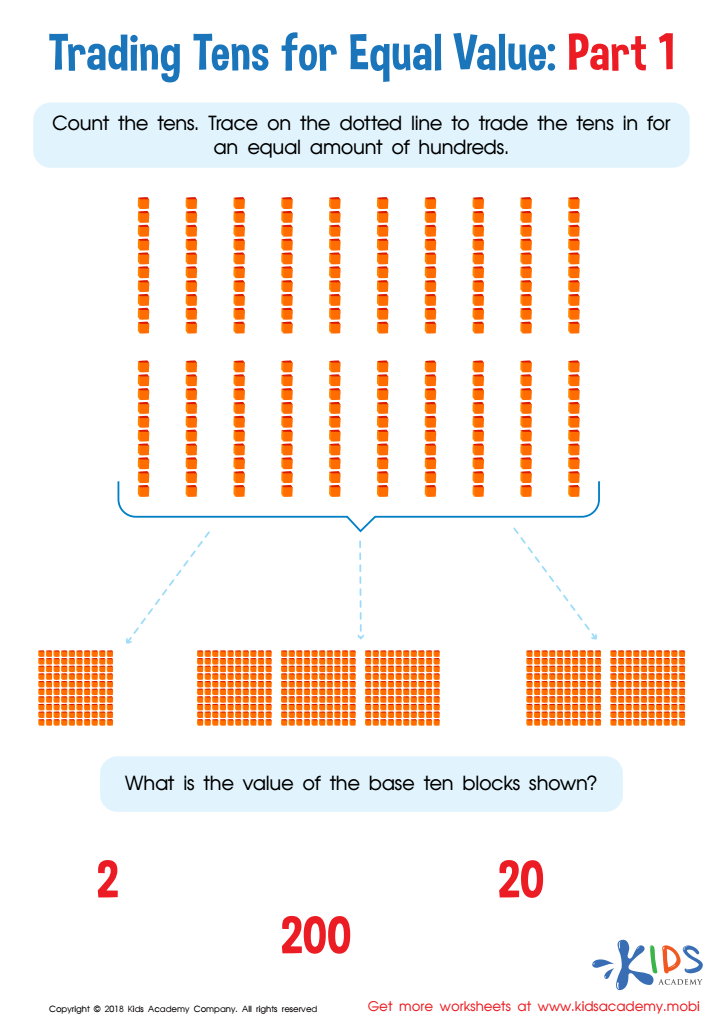
Trading Tens for Equal Value Worksheet: Part 1
 Assign to My Students
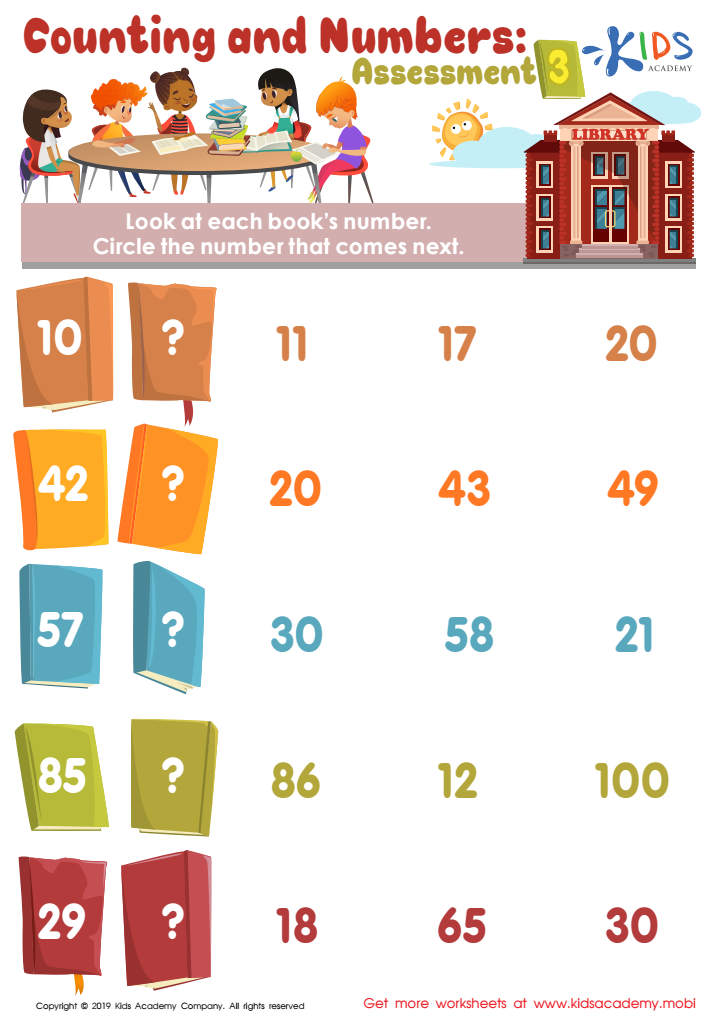
Counting and Numbers: Assessment Worksheet
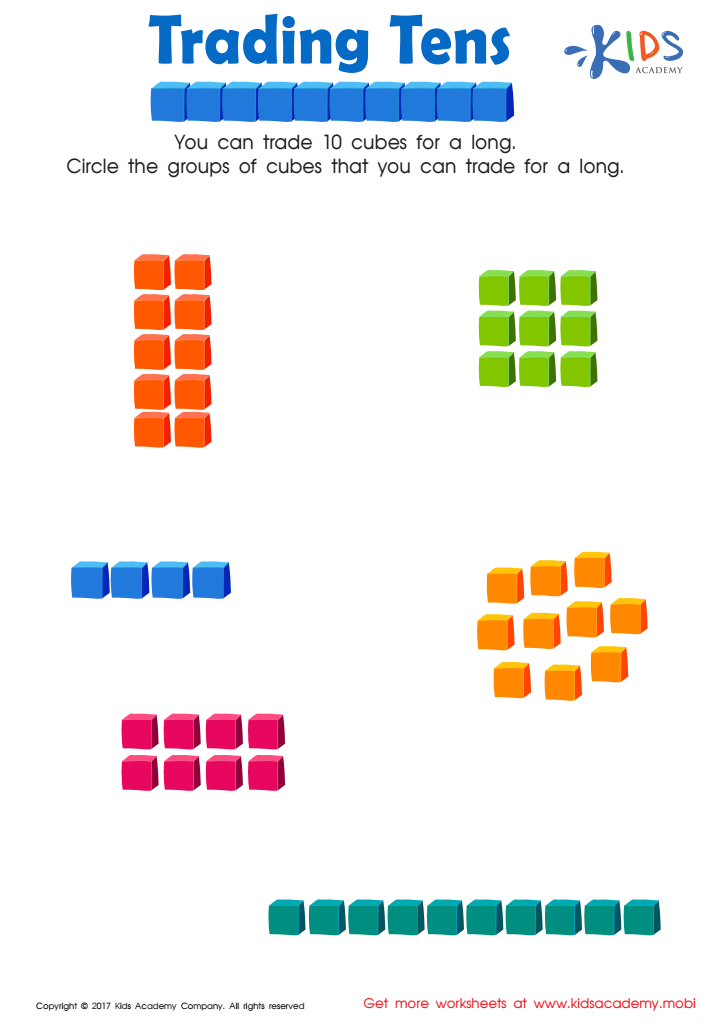
Trading Tens Worksheet
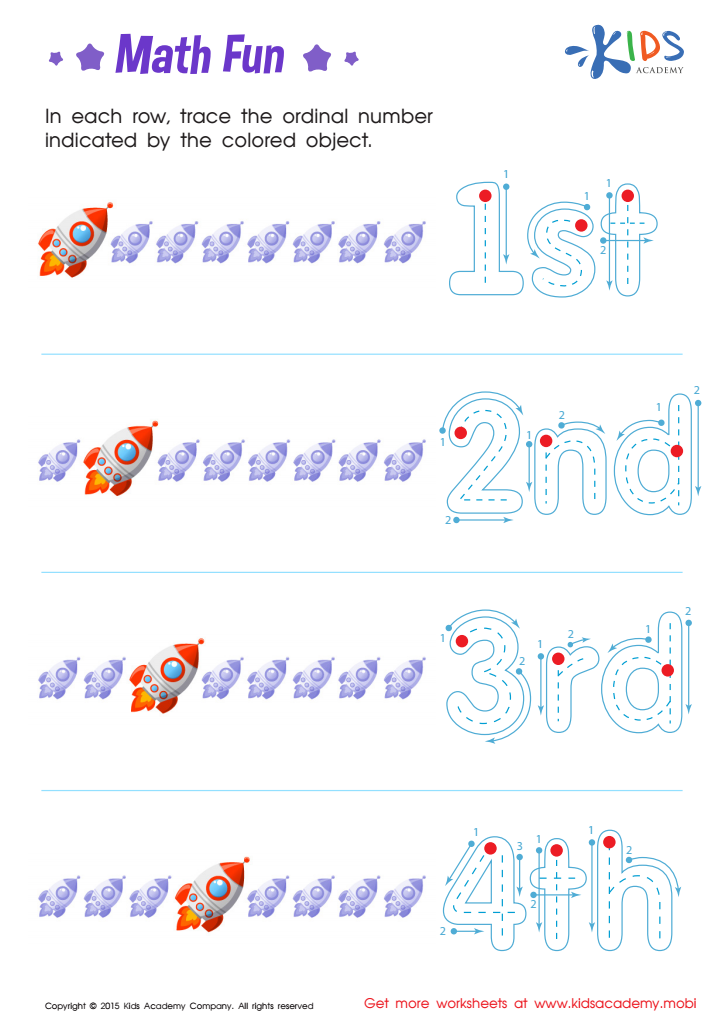
Ordinal Numbers: Math Fun Worksheet



%20(1).jpg)
.jpg)



Teaching addition of normal numbers to children ages 5-9 is crucial for their cognitive development and academic success. At this stage, children are honing fundamental math skills that will form the foundation for more complex mathematical concepts later on. Mastery of addition helps children develop problem-solving abilities and enhances their logical thinking, which is essential not just in math, but across various subjects.
Moreover, learning addition boosts confidence. When children grasp these concepts, they feel accomplished and are more inclined to engage with math in the future. This positive attitude can counteract anxiety related to mathematics, promoting a lifelong enthusiasm for learning.
Early mastery of addition also significantly impacts practical life skills. Understanding how to add enables children to manage money, organize their time, and tackle science-related tasks, ultimately assisting them in becoming well-rounded individuals.
For parents and teachers, fostering a solid math foundation during these formative years is vital. It benefits not only individual student growth but contributes to overall classroom dynamics and goal-setting. Investing time and resources into teaching addition in engaging ways can yield substantial academic returns, enhancing children's future opportunities and success. Thus, prioritizing these early math skills is essential.








