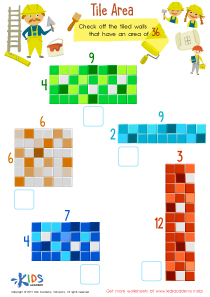
Number writing Normal Numbers Worksheets for Ages 5-9
3 filtered results
Difficulty Level
Grade
Age
-
From - To
Subject
Activity
Standards
Introducing our "Number Writing Normal Numbers Worksheets for Ages 5-9" – the perfect resource to enhance your child's number writing skills! These engaging worksheets offer a fun, hands-on way for young learners to practice writing numbers, improving both their handwriting and numerical understanding. Ideal for kindergartners and early primary students, our worksheets focus on correct number formation, sequence, and counting. With vibrant illustrations and step-by-step guidance, kids will stay motivated and excited to learn. Access these free, printable worksheets now to support and boost your child's numeracy confidence and fluency in number writing!
Favorites
With answer key
Interactive
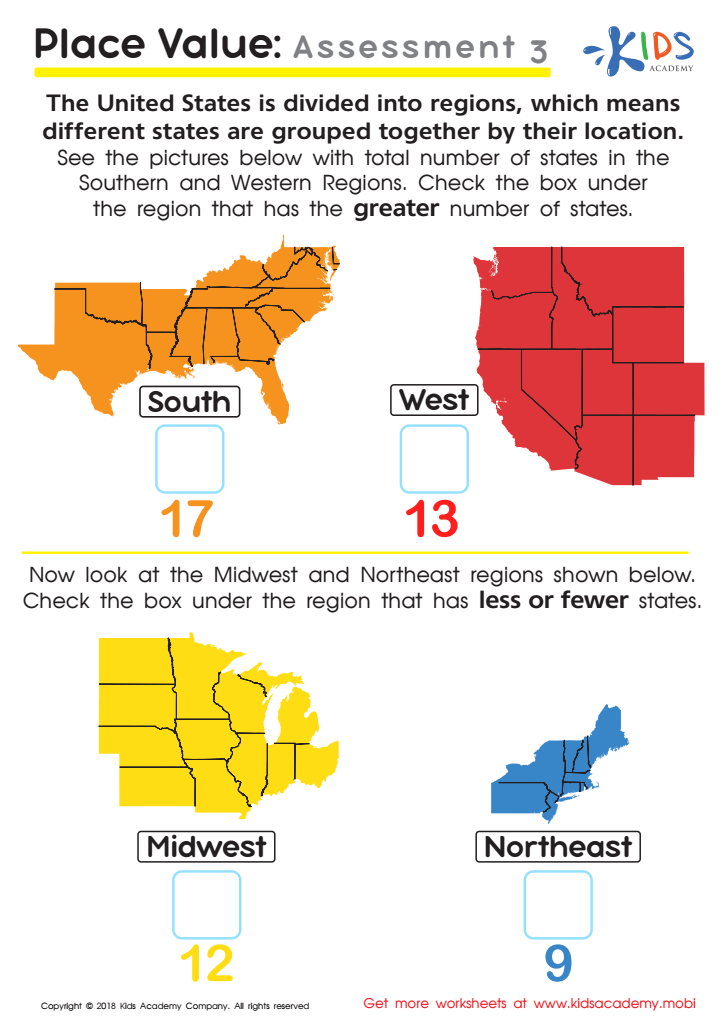
Place Value: Assessment 3 Worksheet
Test your child's math skills without them realizing it! This fun worksheet looks at the states and regions of the U.S. and your child can compare numbers greater or lesser than the other. It's the perfect way to assess your child's number sense without them knowing.
 Assign to My Students
Place Value: Assessment 3 Worksheet
Worksheet
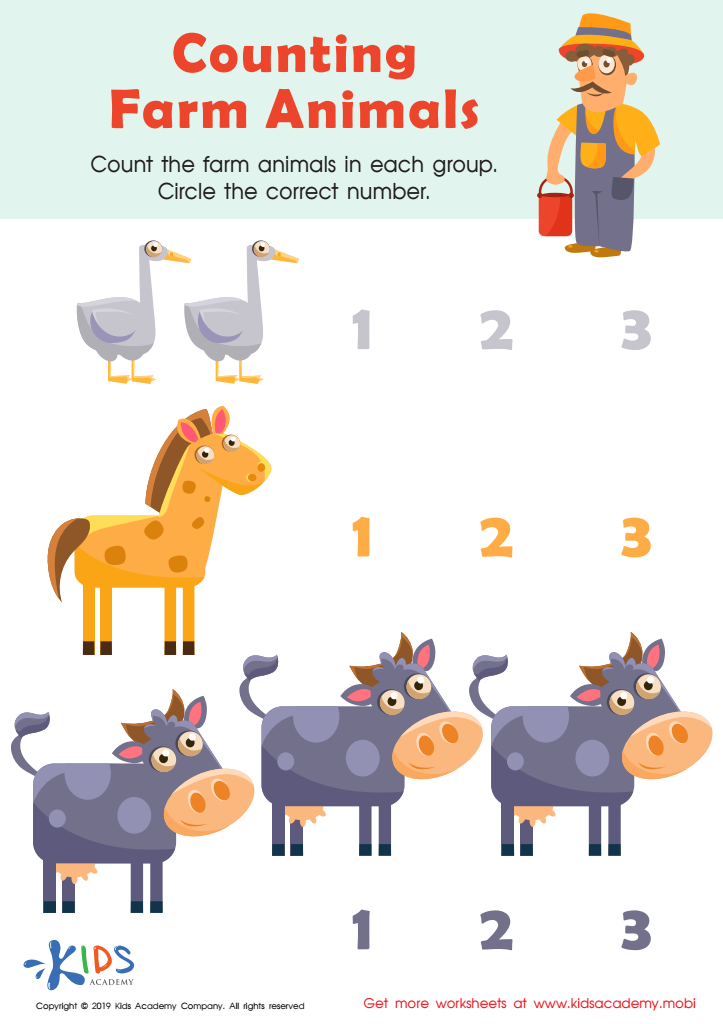
Counting Farm Animals Worksheet
Kids love farms! That's why this free farm animals counting worksheet is great for building number sense and counting skills. Have your young mathematician count the pictures, then circle the corresponding number. It's a fun and meaningful way to practice counting.
Counting Farm Animals Worksheet
Worksheet
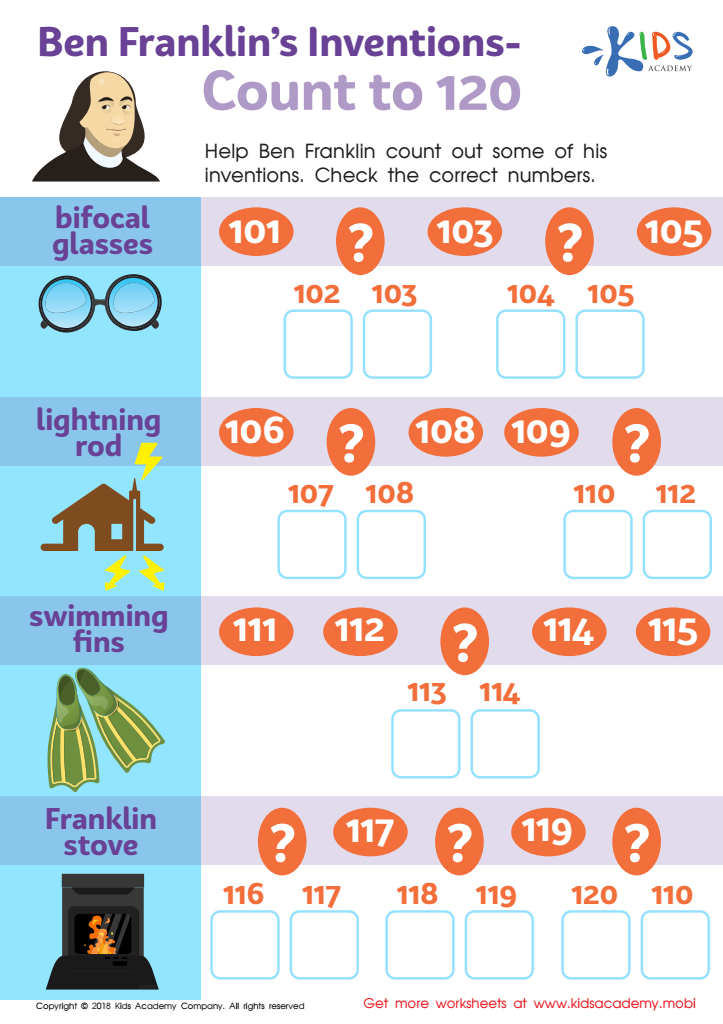
Ben Franklin’s Inventions – Count to 120 Worksheet
Benjamin Franklin is a significant figure in US history. He invented objects we use daily. If your child is interested in object history and invention, they'll love this worksheet. See if they can help Mr Franklin count his inventions and check their answers. It's a simple and enjoyable task!
Ben Franklin’s Inventions – Count to 120 Worksheet
Worksheet
Join Kids Academy for Free
Who is primarily going to use this learning content?








Parents and teachers should care about number writing for children ages 5-9 because it lays a foundational skill crucial for their overall math literacy and cognitive development. At this formative stage, children are developing their fine motor skills and hand-eye coordination, which are essential for writing numbers clearly and accurately. Ensuring they learn proper numeral formation helps prevent future confusion, reduces errors, and fosters confidence in their math abilities.
Furthermore, understanding and writing numbers correctly enhances children’s ability to comprehend place value and number relationships, which are the building blocks for more complex arithmetic operations like addition, subtraction, multiplication, and division. These skills also support everyday activities, such as counting money, telling time, and measuring.
Early mastery of number writing nurtures a positive attitude toward math, a subject that can often become a source of anxiety if not approached with care. Educators and parents who prioritize and pay attention to number writing help children build a strong foundation for academic success, critical thinking, and problem-solving skills, which are vital in their future educational journey and everyday life.
Lastly, creating an engaging and supportive learning environment makes the process enjoyable, further encouraging children’s interest and persistence in learning mathematics.