Comparative analysis Normal Math Worksheets for Ages 5-9
3 filtered results
-
From - To
At Kids Academy, our "Comparative Analysis Normal Math Worksheets for Ages 5-9" offer a unique and engaging approach to developing critical learning skills in young learners. Designed specifically for children aged 5-9, these worksheets help students build foundational math concepts through comparative analysis exercises. By encouraging children to identify patterns, assess data, and recognize mathematical relationships, these activities foster analytical thinking and problem-solving abilities. Tailored to align with educational standards, our printable worksheets are perfect for enhancing classroom lessons or providing extra practice at home, ensuring a comprehensive and fun-filled learning experience.
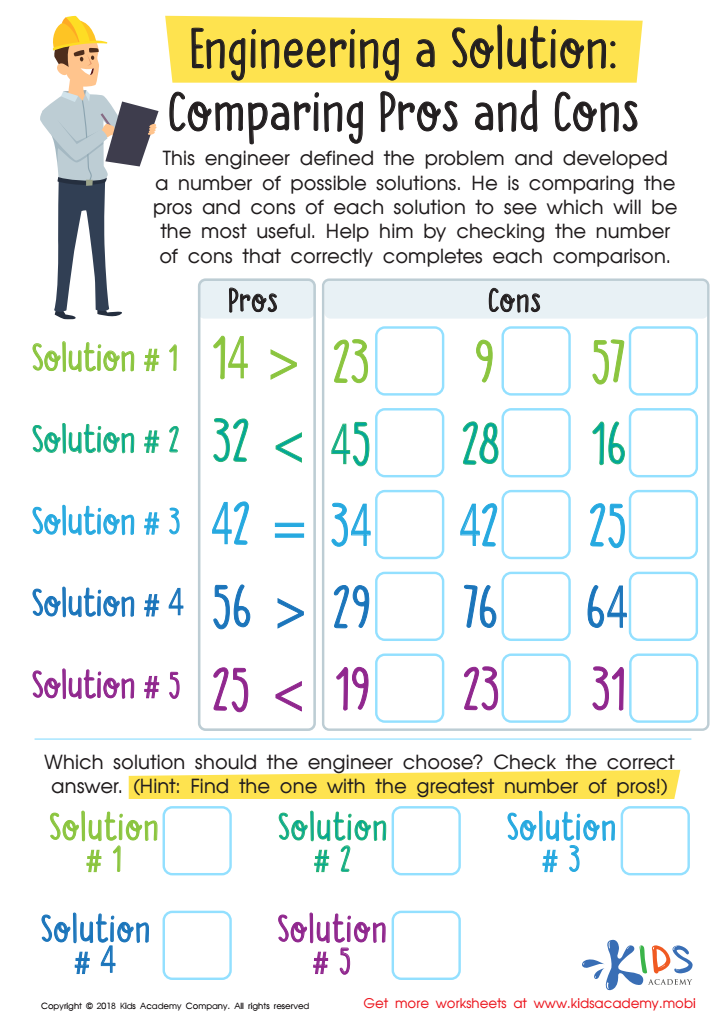
Engineering a Solution: Comparing Pros and Cons Worksheet
 Assign to My Students
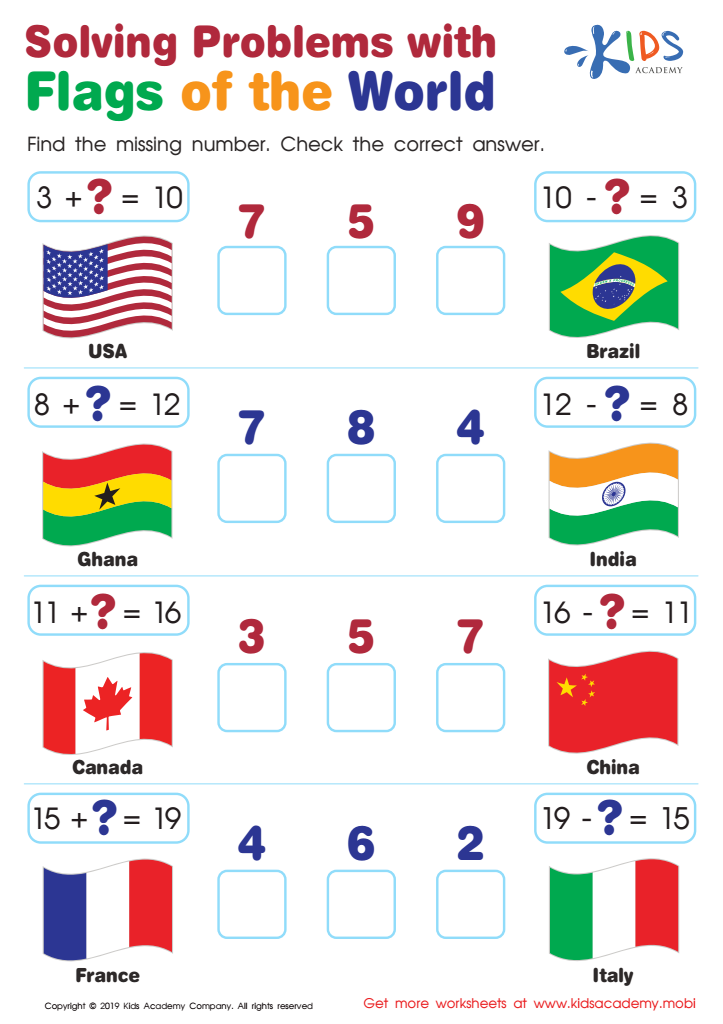
Solving Problems with Flags of the World Worksheet







Understanding how children aged 5-9 typically develop their math skills is fundamental for both parents and teachers because it helps tailor educational strategies to support each child's learning process. Comparative analysis of normal math development provides insight into the expected milestones and abilities, thus enabling early identification of both giftedness and areas needing reinforcement.
Children’s math skills generally progress through stages, starting with basic number recognition and counting, leading to simple addition and subtraction. Comparative analysis assists in benchmarking these skills against standard developmental milestones, ensuring that children are on track. For instance, it can highlight if a child struggles with concepts like one-to-one correspondence or if they're well ahead, understanding number patterns early.
For parents, such knowledge allows for creating a supportive home learning environment by incorporating fun, age-appropriate math games and activities that reinforce concepts. For teachers, it aids in devising lesson plans that meet the varied needs of students, from remedial support to advanced challenges.
Overall, this understanding fosters a proactive approach to math education, building a robust foundation crucial for future learning. Early intervention, enriched learning experiences, and a supportive learning environment ultimately cultivate a positive attitude toward math, setting the stage for academic success.








