Comparing Fractions Normal Math Worksheets for Ages 5-9
4 filtered results
-
From - To
Discover our engaging "Comparing Fractions Normal Math Worksheets" designed for children ages 5-9. These worksheets provide a fun and interactive way for young learners to grasp the concept of comparing fractions through visual aids and relatable examples. The exercises facilitate critical thinking as students identify greater or lesser fractions while boosting their math confidence. With varying levels of difficulty, our worksheets cater to every child's learning pace, ensuring comprehension and mastery of fraction comparisons. Perfect for home or classroom use, these resources make math enjoyable and accessible, setting a solid foundation for future mathematical concepts. Start exploring today!
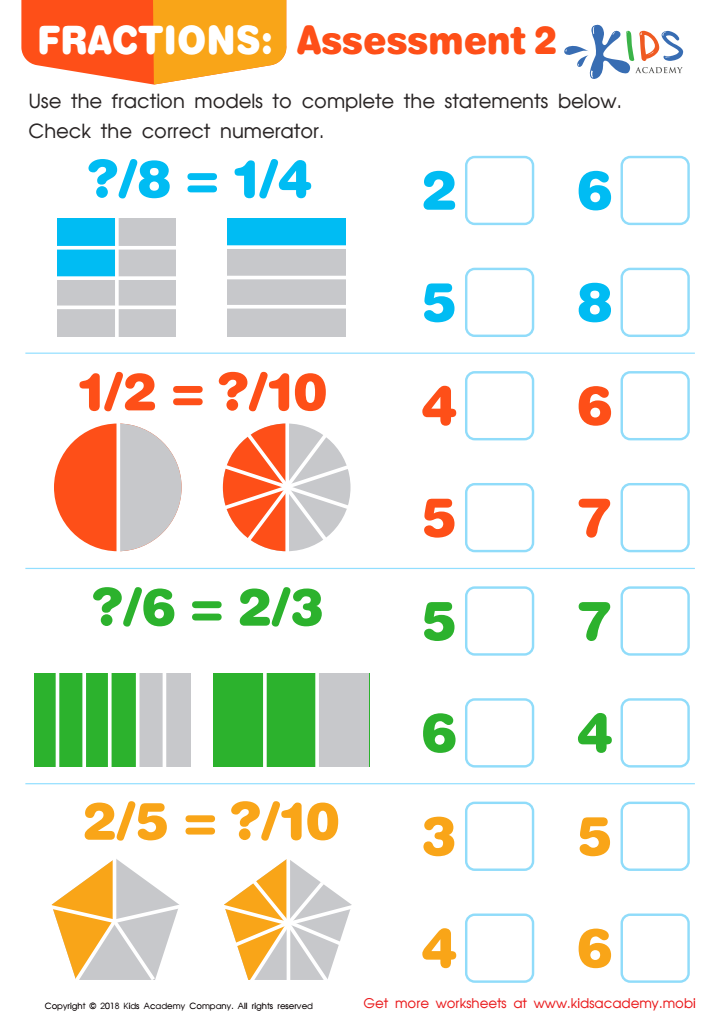
Fractions: Assessment 2 Worksheet
 Assign to My Students
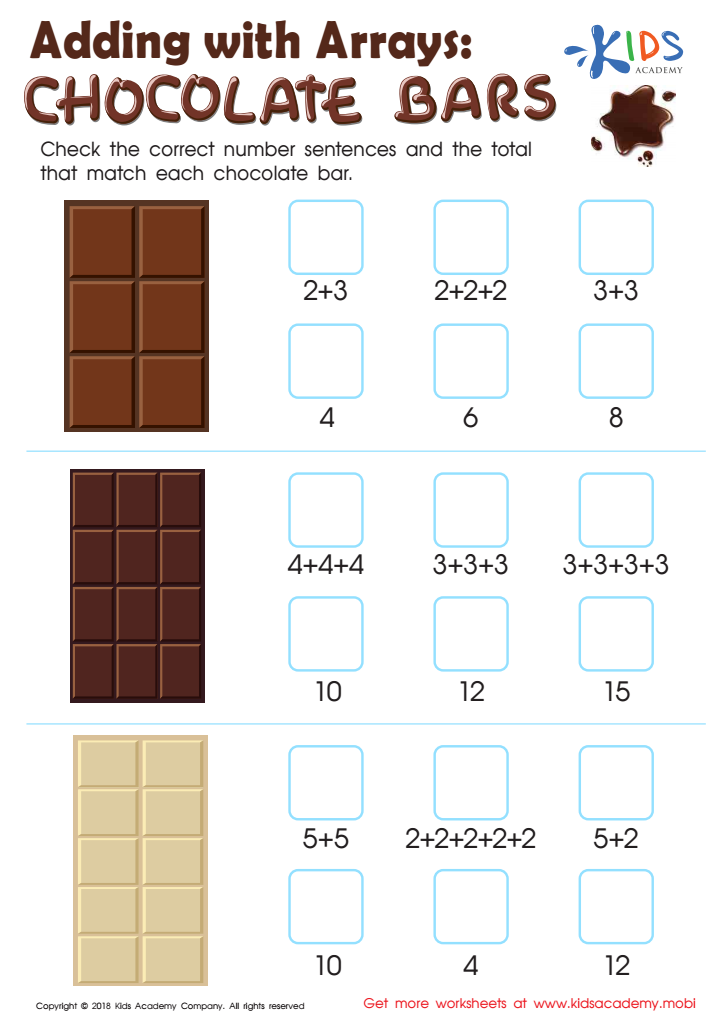
Adding with Arrays: Chocolate Bars Worksheet
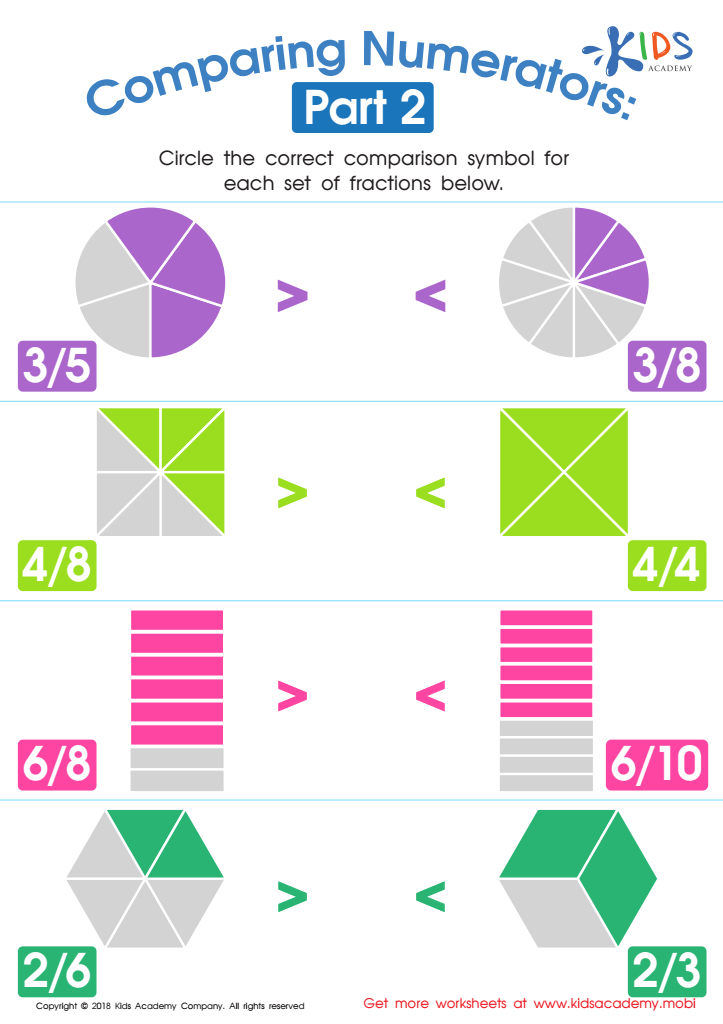
Comparing Numerators Part 2 Worksheet
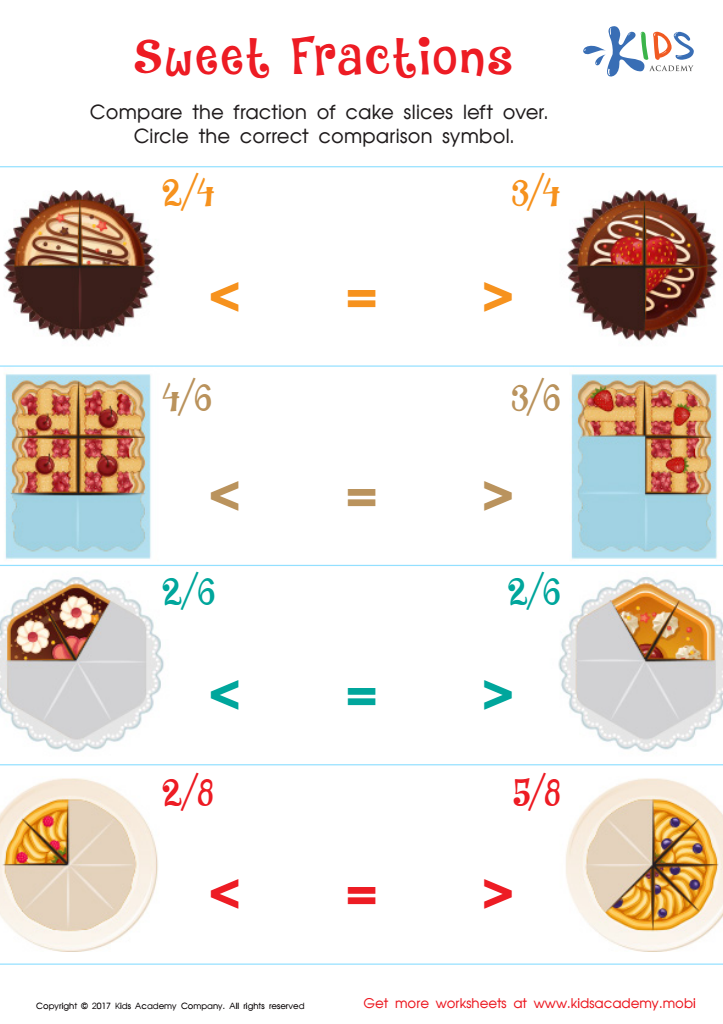
Compare Fractions Worksheet


.jpg)



Understanding fractions is a foundational skill in early mathematics, and comparing fractions is a critical step in developing number sense for children aged 5-9. Parents and teachers should prioritize this concept because it lays the groundwork for more advanced mathematical concepts encountered later in education, such as addition, subtraction, and understanding ratios.
At this age, children are naturally curious and can grasp visual and comparative differences easily. Teaching them how to compare fractions using visual aids, such as pie charts or fraction bars, helps them visualize relationships between quantities, which enhances their comprehension. This skill also strengthens critical thinking as children learn to evaluate and differentiate sizes or portions.
Moreover, comparing fractions can reinforce essential skills such as problem-solving and logical reasoning. It is an opportunity for adults to encourage discussions about real-life situations, such as cooking or sharing food, making learning more relatable and engaging. When parents and teachers invest time in this area of math, they promote confidence and curiosity about numbers, which can lead to a more positive attitude toward math in general. Overall, fostering a solid understanding of comparing fractions equips children with the tools they need for future academic success.








