
Data interpretation Normal Math Worksheets for Ages 5-9
3 filtered results
Difficulty Level
Grade
Age
-
From - To
Subject
Activity
Standards
Unlock your child's analytical potential with our Data Interpretation Normal Math Worksheets for ages 5-9 from Kids Academy. These engaging and easy-to-understand worksheets help young learners grasp essential math and data skills, including reading graphs, identifying patterns, and making informed predictions. Specially designed by educators, our worksheets are perfect for developing critical thinking and problem-solving abilities while keeping learning fun and interactive. Increase your child's confidence and proficiency in math with our carefully crafted, age-appropriate resources to prepare them for future academic success. Parents and teachers can seamlessly integrate these worksheets into both classroom and home study sessions.
Favorites
With answer key
Interactive
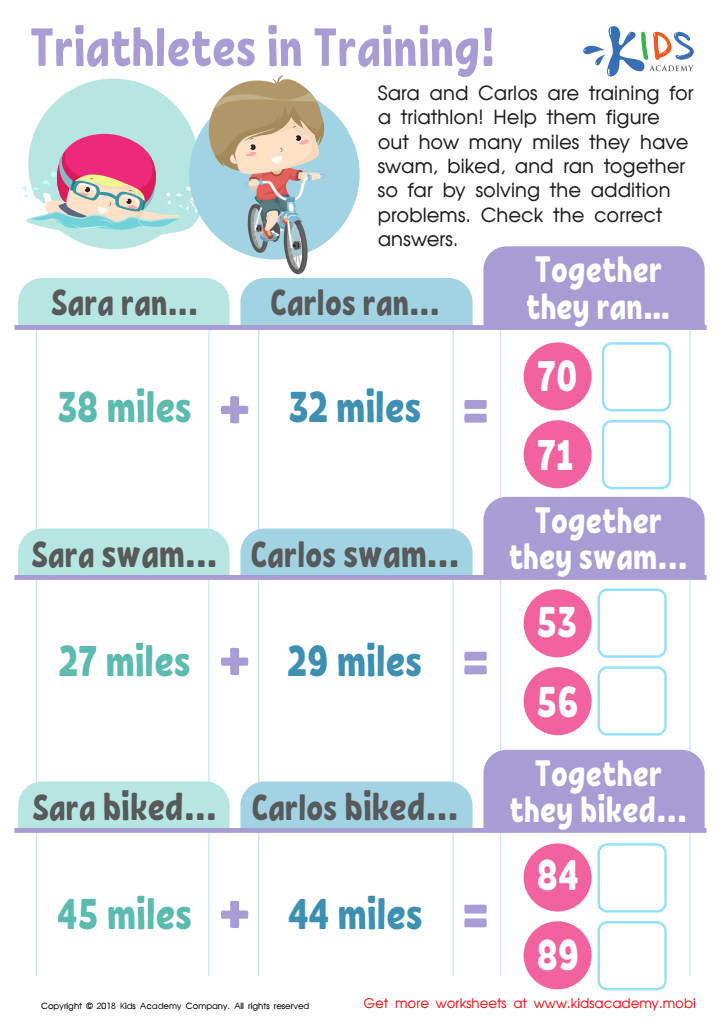
Triathletes in Training Worksheet
Sara and Carlos are training for a triathlon and need your child's help! They must solve the addition problems to figure out how many miles they've swam, ran, and biked. Help your kid check the answers and get them ready for the triathlon!
 Assign to My Students
Triathletes in Training Worksheet
Worksheet
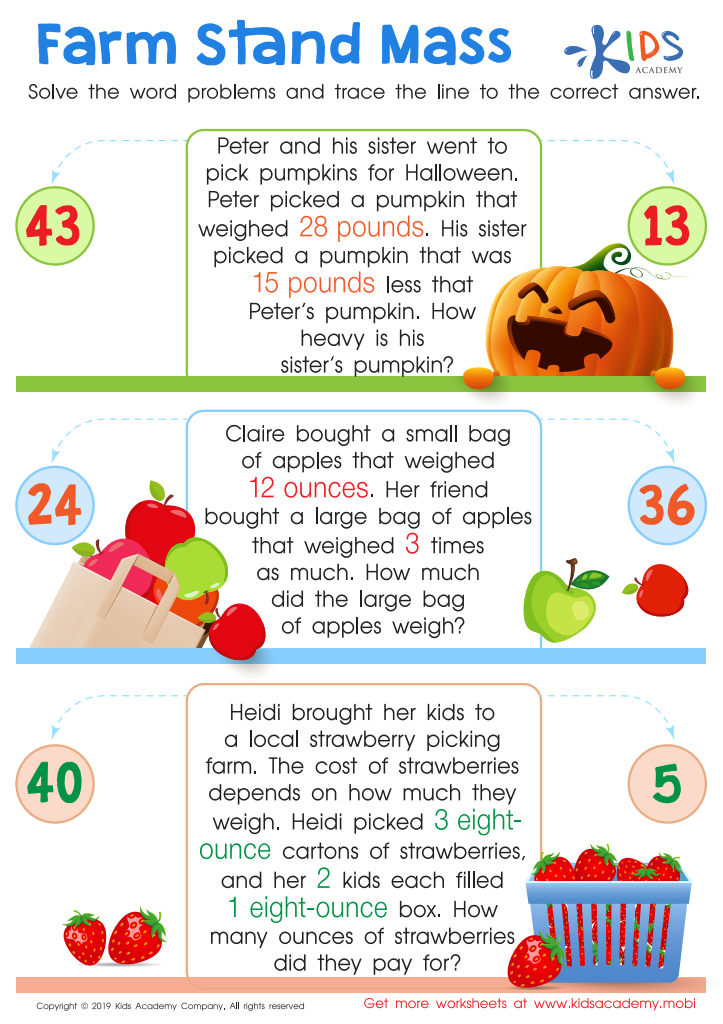
Farm Stand Mass Worksheet
Engage your kids in a fun learning adventure! Encourage them to practice what they learn in school using this worksheet. Look at the picture and read the problem together. Help them solve it and trace the line to the answer. Make learning enjoyable and your kids will be more motivated!
Farm Stand Mass Worksheet
Worksheet
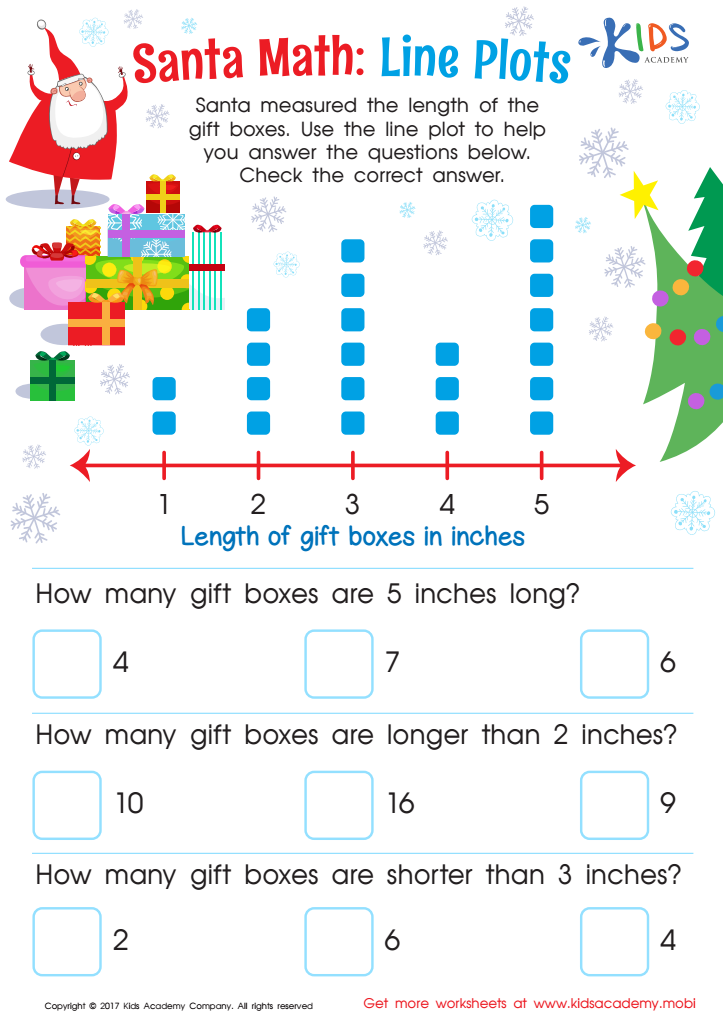
Line Plot Worksheet
Help your child measure presents with Santa using this 2nd grade line plot worksheet! It's a fun way to boost math skills and analyze data. Plus, it's sure to delight your child!
Line Plot Worksheet
Worksheet
Join Kids Academy for Free
Who is primarily going to use this learning content?







.jpg)
Data interpretation and normal math skills for ages 5-9 lay the foundation for critical thinking and problem-solving abilities essential in both academics and everyday life. During these formative years, children are naturally curious and excellent at absorbing new information. Teaching them how to collect, visualize, and interpret simple data sets helps cultivate attention to detail and reinforces the importance of accuracy.
Introducing data interpretation early fosters numerical literacy, making students more comfortable with concepts like averages, graphs, and simple charts. This not only aids in their current understanding but also paves the way for more complex mathematical and scientific learning in later years. Children who understand the basics of data interpretation can quickly grasp important concepts like comparing quantities, recognizing patterns, and making predictions.
For parents and teachers, an early focus on these skills means developing children who are better prepared to face a data-driven world. In an age dominated by information, these skills are crucial. They equip young learners to make informed decisions, understand statistics in media, and approach problems analytically rather than intuitively. Ultimately, fostering data interpretation skills in early education arms children with the tools they need to succeed academically and navigate a complex, information-rich world with confidence.








