Developing problem-solving abilities Normal Math Worksheets for Ages 5-9
3 filtered results
-
From - To
Enhance your child's critical thinking and problem-solving skills with our engaging Normal Math Worksheets designed for ages 5-9! These carefully crafted resources provide an interactive way for young learners to tackle various mathematical challenges. Our worksheets empower children to apply logical reasoning and develop strategies to find solutions, laying a strong foundation for future math success. Each activity encourages kids to think independently while building confidence in their abilities. With a diverse range of topics and difficulty levels, our worksheets cater to different learning styles, ensuring every child can thrive. Spark your child's love for math today with our fun and educational worksheets!
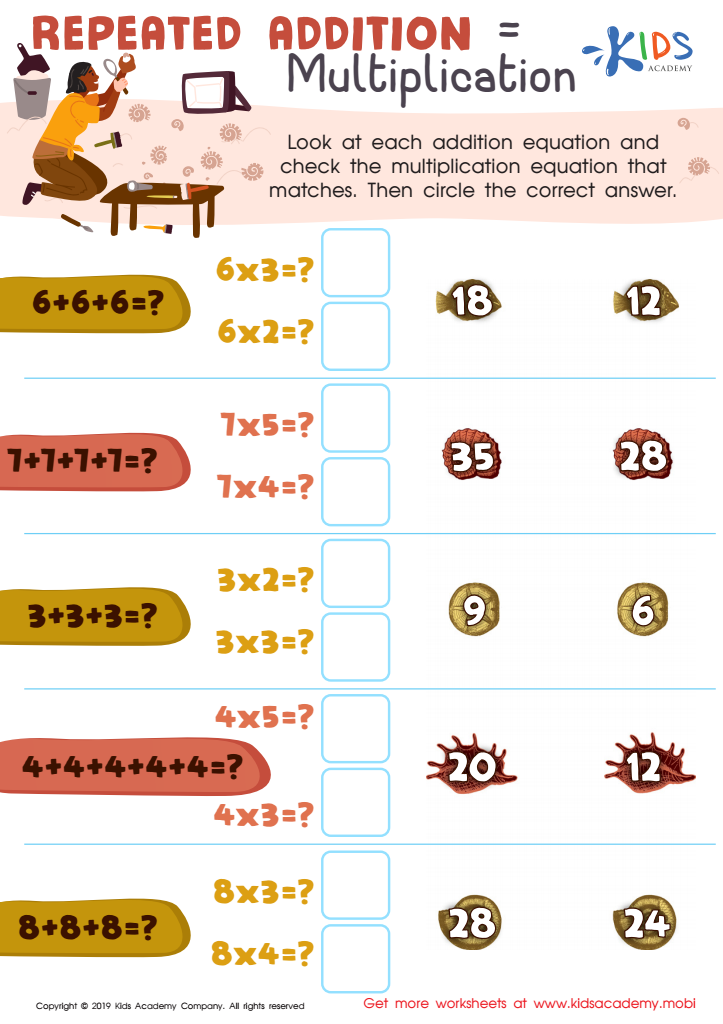
Repeated Addition = Multiplication Worksheet
 Assign to My Students
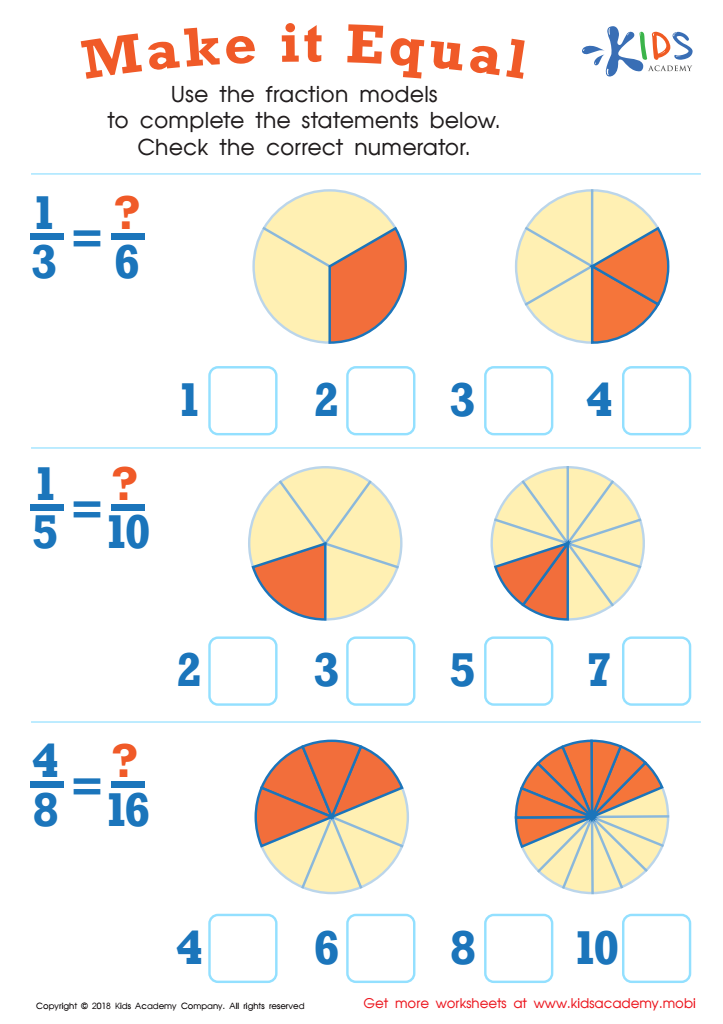
Make It Equal Worksheet
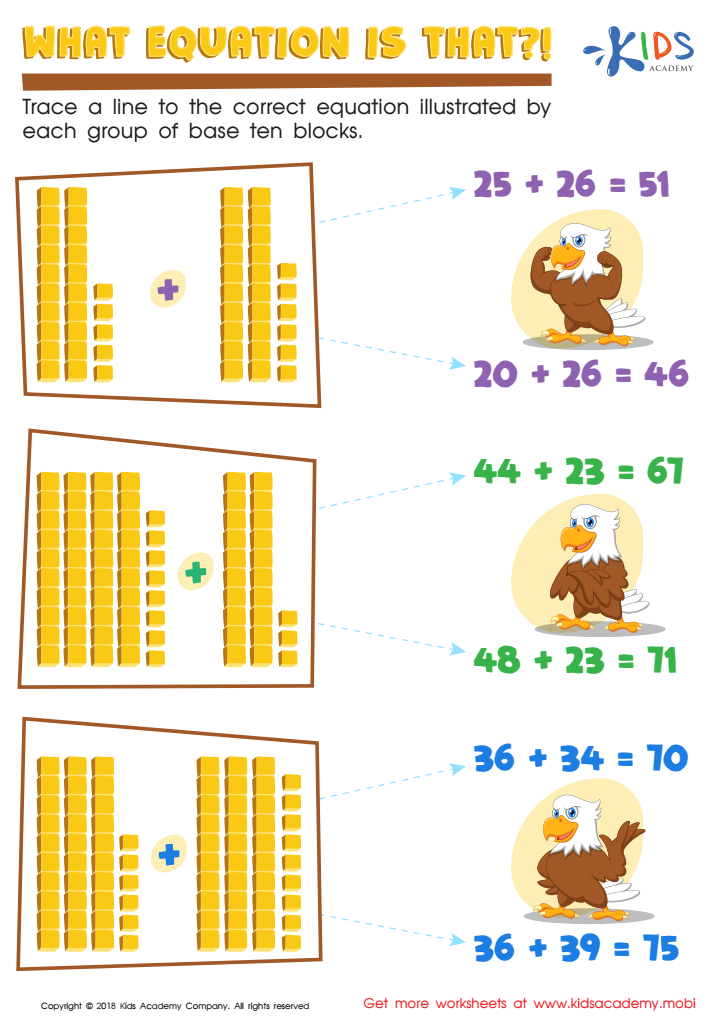
What Equation Is That? Worksheet







Developing problem-solving abilities in young children, especially between the ages of 5-9, is crucial for their cognitive growth and overall development. At this age, children's brains are highly adaptable and receptive to learning, making it a prime time to cultivate critical thinking skills. Engaging with Normal Math concepts helps children conceptualize mathematical ideas, build logical reasoning, and learn to analyze situations.
Enhancing problem-solving skills lays the groundwork for future academic success. Children learn to approach challenges methodically, break down complex problems into smaller steps, and evaluate possible solutions. This skillset extends beyond mathematics, encouraging resilience and adaptability that are essential in everyday situations and real-world contexts.
Moreover, when parents and teachers prioritize problem-solving abilities, they foster a love for learning. Using play-based methods or hands-on activities makes the learning process enjoyable, cultivating positive attitudes toward math and overcoming fear of failure.
Ultimately, nurturing these abilities prepares children not just for future math classes, but also for life’s challenges. It fosters independence and creativity, equipping children with the tools they need to navigate an ever-changing world. Therefore, parents and teachers play a pivotal role in shaping the future of our children through focused and intentional problem-solving learning experiences.








